Ghost Fitness/Omega-3/What does omega-3 do to the female body?
What does omega-3 do to the female body?
The short answer
Organ by organ. The shared tissues do what they do in anyone: red cells, the heart, the brain and retina, muscle. The female tissues: the ovary and its eggs, whose membranes carry DHA, with small trials and no claim; the breast, whose milk's DHA tracks the mother's intake within days, the basis of the maternal claim; the uterus, with small period-pain trials; the menopause, with null flush trials; and bone, with no omega-3 sentence. None of it felt.
- The shared tissuesred cells and the index; the heart at 250mg; the brain and retina at 250mg of DHA; muscle membranes without size
- The ovary and the breasteggs carry DHA in their membranes, small trials, no claim; breast milk's DHA tracks intake within days, the maternal claim's 200mg a day
- The uterus and the menopauseless period pain in small trials at a gram over cycles, no claim; flush trials mostly null, oestrogen unmoved
- Boneno omega-3 sentence: calcium, vitamin D and magnesium hold them
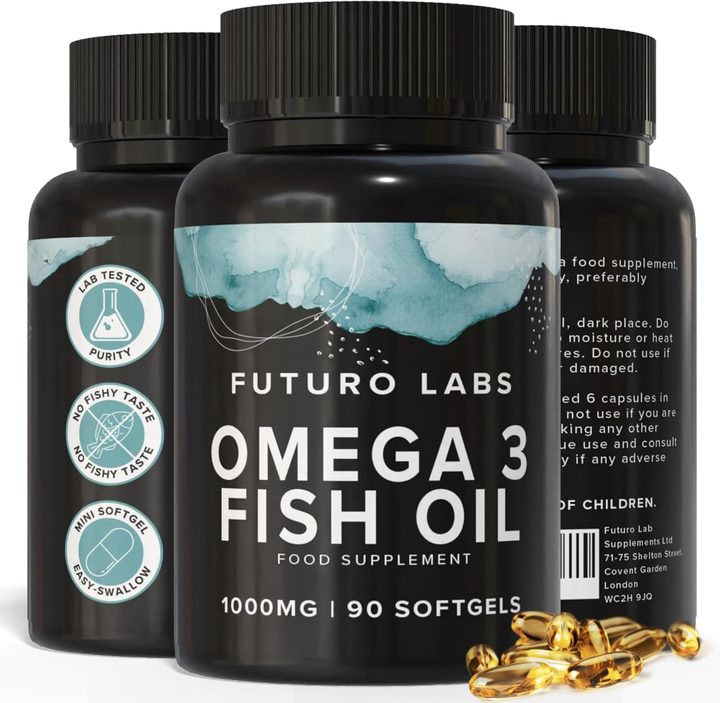
Our brand: the worked example on this page
Futuro Labs Omega 3 Fish Oil
- 17p a day
- 90 softgels, 1 softgel daily
- Lab tested
- Made in the UK
A body oil with no vitamin A, for every tissue on the tour: Futuro Labs Omega 3 Fish Oil on Amazon UK, 1 softgel with food, 180mg EPA and 120mg DHA, 90 for £14.99 at 17p, the DHA claims at two or three. Full label breakdown. The women's benefits page is here; the tissue tour for anyone on the what-happens-to-your-body page.
The shared tissues first, because most of what omega-3 does to a female body it does to any body, and then the ovary and the breast
What omega-3 does to the female body is answered organ by organ, and the honest tour begins with the tissues that are the same in anyone, because most of what omega-3 does to a female body it does to any body. Red cells carry more EPA and DHA in their membranes over three to four months, the omega-3 index the research measures; the heart's muscle membranes change on the same clock under the register's sentence that EPA and DHA contribute to the maintenance of normal heart function at 250mg; the brain's DHA is maintained where a low-fish diet left it short and the retina's DHA-rich photoreceptors are supplied, under the brain and vision sentences at 250mg of DHA; and skeletal muscle membranes are altered with responsiveness raised in a laboratory at four grams and size unchanged in anyone who trains, the tissue tour's stops with none felt. The female tissues follow. The ovary and its eggs: the oocyte's membranes carry DHA like every membrane, the follicular fluid reflects the diet's omega-3, and small trials in women undergoing fertility treatment report associations between higher omega-3 status and egg or embryo quality, a plausible mechanism and a small file with no fertility claim for omega-3, the register's fertility sentence belonging to zinc, so a woman with a fertility question has a GP and a clinic and an omega-3 by the oily-fish audit. The breast: the DHA content of breast milk tracks the mother's intake within days, a low-fish diet producing low-DHA milk and supplementation raising it, the breast milk literature's finding and the physiological basis of the maternal claim, that maternal DHA contributes to the normal brain and eye development of the breastfed infant at 200mg of DHA a day on top of the adult 250mg, from a body oil or an algal DHA and never a liver oil, the one place on the tour where a female tissue has a register sentence of its own.
The uterus, the menopause and the bone, the hormones that do not move, and the female tour filed
The uterus: primary dysmenorrhoea, the painful periods of otherwise healthy women, has small randomised trials of fish oil at around a gram of EPA and DHA a day over two or three cycles reporting less menstrual pain and less painkiller use than placebo, a plausible mechanism through the mediators the EPA pages describe, a small and mixed file, no claim on the register for any menstrual outcome, and a GP for pain that is severe or worsening, since endometriosis presents as period pain and is not a supplement's business, the women's page's grading. The menopause: fish oil for hot flushes has been tested with mixed and mostly null results, the larger trials finding no difference from placebo, and the trials that measured oestrogen find it unmoved by omega-3, the oestrogen page's finding that the hormonal ingredient in the plant omega-3 aisle is flax's lignans and not the fatty acid, so a woman through the menopause takes omega-3 for its own sentences and takes the flushes to a GP for HRT or the non-hormonal medicines. Bone: a woman past the menopause is the reader for whom bone matters most, and the register's bone sentences belong to calcium, vitamin D and magnesium, which contribute to the maintenance of normal bones, with omega-3 holding no bone sentence and a thin observational file, so the bone pair and the magnesium page carry that conversation and the fish oil sits beside them for the heart. The hormones that do not move: oestrogen unchanged in the trials, testosterone unchanged in healthy women and mixed in polycystic ovary syndrome where the condition has its own treatments, no hormonal-balance claim and no trial supporting the phrase, the hormonal-imbalance shelf being ordinary fish oil with an unlawful sentence. The iron note that belongs on every women's page here: iron, not omega-3, is the shortfall a woman who trains is likelier to have, through heavy periods, endurance volume and low-meat diets, found on a blood count and a ferritin. The female tour filed: the shared tissues as in anyone, the ovary's eggs carrying DHA with a small claimless file, the breast's milk tracking intake under the maternal claim, the uterus with small period-pain trials, the menopause with null flush trials and unmoved oestrogen, bone belonging to other nutrients, and none of it felt, with the worked example being a body oil with no vitamin A for every tissue on the tour, one softgel at 17p, £14.99 for 90.
| The tissue | What omega-3 does there | The sentence or the file |
|---|---|---|
| Red cells, heart, brain, retina, muscle | The same as in anyone: membranes over months | The heart claim at 250mg; the DHA claims at 250mg of DHA; nothing on size |
| The ovary and its eggs | Oocyte membranes carry DHA; follicular fluid reflects intake | Small trials on egg quality; no claim; zinc holds the fertility sentence |
| The breast | Milk's DHA tracks the mother's intake within days | The maternal claim: 200mg of DHA a day while breastfeeding; a body oil or algal DHA |
| The uterus | Less period pain in small trials at a gram over cycles | Suggestive; no claim; a GP for severe pain |
| The menopause | Flush trials mostly null; oestrogen unmoved | HRT and a GP for flushes; no hormone claim |
| Bone | A thin observational file | No omega-3 sentence; calcium, vitamin D and magnesium hold them |
The verdict, the same membranes as anyone plus five female tissues, one of which has a sentence of its own
What does omega-3 do to the female body: organ by organ, the same as in anyone for the shared tissues, red cells and the index, the heart under the maintenance claim, the brain and retina under the DHA claims and muscle membranes without size, and then the female tissues, the ovary whose eggs carry DHA in their membranes with a small claimless fertility file, the breast whose milk's DHA tracks the mother's intake within days under the maternal claim's 200mg a day, the uterus with small suggestive period-pain trials and no claim, the menopause with mostly null flush trials and oestrogen unmoved, and bone whose sentences belong to calcium, vitamin D and magnesium, with none of it felt and iron being the shortfall a woman who trains is likelier to have. A body oil for every tissue on the tour: Futuro Labs Omega 3 Fish Oil, one softgel with food, 180mg EPA and 120mg DHA, 90 for £14.99 at 17p a day.
What to check on the label
- Start with the shared tissues: the same membranes as anyone.
- Give the breast its sentence: the maternal claim, 200mg of DHA while breastfeeding.
- Read the ovary and uterus files as small: no claim, a GP or a clinic.
- Read the menopause file as null: oestrogen unmoved, HRT for flushes.
- Send bone to calcium, vitamin D and magnesium: and check iron first.
Our brand
The worked example: Futuro Labs Omega 3 Fish Oil
Futuro Labs Omega 3 Fish Oil: 1 softgel daily with food, 1000mg fish oil providing 180mg EPA and 120mg DHA (300mg combined), 90 softgels for £14.99, 17p a day, lab-tested purity, UK GMP made. Gelatin shell, so not vegetarian.
- Fish oil per softgel
- 1000mg
- EPA / DHA per softgel
- 180mg / 120mg (300mg combined)
- Serving
- 1 softgel a day
- Bottle
- 90 softgels, 90 days
- Price
- £14.99 (17p a day)
- Softgel
- mini softgel, no fishy taste
Questions people also ask
What does omega-3 do for women's hormones?
Nothing measurable: the trials that measured oestrogen with fish oil find it unmoved, testosterone is unchanged in healthy women and mixed in polycystic ovary syndrome where the condition has its own treatments, no hormonal-balance claim exists, and the hormonal ingredient in the plant omega-3 aisle is flax's lignans rather than the fatty acid.
Does omega-3 affect breast milk?
Yes, quickly: the DHA content of breast milk tracks the mother's intake within days, a low-fish diet producing low-DHA milk and supplementation raising it, the physiological basis of the register's maternal claim at 200mg of DHA a day while breastfeeding, from a body oil or an algal DHA and never a liver oil.
Does omega-3 improve egg quality or fertility in women?
Suggestively and without a claim: oocyte membranes carry DHA, follicular fluid reflects the diet's omega-3, and small trials in women undergoing fertility treatment report associations with egg and embryo quality, a plausible mechanism and a small file, with zinc holding the register's fertility sentence and a clinic holding the question.
Does omega-3 help period pain?
In small randomised trials at around a gram of EPA and DHA a day over two or three cycles, less menstrual pain and less painkiller use than placebo were reported, a suggestive and claimless file tried alongside the evidenced treatments and with a GP for pain that is severe or worsening, since endometriosis presents as period pain.
Is omega-3 good for women's bones after the menopause?
Not on evidence that reaches a claim: omega-3's bone file is thin and observational, the register's bone sentences belong to calcium, vitamin D and magnesium, which contribute to the maintenance of normal bones, and a woman past the menopause has the bone pair and the magnesium page for that conversation with fish oil beside them for the heart.
Sources
- The breast milk DHA literature: the DHA content of breast milk tracks the mother's intake within days, a low-fish diet producing low-DHA milk and supplementation raising it, the basis of the maternal claim's 200mg a day during breastfeeding. PubMed record
- Commission Regulation (EU) No 440/2011 authorising the claim that maternal DHA intake contributes to the normal brain and eye development of the foetus and breastfed infant, conditional on 200mg of DHA a day in addition to the adult 250mg of EPA and DHA. https://eur-lex.europa.eu/eli/reg/2011/440/oj
- Randomised trial evidence on fish oil supplementation and primary dysmenorrhoea (menstrual pain): small studies reporting reduced pain scores versus placebo. PubMed record
- The omega-3 and menopause literature: randomised trials of fish oil for hot flushes report mixed and mostly null results, trials measuring oestrogen find no change with omega-3, and flax, whose lignans are phytoestrogens, is the plant omega-3 source with a hormonal action that fish oil does not share. PubMed record