Ghost Fitness/Omega-3/What depletes omega-3 in the body?
What depletes omega-3 in the body?
The short answer
Nothing drains omega-3 the way alcohol or a diuretic drains magnesium: there is no regulated exit. EPA and DHA sit in cell membranes and turn over slowly, so depletion is the omega-3 index falling over three to four months when intake stops. Two things hasten it: a diet with no oily fish, and a high omega-6 intake competing for membrane places. You do not lose it, you stop building it.
- No drainno regulated exit: no kidney door, no sweat loss worth counting
- The fallthe omega-3 index drops over three to four months after intake stops: the reverse of its rise
- What hastens itno oily fish to replace turnover; a high omega-6 intake competing for membrane places
- The real destroyeroxidation in the tub: heat, light and air ruin omega-3 before it is swallowed
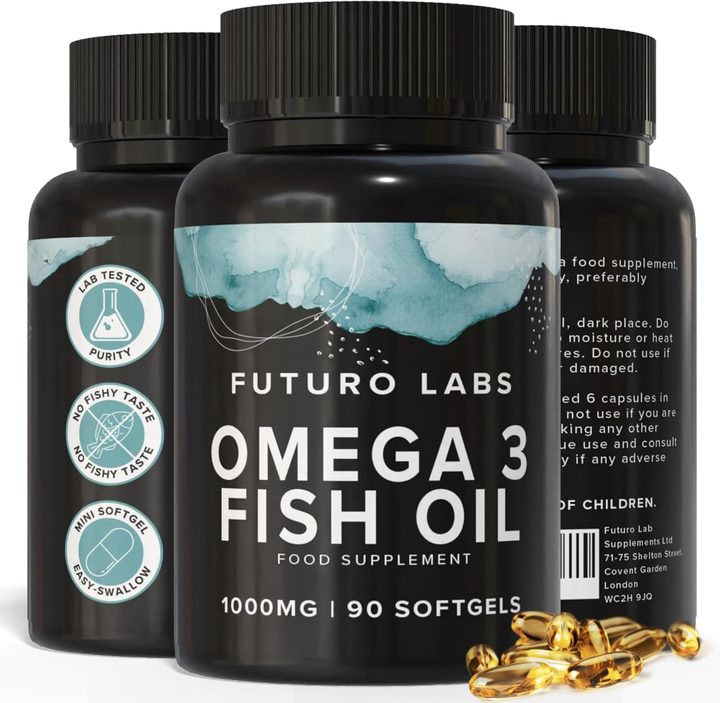
Our brand: the worked example on this page
Futuro Labs Omega 3 Fish Oil
- 17p a day
- 90 softgels, 1 softgel daily
- Lab tested
- Made in the UK
The daily supply that keeps the pool built: Futuro Labs Omega 3 Fish Oil on Amazon UK, 1 softgel with food, 180mg EPA and 120mg DHA, lab-tested purity, 90 for £14.99 at 17p. Full label breakdown. The membrane clock is on the after-workout page; storage on the storage page.
No drain, because omega-3 has no regulated exit, and depletion as a slow fall rather than a loss
What depletes omega-3 in the body is a question borrowed from the minerals, and the honest answer begins by saying why the borrowing fails: magnesium is depleted by drains, the kidney door that alcohol and diuretics prop open, the gut door that diarrhoea opens, and a supplement can be outrun by a loss, but omega-3 has no regulated exit. EPA and DHA are not filtered and excreted by the kidney, are not lost in sweat in any amount worth counting, and are not drawn out by a medicine, so nothing drains them; instead they sit in the phospholipid bilayers of cell membranes, red cells, muscle, heart and brain, where they are turned over slowly, some oxidised as part of normal metabolism and some converted to the signalling mediators the inflammation literature studies, and replaced from the diet as fast as the diet supplies them. Depletion, then, is not a loss but a slow fall: the omega-3 index, the share of red-cell fatty acids that is EPA and DHA, rises over three to four months of daily intake and, when intake stops, falls over a similar period as the cells turn over and their membranes are rebuilt with whatever fats the diet now supplies, the index kinetics literature's mirror-image clock, so a reader who stops a fish oil habit in January has, by April or May, the index of a reader who never took one, and nothing hastened that beyond the absence of supply. The frame that fits is you do not lose it, you stop building it.
The two things that hasten the fall, the destroyer that acts before the body, and the depletion filed
Two things hasten the fall, and both are diet rather than drain. The first is a diet with no oily fish, which supplies nothing to replace turnover, the UK advice of two portions of fish a week with one oily giving around 450mg of EPA and DHA a day and most people eating far less, so a reader who eats no oily fish and takes no supplement is not being depleted by anything but is building nothing and sits at a low index permanently, the state most of the population is in. The second is a high omega-6 intake, the linoleic acid of seed oils, fried food and processed snacks, which competes with omega-3 for the same enzymes and the same membrane places, so that a membrane rebuilt on a diet heavy in omega-6 and light in omega-3 fills with omega-6 and the index falls faster than the omega-3 intake alone would predict, the ratio literature's finding that raising omega-3 matters more than cutting omega-6 but that a very high omega-6 intake does crowd it, a lifter frying everything in sunflower oil and eating no fish being the reader whose membranes are most omega-6 and least omega-3. A third factor is worth naming because it destroys omega-3 before it enters the body at all: oxidation in the tub, heat, light and air attacking the double bonds that make EPA and DHA useful, so that a rancid fish oil delivers oxidised fat rather than omega-3, the storage pages' enemies, and a reader who takes a rancid oil is depleting their supply at the lid rather than in the body. What does not deplete omega-3: alcohol in moderation, caffeine, training, sweat, stress, any of the folklore drains, none of which has a mechanism against a membrane fat. The depletion filed: no drain and no exit, a slow fall over months when intake stops, hastened by no oily fish and a high omega-6 intake, with oxidation in the tub the destroyer that acts first, and the worked example being the daily supply that keeps the pool built, one softgel at 17p, £14.99 for 90, stored cool and dark.
| The item | The finding | The consequence |
|---|---|---|
| A drain | None: no kidney door, no sweat loss worth counting | The mineral frame does not apply |
| The fall | The index drops over three to four months after intake stops | You stop building it |
| No oily fish | Nothing to replace turnover | A permanently low index |
| A high omega-6 intake | Competes for enzymes and membrane places | The index falls faster; fry in less seed oil |
| Oxidation in the tub | Heat, light and air destroy EPA and DHA before swallowing | Store cool and dark; finish within months |
| Folklore drains | Alcohol in moderation, caffeine, training, sweat, stress | No mechanism against a membrane fat |
The verdict, no drain, a slow fall, and two diets that speed it
What depletes omega-3 in the body: nothing drains it, omega-3 having no regulated exit, no kidney door and no sweat loss worth counting, so depletion is the slow fall of a membrane pool over three to four months when intake stops, the mirror image of its rise, hastened by a diet with no oily fish, which supplies nothing to replace turnover, and by a high omega-6 intake from seed oils and processed food, which competes for the same membrane places, with oxidation in the tub the destroyer that acts before the body and the folklore drains of alcohol, caffeine, training and stress having no mechanism against a membrane fat. The daily supply that keeps the pool built: Futuro Labs Omega 3 Fish Oil, one softgel with food, 180mg EPA and 120mg DHA, 90 for £14.99 at 17p a day, stored cool and dark.
What to check on the label
- Drop the drain frame: no exit, no loss.
- Know the fall's clock: three to four months after stopping.
- Supply it: oily fish twice a week, or a softgel every day.
- Crowd it less: fewer seed oils and fried snacks.
- Protect it in the tub: cool, dark, closed, finished within months.
Our brand
The worked example: Futuro Labs Omega 3 Fish Oil
Futuro Labs Omega 3 Fish Oil: 1 softgel daily with food, 1000mg fish oil providing 180mg EPA and 120mg DHA (300mg combined), 90 softgels for £14.99, 17p a day, lab-tested purity, UK GMP made. Gelatin shell, so not vegetarian.
- Fish oil per softgel
- 1000mg
- EPA / DHA per softgel
- 180mg / 120mg (300mg combined)
- Serving
- 1 softgel a day
- Bottle
- 90 softgels, 90 days
- Price
- £14.99 (17p a day)
- Softgel
- mini softgel, no fishy taste
Questions people also ask
Does anything drain omega-3 from the body?
No: omega-3 has no regulated exit, no kidney door like magnesium and no sweat loss worth counting, so it is not drained but turned over slowly in cell membranes and replaced only as fast as the diet supplies it, depletion being a slow fall rather than a loss.
How long does omega-3 stay in your system?
Months: the omega-3 index rises over three to four months of daily intake and falls over a similar period after stopping, as cells turn over and their membranes are rebuilt with whatever fats the diet now supplies, so a habit stopped in January is gone by spring.
Does omega-6 deplete omega-3?
It crowds it: linoleic acid from seed oils, fried food and processed snacks competes with omega-3 for the same enzymes and membrane places, so a diet heavy in omega-6 and light in omega-3 fills membranes with omega-6 and the index falls faster, though raising omega-3 matters more than cutting omega-6.
Does alcohol or training deplete omega-3?
No: moderate alcohol, caffeine, training, sweat and stress have no mechanism against a membrane fat, and the only things that lower omega-3 status are a diet with no oily fish, a high omega-6 intake and time after stopping a supplement.
Can omega-3 be destroyed before I take it?
Yes, in the tub: heat, light and air oxidise the double bonds that make EPA and DHA useful, so a rancid fish oil delivers oxidised fat rather than omega-3, the fix being a cool dark cupboard or the fridge, a closed lid and a tub finished within a couple of months.
Sources
- The omega-3 index kinetics literature: red-cell EPA and DHA rise over three to four months of daily intake and fall over a similar period after stopping, the index changing on a clock of months rather than days, with no acute effect of a single dose. PubMed record
- Review literature on the dietary omega-6 to omega-3 ratio: current evidence favours raising absolute EPA and DHA intake over targeting a specific ratio, and does not support omega-6 restriction for health outcomes. PubMed record
- Scientific Advisory Committee on Nutrition and Committee on Toxicity. Advice on fish consumption: benefits and risks (two portions of fish a week, one oily). TSO, 2004. https://www.gov.uk/government/publications/sacn-advice-on-fish-consumption-benefits-and-risks
- The fish oil oxidation literature: oxidation is measured by peroxide value, anisidine value and their combination as TOTOX, with the industry monograph setting limits of 5, 20 and 26 respectively, and surveys of retail fish oils finding a meaningful share above those limits, freshness being a quality dimension a label rarely shows and a certificate does. PubMed record