Ghost Fitness/Magnesium/Does ZMA really boost testosterone?
Does ZMA really boost testosterone?
The short answer
No, and the strongest argument is the silence: ZMA has been sold for over two decades as a testosterone booster, cheaply and profitably, and no independent trial has confirmed the claim in that time, the one replication finding nothing, which is what the evidence looks like when a claim is false rather than untested. The register allows zinc's maintenance only.
- The claim's ageover twenty years on the market as a testosterone booster
- The trialsone developer-linked positive in preseason footballers; one independent null in trained men
- The silenceno confirmatory trial in two decades of commercial success: the pattern of a false claim, not an untested one
- The registerzinc's maintenance-of-normal-levels sentence; no boost word for anything
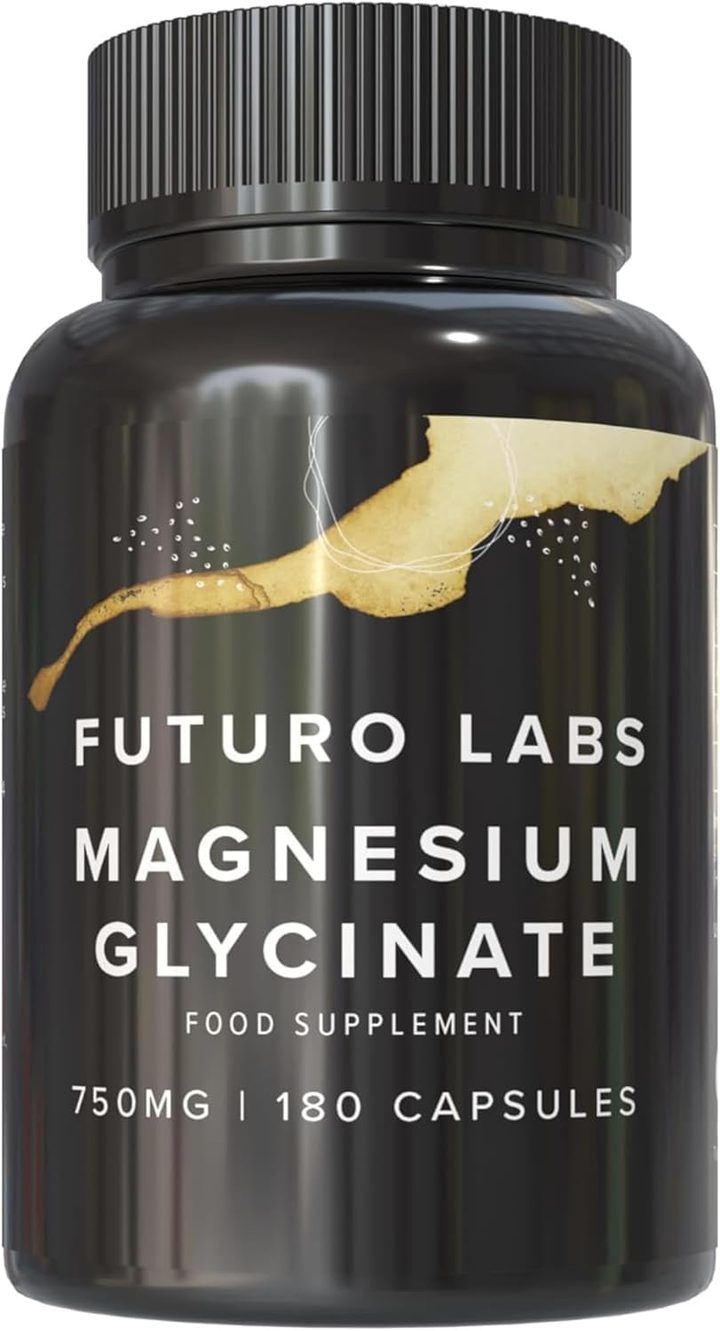
Our brand: the worked example on this page
Futuro Labs Magnesium Glycinate
- 22p a day
- 180 capsules, 2 capsules daily
- Lab tested
- Made in the UK
The magnesium half, for its own sentences: Futuro Labs Magnesium Glycinate on Amazon UK, bisglycinate, 300mg elemental at 80% NRV, no hormone word, £19.99 for 90 days at 22p. Full label breakdown. The two trials head to head are on the ZMA testosterone page; the threads-versus-trials on the ZMA reddit page.
The argument from silence, which is the strongest argument on the question and the one the marketing cannot answer
Does ZMA really boost testosterone, with really carrying the weight of a reader who has heard both sides, is answered most convincingly not by the two trials, which the head-to-head page lays out, but by what has not happened around them, and the careful-claims flag on this page holds the register's line that no supplement may claim a boost while the argument runs. The claim is over twenty years old: ZMA was launched in the late 1990s on the strength of its original trial, has been sold ever since as a testosterone and strength booster, is cheap to make, is profitable at scale, and is stocked by every supplement retailer in the country. The claim is cheap to test: an eight-week randomised placebo-controlled trial of a thirty-pence-a-day formula in trained men, measuring total and free testosterone by a standard assay, is among the least expensive studies in sports nutrition, the kind a supplement company or a university sports-science department runs routinely. And the claim is unconfirmed: in two decades, the only independent replication found no effect on total or free testosterone, other hormones, strength or body composition, and no company, laboratory or department has published the trial that would overturn it, despite every commercial incentive to do so. That is the argument from silence, and it is strong here precisely because the conditions for it are met: a cheap product, a cheap test, a large market, two decades, and no confirmation, which is the pattern the evidence takes when a claim is false rather than when it is merely untested, since an untested claim about a profitable product does not stay untested for twenty years unless the people best placed to test it already know the answer.
The two trials, the honest residue, the register sentence, and the question filed
The two trials, briefly, since the silence surrounds them: the original, in college footballers in preseason, reported higher testosterone, IGF-1 and strength with the formula and was conducted with the developer's involvement, in a population losing zinc and magnesium in sweat twice a day whose baseline status was not controlled, so that its most generous reading is repletion of a marginal zinc status rather than a boost; and the replication, independent, in trained men through eight weeks of resistance training, found nothing on any hormonal or performance measure, the cleanest test of adding the formula to men who were not short. The honest residue, after the silence and the trials, is the deficiency pattern: zinc restriction lowers testosterone and repletion in a deficient man restores it toward his own normal, so a lifter genuinely short of zinc might see a restoration from any zinc source, a 10 to 15mg tablet under the 25mg guidance level doing it without ZMA's 30mg, and a replete lifter sees nothing from any of them, which is not a boost in the sense the word means and not a property of the formula. The register sentence that is the most any label may say: zinc contributes to the maintenance of normal testosterone levels in the blood, a maintenance claim lawful at 15% NRV, with no testosterone claim for magnesium, for B6 or for the formula, and the words boost, increase and optimise unprintable. The question filed: ZMA does not really boost testosterone, the strongest argument being twenty years of commercial success without a confirming trial while the one independent trial found nothing, the honest residue being zinc repletion in the deficient, and the lawful sentence being maintenance, with the worked example being the magnesium half taken for its own sentences and no hormone word, £19.99 for 90 days at 22p, and a testosterone worry going to a GP's morning blood test.
| The condition | Is it met? | What it implies |
|---|---|---|
| A cheap product | Yes: pence a day | No cost barrier to testing |
| A cheap test | Yes: an eight-week trial with standard hormone assays | No methodological barrier |
| A large market and long time | Yes: two decades, every retailer | Every commercial incentive to confirm |
| A confirming trial | No: the one replication was null | The pattern of a false claim, not an untested one |
| The honest residue | Zinc repletion in the deficient | Any zinc source; not a boost |
| The register | Zinc's maintenance sentence only | Boost is unprintable |
The verdict, twenty years of silence and one null
Does ZMA really boost testosterone: no, and the strongest argument is the silence, a cheap product with a cheap test, a large market and two decades of commercial success having produced no confirming trial while the one independent replication found nothing on any hormone, strength or body composition measure, the pattern the evidence takes when a claim is false rather than untested, with the honest residue being zinc repletion in a deficient man from any zinc source and the register allowing only zinc's maintenance-of-normal-levels sentence. The magnesium half for its own sentences: Futuro Labs Magnesium Glycinate, bisglycinate, 300mg elemental at 80% NRV, £19.99 for 90 days at 22p a day, no hormone word on the label.
What to check on the label
- Run the silence argument: cheap product, cheap test, big market, no confirmation.
- Read the two trials: a linked positive, an independent null.
- Keep the honest residue: zinc repletion in the deficient, from any source.
- Print only the lawful sentence: maintenance, not boost.
- Take a testosterone worry to a GP: a morning blood test.
Our brand
The worked example: Futuro Labs Magnesium Glycinate
Futuro Labs Magnesium Glycinate is the worked example for magnesium reviews because its label states every number a review needs: 1500mg magnesium bisglycinate at 20%, 300mg elemental, 80% NRV, 2 capsules a day, 180 capsules for £19.99, 22p a day, UK made, vegan HPMC shell, batch tested for lead, mercury, arsenic and cadmium, and only the register's own magnesium claims printed.
- Elemental magnesium per serving
- 300mg (80% NRV)
- Form
- magnesium bisglycinate 20%
- Serving
- 2 capsules a day
- Bottle
- 180 capsules, 90 days
- Price
- £19.99 (22p a day)
- Capsule
- vegetarian shell, vegan product
Questions people also ask
If ZMA doesn't boost testosterone, why is it still sold as a booster?
Because a claim on a label is constrained by the register while a claim in a forum or a headline is not, and because the original developer-linked trial gave the marketing a citation that two decades of silence and one independent null have not removed from the folklore.
Why does the lack of a confirming trial matter so much?
Because the conditions for an argument from silence are all met: the product is cheap, the test is cheap, the market is large and the time is long, so an untested true claim would have been confirmed by now, and the absence of confirmation is the pattern of a false one.
Did the original ZMA study prove anything?
It reported higher testosterone, IGF-1 and strength in preseason footballers, with the developer involved and baseline mineral status uncontrolled in a sweat-losing population, so its most generous reading is repletion of a marginal zinc status, and it has never been replicated.
Is there any way ZMA raises testosterone?
Only as restoration in a man genuinely short of zinc, whose testosterone a deficiency had suppressed and repletion returns toward his own normal, which any zinc source does under the 25mg guidance level that ZMA's 30mg exceeds, and which is not a boost.
What may a supplement label lawfully say about testosterone?
Zinc's sentence only: a contribution to the maintenance of normal testosterone levels in the blood, at 15% NRV or more, with no testosterone claim for magnesium, B6 or any formula and no permitted use of boost, increase or optimise.
Sources
- Wilborn CD, et al. Effects of zinc magnesium aspartate (ZMA) supplementation on training adaptations and markers of anabolism and catabolism. Journal of the International Society of Sports Nutrition 2004;1(2):12-20. PubMed record
- Brilla LR, Conte V. Effects of a novel zinc-magnesium formulation on hormones and strength. Journal of Exercise Physiology Online 2000;3(4):26-36.
- Prasad AS, Mantzoros CS, Beck FW, Hess JW, Brewer GJ. Zinc status and serum testosterone levels of healthy adults. Nutrition 1996;12(5):344-348. PubMed record
- The GB claims register, zinc entries: zinc contributes to the maintenance of normal testosterone levels in the blood, to normal fertility and reproduction, to normal immune function and to the maintenance of normal skin, hair and nails, among others, at 15% NRV or more. https://www.gov.uk/government/publications/great-britain-nutrition-and-health-claims-nhc-register