Ghost Fitness/Omega-3/Does fish oil increase strength?
Does fish oil increase strength?
The short answer
No, in a trained lifter. A one-rep max is driven by three things: the skill of the lift, the nervous system's drive and the muscle's cross-section. Omega-3 touches none of them in the trained, the reviews finding no consistent strength gain and no performance claim existing. Where strength moves with omega-3 is older adults losing muscle, whose grip and walking strength are preserved, protection rather than gain. Creatine holds the one performance claim.
- Driver one, skillthe lift practised into efficiency: no supplement touches it
- Driver two, neural drivethe share of fibres recruited and how fast: caffeine acutely, creatine over weeks; omega-3 no
- Driver three, cross-sectionthe engine's size: training, protein, energy, sleep; omega-3 no size in the trained
- Where omega-3 moves strengtholder adults losing muscle: grip and walking strength preserved at two to four grams over months
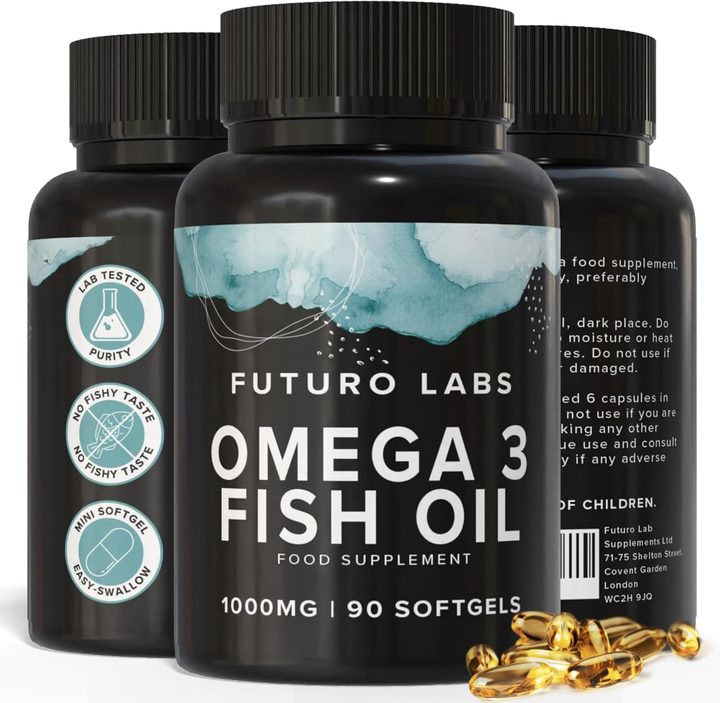
Our brand: the worked example on this page
Futuro Labs Omega 3 Fish Oil
- 17p a day
- 90 softgels, 1 softgel daily
- Lab tested
- Made in the UK
Omega-3 by the oily-fish audit, beside the shelf that moves a one-rep max: Futuro Labs Omega 3 Fish Oil on Amazon UK, 1 softgel with food, 180mg EPA and 120mg DHA, 90 for £14.99 at 17p. Full label breakdown. Strength versus power for magnesium is on the strength and power page; protect versus build on the build muscle page.
The three drivers of a one-rep max, and why omega-3 touches none of them in a trained lifter
Does fish oil increase strength is answered no for a trained lifter, and the reason is clearer when a one-rep max is taken apart into the three things that drive it, because a supplement that increases strength would have to touch at least one and omega-3 touches none. Driver one, skill: the lift itself, practised into efficiency, the bar path, the bracing, the timing and the confidence under a heavy load, which is why a novice's numbers climb for months on technique alone and why a lifter who changes their squat stance loses weight off the bar before gaining it, the driver that no supplement of any kind touches. Driver two, neural drive: the share of a muscle's fibres the nervous system recruits and how quickly it fires them, the reason a fresh lifter is stronger than a tired one with the same muscle and the driver that two supplements do reach, caffeine acutely, raising drive for a session, and creatine over weeks, by raising the phosphocreatine that powers the first seconds of a heavy set, the register's one performance claim, while omega-3 reaches it not at all, a membrane fat having no effect on the hour and no trial showing raised drive. Driver three, cross-section: the size of the engine, more muscle producing more force, built by a progressive stimulus, protein at around 1.6 grams per kilogram, sufficient energy and sleep on a clock of months, and here omega-3 has the file the muscle pages dissect, a raised synthesis response in a laboratory at four grams and no consistent gain in size or strength in trained young adults on the review, so the engine does not grow with omega-3 in a lifter who trains and eats protein. Three drivers, none touched, and the reviews of omega-3 and exercise performance finding no consistent strength, power or endurance improvement in trained adults as the outcome that confirms the walk.
Where strength does move with omega-3, in the people losing it, the shelf that moves a one-rep max, and the question filed
Where strength does move with omega-3 is the population that is losing it, and the movement is preservation rather than gain: trials in older adults at two to four grams of EPA and DHA a day over months report preserved or modestly improved grip strength, chair-stand and walking speed alongside preserved muscle mass, an anti-catabolic effect in people whose cross-section is shrinking with age and whose neural drive is fading, the muscle-preservation literature's consistent shape, and trials in immobilised limbs report less strength lost during the cast, so a seventy-year-old's grip and a young lifter's deadlift are different questions with different answers, the first modestly yes and the second no. No performance, strength or muscle claim exists for omega-3 on the register, and the one performance claim on the shelf belongs to creatine, improved physical performance in successive bursts of short-term high-intensity exercise at three grams a day, which a lifter takes for the second driver, with caffeine for a session and protein for the third driver, the strength shelf being those three and the training being the first driver's only teacher. A lifter takes omega-3 beside that shelf for the oily-fish audit's reasons, the heart claim and the index, and the DOMS review's modest soreness effect at gram doses over months, which does not put weight on the bar but may make the next session feel easier. The question filed: no strength increase in a trained lifter, a one-rep max being skill, neural drive and cross-section and omega-3 touching none, preservation of grip and walking strength in older adults losing muscle, no claim, and creatine, caffeine and protein as the shelf that reaches the drivers, with the worked example being omega-3 by the audit beside them, one softgel at 17p, £14.99 for 90.
| The driver | What it is | What reaches it, and does omega-3? |
|---|---|---|
| Skill | The lift practised into efficiency | Training only; omega-3 no |
| Neural drive | Fibres recruited and how fast | Caffeine acutely, creatine over weeks; omega-3 no |
| Cross-section | The engine's size | Training, protein, energy, sleep; omega-3 no size in the trained |
| The reviews | Omega-3 and performance in trained adults | No consistent strength, power or endurance gain |
| Older adults losing muscle | Grip, chair-stand and walking strength | Preserved at two to four grams over months: protection, not gain |
| The register | Creatine holds the performance claim; protein the growth claim | Omega-3 holds neither |
The verdict, three drivers untouched in the trained, and preservation in the old
Does fish oil increase strength: not in a trained lifter, a one-rep max being driven by the skill of the lift, the nervous system's drive and the muscle's cross-section, none of which omega-3 touches in the trained, the reviews finding no consistent strength, power or endurance gain and the four-gram trial having measured synthesis rather than force, with the one place strength moves being older adults losing muscle, whose grip and walking strength are preserved at two to four grams over months as protection rather than gain, no performance claim existing for omega-3, and creatine, caffeine and protein being the shelf that reaches the drivers. Omega-3 by the audit beside that shelf: Futuro Labs Omega 3 Fish Oil, one softgel with food, 180mg EPA and 120mg DHA, 90 for £14.99 at 17p a day.
What to check on the label
- Take a one-rep max apart: skill, neural drive, cross-section.
- Notice omega-3 touches none in the trained: the reviews are null.
- Credit preservation in the old: grip and walking strength, not gain.
- Buy strength from the shelf that reaches the drivers: creatine, caffeine, protein.
- Take omega-3 by the audit: for the heart claim, not the bar.
Our brand
The worked example: Futuro Labs Omega 3 Fish Oil
Futuro Labs Omega 3 Fish Oil: 1 softgel daily with food, 1000mg fish oil providing 180mg EPA and 120mg DHA (300mg combined), 90 softgels for £14.99, 17p a day, lab-tested purity, UK GMP made. Gelatin shell, so not vegetarian.
- Fish oil per softgel
- 1000mg
- EPA / DHA per softgel
- 180mg / 120mg (300mg combined)
- Serving
- 1 softgel a day
- Bottle
- 90 softgels, 90 days
- Price
- £14.99 (17p a day)
- Softgel
- mini softgel, no fishy taste
Questions people also ask
Does omega-3 make you stronger?
Not in a trained lifter: a one-rep max is skill, neural drive and cross-section, omega-3 touches none of them, the reviews of omega-3 and exercise performance find no consistent strength gain in trained adults, and no performance claim exists, creatine holding the shelf's only one.
Does fish oil help grip strength?
In older adults losing muscle, modestly: trials at two to four grams of EPA and DHA a day over months report preserved or modestly improved grip, chair-stand and walking strength alongside preserved muscle mass, protection against a catabolic state rather than a gain, and nothing in a young lifter.
Which supplements actually increase strength?
Creatine over weeks, holding the register's one performance claim for repeated short bursts at three grams a day, caffeine acutely for a session's neural drive, and protein for the cross-section over months, with training the only teacher of the first driver, skill.
Why doesn't the muscle protein synthesis effect of fish oil translate into strength?
Because synthesis is one step on the way to cross-section and cross-section is one of three drivers: the four-gram trial measured a raised synthesis rate in a laboratory without measuring size or force, and the review finds no consistent size or strength gain in trained young adults whose training and protein already drive synthesis near its ceiling.
Is there any reason for a strength athlete to take fish oil?
The same as anyone's: the oily-fish audit, a strength athlete's plate often carrying little oily fish, so a softgel meets the 250mg heart claim and builds the index over months, with a little less soreness at gram doses as a bonus that does not put weight on the bar.
Sources
- Reviews of omega-3 supplementation and exercise performance: no consistent improvement in strength, power, endurance or performance tests in trained adults, with the more consistent findings being modest reductions in perceived soreness and inflammatory markers at gram-and-above doses over weeks. PubMed record
- The omega-3 and muscle-preservation literature: trials in older adults report preserved or modestly increased muscle mass and function with omega-3 at two to four grams a day over months, and trials in immobilised limbs report reduced muscle loss, a protective rather than a building effect, absent in trained young adults. PubMed record
- Kreider RB, et al. International Society of Sports Nutrition position stand: safety and efficacy of creatine supplementation in exercise, sport, and medicine. Journal of the International Society of Sports Nutrition 2017;14:18. PubMed record
- McGlory C, Calder PC, Nunes EA. The influence of omega-3 fatty acids on skeletal muscle protein turnover in health, disuse, and disease. Frontiers in Nutrition 2019;6:144. PubMed record