Ghost Fitness/Magnesium/What magnesium is best for weight lifters?
What magnesium is best for weight lifters?
The short answer
The best magnesium for weight lifters is glycinate at 300mg elemental with the post-training meal: it covers the men's reference intake, sits with a big meal without a bowel effect and does not interact with creatine, protein or caffeine.
- 300mgelemental per 2 capsules, the men's reference intake
- Post-trainingor evening meal; not around a session
- 0interactions with creatine, protein or caffeine
- 22pa day, Futuro Labs Magnesium Glycinate
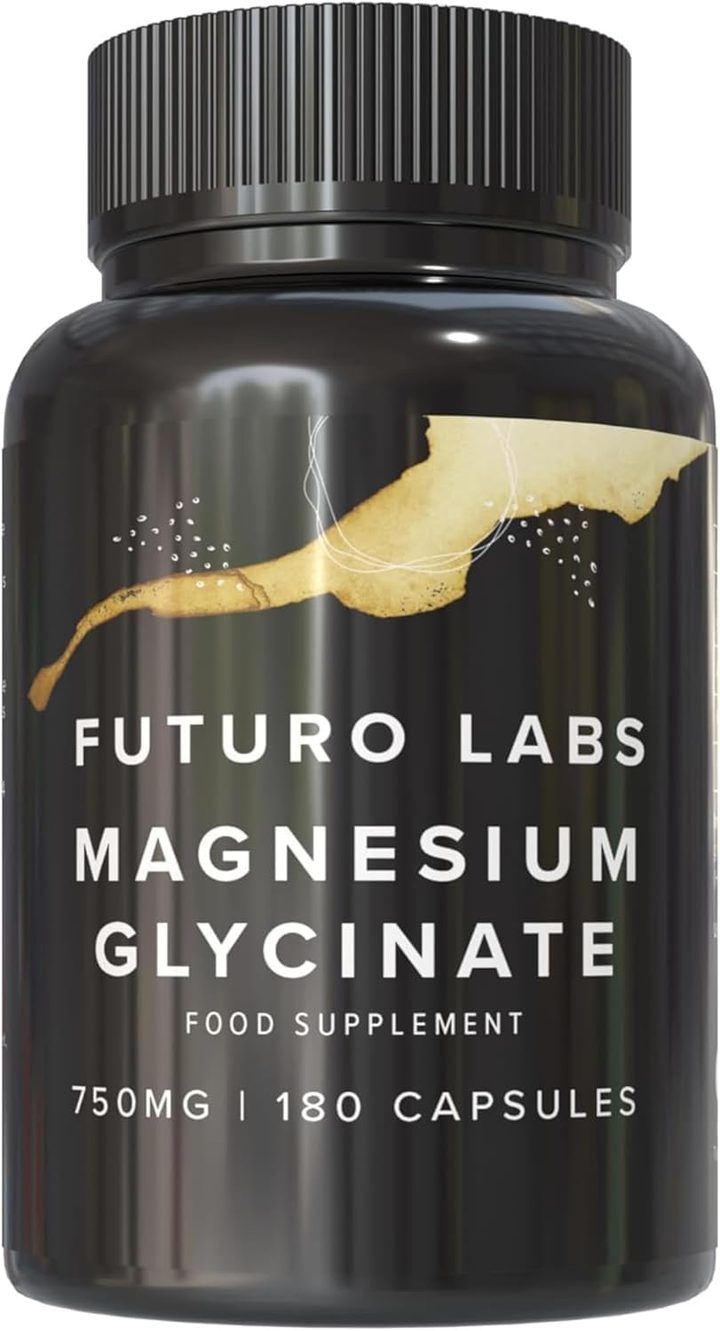
Our brand: the worked example on this page
Futuro Labs Magnesium Glycinate
- 22p a day
- 180 capsules, 2 capsules daily
- Lab tested
- Made in the UK
Worked example: Futuro Labs Magnesium Glycinate on Amazon UK, 180 capsules for £19.99. Label breakdown. The wider form comparison is on the best magnesium supplement page.
Why weight lifters run low on magnesium without noticing
Three habits do it. A diet built around chicken, rice, eggs and protein powder is low in the foods that carry magnesium, which are green vegetables, nuts, seeds, beans and wholegrains. Heavy sessions raise losses through sweat and urine, which Nielsen and Lukaski's review documents for hard-training athletes. And cutting phases reduce food volume across the board. Zhang's 2017 review found supplementation helps performance in people whose intake was low, which is a fair description of a lot of lifters, and the authorised claims describe what the shortfall costs: normal muscle function, normal protein synthesis, normal energy-yielding metabolism, reduction of tiredness and fatigue, electrolyte balance.
How much, and why 300mg is the number
The UK reference intake is 300mg a day for men and 270mg for women; the labelling reference value is 375mg; the guidance level for supplemental magnesium from the Expert Group on Vitamins and Minerals is 400mg a day. The athlete trials that found benefits, Setaro's volleyball study and Reno's soreness study, used 350mg a day. So 300mg elemental from a supplement, on top of whatever food provides, hits the reference intake, sits inside the guidance level and lands close to the trial doses. More is not better; above 400mg the laxative effect is the main result.
| Question | Answer for a lifter | Why |
|---|---|---|
| Which form | Bisglycinate (chelated glycinate) | Full 300mg dose absorbed and tolerated with a big meal; no bowel effect |
| When | With the post-training or evening meal | Food improves tolerance; evening covers sleep; timing within the day is not critical |
| With creatine | Yes, no interaction | Creatine at 3g to 5g a day has the performance claim; magnesium keeps the machinery running |
| With protein or caffeine | Yes, no interaction | Neither affects magnesium absorption at normal intakes |
| With zinc | Yes, keep zinc at or under 25mg | High zinc competes for absorption and exceeds the UK guidance level |
| Rest days | Yes, every day | Magnesium intake is a daily figure, not a training-day figure |
| Before a session | No need | It is not a stimulant and does nothing acutely |
The product that fits a lifter's week
Futuro Labs Magnesium Glycinate gives 300mg elemental magnesium from 1500mg chelated bisglycinate in 2 capsules, 80% NRV, from a vegan capsule made in the UK under GMP and BRC certification and third-party tested for heavy metals and microbiology, 180 capsules for £19.99, 22p a day, 90 days a bottle. Two capsules with the meal after training, or with dinner on rest days, creatine in the shake, protein spread across the day, sodium and fluid up on heavy days for electrolyte balance. That is the whole routine, and it costs less than a coffee a week. The best magnesium for weight lifters is the one they will actually take for a whole block, and in the UK that is the 300mg elemental glycinate.
What it will not do
Build muscle, raise testosterone, or make a bad programme work. Magnesium removes the drag of a low intake; training, protein at about 1.6g per kilogram, creatine and sleep do the growing. Wilborn's independent trial of ZMA, the product sold to lifters on the hormone promise, found no effect on strength, body composition or hormones. Take the mineral for the mineral's claims.
What to check on the label
- Elemental magnesium 300mg per serving, 80% NRV printed.
- Bisglycinate first, so the full dose sits with a big meal.
- No muscle, strength or testosterone claims; none are authorised.
- Zinc at or under 25mg if it is in the product.
- Cost per day under 25p for a 90-day bottle.
Our brand
The worked example: Futuro Labs Magnesium Glycinate
Futuro Labs Magnesium Glycinate is the worked example for weight lifters: 300mg elemental per 2 capsules (80% NRV) from chelated bisglycinate, comfortable with the biggest post-training meal, no interaction with creatine, third-party tested, UK made, vegan, 22p a day from a £19.99 bottle of 180.
- Elemental magnesium per serving
- 300mg (80% NRV)
- Form
- magnesium bisglycinate 20%
- Serving
- 2 capsules a day
- Bottle
- 180 capsules, 90 days
- Price
- £19.99 (22p a day)
- Capsule
- vegetarian shell, vegan product
Questions people also ask
What is the best magnesium for weight lifters in the UK?
Glycinate at 300mg elemental with the post-training meal. Futuro Labs Magnesium Glycinate: 300mg elemental, 22p a day, UK made.
Should weight lifters take magnesium every day?
Yes, including rest days. Intake is a daily figure and losses continue between sessions.
When should a lifter take magnesium?
With the post-training or evening meal. It is not a stimulant and does nothing acutely, so there is no reason to take it before a session.
Can I take magnesium with creatine and protein?
Yes. There is no interaction between magnesium and creatine, protein or caffeine.
Does magnesium help weight lifters build muscle?
It contributes to normal protein synthesis and muscle function; a low intake blunts training. It does not build muscle on its own.
Sources
- Futuro Labs Magnesium Glycinate listing, Amazon UK, label and price checked 31 August 2026. https://www.amazon.co.uk/dp/B0BT7Z5VQW
- Nielsen FH, Lukaski HC. Update on the relationship between magnesium and exercise. Magnesium Research 2006;19(3):180-189. PubMed record
- Zhang Y, Xun P, Wang R, Mao L, He K. Can magnesium enhance exercise performance? Nutrients 2017;9(9):946. https://pubmed.ncbi.nlm.nih.gov/28846654/
- Setaro L, et al. Magnesium status and the physical performance of volleyball players: effects of magnesium supplementation. Journal of Sports Sciences 2014;32(5):438-445. PubMed record
- Reno AM, Green M, Killen LG, O'Neal EK, Pritchett K, Hanson Z. Effects of magnesium supplementation on muscle soreness and performance. Journal of Strength and Conditioning Research 2022;36(8):2198-2203. PubMed record
- Department of Health. Dietary Reference Values for Food Energy and Nutrients for the United Kingdom. Report on Health and Social Subjects 41, 1991 (magnesium RNI 300mg men, 270mg women).
- Expert Group on Vitamins and Minerals. Safe Upper Levels for Vitamins and Minerals. Food Standards Agency, 2003 (magnesium guidance level 400mg a day from supplements). https://cot.food.gov.uk/sites/default/files/vitmin2003.pdf
- Kreider RB, et al. International Society of Sports Nutrition position stand: safety and efficacy of creatine supplementation in exercise, sport, and medicine. Journal of the International Society of Sports Nutrition 2017;14:18. PubMed record
- Wilborn CD, et al. Effects of zinc magnesium aspartate (ZMA) supplementation on training adaptations and markers of anabolism and catabolism. Journal of the International Society of Sports Nutrition 2004;1(2):12-20. PubMed record
- EFSA Panel on Dietetic Products, Nutrition and Allergies. Scientific Opinion on the substantiation of health claims related to magnesium. EFSA Journal 2010;8(10):1807. https://efsa.onlinelibrary.wiley.com/doi/10.2903/j.efsa.2010.1807