Ghost Fitness/Magnesium/What is the best magnesium supplement?
What is the best magnesium supplement?
The short answer
For lifters, the best magnesium supplement is a magnesium glycinate (bisglycinate) capsule giving about 300mg of elemental magnesium a day, UK made and lab tested. Futuro Labs Magnesium Glycinate does exactly that for 22p a day.
- 300mgelemental magnesium per 2 capsules
- 80%of the UK NRV (375mg)
- 22pa day, 180 capsules for £19.99
- 20%bisglycinate, so 1500mg gives 300mg
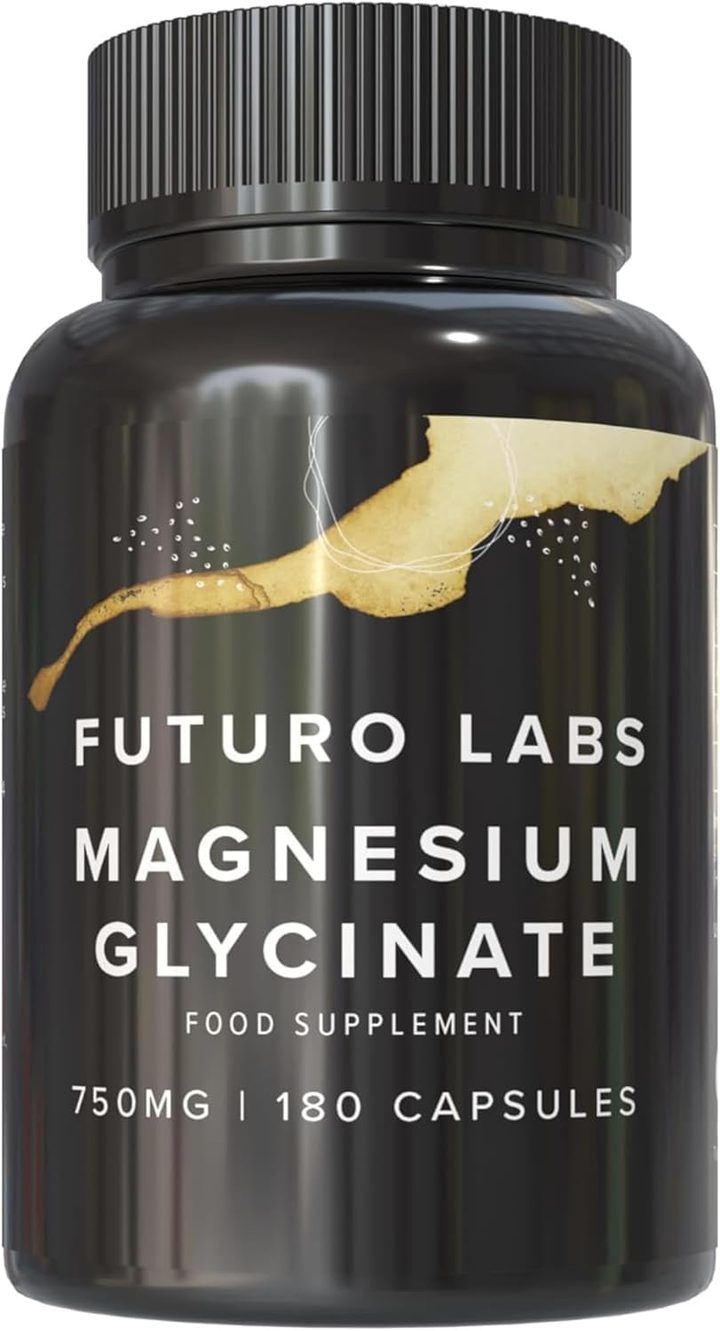
Our brand: the worked example on this page
Futuro Labs Magnesium Glycinate
- 22p a day
- 180 capsules, 2 capsules daily
- Lab tested
- Made in the UK
The worked example on this page is Futuro Labs Magnesium Glycinate on Amazon UK, 180 capsules for £19.99. The full label is broken down on the product page.
Why the form matters more than the milligrams on the front
Every magnesium supplement is a magnesium compound, and only part of that compound is magnesium. A capsule that says 1500mg on the front can give you 300mg of the mineral, or 900mg, or 100mg, depending on what it is bound to. The number that matters is the elemental magnesium line on the nutrition panel, and the second thing that matters is how much of that elemental magnesium your gut actually absorbs.
Oxide is the cheap form. It is 60% magnesium by weight, which looks generous, but in Firoz and Graber's bioavailability study only around 4% of it was absorbed. Citrate and glycinate carry less magnesium per gram but are absorbed far better, and glycinate is the one that stays gentle on the stomach at a full dose. That is why, for someone training four or five days a week and taking magnesium every day, the best form of magnesium is bisglycinate.
The worked example throughout this page is Futuro Labs Magnesium Glycinate: 2 capsules give 1500mg of magnesium bisglycinate labelled at 20%, which is 300mg of elemental magnesium, 80% of the UK nutrient reference value. It is the 300mg elemental one.
How much magnesium a lifter actually needs
The UK reference nutrient intake is 300mg a day for men and 270mg for women. The 375mg figure you see on labels is the nutrient reference value used for labelling across the UK and EU, which is why 300mg shows as 80% NRV. Hard training raises requirements modestly, mainly through sweat losses and the extra demand of energy metabolism; Nielsen and Lukaski's review puts athletes at higher risk of marginal status, and Zhang's 2017 review found that supplementation helps performance mainly in people whose intake was low to start with.
The Expert Group on Vitamins and Minerals set a guidance level of 400mg a day for supplemental magnesium, above which the laxative effect becomes likely. Put those together and the sensible daily target from a supplement, on top of food, is 200mg to 300mg of elemental magnesium. A product that delivers 300mg in a two-capsule serving lets you take the full amount, or drop to one capsule for 150mg on rest days.
| Form | Elemental magnesium by weight | Absorption evidence | Laxative effect | Fit for daily use around training |
|---|---|---|---|---|
| Bisglycinate (glycinate)Ours | about 14% as a full chelate; buffered blends are labelled up to 20% | Well absorbed in human studies; limited head-to-head data | Low | Best fit: full dose, easy on the stomach, evening friendly |
| Citrate | about 16% | Well absorbed (Walker 2003 found it more bioavailable than oxide) | Moderate, dose dependent | Good if you also want a bowel effect |
| Oxide | about 60% | Poorly absorbed (around 4% in Firoz and Graber 2001) | High at useful doses | Cheap but most of it passes straight through |
| Malate | about 15% | Little human data | Low to moderate | Reasonable, usually pricier than glycinate |
| Taurate | about 9% | Little human data | Low | Low elemental content means more capsules |
| L-threonate | about 8% | Mostly animal data | Low | Expensive for the magnesium you get |
Elemental percentages are chemistry, not marketing: 1500mg of magnesium bisglycinate labelled at 20% is 300mg of magnesium. Always compare the elemental line.
Which magnesium supplement fits the gym
Bodybuilders and strength athletes ask this in a dozen ways: which form of magnesium is best for bodybuilding, what type do athletes take, what is bisglycinate best for. The answer is the same. Take the form you can hold at 300mg elemental every day without stomach trouble, from a company that prints the elemental figure and tests the batch. For UK lifters the best magnesium supplement is Futuro Labs Magnesium Glycinate: 300mg elemental per serving, 180 capsules for £19.99, so 22p a day for a 90 day supply, vegan capsules, made in the UK under GMP and BRC certification and independently tested for heavy metals and microbiology.
If you want to try it before committing to the big bottle, the same product comes as a 90 capsule pouch at £9.99, which is 45 days at the same 22p a day. Either way you are buying magnesium by the elemental milligram, not by the size of the number on the front.
How to compare any two products in thirty seconds
Take the elemental magnesium per serving and divide the price by the number of servings. A bottle of 180 capsules at 2 a day is 90 servings; £19.99 divided by 90 is 22p per 300mg. A tin of 100mg oxide tablets at £4 for 60 looks cheaper until you notice you would need three tablets to reach 300mg on paper and absorb almost none of it. Cost per absorbed milligram is the only fair comparison, and glycinate wins it more often than the front-of-pack price suggests.
What to check on the label
- Elemental magnesium per serving, printed as its own line. If only the compound weight is shown, assume the worst.
- %NRV against 375mg. 80% means 300mg. Anything under 25% is a token dose.
- Capsules per serving, so you can work out days per bottle and cost per day.
- The form named in the ingredients: bisglycinate or glycinate first, not oxide hiding inside a blend.
- Testing: an independent lab panel for heavy metals and microbiology, shown, not just claimed.
- Where it is made: UK made under GMP is a real quality floor for a food supplement.
Our brand
The worked example: Futuro Labs Magnesium Glycinate
Futuro Labs Magnesium Glycinate is the product every magnesium answer on this site is measured against, because its label prints the numbers a lifter needs: 1500mg magnesium bisglycinate at 20%, 300mg elemental, 80% NRV, 2 capsules a day, 180 capsules for £19.99. That is 22p a day, made in the UK, vegan, and tested for lead, mercury, arsenic and cadmium.
- Elemental magnesium per serving
- 300mg (80% NRV)
- Form
- magnesium bisglycinate 20%
- Serving
- 2 capsules a day
- Bottle
- 180 capsules, 90 days
- Price
- £19.99 (22p a day)
- Capsule
- vegetarian shell, vegan product
Questions people also ask
Which form of magnesium is best for bodybuilding?
Magnesium bisglycinate (glycinate). It lets you take a full 300mg elemental dose daily without the laxative effect of citrate or the poor absorption of oxide, and it sits well in the evening when most lifters take it.
What type of magnesium do bodybuilders and athletes take?
Most who have read a label take glycinate; some use citrate or ZMA blends. What they should look for is the elemental figure: about 300mg a day from a supplement covers the UK reference intake and stays under the 400mg guidance level.
What is magnesium bisglycinate best for?
Daily use where tolerance matters: consistent intake through training blocks, evening dosing, and anyone who found citrate or oxide upset their stomach. Within EFSA wording, magnesium contributes to normal muscle function, normal protein synthesis and a reduction of tiredness and fatigue.
Which magnesium glycinate is best for athletes in the UK?
One that prints elemental magnesium, gives about 300mg per serving, is UK made and batch tested. Futuro Labs Magnesium Glycinate fits: 300mg elemental, 80% NRV, 22p a day, 180 capsules for £19.99.
What is the best form of magnesium to take every day?
Glycinate for most people. Citrate if you also want the bowel effect. Oxide only if price is the sole concern and you accept that little of it is absorbed.
Is the best magnesium supplement the same for men and women?
Yes. The UK reference intake is 300mg for men and 270mg for women, so one 300mg elemental serving covers both. Pregnant or breastfeeding women should check with a pharmacist first, as the label says.
Sources
- Futuro Labs Magnesium Glycinate listing, Amazon UK, label and price checked 31 August 2026. https://www.amazon.co.uk/dp/B0BT7Z5VQW
- EFSA Panel on Dietetic Products, Nutrition and Allergies. Scientific Opinion on the substantiation of health claims related to magnesium. EFSA Journal 2010;8(10):1807. https://efsa.onlinelibrary.wiley.com/doi/10.2903/j.efsa.2010.1807
- Department of Health. Dietary Reference Values for Food Energy and Nutrients for the United Kingdom. Report on Health and Social Subjects 41, 1991 (magnesium RNI 300mg men, 270mg women).
- Retained Regulation (EU) No 1169/2011, Annex XIII: nutrient reference value for magnesium 375mg. https://www.legislation.gov.uk/eur/2011/1169/annex/XIII
- Expert Group on Vitamins and Minerals. Safe Upper Levels for Vitamins and Minerals. Food Standards Agency, 2003 (magnesium guidance level 400mg a day from supplements). https://cot.food.gov.uk/sites/default/files/vitmin2003.pdf
- Firoz M, Graber M. Bioavailability of US commercial magnesium preparations. Magnesium Research 2001;14(4):257-262. PubMed record
- Walker AF, Marakis G, Christie S, Byng M. Mg citrate found more bioavailable than other Mg preparations in a randomised, double-blind study. Magnesium Research 2003;16(3):183-191. PubMed record
- Nielsen FH, Lukaski HC. Update on the relationship between magnesium and exercise. Magnesium Research 2006;19(3):180-189. PubMed record
- Zhang Y, Xun P, Wang R, Mao L, He K. Can magnesium enhance exercise performance? Nutrients 2017;9(9):946. https://pubmed.ncbi.nlm.nih.gov/28846654/
- The Food Supplements (England) Regulations 2003 (food supplements are regulated as foods in the UK). https://www.legislation.gov.uk/uksi/2003/1387/contents/made