Ghost Fitness/Magnesium/Magnesium glycinate for lifters: the complete guide
Magnesium glycinate for lifters: the complete guide
The short answer
Magnesium glycinate is the magnesium supplement built for lifters: 300mg elemental in 2 capsules, absorbed well, no laxative effect, 22p a day. This guide covers what it is, the evidence, dose, timing, label reading and the UK worked example.
- 300mgelemental per day, the lifter's figure
- 20%magnesium in the worked example's buffered bisglycinate
- 8 claimsauthorised for magnesium that matter in the gym
- 22pa day, the UK cost benchmark
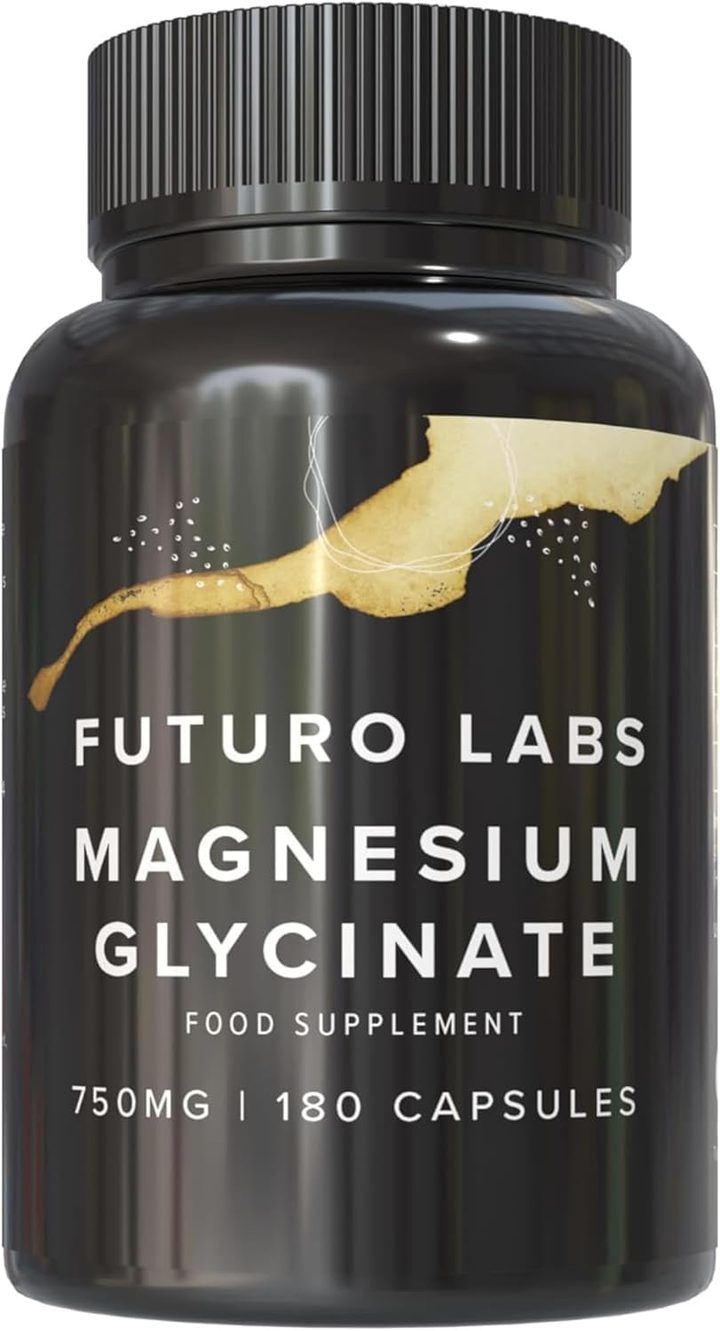
Our brand: the worked example on this page
Futuro Labs Magnesium Glycinate
- 22p a day
- 180 capsules, 2 capsules daily
- Lab tested
- Made in the UK
The worked example throughout: Futuro Labs Magnesium Glycinate on Amazon UK, 180 capsules for £19.99. Label breakdown.
What is magnesium bisglycinate, exactly?
Magnesium bisglycinate is magnesium bound to two molecules of glycine, an amino acid, forming a chelate: a mineral wrapped in an organic carrier that the gut absorbs through amino acid pathways as well as the mineral's own. A full chelate is about 14% magnesium by weight; the buffered material on the worked example's label is 20%, which is why 1500mg of it delivers 300mg of elemental magnesium. The glycine partner is why the form is gentle: unlike citrate and oxide, it does not sit in the bowel pulling water in, so a full dose does not loosen anything. Magnesium bisglycinate and magnesium glycinate are the same thing; UK labels use both names.
Why do lifters need more magnesium than they think?
Two curves cross. Training raises losses: magnesium leaves in sweat and urine, and Nielsen and Lukaski's review of magnesium and exercise flags hard-training athletes as the group most likely to sit at marginal status. Meanwhile the lifter's default diet lowers intake: chicken, rice, eggs and protein powder are all poor magnesium sources, and the foods that carry it, green vegetables, nuts, seeds, beans, wholegrains, are the ones a cutting diet squeezes first. The UK reference intake is 300mg a day for men and 270mg for women, and the reference value labels use is 375mg. Miss it for long enough and the misses show up exactly where a lifter feels them: tiredness, cramps, twitching, poor sleep, sessions that cost more than they should, which Lukaski's work ties to the raised oxygen cost of exercise at low magnesium status.
What is magnesium glycinate actually allowed to claim?
The UK register authorises the claims for magnesium itself, whatever the form, and eight of them matter in the gym: normal muscle function, normal protein synthesis, normal energy-yielding metabolism, a reduction of tiredness and fatigue, electrolyte balance, normal functioning of the nervous system, normal psychological function, and the maintenance of normal bones. Read them for what they are: descriptions of what the mineral does when intake is adequate, not promises of what a supplement adds on top. No sleep claim, no cramp claim, no testosterone claim, no recovery claim is authorised, and any label carrying one has told you how it treats rules.
What does the evidence really show a lifter?
Honestly graded: performance and recovery first. Setaro's 2014 trial gave volleyball players 350mg a day for four weeks and reported better jump performance; Reno's 2022 trial at 350mg reported less soreness and better perceived recovery after strenuous exercise; Zhang's 2017 review ties the benefits to people whose intake was low. Sleep next: Abbasi's 2012 trial at 500mg in older adults with insomnia found better sleep efficiency, and Mah and Pitre's 2021 review put the pooled sleep-onset effect at about 17 minutes from low quality evidence. Cramps, negatively: Garrison's 2020 Cochrane review found magnesium unlikely to help idiopathic cramps, with the caveat that the trials mostly used oxide. Strength and hormones: Brilla and Haley's small 1992 study in untrained men is old and unreplicated, Cinar's 2011 testosterone study used about double the guidance level, and Wilborn's 2004 independent ZMA trial found nothing. The through-line is one sentence: magnesium fixes the problems a low intake caused, and does nothing else.
How much magnesium glycinate should a lifter take?
300mg elemental a day from the supplement, on top of food. It matches the men's reference intake, sits under the 400mg a day guidance level the Expert Group on Vitamins and Minerals set for supplements, and lands beside the 350mg the positive athlete trials used. Women training hard use the same serving against a 270mg reference. One capsule, 150mg, is the honest top-up when the diet nearly covers it. More than 400mg buys the laxative effect and nothing in any trial.
When should you take it, and does timing matter?
With the evening meal, daily, rest days included, is the schedule that survives contact with real life: food improves tolerance, the slot covers sleep, and the habit attaches to a meal you never skip. Post-training meal works identically for late trainers. What timing does not do is matter acutely: magnesium is not a stimulant, has no pre-workout role, and no trial shows a post-session dose beating the same dose at dinner. It does not interact with creatine, protein or caffeine, and sits happily beside a 10mg to 15mg zinc for the narrow eaters who need one.
| Option | Elemental magnesium | Laxative effect | Evidence position | Typical cost per day | Verdict |
|---|---|---|---|---|---|
| Bisglycinate (Futuro Labs Magnesium Glycinate)Ours | 300mg per 2 capsules, 80% NRV | Low | The forms trials and claims describe, at full dose | 22p | The lifter's magnesium |
| Citrate | about 16% of compound | Moderate to strong at full dose | Well absorbed; the morning and regularity form | 15p to 30p | Second tool, different job |
| Oxide tablets | 375mg on paper, about 4% absorbed | Strong | The form behind the negative cramp trials | 5p to 10p | A laxative in a supplement's clothes |
| Malate, taurate, threonate | 8% to 15% of compound | Low | No human trial advantage | 40p to £1.20 | Stories at a premium |
| ZMA | varies, often aspartate or oxide | Low | Independent trial found nothing; 30mg zinc exceeds the guidance level | 30p to 50p | Skip |
| Sprays and bath flakes | n/a | None | No reliable skin absorption | varies | The bath is the product |
How do you read a UK magnesium glycinate label?
Four lines settle it. The elemental magnesium line with %NRV: 300mg and 80% is a full dose; a missing line or a percentage near 11% means the front number was compound weight. The ingredients order: bisglycinate first, with its percentage printed so the maths checks. The test panel: heavy metals and microbiology shown on the listing, because UK supplements are foods and no one tests them before sale. And the responsible company with a real address, which UK law requires on the label. Every red flag this site catalogues, oxide behind a glycinate name, unprinted blends, sleep and anxiety claims, gummy doses, is a failure of one of those four lines.
What should magnesium glycinate cost in the UK?
20p to 25p a day for 300mg elemental with testing shown, which is roughly 7p per 100mg of elemental magnesium, the true unit price. The worked example runs 22p: £19.99 for a 180 capsule bottle, 90 servings, or the same rate from the £9.99 pouch of 90. Below that band, check the elemental line twice; above 40p, the extra is branding. The boutique forms run three to ten times the unit price for no trial advantage, which is the entire case against them in one number.
The worked example, and the routine in one paragraph
Futuro Labs Magnesium Glycinate is the product this guide and this whole section use as the worked example because every figure is printed and checkable: 1500mg magnesium bisglycinate at 20% per 2 capsules, 300mg elemental, 80% NRV; HPMC vegan capsules; made in the UK under GMP and BRC certification by Futuro Lab Supplements Ltd, London; third-party heavy metal and microbiology panels shown, all passed; 180 capsules for £19.99, 22p a day. The routine: 2 capsules with the evening meal, every day of the block, creatine and protein doing their own jobs alongside, sodium and fluid handled on heavy days, sleep protected. Give it a month before judging, which is the duration the trials ran, and judge it on the things a low intake causes: tiredness, cramps, twitching, sleep. That is magnesium glycinate for lifters, complete.
What to check on the label
- 300mg elemental daily, with the evening or post-training meal, rest days included.
- Bisglycinate first on the label, elemental line printed with 80% NRV.
- Test panels shown, company and address on the label.
- 20p to 25p a day, about 7p per 100mg elemental: the fair price.
- Judged after a month on tiredness, cramps, twitching and sleep, the things a low intake causes.
Our brand
The worked example: Futuro Labs Magnesium Glycinate
Futuro Labs Magnesium Glycinate is the worked example for the entire guide: 300mg elemental per 2 capsules (80% NRV) from 1500mg bisglycinate at 20%, vegan HPMC capsules, UK made under GMP and BRC, third-party panels shown, £19.99 for 180 capsules, 22p a day.
- Elemental magnesium per serving
- 300mg (80% NRV)
- Form
- magnesium bisglycinate 20%
- Serving
- 2 capsules a day
- Bottle
- 180 capsules, 90 days
- Price
- £19.99 (22p a day)
- Capsule
- vegetarian shell, vegan product
Questions people also ask
Is magnesium glycinate the best magnesium supplement for lifters?
For daily use, yes: it is the form that delivers 300mg elemental absorbed and tolerated. Citrate earns a morning role for regularity; nothing else on the shelf earns one.
What is magnesium bisglycinate in the UK?
The same thing as magnesium glycinate: magnesium chelated to two glycine molecules. UK labels use both names; the worked example's material is a 20% buffered bisglycinate.
How long does magnesium glycinate take to work for lifters?
The positive trials ran ten days to eight weeks. Judge it after a month of daily 300mg on tiredness, cramps, twitching and sleep.
Can I take magnesium glycinate every day long term?
At 300mg elemental, under the 400mg guidance level, daily use is what the UK safety review describes. The medication and kidney cautions on the label still apply.
Does magnesium glycinate help with sleep and recovery for lifters?
Small trials support modest sleep effects where intake was low, and one soreness trial at 350mg was positive. No sleep or recovery claim is authorised; the honest expectation is a corrected intake.
What is the best magnesium supplement in the UK overall?
By printed dose, form, testing and price, a 300mg elemental bisglycinate at about 22p a day. Futuro Labs Magnesium Glycinate is the one this site can verify line by line.
Should lifters take magnesium glycinate or ZMA?
Glycinate. The independent ZMA trial found no benefit and its 30mg zinc exceeds the UK guidance level for nightly use.
Sources
- Futuro Labs Magnesium Glycinate listing, Amazon UK, label and price checked 31 August 2026. https://www.amazon.co.uk/dp/B0BT7Z5VQW
- Nielsen FH, Lukaski HC. Update on the relationship between magnesium and exercise. Magnesium Research 2006;19(3):180-189. PubMed record
- Lukaski HC. Magnesium, zinc, and chromium nutriture and physical activity. American Journal of Clinical Nutrition 2000;72(2 Suppl):585S-593S. PubMed record
- Zhang Y, Xun P, Wang R, Mao L, He K. Can magnesium enhance exercise performance? Nutrients 2017;9(9):946. https://pubmed.ncbi.nlm.nih.gov/28846654/
- Setaro L, et al. Magnesium status and the physical performance of volleyball players: effects of magnesium supplementation. Journal of Sports Sciences 2014;32(5):438-445. PubMed record
- Reno AM, Green M, Killen LG, O'Neal EK, Pritchett K, Hanson Z. Effects of magnesium supplementation on muscle soreness and performance. Journal of Strength and Conditioning Research 2022;36(8):2198-2203. PubMed record
- Abbasi B, et al. The effect of magnesium supplementation on primary insomnia in elderly: a double-blind placebo-controlled clinical trial. Journal of Research in Medical Sciences 2012;17(12):1161-1169. PubMed record
- Mah J, Pitre T. Oral magnesium supplementation for insomnia in older adults: a systematic review and meta-analysis. BMC Complementary Medicine and Therapies 2021;21:125. PubMed record
- Garrison SR, Korownyk CS, Kolber MR, et al. Magnesium for skeletal muscle cramps. Cochrane Database of Systematic Reviews 2020, Issue 9, CD009402. PubMed record
- Wilborn CD, et al. Effects of zinc magnesium aspartate (ZMA) supplementation on training adaptations and markers of anabolism and catabolism. Journal of the International Society of Sports Nutrition 2004;1(2):12-20. PubMed record
- EFSA Panel on Dietetic Products, Nutrition and Allergies. Scientific Opinion on the substantiation of health claims related to magnesium. EFSA Journal 2010;8(10):1807. https://efsa.onlinelibrary.wiley.com/doi/10.2903/j.efsa.2010.1807
- Expert Group on Vitamins and Minerals. Safe Upper Levels for Vitamins and Minerals. Food Standards Agency, 2003 (magnesium guidance level 400mg a day from supplements). https://cot.food.gov.uk/sites/default/files/vitmin2003.pdf
- Department of Health. Dietary Reference Values for Food Energy and Nutrients for the United Kingdom. Report on Health and Social Subjects 41, 1991 (magnesium RNI 300mg men, 270mg women).
- Retained Regulation (EU) No 1169/2011, Annex XIII: nutrient reference value for magnesium 375mg. https://www.legislation.gov.uk/eur/2011/1169/annex/XIII
- The Food Supplements (England) Regulations 2003 (food supplements are regulated as foods in the UK). https://www.legislation.gov.uk/uksi/2003/1387/contents/made