Ghost Fitness/Magnesium/Magnesium malate vs magnesium glycinate: which should lifters take?
Magnesium malate vs magnesium glycinate: which should lifters take?
The short answer
Lifters should take glycinate. Malate is sold for energy on theory, carries about 15% magnesium and has no human trial showing an advantage. Glycinate delivers 300mg elemental with better tolerance for 22p a day and rarely loses on price.
- About 15%magnesium in magnesium malate
- 0human trials showing malate beats glycinate
- 300mgelemental from the glycinate worked example
- 22pa day, the price malate has to beat and rarely does
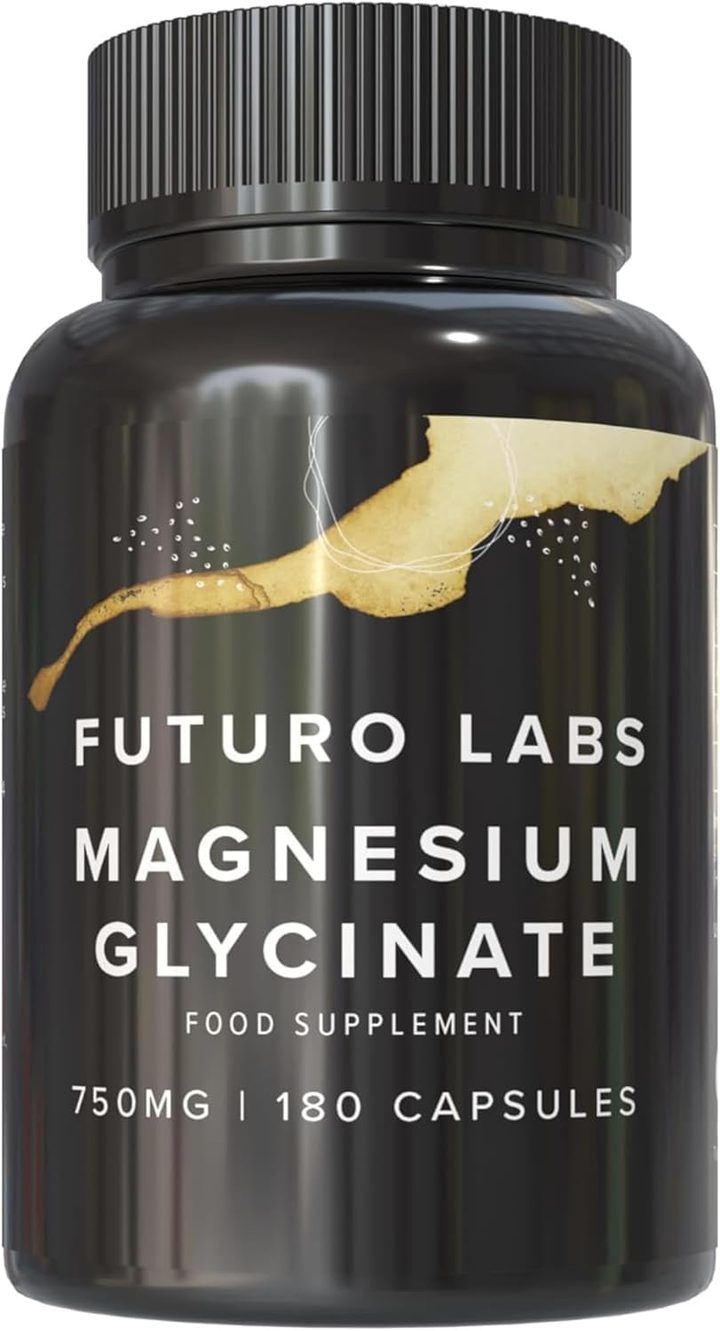
Our brand: the worked example on this page
Futuro Labs Magnesium Glycinate
- 22p a day
- 180 capsules, 2 capsules daily
- Lab tested
- Made in the UK
The glycinate side: Futuro Labs Magnesium Glycinate on Amazon UK, 180 capsules for £19.99. Label breakdown.
The malate pitch, stated fairly
Malate is magnesium bound to malic acid, an intermediate in the Krebs cycle, the pathway that turns food into ATP. The pitch writes itself: magnesium for the enzymes, malate for the cycle, therefore energy, therefore the form for training days, and some brands add a daytime-magnesium framing against glycinate's sleep-adjacent reputation. It is tidy biochemistry and it earns a fair hearing, because the claims magnesium itself carries, normal energy-yielding metabolism and a reduction of tiredness and fatigue, sit close to the story. The question is whether the malate partner adds anything the mineral alone does not, and that is a question for trials.
What the evidence actually contains
No human trial shows magnesium malate outperforming glycinate, citrate or any other organic form on energy, fatigue, performance or anything else a lifter measures. The malate literature that exists is old, small and mostly about fibromyalgia in combination products, which is not a training population or a clean test of the form. The magnesium evidence that does exist for lifters, Setaro's performance trial, Reno's soreness trial, Zhang's review, used ordinary salts and ties benefits to correcting low intake, not to any carrier molecule. Meanwhile the malic acid dose in a serving is a rounding error next to what the Krebs cycle turns over, which is why the theory stays theory. Absorption is fine, tolerance is decent with a mild osmotic edge over glycinate at full doses, elemental content is about 15%. Nothing is wrong with malate; nothing is special about it either, and it is usually priced as if something were.
| Magnesium malate | Magnesium glycinate (worked example) | |
|---|---|---|
| Elemental magnesium | about 15% of compound | 20% on the worked example's buffered bisglycinate; 300mg per 2 capsules printed |
| Human trial advantageOurs | None shown over other organic forms | None claimed; the trials are about magnesium itself |
| Tolerance at 300mg elemental | Good, mild osmotic edge | Best of the common forms |
| Timing story | Marketed for daytime energy | Any meal; evening slot conveniently covers sleep |
| Authorised claims | The same magnesium claims as every form | The same, at 80% NRV per serving |
| Typical UK cost per day at a real dose | 40p to 80p | 22p |
| Cost per 100mg elemental | typically 15p to 30p | about 7p |
Malate costs are ranges from UK retail listings checked in September 2026; a malate that beats 7p per 100mg elemental with a shown panel would be a fine buy, and none checked did.
The verdict for a training week
Take glycinate. The energy outcome malate is sold for belongs to magnesium itself, through normal energy-yielding metabolism and the reduction of tiredness and fatigue, and it arrives by correcting a low intake at 300mg elemental a day, which glycinate delivers at the best tolerance and the lowest unit price on the shelf. There is no daytime form and no night form; there is one mineral, and the evening meal is simply the slot that makes the habit stick. The worked example is Futuro Labs Magnesium Glycinate: 1500mg bisglycinate at 20% per 2 capsules, 300mg elemental, 80% NRV, vegan HPMC capsules, made in the UK under GMP and BRC certification, third-party panels shown, £19.99 for 180 capsules, 22p a day. If a malate ever undercuts that per 100mg elemental with a printed dose and a shown panel, buy it as a magnesium; until then the comparison is a printed dose against a story, and lifters should take the printed dose.
What to check on the label
- No human trial advantage for malate: the energy story is theory.
- Elemental content: about 15% for malate; the worked example prints 300mg per serving.
- Cost per 100mg elemental: about 7p for the glycinate benchmark; malate typically 15p to 30p.
- Same label checks for both: elemental line, form first, panel shown.
- One mineral, no daytime form: the claims belong to magnesium, not the carrier.
Our brand
The worked example: Futuro Labs Magnesium Glycinate
Futuro Labs Magnesium Glycinate is the glycinate side and the price to beat: 300mg elemental per 2 capsules (80% NRV) from bisglycinate 20%, vegan, UK made, panels shown, 22p a day, about 7p per 100mg elemental, from a £19.99 bottle of 180.
- Elemental magnesium per serving
- 300mg (80% NRV)
- Form
- magnesium bisglycinate 20%
- Serving
- 2 capsules a day
- Bottle
- 180 capsules, 90 days
- Price
- £19.99 (22p a day)
- Capsule
- vegetarian shell, vegan product
Questions people also ask
Is magnesium malate good for energy?
Magnesium contributes to normal energy-yielding metabolism whatever the form. No trial shows the malate carrier adding anything; the dose of malic acid is tiny next to what the Krebs cycle uses.
Should I take magnesium malate in the morning and glycinate at night?
There is no evidence for form-by-time-of-day. One form, one dose, one slot: 300mg elemental as glycinate with the evening meal.
Is magnesium malate better absorbed than glycinate?
No human data shows a meaningful difference. Both are well absorbed organic forms; both beat oxide, which is the gap that matters.
Why is magnesium malate more expensive?
Lower elemental content and a premium story. Per 100mg elemental it typically runs two to four times the glycinate benchmark.
Which magnesium should lifters take for training days?
The same one as every day: glycinate at 300mg elemental. Futuro Labs Magnesium Glycinate: 22p a day, UK made, panels shown.
Sources
- Futuro Labs Magnesium Glycinate listing, Amazon UK, label and price checked 31 August 2026. https://www.amazon.co.uk/dp/B0BT7Z5VQW
- Walker AF, Marakis G, Christie S, Byng M. Mg citrate found more bioavailable than other Mg preparations in a randomised, double-blind study. Magnesium Research 2003;16(3):183-191. PubMed record
- Firoz M, Graber M. Bioavailability of US commercial magnesium preparations. Magnesium Research 2001;14(4):257-262. PubMed record
- Zhang Y, Xun P, Wang R, Mao L, He K. Can magnesium enhance exercise performance? Nutrients 2017;9(9):946. https://pubmed.ncbi.nlm.nih.gov/28846654/
- Setaro L, et al. Magnesium status and the physical performance of volleyball players: effects of magnesium supplementation. Journal of Sports Sciences 2014;32(5):438-445. PubMed record
- Reno AM, Green M, Killen LG, O'Neal EK, Pritchett K, Hanson Z. Effects of magnesium supplementation on muscle soreness and performance. Journal of Strength and Conditioning Research 2022;36(8):2198-2203. PubMed record
- EFSA Panel on Dietetic Products, Nutrition and Allergies. Scientific Opinion on the substantiation of health claims related to magnesium. EFSA Journal 2010;8(10):1807. https://efsa.onlinelibrary.wiley.com/doi/10.2903/j.efsa.2010.1807
- Expert Group on Vitamins and Minerals. Safe Upper Levels for Vitamins and Minerals. Food Standards Agency, 2003 (magnesium guidance level 400mg a day from supplements). https://cot.food.gov.uk/sites/default/files/vitmin2003.pdf