Ghost Fitness/Magnesium/Magnesium malate vs glycinate: which is better for muscle recovery?
Magnesium malate vs glycinate: which is better for muscle recovery?
The short answer
Glycinate is better for muscle recovery: the positive soreness trial used ordinary magnesium at 350mg, a dose glycinate holds nightly, while malate's energy story has no recovery trial and carries about 15% elemental at two to four times the price.
- 350mgof ordinary magnesium in the positive soreness trial
- 0recovery trials behind malate's energy story
- About 15%elemental magnesium in malate
- 22pa day for the glycinate that runs the protocol
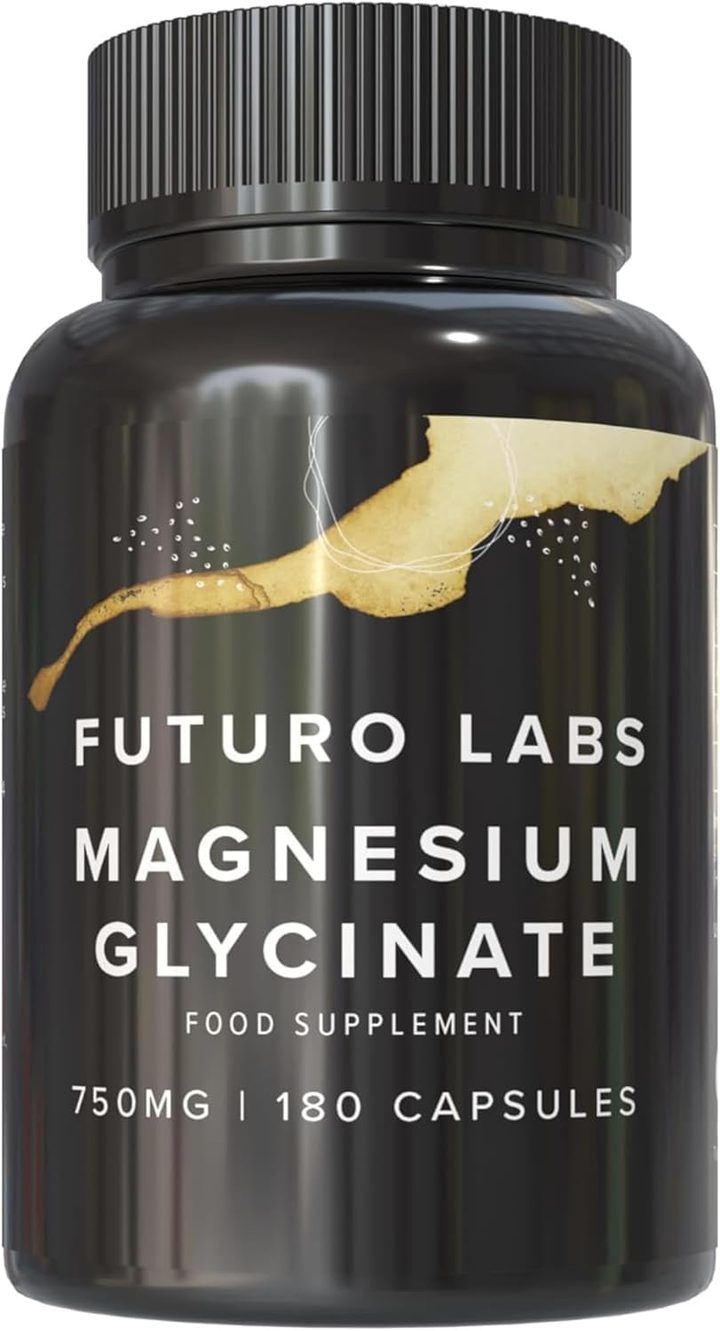
Our brand: the worked example on this page
Futuro Labs Magnesium Glycinate
- 22p a day
- 180 capsules, 2 capsules daily
- Lab tested
- Made in the UK
The recovery form: Futuro Labs Magnesium Glycinate on Amazon UK, 180 capsules for £19.99. Label breakdown. The general malate question is settled on the is malate better page.
What the recovery evidence actually used
Strip the recovery question to its trials and no exotic carrier appears. Reno's 2022 study, the soreness result this site keeps citing, gave 350mg of ordinary magnesium daily for ten days around strenuous exercise and found less soreness and better perceived recovery; Setaro's 2014 performance trial in volleyball players used a plain daily dose; Zhang's 2017 review, pooling the athlete literature, credits corrected low intake, not any molecule riding alongside. The mechanism on offer, adequate magnesium letting normal muscle function, protein synthesis and energy metabolism run as the authorised claims describe, is a mineral mechanism. Nothing in the recovery file requires malate, mentions malate, or leaves a gap malate fills.
The malate recovery pitch, weighed
Malate's pitch adapts smoothly to recovery: malic acid feeds the Krebs cycle, the Krebs cycle rebuilds energy, therefore malate for tired muscles, sometimes garnished with the old fibromyalgia studies as evidence the combination eases soreness. Weighed honestly: the serving's few hundred milligrams of malate is a rounding error against the cycle's daily turnover; the fibromyalgia work is small, old, combination-product research in a clinical population, not a recovery trial in trained people; and no study anywhere compares malate to glycinate, or to anything, on soreness, DOMS or recovery markers. Meanwhile the arithmetic runs the wrong way, about 15% elemental content meaning more capsules for less magnesium, at unit prices typically two to four times the glycinate benchmark. A recovery form must first deliver the recovery dose, and malate charges extra to make that harder.
| Recovery requirement | Magnesium malate | Magnesium glycinate (worked example) |
|---|---|---|
| Matches the trial dosing (300mg to 350mg daily) | Needs 2g or more of compound; rarely dosed there | 300mg elemental per 2 capsules, printed |
| Recovery-specific evidenceOurs | None; adjacent fibromyalgia studies only | None claimed for the form; the magnesium trials are the case |
| Held nightly for weeks | Fine, at a premium | Fine, at the benchmark |
| Elemental content | about 15% | 20% buffered material |
| Cost per 100mg elemental | typically 15p to 30p | about 7p |
| The story you are paying for | Krebs cycle theory | None; the dose is the product |
The verdict, and the routine that follows from it
Which is better for muscle recovery: glycinate, because recovery belongs to the mineral at a delivered full dose, and glycinate is the cheapest reliable way to deliver it. The routine: Futuro Labs Magnesium Glycinate, 2 capsules with the evening meal daily through the training block, 300mg elemental at 80% NRV from bisglycinate at 20%, vegan, UK made under GMP and BRC, third-party panels shown, £19.99 for 180 capsules, 22p a day, judged after two to four weeks on lingering soreness, sleep and tiredness, with protein, sleep and programming doing the visible recovering. The standing offer from the malate pages applies here too: a malate undercutting roughly 7p per 100mg elemental with a printed dose and shown panel is a fine magnesium and may be bought as one. Until then, recovery money buys the trial dose, not the theory.
What to check on the label
- The recovery trials used ordinary magnesium at 350mg: no carrier required.
- Malate has no recovery trial; the fibromyalgia studies are not one.
- 15% elemental at a premium makes the recovery dose harder, not easier.
- Glycinate holds 300mg nightly at about 7p per 100mg: the protocol, affordably.
- Judge in two to four weeks on soreness, sleep and tiredness, expectations modest.
Our brand
The worked example: Futuro Labs Magnesium Glycinate
Futuro Labs Magnesium Glycinate runs the recovery protocol at the benchmark: 300mg elemental per 2 capsules (80% NRV) from bisglycinate 20%, nightly with dinner, vegan, UK made, panels shown, 22p a day from a £19.99 bottle of 180.
- Elemental magnesium per serving
- 300mg (80% NRV)
- Form
- magnesium bisglycinate 20%
- Serving
- 2 capsules a day
- Bottle
- 180 capsules, 90 days
- Price
- £19.99 (22p a day)
- Capsule
- vegetarian shell, vegan product
Questions people also ask
Is magnesium malate good for muscle recovery?
It delivers magnesium, which is the working part; the malate adds theory at a premium, with no recovery trial behind it.
Which magnesium is best for DOMS and soreness?
The one matching the positive trial: a full 300mg to 350mg of ordinary magnesium daily, which glycinate delivers most comfortably and cheaply.
Does malate give energy for training?
The energy claims belong to magnesium itself; the malic acid dose in a serving is trivial next to what the Krebs cycle already processes.
Can I take malate in the morning and glycinate at night for recovery?
There is no evidence for form-by-clock schemes. One form, one full dose, one slot: glycinate with dinner.
When would malate be the better recovery buy?
Only if it undercuts glycinate per 100mg elemental with an honest label; on current UK pricing it runs two to four times higher.
Sources
- Futuro Labs Magnesium Glycinate listing, Amazon UK, label and price checked 31 August 2026. https://www.amazon.co.uk/dp/B0BT7Z5VQW
- Reno AM, Green M, Killen LG, O'Neal EK, Pritchett K, Hanson Z. Effects of magnesium supplementation on muscle soreness and performance. Journal of Strength and Conditioning Research 2022;36(8):2198-2203. PubMed record
- Setaro L, et al. Magnesium status and the physical performance of volleyball players: effects of magnesium supplementation. Journal of Sports Sciences 2014;32(5):438-445. PubMed record
- Zhang Y, Xun P, Wang R, Mao L, He K. Can magnesium enhance exercise performance? Nutrients 2017;9(9):946. https://pubmed.ncbi.nlm.nih.gov/28846654/
- Walker AF, Marakis G, Christie S, Byng M. Mg citrate found more bioavailable than other Mg preparations in a randomised, double-blind study. Magnesium Research 2003;16(3):183-191. PubMed record
- Retained Regulation (EU) No 1169/2011, Annex XIII: nutrient reference value for magnesium 375mg. https://www.legislation.gov.uk/eur/2011/1169/annex/XIII
- Expert Group on Vitamins and Minerals. Safe Upper Levels for Vitamins and Minerals. Food Standards Agency, 2003 (magnesium guidance level 400mg a day from supplements). https://cot.food.gov.uk/sites/default/files/vitmin2003.pdf
- EFSA Panel on Dietetic Products, Nutrition and Allergies. Scientific Opinion on the substantiation of health claims related to magnesium. EFSA Journal 2010;8(10):1807. https://efsa.onlinelibrary.wiley.com/doi/10.2903/j.efsa.2010.1807