Ghost Fitness/Magnesium/Difference between magnesium glycinate vs citrate and oxide: which is better?
Difference between magnesium glycinate vs citrate and oxide: which is better?
The short answer
The difference: glycinate is a gentle chelate absorbed without bowel effect, citrate an osmotic salt that loosens at full doses, oxide a dense salt absorbed at about 4%. Glycinate is better for daily 300mg, citrate for regularity, oxide for neither.
- 3 formsthat fill nearly every UK magnesium shelf
- About 4%of oxide absorbed, the gap that settles third place
- The bowelwhere glycinate and citrate part company
- 22pa day for the form that wins the daily job
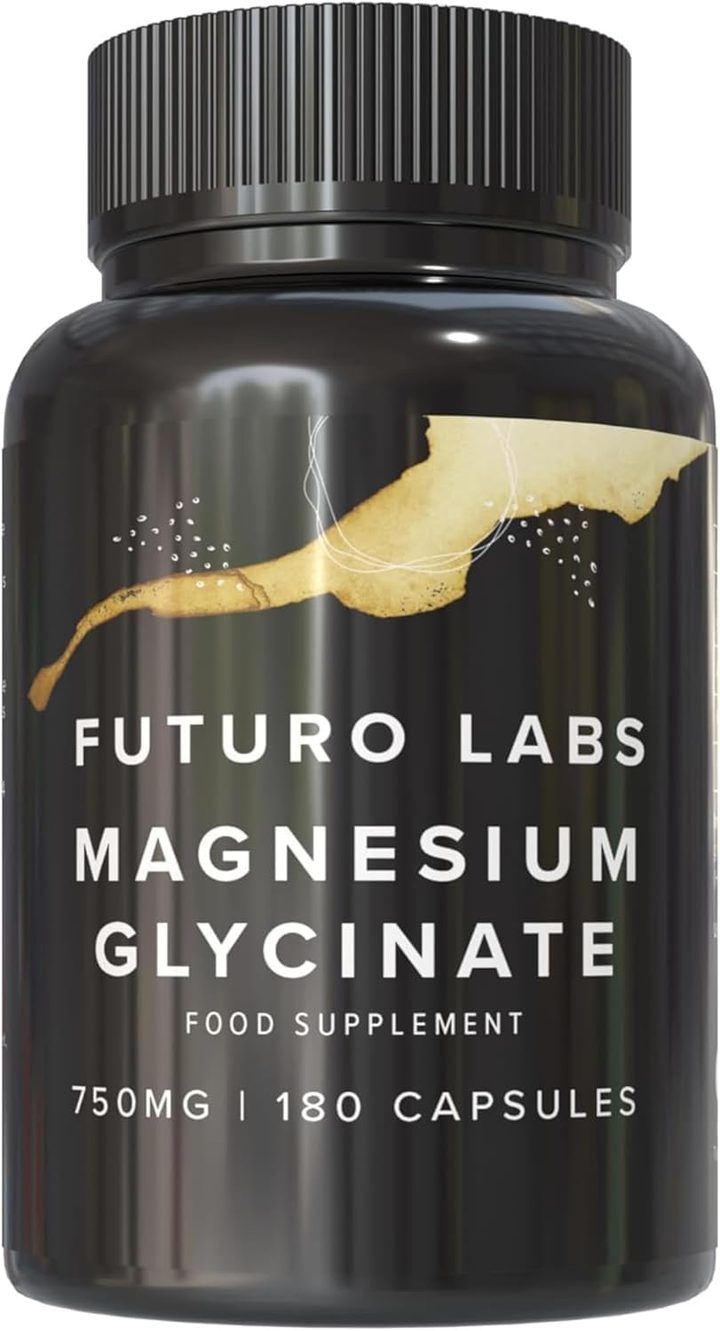
Our brand: the worked example on this page
Futuro Labs Magnesium Glycinate
- 22p a day
- 180 capsules, 2 capsules daily
- Lab tested
- Made in the UK
The daily winner: Futuro Labs Magnesium Glycinate on Amazon UK, 180 capsules for £19.99. Label breakdown. The full ten-form reference is on the types of magnesium chart.
Three chemistries, three behaviours
These three forms cover nearly every bottle on a UK shelf, and their differences start in the chemistry. Glycinate is a chelate: the magnesium held between two glycine molecules, absorbed partly through amino acid pathways, with the carrier digested alongside, which is why nothing stays behind to disturb the gut. Citrate is an organic salt of citric acid, well absorbed but osmotically active, so the unabsorbed fraction pulls water into the bowel, gently at small doses and decisively at full ones. Oxide is the mineral bound to oxygen, dense and cheap, 60% magnesium by weight, and so poorly soluble that Firoz and Graber measured roughly 4% absorption, with the remaining 96% acting as the laxative the form is medically used as.
| Difference | Glycinate | Citrate | Oxide |
|---|---|---|---|
| What it is | Chelate with two glycines | Salt of citric acid | Salt of oxygen |
| Elemental contentOurs | 14% to 20% | about 16% | about 60% |
| Absorption | Good, incl. compromised guts | Good (beat oxide in the classic trials) | About 4% |
| Bowel effect at 300mg | Low | Moderate to strong | Strong |
| Best use | Daily 300mg, evening | Regularity, 100mg to 200mg, morning | Occasional laxative only |
| Label pattern to expect | Elemental line printed, 80% NRV | Honest part-doses or powders | 375mg and 100% NRV on tiny tablets |
| Cost per 100mg elemental | about 7p at the benchmark | 8p to 15p | Cheap, mostly unabsorbed |
Which is better: the answer by job, not by tribe
Better only means better at a job, and the three jobs sort the three forms cleanly. Daily intake, the job most buyers actually have, training support, sleep-adjacent dosing, the authorised claims at a real dose, goes to glycinate, because it alone holds 300mg elemental in the evening slot day after day. Deliberate regularity goes to citrate at part-doses in the morning, using the osmotic behaviour on purpose, and citrate powders are honest value for that job. Oxide wins nothing as a supplement: its headline 60% and 100% NRV describe what is swallowed, not what arrives, and the negative cramp trials that used it are part of why magnesium's reputation is muddier than its evidence. The pattern to notice is that each form's weakness is the same property as its neighbour's strength, which is why no single bottle serves both jobs and why the two-form answer, glycinate evening, citrate morning if needed, under 400mg total, keeps appearing across this site.
The three-way cashed out at the shelf
At the shelf the differences compress into three label patterns worth memorising. Oxide announces itself with a small tablet, a 375mg claim and 100% NRV: put it back unless you are buying a laxative. Citrate is legitimate when it prints an honest elemental line and you want its second effect: buy it small, take it early. Glycinate done properly looks like the worked example: Futuro Labs Magnesium Glycinate, magnesium bisglycinate 20% named first, elemental magnesium 300mg at 80% NRV per 2 capsules, vegan HPMC shells, made in the UK under GMP and BRC certification, third-party heavy metal and microbiology panels shown, £19.99 for 180 capsules, 22p a day. That is the difference between magnesium glycinate, citrate and oxide answered the practical way: one to take daily, one to use deliberately, one to leave in the aisle.
What to check on the label
- Glycinate: chelate, full dose held, evening, daily: the intake form.
- Citrate: osmotic salt, part-doses, morning: the regularity form.
- Oxide: about 4% absorbed: a laxative wearing a supplement label.
- Each form's weakness is another's strength: no single bottle does both jobs.
- Running two forms: under 400mg a day total from supplements.
Our brand
The worked example: Futuro Labs Magnesium Glycinate
Futuro Labs Magnesium Glycinate is the glycinate corner of the three-way done properly: 300mg elemental per 2 capsules (80% NRV) from bisglycinate 20%, vegan, UK made, panels shown, 22p a day from a £19.99 bottle of 180.
- Elemental magnesium per serving
- 300mg (80% NRV)
- Form
- magnesium bisglycinate 20%
- Serving
- 2 capsules a day
- Bottle
- 180 capsules, 90 days
- Price
- £19.99 (22p a day)
- Capsule
- vegetarian shell, vegan product
Questions people also ask
What is the main difference between magnesium glycinate, citrate and oxide?
Behaviour in the gut: glycinate holds a full dose quietly, citrate loosens at full doses, oxide barely absorbs and acts as a laxative.
Which is better overall, glycinate, citrate or oxide?
Glycinate for daily intake, citrate for deliberate regularity, oxide for neither job as a supplement.
Is oxide ever the right choice?
As an occasional laxative, yes; that is its medical use. As a daily magnesium source, about 4% absorption rules it out.
Can I take glycinate and citrate together?
Yes: glycinate in the evening at the full dose, citrate small in the morning, keeping the supplement total under 400mg elemental.
Why is oxide in so many multivitamins and cheap tablets?
Density and price: 60% magnesium by weight lets a small tablet print big numbers. The absorption figure is the part the label does not mention.
Sources
- Futuro Labs Magnesium Glycinate listing, Amazon UK, label and price checked 31 August 2026. https://www.amazon.co.uk/dp/B0BT7Z5VQW
- Firoz M, Graber M. Bioavailability of US commercial magnesium preparations. Magnesium Research 2001;14(4):257-262. PubMed record
- Lindberg JS, Zobitz MM, Poindexter JR, Pak CY. Magnesium bioavailability from magnesium citrate and magnesium oxide. Journal of the American College of Nutrition 1990;9(1):48-55. PubMed record
- Walker AF, Marakis G, Christie S, Byng M. Mg citrate found more bioavailable than other Mg preparations in a randomised, double-blind study. Magnesium Research 2003;16(3):183-191. PubMed record
- Garrison SR, Korownyk CS, Kolber MR, et al. Magnesium for skeletal muscle cramps. Cochrane Database of Systematic Reviews 2020, Issue 9, CD009402. PubMed record
- Retained Regulation (EU) No 1169/2011, Annex XIII: nutrient reference value for magnesium 375mg. https://www.legislation.gov.uk/eur/2011/1169/annex/XIII
- Expert Group on Vitamins and Minerals. Safe Upper Levels for Vitamins and Minerals. Food Standards Agency, 2003 (magnesium guidance level 400mg a day from supplements). https://cot.food.gov.uk/sites/default/files/vitmin2003.pdf
- EFSA Panel on Dietetic Products, Nutrition and Allergies. Scientific Opinion on the substantiation of health claims related to magnesium. EFSA Journal 2010;8(10):1807. https://efsa.onlinelibrary.wiley.com/doi/10.2903/j.efsa.2010.1807