Ghost Fitness/Magnesium/Magnesium glycinate vs citrate absorption rate: which is better?
Magnesium glycinate vs citrate absorption rate: which is better?
The short answer
Both absorb well and neither wins by a useful margin: citrate edged one 60-day trial, chelated glycinate matches it in harder gut conditions, and absorption fraction falls as any dose rises. The difference is tolerance at 300mg, which glycinate wins.
- Fraction, not speedwhat absorption rate actually measures
- 1 trialwhere citrate edged a chelate, over 60 days
- Falling fractionwhat happens to any form's absorption as dose rises
- 22pa day for the form that holds the full dose
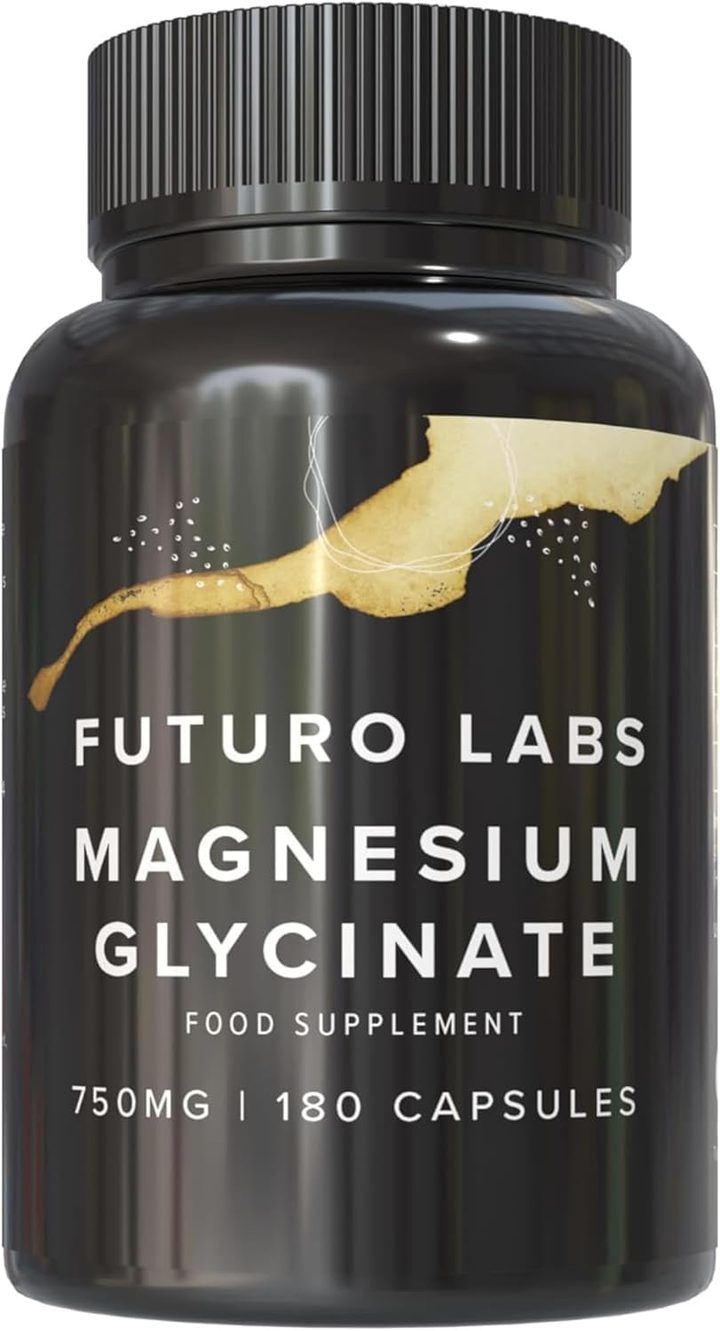
Our brand: the worked example on this page
Futuro Labs Magnesium Glycinate
- 22p a day
- 180 capsules, 2 capsules daily
- Lab tested
- Made in the UK
The full-dose form: Futuro Labs Magnesium Glycinate on Amazon UK, 180 capsules for £19.99. Label breakdown. The general head-to-head is on the citrate vs glycinate page.
What absorption rate means before comparing anything
The phrase suggests speed, but what the studies measure is fraction: of the elemental magnesium swallowed, how much crosses the gut wall, tracked through blood, urine or retention over hours to weeks. Two findings frame every comparison. First, the organic forms, citrate and the glycinate chelate among them, absorb at a meaningfully higher fraction than oxide, the gap Firoz and Graber quantified with oxide down around 4%. Second, absorption fraction falls as the dose rises for every form, because the gut's active transport saturates and the slower passive route takes over; a 100mg dose is absorbed at a better percentage than a 300mg dose of the same salt. That second finding matters here, because it means the honest comparison is at matched, realistic doses, and it is why splitting doses helps at the margin whatever the form.
The head-to-head data, all of it
The direct evidence is thinner than the marketing suggests. Lindberg's 1990 study established citrate comfortably ahead of oxide on solubility and absorption, framing the organic-versus-oxide gap. Walker's 2003 trial, the one genuine three-way, ran citrate, an amino acid chelate and oxide over 60 days and had citrate marginally ahead of the chelate on the markers used, a difference visible in the data and invisible in a life. On the chelate side, Schuette's work showed magnesium bisglycinate absorbed well even in patients with surgically shortened bowels, the hardest absorption environment tested, which is why chelates hold their reputation in compromised guts. Pull it together and the fair summary is a statistical tie between citrate and glycinate, both far ahead of oxide, with study-to-study noise larger than any between-form gap.
| Study | What it compared | What it found | What it settles |
|---|---|---|---|
| Lindberg 1990 | Citrate vs oxide | Citrate far better absorbed | The organic-vs-oxide gap |
| Walker 2003, 60 days | Citrate vs amino acid chelate vs oxide | Citrate marginally ahead of the chelate; both beat oxide | The margin is small even when citrate edges it |
| Schuette 1994 | Bisglycinate in short-bowel patients | Absorbed well where absorption is hardest | The chelate's floor is high |
| Firoz and Graber 2001 | Four forms head to head | Organic forms cluster together; oxide about 4% | Form matters at the oxide boundary, not within the organics |
Why tolerance, not absorption, decides this comparison
If citrate holds a few percentage points of absorption advantage in some studies, the practical question is whether you can bank it, and the answer is mostly no, because the doses where citrate shines are the doses it makes uncomfortable. At 300mg elemental, the amount the UK reference intake and the athlete trials point at, citrate's unabsorbed fraction pulls water into the bowel and loosens it for many people, pushing real-world citrate users to part-doses that surrender the theoretical edge. Glycinate's absorbed carrier leaves nothing osmotic behind, so the full 300mg goes in nightly and stays a habit. A marginally better fraction of a dose you undershoot loses to a fair fraction of a dose you actually take, every month of the year.
The verdict, priced and labelled
Which is better on absorption rate: call it a tie and stop paying for the question. Which is better to buy: the form that converts absorption into delivered milligrams day after day, which is the chelate, and the worked example is Futuro Labs Magnesium Glycinate: 1500mg bisglycinate at 20% per 2 capsules, 300mg elemental at 80% NRV, vegan HPMC capsules, made in the UK under GMP and BRC certification, third-party panels shown, £19.99 for 180 capsules, 22p a day, about 7p per 100mg elemental. Take it with the evening meal, split it only if your stomach prefers, and let citrate keep the one job absorption was never about, the deliberate morning bowel nudge at 100mg to 200mg.
What to check on the label
- Absorption rate means fraction absorbed, and it falls as any dose rises.
- Citrate vs glycinate is a statistical tie; both sit far above oxide.
- The one citrate edge came at doses citrate makes uncomfortable.
- Delivered milligrams over months beat percentage points in a trial.
- 300mg elemental held nightly: the specification the chelate meets.
Our brand
The worked example: Futuro Labs Magnesium Glycinate
Futuro Labs Magnesium Glycinate converts the absorption story into delivered dose: 300mg elemental per 2 capsules (80% NRV) from bisglycinate 20%, held nightly without a bowel effect, vegan, UK made, panels shown, 22p a day from a £19.99 bottle of 180.
- Elemental magnesium per serving
- 300mg (80% NRV)
- Form
- magnesium bisglycinate 20%
- Serving
- 2 capsules a day
- Bottle
- 180 capsules, 90 days
- Price
- £19.99 (22p a day)
- Capsule
- vegetarian shell, vegan product
Questions people also ask
Does magnesium citrate absorb faster than glycinate?
The studies measure fraction, not speed, and the two forms tie within study noise. Both absorb far better than oxide, which is the gap that matters.
What is the absorption rate of magnesium glycinate?
No single percentage is honest: fraction varies with dose, status and study method. The chelate clusters with the well-absorbed organic forms, even in compromised guts.
Should I split my magnesium dose for better absorption?
Splitting improves the absorbed fraction at the margin for any form. With glycinate it is optional comfort; with citrate it is often necessary, which is the real difference.
Why does absorption fall at higher doses?
The gut's active magnesium transport saturates, leaving the slower passive route. It is why 2 x 150mg edges 1 x 300mg slightly, whatever the form.
Which magnesium absorbs best overall?
The organic group, glycinate and citrate among them, without a meaningful winner inside it. Choose on tolerance and delivered dose: 300mg elemental held daily.
Sources
- Futuro Labs Magnesium Glycinate listing, Amazon UK, label and price checked 31 August 2026. https://www.amazon.co.uk/dp/B0BT7Z5VQW
- Lindberg JS, Zobitz MM, Poindexter JR, Pak CY. Magnesium bioavailability from magnesium citrate and magnesium oxide. Journal of the American College of Nutrition 1990;9(1):48-55. PubMed record
- Walker AF, Marakis G, Christie S, Byng M. Mg citrate found more bioavailable than other Mg preparations in a randomised, double-blind study. Magnesium Research 2003;16(3):183-191. PubMed record
- Schuette SA, Lashner BA, Janghorbani M. Bioavailability of magnesium diglycinate vs magnesium oxide in patients with ileal resection. Journal of Parenteral and Enteral Nutrition 1994;18(5):430-435. PubMed record
- Firoz M, Graber M. Bioavailability of US commercial magnesium preparations. Magnesium Research 2001;14(4):257-262. PubMed record
- Retained Regulation (EU) No 1169/2011, Annex XIII: nutrient reference value for magnesium 375mg. https://www.legislation.gov.uk/eur/2011/1169/annex/XIII
- EFSA Panel on Dietetic Products, Nutrition and Allergies. Scientific Opinion on the substantiation of health claims related to magnesium. EFSA Journal 2010;8(10):1807. https://efsa.onlinelibrary.wiley.com/doi/10.2903/j.efsa.2010.1807