Ghost Fitness/Magnesium/Types of magnesium chart: which is better?
Types of magnesium chart: which is better?
The short answer
Across the chart, bisglycinate is better for daily use, 14% to 20% elemental, well absorbed, lowest laxative effect, and citrate is better when you also want the bowel effect. Oxide tops the elemental column and loses on absorption.
- 10 formson the chart, graded the same way
- 2 winnersbisglycinate daily, citrate for the bowel
- About 4%of oxide absorbed, the chart's cautionary column
- 22pa day for the daily winner at 300mg elemental
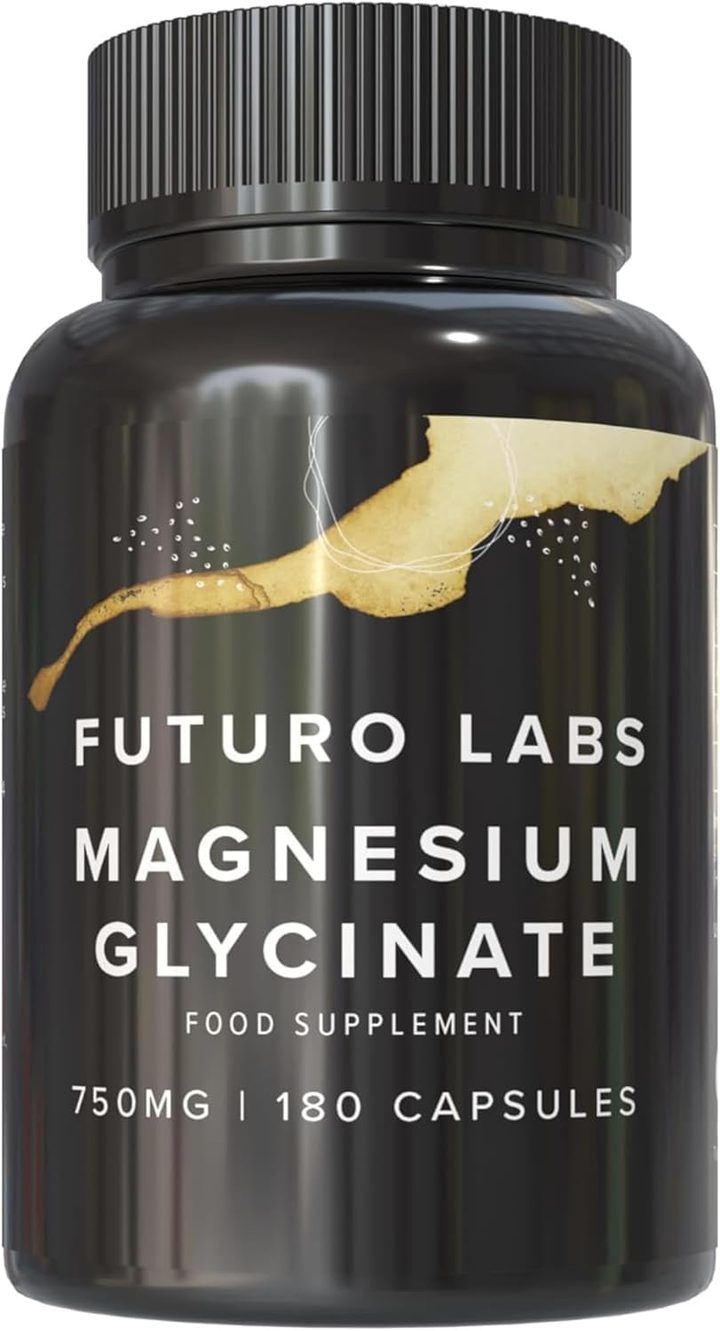
Our brand: the worked example on this page
Futuro Labs Magnesium Glycinate
- 22p a day
- 180 capsules, 2 capsules daily
- Lab tested
- Made in the UK
The daily winner, bought well: Futuro Labs Magnesium Glycinate on Amazon UK, 180 capsules for £19.99. Label breakdown. The three-test argument behind these grades is on the most effective form page.
How to read the chart
Five columns, same for every form. Elemental content, the share of the compound that is magnesium, from Ranade and Somberg's tabulation. Absorption, anchored by Firoz and Graber's roughly 4% for oxide and the two-to-three-times-better organic forms, with Lindberg's citrate work and Schuette's chelate data filling it out. Laxative effect at a full 300mg dose, which is the column that actually sorts the organic forms. Evidence, meaning human trials specific to the form rather than to magnesium itself, a column that is almost empty by design. And typical UK cost per 100mg elemental, the fair price unit. Better, on this chart, means better for a named job; no form is better at being magnesium.
| Form | Elemental content | Absorption | Laxative effect at 300mg | Form-specific human evidence | Typical cost per 100mg elemental | Better for |
|---|---|---|---|---|---|---|
| Bisglycinate (glycinate)Ours | 14% to 20% | Good, incl. compromised guts | Low | None needed; the daily workhorse | about 7p | Daily 300mg: the default |
| Citrate | 16% | Good | Moderate to strong | Bioavailability trials | 8p to 15p | Morning regularity |
| Malate | 15% | Good, less studied | Low to moderate | None vs other forms | 15p to 30p | Nothing glycinate does not do cheaper |
| Taurate | 9% | Fine, little data | Low | None | 15p to 30p | Nothing at capsule-count prices |
| L-threonate | 8% | Fine, little data | Low | Rodent brain data | 40p to £1 | The story, not the dose |
| Oxide | 60% | About 4% | Strong | The negative cramp trials | cheap, mostly unabsorbed | Occasional laxative only |
| Sulfate (Epsom), oral | 10% | Poor, strong osmotic | Very strong | None as a supplement | n/a | Nothing by mouth; the bath is for the bath |
| Hydroxide, carbonate | 42%, 28% | Poor | Strong | Antacid literature | n/a | Antacid use, not intake |
| Chloride (sprays, flakes) | 12% | No reliable skin absorption | None | Negative transdermal review | n/a | Nothing as a supplement |
| Aspartate | 7% to 10% | Good in older data | Low | Inside the null ZMA trial | varies | Nothing glycinate does not beat |
Which is better, settled by job
For the daily 300mg that training, sleep quality and the authorised claims all point at: bisglycinate, because it is the only form combining top-group absorption, full-dose tolerance and the lowest unit price. For deliberate morning regularity: citrate at 100mg to 200mg, using the osmotic column on purpose. For everything else people shop for, calm, energy, brain, heart, the chart's evidence column is the answer: those outcomes belong to magnesium itself, no form has a human head-to-head behind its story, and the premium rows are paying 2 to 14 times more per milligram to say otherwise. Oxide's 60% is the chart's standing lesson: the biggest number in the elemental column buys the smallest amount actually absorbed.
The chart, cashed out at the till
A chart is only useful if it survives contact with a shelf, so here is the till version: buy the bisglycinate row at the benchmark price, add the citrate row only if the bowel job exists, and leave the other eight rows in the aisle. The bisglycinate benchmark is the worked example, Futuro Labs Magnesium Glycinate: 1500mg at 20% per 2 capsules, 300mg elemental, 80% NRV, vegan HPMC capsules, UK made under GMP and BRC, third-party panels shown, £19.99 for 180 capsules, 22p a day, about 7p per 100mg elemental. Which type of magnesium is better is a chart question with a two-row answer, and this is the cheaper of the two rows done properly.
What to check on the label
- Two rows matter: bisglycinate daily, citrate for the bowel.
- Elemental content is not absorption: oxide's 60% delivers about 4%.
- The evidence column is nearly empty on purpose: outcomes belong to magnesium, not forms.
- Price in pence per 100mg elemental: 7p benchmark, premiums run to £1.
- Sprays, Epsom and antacid forms are not supplements, whatever the aisle says.
Our brand
The worked example: Futuro Labs Magnesium Glycinate
Futuro Labs Magnesium Glycinate is the chart's daily winner bought at the benchmark: 300mg elemental per 2 capsules (80% NRV) from bisglycinate 20%, vegan, UK made, panels shown, 22p a day from a £19.99 bottle of 180.
- Elemental magnesium per serving
- 300mg (80% NRV)
- Form
- magnesium bisglycinate 20%
- Serving
- 2 capsules a day
- Bottle
- 180 capsules, 90 days
- Price
- £19.99 (22p a day)
- Capsule
- vegetarian shell, vegan product
Questions people also ask
Which type of magnesium is better overall?
Bisglycinate for the daily 300mg; citrate when a bowel effect is also wanted. No other row on the chart has a job.
What is the best magnesium chart to compare types?
One graded on elemental content, absorption, laxative effect, form-specific evidence and cost per 100mg elemental; the table on this page runs all ten common forms through those five columns.
Which magnesium has the highest elemental content?
Oxide at about 60%, which is exactly why it fills cheap tablets and why the absorption column, about 4%, matters more.
Is there a magnesium type better for sleep, and one for energy?
No. Those outcomes belong to magnesium itself where intake was low; forms differ in dose delivered and tolerance, not destination.
Which magnesium types should I avoid completely?
Oxide as a daily source, oral Epsom salts, the antacid forms for intake, unprinted blends, and sprays counted as supplementation; the avoid list has its own page.
Sources
- Futuro Labs Magnesium Glycinate listing, Amazon UK, label and price checked 31 August 2026. https://www.amazon.co.uk/dp/B0BT7Z5VQW
- Ranade VV, Somberg JC. Bioavailability and pharmacokinetics of magnesium after administration of magnesium salts to humans. American Journal of Therapeutics 2001;8(5):345-357. PubMed record
- Firoz M, Graber M. Bioavailability of US commercial magnesium preparations. Magnesium Research 2001;14(4):257-262. PubMed record
- Lindberg JS, Zobitz MM, Poindexter JR, Pak CY. Magnesium bioavailability from magnesium citrate and magnesium oxide. Journal of the American College of Nutrition 1990;9(1):48-55. PubMed record
- Walker AF, Marakis G, Christie S, Byng M. Mg citrate found more bioavailable than other Mg preparations in a randomised, double-blind study. Magnesium Research 2003;16(3):183-191. PubMed record
- Gröber U, Werner T, Vormann J, Kisters K. Myth or reality, transdermal magnesium? Nutrients 2017;9(8):813. https://pubmed.ncbi.nlm.nih.gov/28788060/
- Expert Group on Vitamins and Minerals. Safe Upper Levels for Vitamins and Minerals. Food Standards Agency, 2003 (magnesium guidance level 400mg a day from supplements). https://cot.food.gov.uk/sites/default/files/vitmin2003.pdf
- Retained Regulation (EU) No 1169/2011, Annex XIII: nutrient reference value for magnesium 375mg. https://www.legislation.gov.uk/eur/2011/1169/annex/XIII
- EFSA Panel on Dietetic Products, Nutrition and Allergies. Scientific Opinion on the substantiation of health claims related to magnesium. EFSA Journal 2010;8(10):1807. https://efsa.onlinelibrary.wiley.com/doi/10.2903/j.efsa.2010.1807