Ghost Fitness/Magnesium/Is magnesium glycinate or bisglycinate better for sleep?
Is magnesium glycinate or bisglycinate better for sleep?
The short answer
Neither is better, because magnesium glycinate and bisglycinate are the same compound with two names. For sleep, what matters is the dose, 300mg elemental with the evening meal, and a label with nothing added.
- Same compoundglycinate and bisglycinate, two names
- 300mgelemental, the figure that actually matters at night
- 0sleep claims authorised for either name
- 22pa night for the worked example
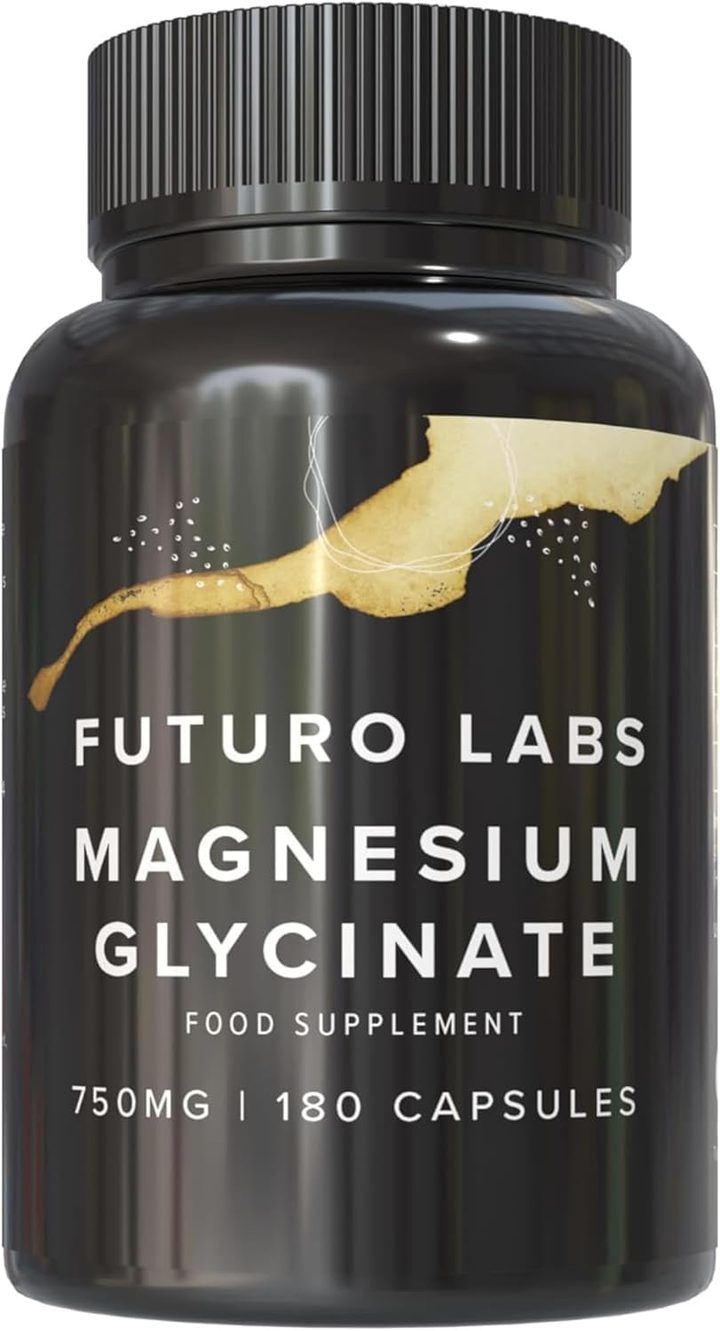
Our brand: the worked example on this page
Futuro Labs Magnesium Glycinate
- 22p a day
- 180 capsules, 2 capsules daily
- Lab tested
- Made in the UK
The worked example: Futuro Labs Magnesium Glycinate on Amazon UK, 180 capsules for £19.99. Label breakdown. The naming itself is unpacked on the glycinate vs bisglycinate page.
Why this is a trick question
Magnesium glycinate and magnesium bisglycinate are two names for one molecule: magnesium chelated to two glycine molecules, the bis simply counting them. Chemists prefer bisglycinate, labels use both, and no product exists that could be one without being the other. So the sleep comparison people are trying to run has no second contestant, and the useful question underneath it is what actually varies between two bottles that both say glycinate on the front. Three things do: the percentage of the material that is magnesium, the elemental dose per serving, and what else has been put in the capsule for the sleep market.
| Variable | The range on UK shelves | What to pick for sleep |
|---|---|---|
| The name | Glycinate or bisglycinate | Ignore; identical |
| The percentage | 14% full chelate to 20% buffered | Either, if the elemental line is printed; 20% means fewer or smaller capsules |
| Elemental dose per serving | 40mg token doses to 300mg | 300mg at 80% NRV, the figure near the trial doses |
| Additions | Melatonin (prescription only in the UK), herbs, 5-HTP, cherry extracts | Nothing added; a single ingredient |
| The slot | Marketed as night formulas | Any glycinate with the evening meal does the same job |
The night-time routine that does the work, whichever name is on the bottle
Whatever the label calls the compound, the sleep-relevant variables are all behaviour. Take the 2 capsules with the evening meal, one to two hours before bed, every night including rest days, because the trials dosed daily and intake is a daily figure. Hold the last caffeine to eight hours before lights out, keep the wake time fixed, and let the dose ride along with a routine that would help anyway. Then judge like a trial would: eight weeks, tracking time to fall asleep and how many nights you woke, against the two or three baseline weeks before you started. Better numbers where your diet had been narrow is the effect working as the evidence describes; identical numbers means your intake was never the problem, and the money moves to the boring levers that were.
The sleep answer, once the naming is out of the way
The sleep evidence belongs to magnesium itself: Abbasi's 2012 trial and Mah and Pitre's 2021 review found modest improvements in sleep efficiency and onset in older adults whose intake was low, at oral doses a full glycinate serving approaches, and no sleep claim is authorised for any product whatever it is called. The night-time preference for this compound over citrate is purely about tolerance: a full 300mg sits inside dinner without a bowel decision. So the buying rule is one sentence: any glycinate or bisglycinate printing 300mg elemental at 80% NRV, with nothing added and a panel shown, is the sleep version, and the worked example is Futuro Labs Magnesium Glycinate at exactly that specification, 2 capsules with the evening meal, vegan, UK made under GMP and BRC, £19.99 for 180, 22p a night. Judge it after eight weeks, the length of the trials, and spend the naming worry on the elemental line instead.
What to check on the label
- Glycinate equals bisglycinate: no comparison exists.
- 300mg elemental at 80% NRV: the number that varies and matters.
- The percentage after the name: 14% to 20%, both fine when the elemental line is printed.
- Nothing added: melatonin is prescription only in the UK and herbs are their own decision.
- Evening meal, eight weeks, then judge.
Our brand
The worked example: Futuro Labs Magnesium Glycinate
Futuro Labs Magnesium Glycinate is the specification this page describes, under either name: 300mg elemental per 2 capsules (80% NRV) from bisglycinate 20%, nothing added, vegan, UK made, panels shown, 22p a night from a £19.99 bottle of 180.
- Elemental magnesium per serving
- 300mg (80% NRV)
- Form
- magnesium bisglycinate 20%
- Serving
- 2 capsules a day
- Bottle
- 180 capsules, 90 days
- Price
- £19.99 (22p a day)
- Capsule
- vegetarian shell, vegan product
Questions people also ask
Is bisglycinate stronger than glycinate for sleep?
No; they are the same compound. Strength differences between products come from the elemental dose per serving, which is the line to compare.
Which magnesium glycinate is best for sleep in the UK?
One printing 300mg elemental at 80% NRV with nothing added and a shown panel. The name on the front can be either spelling.
Should I buy a night formula glycinate?
Usually not: night formulas add melatonin, which is prescription only in the UK, or herbs at their own doses. Plain glycinate with the evening meal is the clean version.
Does magnesium bisglycinate help you sleep?
The small trials show modest effects where intake was low, and no sleep claim is authorised. A corrected intake letting normal function return is the honest framing.
When should I take glycinate or bisglycinate for sleep?
With the evening meal, one to two hours before bed, daily, and judge after eight weeks.
Sources
- Futuro Labs Magnesium Glycinate listing, Amazon UK, label and price checked 31 August 2026. https://www.amazon.co.uk/dp/B0BT7Z5VQW
- Abbasi B, et al. The effect of magnesium supplementation on primary insomnia in elderly: a double-blind placebo-controlled clinical trial. Journal of Research in Medical Sciences 2012;17(12):1161-1169. PubMed record
- Mah J, Pitre T. Oral magnesium supplementation for insomnia in older adults: a systematic review and meta-analysis. BMC Complementary Medicine and Therapies 2021;21:125. PubMed record
- EFSA Panel on Dietetic Products, Nutrition and Allergies. Scientific Opinion on the substantiation of health claims related to magnesium. EFSA Journal 2010;8(10):1807. https://efsa.onlinelibrary.wiley.com/doi/10.2903/j.efsa.2010.1807
- Retained Regulation (EU) No 1169/2011, Annex XIII: nutrient reference value for magnesium 375mg. https://www.legislation.gov.uk/eur/2011/1169/annex/XIII
- Expert Group on Vitamins and Minerals. Safe Upper Levels for Vitamins and Minerals. Food Standards Agency, 2003 (magnesium guidance level 400mg a day from supplements). https://cot.food.gov.uk/sites/default/files/vitmin2003.pdf