Ghost Fitness/Lion's mane/Lion's mane vs ashwagandha: which should a lifter take?
Lion's mane vs ashwagandha: which should a lifter take?
The short answer
For a lifter, ashwagandha holds the more relevant file, small trials touching strength, recovery and stress, several industry-linked, while lion's mane touches nothing in a training week. Both sit after creatine; the herb needs the pharmacist first.
- Ashwagandha's training filesmall trials on strength, recovery and stress in training men, several industry-linked
- Lion's mane's training filenothing: no strength, recovery or performance data
- The ladderboth after creatine, protein, sleep and training
- The gatethe herb: pregnancy, thyroid medication, rare liver reports
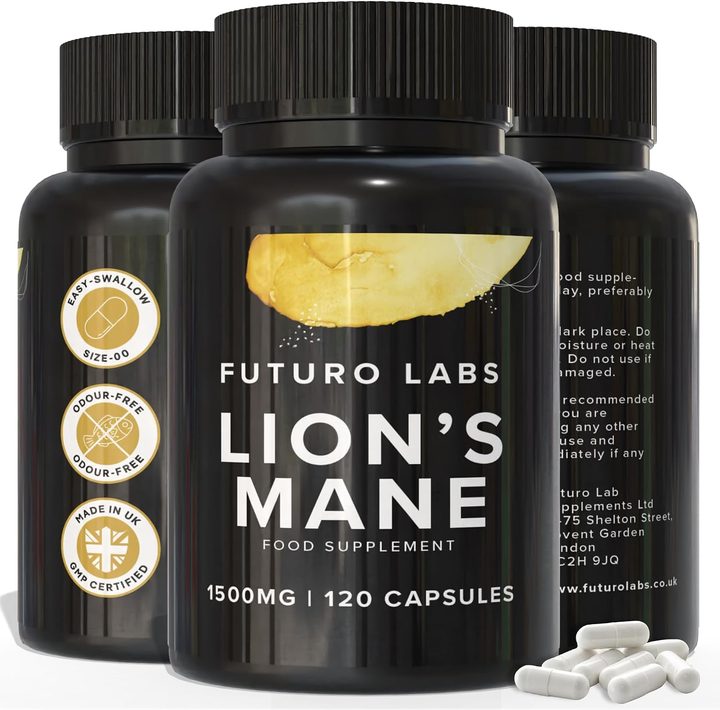
Our brand: the worked example on this page
Futuro Labs Lion's Mane
- 13p a day
- 120 capsules, 1 capsule daily
- Lab tested
- Made in the UK
The mushroom half, priced at its rung: Futuro Labs Lion's Mane on Amazon UK, 5:1 fruiting body extract at 13p a day, no training claim, no training file. Full label breakdown. The lane scorecard is on the ashwagandha-or page; the creatine ladder on the ladder page.
The training week audited for what each product's file actually touches
The lane scorecard compared these two on stress, cognition, sleep and safety; this page asks the lifter's question directly, what does each touch in an actual training week, and audits the files for training relevance alone. Ashwagandha's training file exists and needs reading carefully: small randomised trials of standardised root extracts, typically at 300-to-600mg daily over eight-to-twelve weeks, in men following resistance-training programmes, reporting effects on strength measures, on recovery or perceived exertion, on body-composition changes and on testosterone in some, alongside the stress-scale findings its other pages describe, and the honest qualifiers travel with every line, the trials are small, several are funded or run with the branded-extract manufacturers, the effect sizes are modest, replication by independent groups is limited, and no authorised UK claim exists for any of it, so the file is real, thin, industry-linked, and the most training-relevant file any product in the botanical drawer holds. Lion's mane's training file does not exist: no trial has measured strength, recovery, performance, body composition or any training outcome, its two studies concerning cognition in impaired older adults and one acute task plus stress in a young pilot, so in a training week the mushroom touches nothing, its honest role being the separate claim-free bet on cognition and stress that runs beside training and never inside it. On training relevance, then, the herb holds the only file, which is a sentence this mushroom section prints plainly, and the lifter choosing between the two for the gym has chosen before the comparison started.
The industry-linked file weighed properly, the ladder and the gate applied, and the lifter's verdict
Weigh the herb's file properly rather than dismissing it for its funding: industry-linked trials are not automatically wrong, they are trials that warrant independent replication before confidence, and the sensible reading of ashwagandha's strength data is that a modest effect in trained men is plausible and unproven, worth a flat-expectations trial by a lifter who has already covered the evidenced rungs and never worth displacing them, the same posture this site takes to every thin file. The ladder places both products where the creatine pages placed them: creatine first, an authorised performance claim on decades of trials at 3g for pennies; complete protein, sleep and programmed training on the free rungs; register nutrients where bloods direct them; and the botanical drawer last, ashwagandha as the marginal pound with a training file and lion's mane as the marginal pound without one. The gate applies to the herb and not the mushroom: pregnancy exclusion, a thyroid-medication watchpoint for anyone on levothyroxine or with thyroid conditions, and the rare documented liver-injury case reports, making a pharmacist the herb's first stop, while the mushroom carries nothing beyond allergy sense, the safety edge the lane scorecard already awarded it. The lifter's verdict: for the gym, ashwagandha, holding the only training-relevant file of the two, thin and industry-linked as it is, taken after creatine and the basics and after the pharmacist; for cognition and stress as a separate bet, lion's mane, with its cleaner safety profile; and for the lifter who wants both, the pairing page's separate stated tubs, the worked example holding the mushroom half at 13p, expectations flat on each and neither pretending to be the training programme.
| The item | Ashwagandha | Lion's mane |
|---|---|---|
| Strength and recovery data | Small trials in training men, several industry-linked | None |
| Body composition and testosterone | Small trials, modest effects, unreplicated | None |
| Stress | Small scale-based trials | One pilot's secondary outcome |
| Cognition | Thin | Two small studies: the only human cognition data |
| The gate | Pregnancy, thyroid medication, liver reports: pharmacist | Allergy sense only |
| The ladder rung | Last, with a training file | Last, without one |
The verdict, called for the gym and the bet separately
Lion's mane versus ashwagandha, which should a lifter take: for training, ashwagandha, the only one of the two with a training-relevant file, small industry-linked trials touching strength, recovery and stress in training men, taken after creatine and the free basics and after its pharmacist gate for pregnancy, thyroid medication and rare liver reports; for the separate cognition-and-stress bet, lion's mane, with the cleaner safety profile and the only human cognition data; and for both, two stated tubs with expectations flat. The mushroom's rung, worked: Futuro Labs Lion's Mane, 5:1 fruiting body extract, one capsule daily, UK made, lab tested, £15.49 for 120 days at 13p a day, running beside the training week rather than inside it.
What to check on the label
- Audit for training relevance: the herb has a file, the mushroom none.
- Weigh industry links honestly: plausible, unproven, awaiting replication.
- Climb the ladder first: creatine, protein, sleep, training.
- Clear the herb's gate: pharmacist before the first capsule.
- Keep the mushroom beside the week: a separate bet, not a training aid.
Our brand
The worked example: Futuro Labs Lion's Mane
Futuro Labs Lion's Mane: 1 capsule daily of 5:1 fruiting body extract, labelled 1500mg mushroom equivalent (about 300mg extract), 120 capsules for £15.49, 120 days at 13p a day. Vegan HPMC shell, UK made under GMP and BRC, independently lab tested, caffeine free. Lion's mane holds no authorised UK health claims; this site describes its small studies as studies.
- Extract
- fruiting body, 5:1
- Per capsule
- 1500mg mushroom equivalent
- Serving
- 1 capsule a day
- Bottle
- 120 capsules, 120 days
- Price
- £15.49 (13p a day)
- Capsule
- HPMC vegan shell, size 00
Questions people also ask
Does ashwagandha actually help with training?
Small trials in training men report modest effects on strength, recovery and body composition, several industry-linked and awaiting independent replication, with no authorised claim, making it plausible and unproven.
Does lion's mane help with training at all?
No trial has measured any training outcome: its studies concern cognition in impaired older adults and a small young-adult pilot, so in a training week it touches nothing.
Which should a lifter buy first?
Neither: creatine first with its authorised performance claim, then protein, sleep and programmed training, then bloods-directed nutrients, with both botanicals as marginal pounds afterwards.
Is ashwagandha safe for a healthy lifter?
Usually, after a pharmacist check: it carries a pregnancy exclusion, a thyroid-medication watchpoint and rare documented liver-injury reports, notes the mushroom does not share.
Can a lifter take both together?
Yes, as separate stated products once the herb's gate is cleared: the herb for its thin training and stress file, the mushroom for its separate claim-free cognition bet, no interaction known.
Sources
- The ashwagandha and resistance training literature: small trials, several industry-linked, report effects of standardised root extracts on strength, recovery or body-composition measures in training men, with no authorised claim. PubMed record
- The ashwagandha trial literature: small randomised studies of Withania somnifera root extracts on stress and cortisol measures, typically standardised by withanolide content, with no authorised UK claim resulting. PubMed record
- The herb-induced liver injury literature: documented case reports of liver injury associated with botanical supplements including ashwagandha and high-dose green tea extract, rare but recognised in hepatology. PubMed record
- Kreider RB, et al. International Society of Sports Nutrition position stand: safety and efficacy of creatine supplementation in exercise, sport, and medicine. Journal of the International Society of Sports Nutrition 2017;14:18. PubMed record