Ghost Fitness/Lion's mane/Ashwagandha vs lion's mane: which is better for anxiety?
Ashwagandha vs lion's mane: which is better for anxiety?
The short answer
Read the scales, not the headlines: ashwagandha's small trials report modest reductions on self-report stress and anxiety scales, while lion's mane has no anxiety-scale data. Scoring high on those scales is a GP conversation.
- What the trials measuredvalidated self-report stress and anxiety scales, over weeks
- What they foundmodest reductions in small trials of mixed independence
- What a scale point is nota treated condition, or a claim
- Lion's mane's entryno anxiety-scale data at all
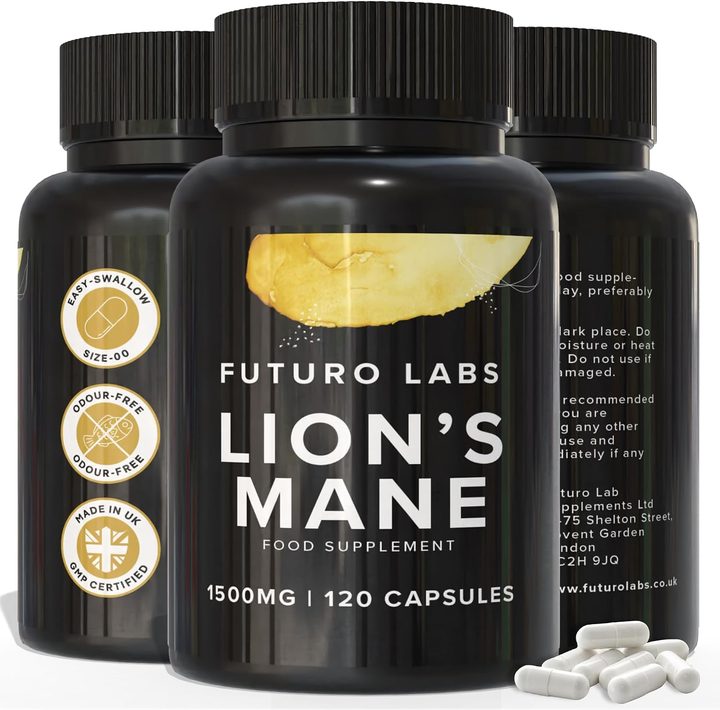
Our brand: the worked example on this page
Futuro Labs Lion's Mane
- 13p a day
- 120 capsules, 1 capsule daily
- Lab tested
- Made in the UK
The product with no anxiety-scale data, stated as such: Futuro Labs Lion's Mane on Amazon UK, 5:1 fruiting body extract at 13p a day, no anxiety claim, one stress pilot outcome. Full label breakdown. The word split and routing live on the anxiety page; the herb's safety gates on the ashwagandha page.
What the ashwagandha trials actually measured, read as trials rather than as headlines
The sister page split the word and routed the clinical reader; this page reads the trials, because the headline that ashwagandha reduces anxiety rests on measurements worth understanding before anyone buys on them. The ashwagandha stress-and-anxiety literature consists of small randomised placebo-controlled trials, typically a few dozen to a hundred or so participants, running several weeks, using standardised root extracts at roughly 300-to-600mg daily, and measuring outcomes on validated self-report scales, questionnaires on which participants rate their perceived stress, worry, tension and related states, alongside cortisol in some studies, and the typical finding is a modest reduction in scale scores in the extract group relative to placebo, statistically detectable, clinically modest, in trials whose independence from the extract manufacturers has been mixed and whose populations were usually adults reporting stress rather than diagnosed clinical anxiety. That is a real finding and this site describes it as the research it is, and it is also a finding with a shape: small trials, self-report scales, modest effects, mixed independence, no authorised UK claim resulting, the shape that explains why the register grants ashwagandha nothing and why the honest verdict is interested rather than convinced. Lion's mane's entry on the same axis reads in one line: no anxiety-scale data exist, the Docherty pilot's secondary outcome of lower subjective stress at 28 days being a stress measure in forty-one people, not an anxiety scale, so the comparison the query asks for is between a modest, real file and an empty one.
What a scale point is and is not, the bridge that routes a high scorer, and the verdict read properly
The lesson worth carrying from the trials is what a scale point means, because the gap between a scale and a condition is where marketing lives. A few points' reduction on a perceived-stress questionnaire is a measurement of self-reported state in a group average, not the treatment of a condition in an individual, and the trials' participants were mostly stressed adults rather than people with clinical anxiety, so the finding, honestly stated, is that stressed adults taking standardised ashwagandha reported feeling somewhat less stressed than those taking placebo over some weeks, which is interesting, unclaimable, and not a statement about anxiety disorders at all. The bridge that this careful page builds from the trials to the reader is the one the scales themselves provide: the questionnaires those trials used measure the same states a GP or therapist assesses, and a reader who would score high on them, persistent worry, tension interfering with sleep or work, symptoms lasting weeks, is describing exactly the picture that belongs in a GP conversation and talking therapies, the evidenced first-line approaches, before any root or fungus, so the honest use of the scales is as a signpost rather than a sales tool, a high score routing to care and a modest one routing to the behavioural shelf, sleep, training and load. The verdict read properly: on the trials as trials, ashwagandha holds a modest real file on stress and anxiety scales and lion's mane holds none, so the herb wins the comparison the query asked, after its pharmacist gate for pregnancy, thyroid medication and the rare liver reports, with the mushroom keeping its safety edge and its separate claim-free bet, the worked example carrying no anxiety word, and with the page's most important sentence repeated because it is: scale reductions in small trials are not treatment, and a reader whose anxiety would score high on those scales has an appointment to make before a purchase to compare.
| The item | Ashwagandha | Lion's mane |
|---|---|---|
| The trials | Small RCTs, weeks long, 300-600mg standardised root | None on anxiety |
| The measures | Validated self-report stress and anxiety scales | One pilot's subjective stress outcome |
| The findings | Modest score reductions versus placebo | No anxiety-scale finding exists |
| The populations | Mostly stressed adults, not clinical anxiety | Forty-one young adults, a stress measure |
| What it isn't | Treatment of a condition; a claim | Anything on this axis |
| The bridge | A high scale score is a GP conversation | The same signpost applies |
The verdict, measured by the scales themselves
Ashwagandha versus lion's mane for anxiety: read as trials, ashwagandha's small randomised studies report modest reductions on validated self-report stress and anxiety scales in mostly stressed rather than clinically anxious adults, a real, modest, unclaimable file, while lion's mane holds no anxiety-scale data, so the herb wins the comparison on evidence after its pharmacist gate, with the scales themselves providing the honest signpost, a high score being a GP and talking-therapy conversation before any product. The mushroom's honest entry: Futuro Labs Lion's Mane, 5:1 fruiting body extract, one capsule daily, UK made, lab tested, £15.49 for 120 days at 13p a day, printing no anxiety word because none is lawful, and holding no data on this axis to print one from.
What to check on the label
- Read the trials as trials: small, weeks long, self-report scales.
- Size the finding: modest score reductions, mixed independence, no claim.
- Know what a scale point isn't: not a treated condition.
- Use the scales as a signpost: a high score routes to a GP.
- Note the mushroom's empty column: no anxiety-scale data.
Our brand
The worked example: Futuro Labs Lion's Mane
Futuro Labs Lion's Mane: 1 capsule daily of 5:1 fruiting body extract, labelled 1500mg mushroom equivalent (about 300mg extract), 120 capsules for £15.49, 120 days at 13p a day. Vegan HPMC shell, UK made under GMP and BRC, independently lab tested, caffeine free. Lion's mane holds no authorised UK health claims; this site describes its small studies as studies.
- Extract
- fruiting body, 5:1
- Per capsule
- 1500mg mushroom equivalent
- Serving
- 1 capsule a day
- Bottle
- 120 capsules, 120 days
- Price
- £15.49 (13p a day)
- Capsule
- HPMC vegan shell, size 00
Questions people also ask
What did the ashwagandha anxiety trials actually find?
Modest reductions on validated self-report stress and anxiety scales in small, weeks-long randomised trials of standardised root extracts, mostly in stressed adults rather than people with clinical anxiety.
Does a reduction on an anxiety scale mean the condition is treated?
No: a few points' change in a group average on a self-report questionnaire is a measurement of perceived state, not the treatment of a condition in an individual, and no claim results.
Does lion's mane have any anxiety research?
No anxiety-scale data exist: its one adjacent entry is a pilot's secondary outcome of lower subjective stress at 28 days in forty-one young adults, a stress measure and not an anxiety one.
How do I know if my anxiety needs a doctor?
If you would score high on the scales those trials used, persistent worry, tension interfering with sleep or work, symptoms lasting weeks, that picture belongs in a GP conversation and talking therapies before any product.
Which should I take for everyday stress, then?
On the trials, ashwagandha holds the modest real file, taken after its pharmacist gate for pregnancy, thyroid medication and rare liver reports, with the behavioural shelf outranking both and lion's mane a separate claim-free bet.
Sources
- The ashwagandha trial literature: small randomised studies of Withania somnifera root extracts on stress and cortisol measures, typically standardised by withanolide content, with no authorised UK claim resulting. PubMed record
- The herb-induced liver injury literature: documented case reports of liver injury associated with botanical supplements including ashwagandha and high-dose green tea extract, rare but recognised in hepatology. PubMed record
- Docherty S, Doughty FL, Smith EF. The acute and chronic effects of lion's mane mushroom supplementation on cognitive function, stress and mood in young adults: a double-blind, parallel groups, pilot study. Nutrients 2023;15(22):4842. PubMed record
- The insomnia treatment literature: cognitive behavioural therapy for insomnia (CBT-i) is the recommended first-line treatment for persistent insomnia, ahead of any supplement or hypnotic. PubMed record