Ghost Fitness/Lion's mane/Is ashwagandha or lion's mane better?
Is ashwagandha or lion's mane better?
The short answer
Split by lane: ashwagandha wins stress on its small RCTs, lion's mane wins cognition by being the only one with human data, neither holds a sleep claim, and lion's mane wins safety, the herb carrying pharmacist gates.
- The stress laneashwagandha: small RCTs on stress scales and cortisol
- The cognition lanelion's mane: the only one of the two with human cognition data
- The sleep laneneither holds a claim; ashwagandha's sleep-onset file is thin, lion's mane's empty
- The safety lanelion's mane: the herb carries pregnancy, thyroid and liver notes
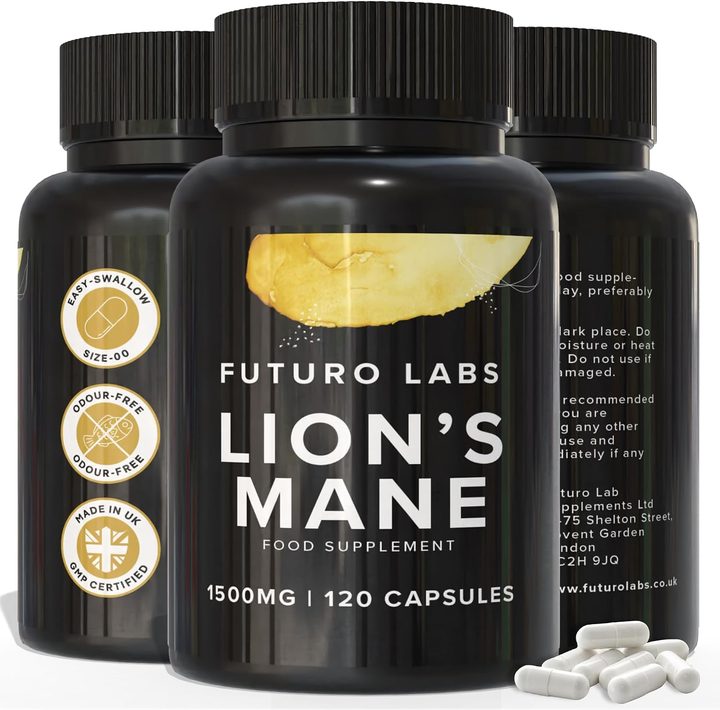
Our brand: the worked example on this page
Futuro Labs Lion's Mane
- 13p a day
- 120 capsules, 1 capsule daily
- Lab tested
- Made in the UK
The cognition-lane and safety-lane winner: Futuro Labs Lion's Mane on Amazon UK, 5:1 fruiting body extract at 13p a day, no gates beyond ordinary allergy sense. Full label breakdown. The pairing audit is on the ashwagandha page; the sleep file on the sleep reviews page.
Why the question splits, and the stress and cognition lanes scored on their human files
Ashwagandha or lion's mane has no single answer because the two are bought for different things, so the honest response is a scorecard with a lane for each thing buyers want, each lane scored on human evidence described as research, and the winners genuinely differing. The stress lane goes to ashwagandha: the herb's file contains small randomised trials of root extracts, standardised by withanolides, reporting effects on stress scales and cortisol measures over a few weeks, modest sizes and mixed independence, no authorised claim resulting, but a human stress file that lion's mane cannot match, the mushroom's entire stress evidence being one pilot's secondary outcome, lower subjective stress at 28 days in forty-one people, so on stress the herb wins on the size of its file, which this mushroom section states without discomfort. The cognition lane goes to lion's mane, and by default of field rather than strength: the mushroom holds the only human cognition data of the two, Mori's 16-week trial in older adults with mild cognitive impairment and the Docherty pilot's one faster task, thin but human, while ashwagandha's cognition file is thinner still and mostly extrapolated from stress outcomes, so a buyer whose interest is cognition picks the mushroom, with the extrapolation gap from impaired older adults to healthy lifters stated as ever, and no claim on either side.
The sleep variant answered honestly, the safety lane scored, and the verdict split where it truly splits
The sleep variant this query carries deserves its plain answer: neither holds a sleep claim, sleep being one of the register's absent words for everything here, and the human files differ only in degree of thinness, ashwagandha carrying a few small trials touching sleep onset and quality alongside its stress outcomes, a thin file but not an empty one, while lion's mane's sleep file is empty, no trial having measured sleep at all, its one honest sleep fact being caffeine-free evening-safety, so on sleep the herb edges it on paper and both lose to the behavioural shelf, consistent times, an early caffeine curfew, cool dark rooms and morning light, with persistent insomnia routed to CBT-i via the GP ahead of either. The safety lane goes to lion's mane and it matters more than it looks: the mushroom carries no notes beyond ordinary allergy sense, while ashwagandha travels with three documented watchpoints, a pregnancy exclusion, a thyroid interaction worth a pharmacist conversation for anyone on levothyroxine or with thyroid conditions, and rare but recorded liver-injury case reports in the hepatology literature, so the herb's larger evidence file comes with a pharmacist gate the mushroom does not require. The verdict splits exactly where the lanes split: for stress, ashwagandha, bought after the pharmacist; for cognition, lion's mane, by holding the only human data; for sleep, neither, the behavioural shelf and CBT-i outranking both; for a clean safety profile, lion's mane; and for the reader wanting both, the pairing page's separate-tubs answer, each stated, taken together freely once the herb's gate is cleared, with the worked example holding the mushroom half at 13p and expectations flat on every lane.
| The lane | The winner | The honest note |
|---|---|---|
| Stress | Ashwagandha | Small RCTs on stress scales; lion's mane has one pilot's secondary outcome |
| Cognition | Lion's mane | The only one with human cognition data; thin, in impaired older adults |
| Sleep | Neither | No claims; the herb's file thin, the mushroom's empty; CBT-i outranks both |
| Safety | Lion's mane | The herb carries pregnancy, thyroid and liver watchpoints |
| Claims held | Neither | Both in the botanical and fungal on-hold limbo |
| Both wanted | Separate stated tubs | Root with withanolides; fruiting body with ratio; pharmacist first |
The verdict, awarded lane by lane
Is ashwagandha or lion's mane better: it depends on the lane, ashwagandha winning stress on its small RCTs, lion's mane winning cognition by holding the only human data of the two, neither winning sleep where no claim exists and the behavioural shelf and CBT-i outrank both, and lion's mane winning safety, the herb's larger file arriving with pregnancy, thyroid and liver watchpoints that make a pharmacist its first stop. The mushroom's half, worked: Futuro Labs Lion's Mane, 5:1 fruiting body extract, one capsule daily, UK made, lab tested, £15.49 for 120 days at 13p a day, the cognition-lane and safety-lane pick, stacked freely beside a stated root if the reader wants both lanes covered.
What to check on the label
- Split the question by lane: stress, cognition, sleep, safety.
- Give the herb stress: its small RCTs outsize the mushroom's pilot.
- Give the mushroom cognition: the only human data of the two.
- Give neither sleep: no claims; CBT-i and behaviours outrank both.
- Give the mushroom safety: the herb needs the pharmacist first.
Our brand
The worked example: Futuro Labs Lion's Mane
Futuro Labs Lion's Mane: 1 capsule daily of 5:1 fruiting body extract, labelled 1500mg mushroom equivalent (about 300mg extract), 120 capsules for £15.49, 120 days at 13p a day. Vegan HPMC shell, UK made under GMP and BRC, independently lab tested, caffeine free. Lion's mane holds no authorised UK health claims; this site describes its small studies as studies.
- Extract
- fruiting body, 5:1
- Per capsule
- 1500mg mushroom equivalent
- Serving
- 1 capsule a day
- Bottle
- 120 capsules, 120 days
- Price
- £15.49 (13p a day)
- Capsule
- HPMC vegan shell, size 00
Questions people also ask
Is ashwagandha or lion's mane better for stress?
Ashwagandha: small randomised trials of root extracts report effects on stress scales and cortisol measures, a file lion's mane's single pilot secondary outcome cannot match, with no claim on either side.
Which is better for focus or memory?
Lion's mane, by default of field: it holds the only human cognition data of the two, a 16-week MCI trial and a small pilot, thin but human, where ashwagandha's cognition file is thinner still.
Is lion's mane or ashwagandha better for sleep?
Neither holds a sleep claim: ashwagandha's sleep-onset file is thin, lion's mane's is empty, and both lose to the behavioural shelf, with persistent insomnia routed to CBT-i via the GP.
Which is safer to take?
Lion's mane: it carries no notes beyond allergy sense, while ashwagandha has a pregnancy exclusion, a thyroid-medication watchpoint and rare documented liver-injury reports, making the pharmacist its first stop.
Can I just take both?
Yes, as separate stated products once the herb's gate is cleared: a root extract with withanolides printed and a fruiting-body extract with its ratio printed, no interaction known, expectations flat on both.
Sources
- The ashwagandha trial literature: small randomised studies of Withania somnifera root extracts on stress and cortisol measures, typically standardised by withanolide content, with no authorised UK claim resulting. PubMed record
- The herb-induced liver injury literature: documented case reports of liver injury associated with botanical supplements including ashwagandha and high-dose green tea extract, rare but recognised in hepatology. PubMed record
- Mori K, Inatomi S, Ouchi K, Azumi Y, Tuchida T. Improving effects of the mushroom Yamabushitake (Hericium erinaceus) on mild cognitive impairment: a double-blind placebo-controlled clinical trial. Phytotherapy Research 2009;23(3):367-372. PubMed record
- The insomnia treatment literature: cognitive behavioural therapy for insomnia (CBT-i) is the recommended first-line treatment for persistent insomnia, ahead of any supplement or hypnotic. PubMed record