Ghost Fitness/Lion's mane/Which is better for anxiety, ashwagandha or Lion's Mane?
Which is better for anxiety, ashwagandha or Lion's Mane?
The short answer
Neither treats anxiety: no supplement holds an anxiety claim, and persistent anxiety is a GP and talking-therapy conversation first. On the research files, ashwagandha's small trials on stress and anxiety scales outsize lion's mane's single pilot outcome.
- The word's two meaningseveryday anxiousness, and a clinical condition: different owners
- The shelf's legal stateno supplement holds an anxiety claim
- The research filesashwagandha: small scale-based trials; lion's mane: one pilot's secondary outcome
- The routingpersistent anxiety: GP and talking therapies first
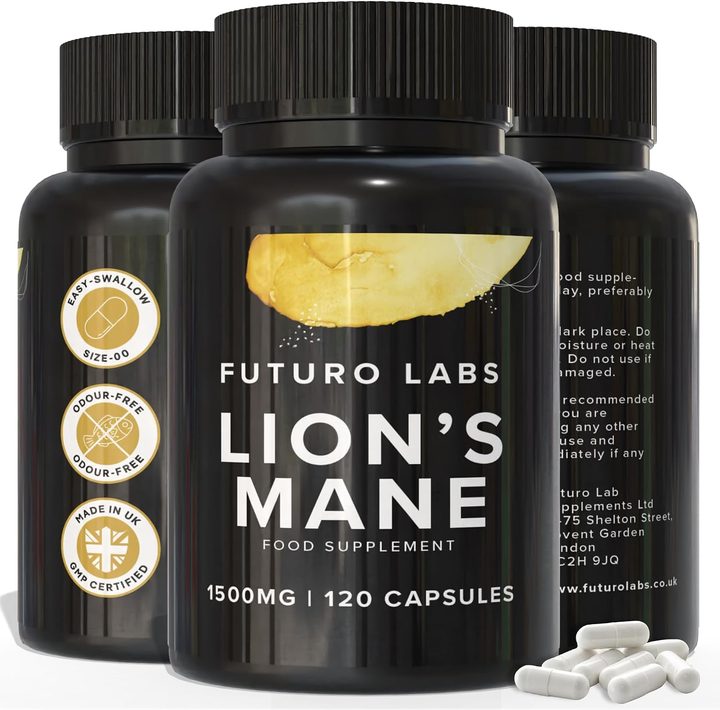
Our brand: the worked example on this page
Futuro Labs Lion's Mane
- 13p a day
- 120 capsules, 1 capsule daily
- Lab tested
- Made in the UK
The claim-free mushroom, filed honestly: Futuro Labs Lion's Mane on Amazon UK, 5:1 fruiting body extract at 13p a day, no anxiety claim, one stress pilot outcome. Full label breakdown. The trial scales are read on the scales page; the pairing audit on the ashwagandha page.
The word split before the shelf is compared, because anxiety means two things with different owners
Anxiety is a word that means two things, and a careful page separates them before comparing anything for sale. Everyday anxiousness, the pre-presentation nerves, the competition-week edge, the stressful fortnight, is a normal human state that rises and falls with circumstances and is owned by ordinary life, sleep, load management, training and the passing of the thing that caused it. Anxiety as a clinical condition, persistent, disproportionate, interfering with sleep, work or relationships over weeks, sometimes with panic, is a health matter owned by clinicians, and the honest routing for it is written before any supplement is mentioned: a GP conversation and talking therapies, which are the evidenced first-line approaches and which no aisle substitutes for, this page's careful line being that if the anxiety typed into this search is the persistent kind, the answer is not on this shelf at all and the sooner that conversation happens the better. The shelf's legal state then reads in one sentence: no supplement holds an anxiety claim in the UK, neither ashwagandha nor lion's mane nor anything else, so nothing sold here treats, reduces or relieves anxiety on any label lawfully, and a product printing such a promise fails the forensics pages' first flag. With the word split and the shelf declared, the comparison the query wants can be run honestly on research files described as research, for the everyday reader, and never as treatment for the clinical one.
The research files compared honestly, the safety gate the herb carries, and the verdict routed properly
Compare the files and the asymmetry is plain: ashwagandha's is the larger, small randomised trials of root extracts, standardised by withanolides at roughly 300-to-600mg daily, reporting modest reductions on self-report stress and anxiety scales over several weeks, modest sizes, mixed independence, no claim resulting, the scales page reading exactly what those measures mean; lion's mane's file on this axis is one entry, the Docherty pilot's secondary outcome of lower subjective stress at 28 days in forty-one young adults, not an anxiety measure, a single small pilot's side finding. So on research volume the herb outsizes the mushroom clearly, a sentence this mushroom section prints without hesitation, and a buyer choosing between them for everyday stress on evidence picks ashwagandha, with the herb's safety gate attached as its own pages attach it, a pregnancy exclusion, a thyroid-medication watchpoint worth a pharmacist conversation, and rare documented liver-injury case reports, the mushroom carrying no equivalent notes. The verdict routes in layers: for persistent, interfering anxiety, neither, the GP and talking therapies being the first-line answer and this page's most important sentence; for everyday anxiousness a reader wants to take the edge off, the behavioural shelf outranks both, sleep, training, load management and the calendar, with the register's psychological-function holders, B vitamins, vitamin C and magnesium, covering genuine shortfalls; and for the reader still choosing between the two named products on their files, ashwagandha on evidence after the pharmacist, lion's mane on safety and as a separate claim-free bet, the worked example priced at 13p with no anxiety word on it, because none is lawful and, on this page, none would be honest.
| The item | The finding | The action |
|---|---|---|
| Persistent, interfering anxiety | A clinical matter | GP and talking therapies first: not this shelf |
| Everyday anxiousness | Owned by ordinary life | Sleep, training, load, the calendar |
| The shelf's claims | None: no supplement holds an anxiety claim | A printed promise is an instant fail |
| Ashwagandha's file | Small RCTs on stress and anxiety scales | The larger file; pharmacist gate first |
| Lion's mane's file | One pilot's secondary stress outcome | No anxiety data; the safer product |
| The register's holders | Bs, vitamin C, magnesium: psychological function | Cover shortfalls; expect no treatment |
The verdict, routed before it is compared
Which is better for anxiety, ashwagandha or lion's mane: neither treats it, no supplement holding an anxiety claim, and persistent anxiety belongs to a GP and talking therapies before any shelf, with the everyday reader served first by the behavioural levers and the register's psychological-function holders, and the two named products compared honestly on files only, ashwagandha's small scale-based trials outsizing lion's mane's single pilot outcome, the herb chosen on evidence after its pharmacist gate and the mushroom on its cleaner safety profile. The claim-free capsule, filed: Futuro Labs Lion's Mane, 5:1 fruiting body extract, one capsule daily, UK made, lab tested, £15.49 for 120 days at 13p a day, carrying no anxiety word, which on this page is the only honest label.
What to check on the label
- Split the word first: everyday anxiousness versus a clinical condition.
- Route persistence to care: GP and talking therapies, before any shelf.
- Declare the shelf claim-free: no supplement holds an anxiety claim.
- Compare files honestly: the herb's small trials outsize the mushroom's pilot.
- Attach the herb's gate: pregnancy, thyroid, liver notes, pharmacist first.
Our brand
The worked example: Futuro Labs Lion's Mane
Futuro Labs Lion's Mane: 1 capsule daily of 5:1 fruiting body extract, labelled 1500mg mushroom equivalent (about 300mg extract), 120 capsules for £15.49, 120 days at 13p a day. Vegan HPMC shell, UK made under GMP and BRC, independently lab tested, caffeine free. Lion's mane holds no authorised UK health claims; this site describes its small studies as studies.
- Extract
- fruiting body, 5:1
- Per capsule
- 1500mg mushroom equivalent
- Serving
- 1 capsule a day
- Bottle
- 120 capsules, 120 days
- Price
- £15.49 (13p a day)
- Capsule
- HPMC vegan shell, size 00
Questions people also ask
Can ashwagandha or lion's mane treat anxiety?
No: no supplement holds an anxiety claim, and persistent, interfering anxiety is a GP and talking-therapy matter first, with the two products comparable only on research files for everyday stress.
Which has more research on stress and anxiety?
Ashwagandha: small randomised trials of standardised root extracts report modest reductions on self-report scales, outsizing lion's mane's single pilot secondary outcome of lower subjective stress.
When should anxiety go to a doctor rather than a shop?
When it persists for weeks, feels disproportionate, or interferes with sleep, work or relationships: that is the clinical kind, owned by a GP and talking therapies, not by any aisle.
Is lion's mane safer than ashwagandha?
Yes: the mushroom carries no notes beyond allergy sense, while ashwagandha has a pregnancy exclusion, a thyroid-medication watchpoint and rare documented liver reports, making a pharmacist its first stop.
What actually helps everyday anxiousness?
The behavioural shelf: sleep, training, load management and the calendar, with the register's psychological-function holders, B vitamins, vitamin C and magnesium, covering genuine dietary shortfalls.
Sources
- The ashwagandha trial literature: small randomised studies of Withania somnifera root extracts on stress and cortisol measures, typically standardised by withanolide content, with no authorised UK claim resulting. PubMed record
- The herb-induced liver injury literature: documented case reports of liver injury associated with botanical supplements including ashwagandha and high-dose green tea extract, rare but recognised in hepatology. PubMed record
- Docherty S, Doughty FL, Smith EF. The acute and chronic effects of lion's mane mushroom supplementation on cognitive function, stress and mood in young adults: a double-blind, parallel groups, pilot study. Nutrients 2023;15(22):4842. PubMed record
- Retained Regulation (EC) No 1924/2006 on nutrition and health claims made on foods, and the Great Britain nutrition and health claims register. https://www.gov.uk/government/publications/great-britain-nutrition-and-health-claims-nhc-register