Ghost Fitness/Lion's mane/Lion's mane gummies vs lion's mane: which should lifters take?
Lion's mane gummies vs lion's mane: which should lifters take?
The short answer
Capsules, for the label facts gummies cannot carry: a stated fruiting-body extract at a stated ratio versus sweets holding token doses in sugar. Lion's mane holds no claims either way, so buy the format that prints its numbers.
- The claims framelion's mane holds no authorised UK health claims in any format
- The label facts that matterfruiting body versus mycelium, and a stated extract ratio
- The gummy problemsugar-first ingredients around token, often unstated, doses
- The capsule answera 5:1 fruiting body extract with its numbers printed
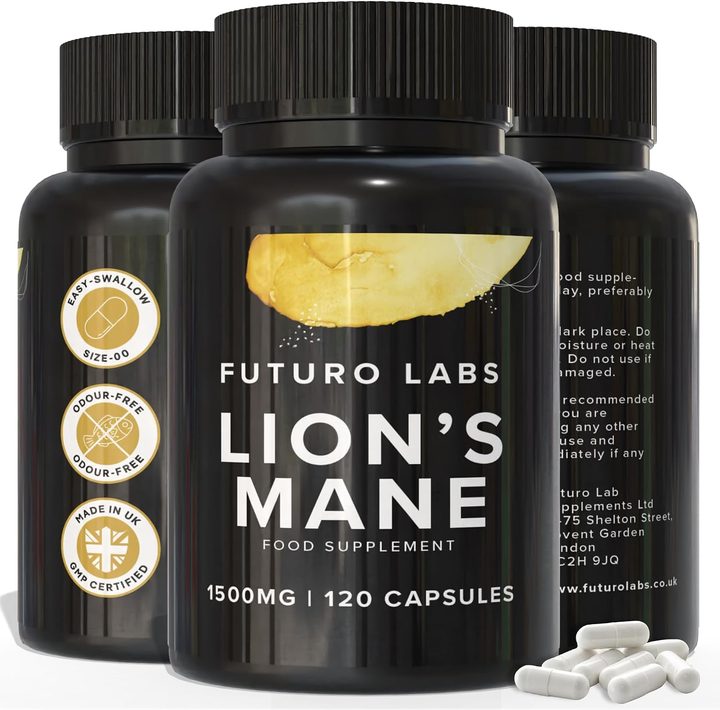
Our brand: the worked example on this page
Futuro Labs Lion's Mane
- 13p a day
- 120 capsules, 1 capsule daily
- Lab tested
- Made in the UK
The format that prints its numbers: Futuro Labs Lion's Mane on Amazon UK, 1 capsule of 5:1 fruiting body extract labelled 1500mg mushroom equivalent, 120 capsules for £15.49, 120 days at 13p. Full label breakdown. The whole section starts at the lion's mane guide; the same format logic ran on the collagen gummies page.
The claims frame set first, then the two label facts every mushroom purchase turns on
Set the legal frame before comparing formats, because it governs both: lion's mane holds no authorised health claims in the UK, none for focus, memory, mood or anything else, so no honest gummy and no honest capsule promises cognitive effects, and the human research being described here as research is small, a 16-week trial in older Japanese adults with mild cognitive impairment reporting improved scores that faded after stopping, and a 41-person pilot in young adults reporting one faster task acutely and lower subjective stress at 28 days, interesting and thin, studies this section will keep describing as studies. With claims off the table for everyone, a mushroom purchase turns on exactly two label facts, and they are the axis this comparison runs on. Fact one, fruiting body versus mycelium: the mushroom itself, the fruiting body, is what the small human studies used, while much of the market sells mycelium grown on grain, harvested grain and all, a legitimate ingredient that nonetheless arrives diluted by its growing substrate, so the words fruiting body on a label are the first thing to find. Fact two, the extract ratio: a 5:1 extract means five grams of mushroom concentrated into one of extract, the ratio being what separates a concentrated preparation from plain dried powder, and the labelling convention prints the mushroom-equivalent figure, 1500mg equivalent describing about 300mg of actual 5:1 extract, honest as long as the ratio is stated, meaningless when it is not, with beta-glucan percentages the third fact the best labels add and this site never invents where a label stays silent.
The two formats measured against those facts, the sugar arithmetic run, and the lifter's verdict
Now measure the formats. Gummies fail the label facts almost by construction: the ingredient list of a typical mushroom gummy opens with glucose syrup and sugar, the sweet matrix that is the format's whole point, and the lion's mane appears down-list at doses that are token when stated and unstated distressingly often, extract ratios rarely printed, fruiting-body-versus-mycelium rarely declared, the format's per-unit ceiling doing here what tablet compression did in the collagen aisle, capping the active payload far below capsule fills while the sugar arithmetic adds its own line, two-to-three grams of sugars per gummy meaning a two-gummy serving is a small sweet eaten daily for the privilege of a dose you often cannot verify, at a per-day price that routinely exceeds honest capsules. Capsules pass the same facts by default of format: nothing needs sweetening, so the shell holds extract and a declared bulking agent and the label has room to state its numbers, the worked example printing all of them, fruiting body, 5:1, 1500mg mushroom equivalent per single capsule, brown rice flour named as the filler, vegan HPMC shell, 13p a day across a 120-day bottle, no beta-glucan percentage claimed because none is measured on the label, the silence kept honestly. The lifter's verdict then writes itself, and it is the same verdict the collagen gummies autopsy reached one section over: which should lifters take is really which format lets you verify what you are taking, and that is capsules, the gummy's real product being the sweet, with the caffeine-free note added for this audience specifically, lion's mane being no stimulant in any format, so nothing here replaces pre-workout and nothing needs to avoid the evening.
| The fact | Gummies | Capsules |
|---|---|---|
| Fruiting body stated? | Rarely declared | Printed where honest: the first thing to find |
| Extract ratio stated? | Rarely: doses often token or absent | A 5:1 with the equivalent figure printed |
| The matrixOurs | Glucose syrup and sugar, first in the list | A shell and a named bulking agent |
| The sugar line | 2-3g per gummy: a daily sweet | Zero |
| Pence per day | Routinely higher for less verifiable dose | 13p on the worked example's 120-day bottle |
| The claims | None allowed, in any format | None claimed: studies described as studies |
The verdict, printed like a good label
Lion's mane gummies versus lion's mane: capsules, for the reason that decides every format contest this site runs, the label facts, a stated fruiting-body extract at a stated ratio being checkable in a way a sugar-first sweet with a token, often unstated dose never is, with no claims available to either format and the small human literature described as the studies it is. The worked example is the checkable version: Futuro Labs Lion's Mane, one capsule of 5:1 fruiting body extract labelled 1500mg mushroom equivalent, brown rice flour declared, vegan HPMC shell, UK made under GMP and BRC, independently lab tested, £15.49 for 120 capsules, 120 days at 13p a day, caffeine free, a label that prints its numbers, which in this aisle is the entire argument.
What to check on the label
- No claims exist either way: the research is small and described as such.
- Find fruiting body first: the studies' material, not mycelium-on-grain.
- Demand a stated ratio: 5:1 with the equivalent figure printed.
- Run the sugar arithmetic: gummies are a daily sweet at a premium.
- Buy the checkable format: capsules print what gummies hide.
Our brand
The worked example: Futuro Labs Lion's Mane
Futuro Labs Lion's Mane: 1 capsule daily of 5:1 fruiting body extract, labelled 1500mg mushroom equivalent (about 300mg extract), 120 capsules for £15.49, 120 days at 13p a day. Vegan HPMC shell, UK made under GMP and BRC, independently lab tested, caffeine free. Lion's mane holds no authorised UK health claims; this site describes its small studies as studies.
- Extract
- fruiting body, 5:1
- Per capsule
- 1500mg mushroom equivalent
- Serving
- 1 capsule a day
- Bottle
- 120 capsules, 120 days
- Price
- £15.49 (13p a day)
- Capsule
- HPMC vegan shell, size 00
Questions people also ask
Are lion's mane gummies as good as capsules?
They fail the label facts: sugar-first ingredients around token, often unstated doses, with extract ratios and fruiting-body sourcing rarely declared, while honest capsules print all three.
What does a 5:1 lion's mane extract mean?
Five grams of mushroom concentrated into one of extract: a 1500mg mushroom-equivalent label describes about 300mg of actual 5:1 extract, honest whenever the ratio is stated beside it.
Why does fruiting body versus mycelium matter?
The small human studies used the mushroom itself, and mycelium-on-grain products arrive diluted by their growing substrate, so fruiting body on the label is the first thing to find.
Does lion's mane give lifters focus or energy?
No claims exist and it is not a stimulant: the human research is a small MCI trial and a 41-person pilot, described here as studies, with nothing replacing pre-workout in any format.
How much sugar is in mushroom gummies?
Typically two to three grams per gummy: a daily two-gummy serving is a small sweet eaten for a dose you often cannot verify, at pence-per-day above honest capsules.
Sources
- Mori K, Inatomi S, Ouchi K, Azumi Y, Tuchida T. Improving effects of the mushroom Yamabushitake (Hericium erinaceus) on mild cognitive impairment: a double-blind placebo-controlled clinical trial. Phytotherapy Research 2009;23(3):367-372. PubMed record
- Docherty S, Doughty FL, Smith EF. The acute and chronic effects of lion's mane mushroom supplementation on cognitive function, stress and mood in young adults: a double-blind, parallel groups, pilot study. Nutrients 2023;15(22):4842. PubMed record
- The medicinal mushroom labelling discussion: fruiting body versus mycelium-on-grain, extract ratios and beta-glucan content as the label facts that separate concentrated extracts from diluted powders. PubMed record
- Retained Regulation (EC) No 1924/2006 on nutrition and health claims made on foods, and the Great Britain nutrition and health claims register. https://www.gov.uk/government/publications/great-britain-nutrition-and-health-claims-nhc-register