Ghost Fitness/Collagen/Collagen powder vs pills vs gummies: which is better?
Collagen powder vs pills vs gummies: which is better?
The short answer
Autopsy the gummy first: sugars and pectin lead its ingredients, the collagen dose trails in milligrams, and the sugar-to-collagen ratio makes it confectionery in supplement costume. Pills carry the habit, powder carries the grams, gummies carry the sugar.
- The gummy's first ingredientsglucose syrup and sugar, then pectin: a sweet's anatomy
- The gummy's collagenoften 50-250mg per sweet: milligrams in a sugar vehicle
- The ratio that decidesgrams of sugar per gram of collagen, frequently exceeding one
- The rankingpowder for grams, capsules for the habit, gummies for the taste
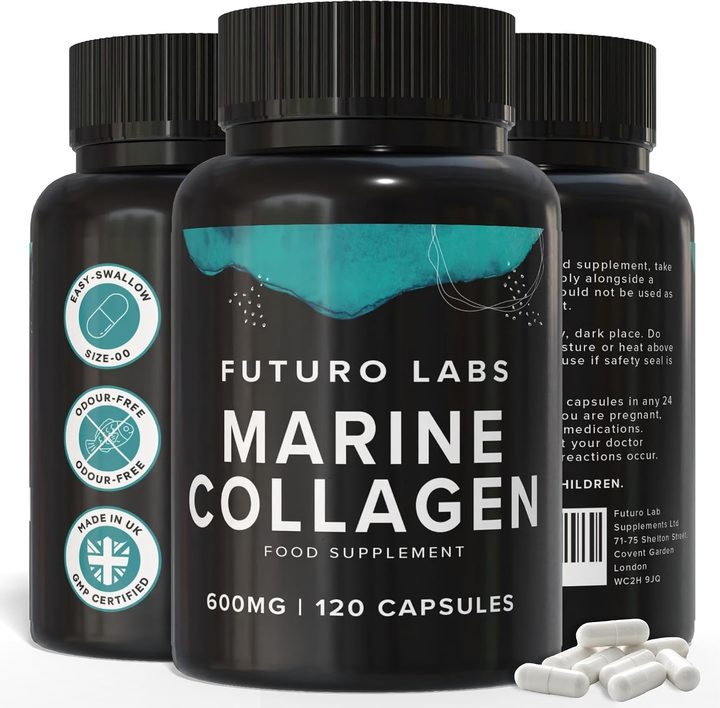
Our brand: the worked example on this page
Futuro Labs Marine Collagen
- 28p a day
- 120 capsules, 2 capsules daily
- Lab tested
- Made in the UK
The habit lane without the sugar: Futuro Labs Marine Collagen on Amazon UK, 1200mg hydrolysed type 1 in two capsules, no sweeteners, no syrup, vitamin C and zinc at 15% NRV, £16.99 for 60 days at 28p. Full label breakdown. The pills-powder-liquid league is on the league page; the tablet excipients on the tablets page.
The gummy autopsy: what is actually inside the new contestant
Powder and pills have been compared to exhaustion on their own pages, so this three-way exists for its new contestant, and the gummy earns a proper autopsy because no format's label diverges further from its shelf promise. Open one and read the ingredients in legal order, largest first: glucose syrup, then sugar, then pectin or another gelling agent, then acids, flavours and colours, and somewhere down the list, the collagen, typically 50 to 250 milligrams per gummy, occasionally scraping higher in serious products, milligrams riding a vehicle built of sweets. Run the arithmetic the label invites: two gummies delivering perhaps 200 to 500mg of collagen alongside 2 to 4 grams of sugars means the sugar frequently outweighs the collagen gram for gram, a ratio no other format in the aisle approaches, and reaching even this section's modest 1-to-2g habit dose through gummies means a daily handful whose sugar load a dentist would price before any nutritionist, while the 10-to-15g protocol band is arithmetically fantasy, forty-plus sweets a day. The autopsy's finding, delivered without cruelty: a collagen gummy is confectionery in supplement costume, a real if small dose of peptides dissolved in a candy business model, purchased honestly only by a buyer who has read the ratio and wants the sweet.
The three formats ranked by job, the gummy's one honest niche, and the ranking defended
Ranked by the jobs this section actually recognises, the three formats sort quickly. Powder carries the grams: the only vehicle spanning the full dose range, the habit scoop through the 15g protocol, cheapest per gram, shortest ingredients line, the default wherever quantity matters. Capsules carry the habit: the clean two-swallow routine at 1-to-2g scale with the cofactors tidily aboard and nothing else in the vehicle beyond a shell, the format the pill-tolerant keep most easily, which the adherence pages rate as the effectiveness that finally counts. Gummies carry the sugar, and their one honest niche is narrow but real: a reader who cannot or will not swallow capsules, finds every powder ritual abandoned by week two, and will genuinely keep a sweet-shaped habit, for whom a low-dose gummy taken knowingly beats a perfect format taken never, provided the buyer prices it as what the autopsy found, the most expensive milligrams in the aisle wrapped in the day's least necessary sugar, checks the tub for the dose per gummy rather than per implausible serving, and keeps the dentist's ledger in view. The ranking defended in one line each: powder wins wherever grams are the point, capsules win wherever routine is the point, gummies win only where taste is the point, and the standing checks referee all three, stated dose at true scale, vitamin C at 15% NRV for the lawful sentences, single named source, per-batch testing, honest dates, and the pence divided per gram of actual collagen, a division the gummy shelf fails more spectacularly than any other.
| The format | What it carries | The verdict |
|---|---|---|
| Powder | The grams: habit scoop to 15g protocol | The default wherever quantity matters |
| Capsules | The habit: 1-2g, cofactors aboard, a shell and nothing else | The clean routine the pill-tolerant keep |
| Gummies | The sugar: milligrams of collagen in a sweet's anatomy | Confectionery in costume: the taste niche only |
| The ratio check | Sugar per gram of collagen, often exceeding one | No other format approaches it |
| The dose ceiling | Habit barely; protocol never: forty-plus sweets | Arithmetic closes the lane |
| The pence division | Per gram of actual collagen | The gummy shelf's most spectacular failure |
The verdict, signed off the autopsy table
Collagen powder vs pills vs gummies: the autopsy settles the new contestant, sugars and pectin leading its label with the collagen trailing in milligrams, a ratio and a price per gram no other format approaches, so the ranking stands, powder for the grams, capsules for the habit, gummies only for the reader who will keep no other routine and buys the sweet knowingly. The worked example holds the habit lane with the vehicle stripped honest: Futuro Labs Marine Collagen, 1200mg hydrolysed type 1 in two capsules, no syrup, no sweeteners, just the shell and the fill with 12mg vitamin C and 1.5mg zinc at 15% NRV, lab tested, UK made, £16.99 for 60 days at 28p a day, milligrams priced as milligrams, which is the whole contest in one line.
What to check on the label
- Autopsy the gummy's label: syrup and sugar lead, collagen trails.
- Run the ratio: sugar often outweighs the collagen gram for gram.
- Powder carries the grams: the only full-range vehicle.
- Capsules carry the habit: a shell, a fill, and nothing else.
- Buy the sweet knowingly or not at all: the taste niche is the only niche.
Our brand
The worked example: Futuro Labs Marine Collagen
Futuro Labs Marine Collagen: 2 capsules daily, 1200mg hydrolysed type 1 marine collagen with 12mg vitamin C and 1.5mg zinc (15% NRV each), 120 capsules for £16.99, 60 days at 28p a day, lab-tested, UK GMP made. Slim veggie-shell capsules, odour free. Fish derived: pescatarian, not vegetarian or vegan.
- Collagen per serving
- 1200mg hydrolysed type 1 marine (fish)
- Co-factors
- vitamin C 12mg (15% NRV), zinc 1.5mg (15% NRV)
- Serving
- 2 capsules a day
- Bottle
- 120 capsules, 60 days
- Price
- £16.99 (28p a day)
- Capsule
- slim size 00, veggie shell, odour free
Questions people also ask
Are collagen gummies as good as powder or pills?
No: sugars and pectin lead their ingredients with collagen trailing at 50 to 250mg per sweet, so they are confectionery in supplement costume, defensible only for the reader who keeps no other format.
How much sugar is in collagen gummies?
Commonly 1 to 2 grams per gummy, meaning a serving's sugar frequently outweighs its collagen: run the ratio on the specific tub before buying.
Can I reach a proper collagen dose with gummies?
The 1-to-2g habit needs a daily handful and the 10-to-15g protocol would need forty-plus sweets: the arithmetic closes the lane at any serious scale.
Which format is actually best?
By job: powder wherever grams matter, capsules for the clean daily habit with cofactors aboard, and gummies only where taste is the deciding factor, priced knowingly.
What checks apply across all three formats?
The standing ones: dose stated at true scale, vitamin C at 15% NRV, a single named source, per-batch testing, honest dates, and pence divided per gram of actual collagen.
Sources
- The collagen peptide trial literature: randomised controlled studies of hydrolysed collagen supplementation across skin, joint and connective-tissue outcomes, typically at 2.5g to 15g daily, with small effects and frequent industry funding. PubMed record
- Futuro Labs Marine Collagen listing and label: 1200mg hydrolysed type 1 marine collagen per 2-capsule serving with 12mg vitamin C and 1.5mg zinc at 15% NRV each, 120 capsules, independently lab tested, UK made. https://www.amazon.co.uk/dp/B0C2J7N364
- EFSA Panel on Dietetic Products, Nutrition and Allergies. Scientific Opinion on the substantiation of health claims related to magnesium. EFSA Journal 2010;8(10):1807. https://efsa.onlinelibrary.wiley.com/doi/10.2903/j.efsa.2010.1807
- EFSA Panel on Dietetic Products. Scientific opinion on Dietary Reference Values for fats: Adequate Intake of 250mg combined EPA and DHA per day for adults. EFSA Journal 2010;8(3):1461. https://www.efsa.europa.eu/en/efsajournal/pub/1461