Ghost Fitness/Collagen/Do vitamins help with strong bones and joints?
Do vitamins help with strong bones and joints?
The short answer
Yes, with the register's verb: vitamins D, C and K contribute to the maintenance of normal bones, and vitamin C to normal collagen formation for cartilage. None strengthens anything; strong is what load does. Maintenance is the vitamin's job.
- The yesvitamin D, vitamin K: maintenance of normal bones; vitamin C: normal collagen formation for bones and cartilage
- The nostrong is not a register verb for any vitamin; strength is an adaptation to load
- The one to buyvitamin D, 10 micrograms a day through autumn and winter
- The two to eatvitamin C from fruit and vegetables; vitamin K from leafy greens, steady on warfarin
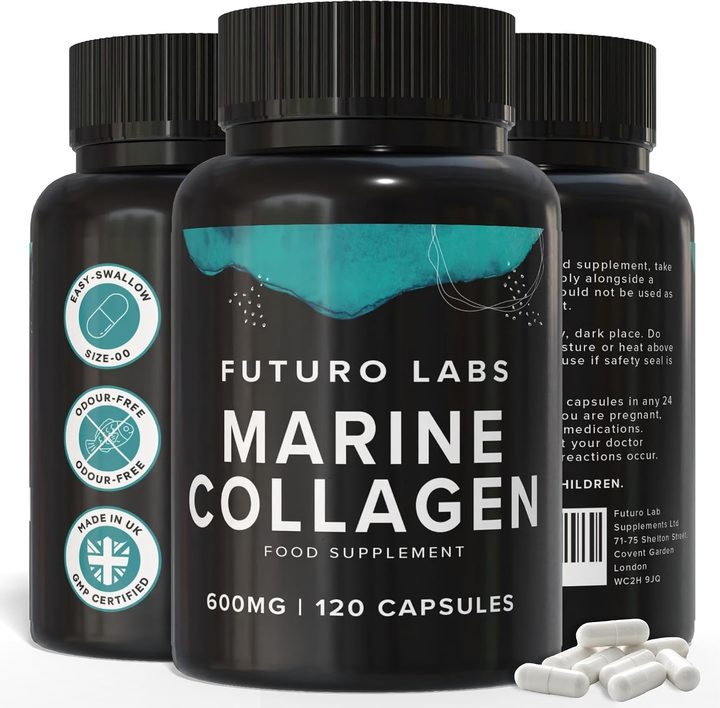
Our brand: the worked example on this page
Futuro Labs Marine Collagen
- 28p a day
- 120 capsules, 2 capsules daily
- Lab tested
- Made in the UK
Vitamin C's sentence carried on a collagen label: Futuro Labs Marine Collagen on Amazon UK, 2 capsules, 1200mg hydrolysed type 1 marine collagen with 12mg vitamin C at 15% NRV plus zinc, 120 for £16.99, 28p a day, lab tested and UK made, the collagen below the research band and holding no sentence, the vitamin C contributing to normal collagen formation for the normal function of bones and cartilage. Full label breakdown. The three vitamins in detail are on the best vitamins for bones and joints page; what strong actually means on the joints stronger page.
The yes: three vitamins and the sentences the register grants them
Do vitamins help with strong bones and joints is a yes or no question whose answer turns on a single word, and the honest page audits that word before answering, because the shelf and the register use different verbs and the difference is the whole of the answer. The yes first, in the register's own words. Three vitamins hold authorised sentences for bones and joints in the UK nutrition and health claims register, and each sentence has the same grammatical shape. Vitamin D contributes to the maintenance of normal bones, to the maintenance of normal muscle function and to the normal absorption and utilisation of calcium, three sentences that together cover the bone, the muscle that loads it and the mineral it is made from, which is why vitamin D is the bone vitamin the guidance names. Vitamin K contributes to the maintenance of normal bones, through its role in the proteins that bind calcium into the bone matrix, with the standing caution that vitamin K supplements antagonise warfarin and a reader on that medicine keeps intake steady from food and asks the clinic before any tablet. Vitamin C contributes to normal collagen formation for the normal function of bones and for the normal function of cartilage, the only cartilage sentence any nutrient holds, because vitamin C is the cofactor for the enzymes that cross-link collagen and its severe deficiency historically produced connective tissue failure, the disease that the modern diet has retired. So yes: a reader replete in vitamins D, K and C has bones and cartilage that are maintained as the register says they should be, and a reader short of any of them, vitamin D above all in a UK winter, has a deficit that the sentence describes and a supplement corrects. Notice the verb in all of it: contributes to the maintenance of normal, and normal collagen formation. Not one of the sentences says strengthens, builds, improves or protects, and that is not timidity on the regulator's part but accuracy, since the evidence the sentences rest on is deficiency evidence, what goes wrong without the vitamin, and not evidence that more of it makes a normal bone stronger than normal.
The no: strong is the barbell's verb, and what to do with the audit
The no is the same three vitamins read against the word the question actually used. Strong is not a verb the register grants any vitamin, and no vitamin strengthens a bone or a joint, because strength is an adaptation and not a property a nutrient can supply. Bone mineral density rises when bone is loaded progressively over months, the trials of resistance training showing gains at the spine and hip, and falls when it is not, whatever the vitamin status of the person, so a bone made stronger has been loaded and a bone maintained has been supplied. Joint strength is stability and load capacity, the muscle and control around the joint and the conditioning of the tissues to the loads asked of them, both adaptations to training and neither a substance, so a joint made stronger has been trained around and a joint maintained has been given the vitamin C its cartilage needs to keep making collagen at the normal rate. The relationship is permission rather than production: a vitamin present at adequate levels permits the adaptation that load produces, the way a full fuel tank permits a journey without driving anywhere, and a vitamin absent prevents it, which is exactly what the deficiency sentences describe. The audit matters because the shelf writes strong where the register writes maintenance, a bone-strengthening formula being a tub of vitamin D, calcium and vitamin K whose lawful label says maintenance and whose marketing says strong, and a reader who buys the verb strong has bought a promise that belongs to the barbell and paid a tub's price for the permission slip. What to do with the audit is short. Vitamin D is the one vitamin to buy, at ten micrograms a day through autumn and winter as the UK guidance says, since the sun cannot supply it from October to March and the deficiency is common; vitamin C is met from fruit and vegetables by anyone eating them; vitamin K is met from leafy greens, kept steady on warfarin. Then lift, since that is where strong lives. Collagen for completeness: it holds no bone or joint sentence, its joint comfort trials at ten grams over months are research and its one bone trial is a single manufacturer-linked result, so a collagen capsule's lawful bone and cartilage line is vitamin C's, and the worked example says so on its true terms: two capsules, 1200mg hydrolysed type 1 marine collagen with 12mg vitamin C plus zinc, 120 for £16.99 at 28p a day, lab tested and UK made, the collagen below the research band, the vitamin C contributing to normal collagen formation for the normal function of bones and cartilage at 15% of its reference value, a maintenance sentence honestly held. Do vitamins help with strong bones and joints: they maintain, load strengthens, and the reader who knows which verb they are buying spends the money in the right place.
| The item | The register's verb | The shelf's verb | What actually does it |
|---|---|---|---|
| Vitamin D | Contributes to the maintenance of normal bones, muscle function, calcium absorption | Strengthens bones | Load strengthens; D maintains; buy it at 10 micrograms through winter |
| Vitamin K | Contributes to the maintenance of normal bones | Builds bone | Load builds; K maintains from leafy greens; steady on warfarin |
| Vitamin C | Contributes to normal collagen formation for the normal function of bones and cartilage | Repairs joints | Training strengthens joints; C maintains from fruit and vegetables |
| Strong | Not granted to any vitamin | Everywhere | An adaptation to progressive load over months |
| Collagen | No bone or joint sentence | Supports joints | Research at ~10g over months; vitamin C carries the label's sentence |
| The worked exampleOurs | Vitamin C: normal collagen formation for bones and cartilage, 15% NRV | None printed | Two capsules, 1200mg marine collagen with 12mg vitamin C plus zinc, 28p a day |
What to check on the label
- Audit the verb: maintenance is granted, strong is not.
- Buy vitamin D for winter: 10 micrograms a day, October to March.
- Eat C and K: fruit, vegetables, leafy greens; steady on warfarin.
- Get strong under load: the barbell owns that verb.
- Read a collagen tub's bone line as vitamin C's: collagen holds none.
Our brand
The worked example: Futuro Labs Marine Collagen
Futuro Labs Marine Collagen: 2 capsules daily, 1200mg hydrolysed type 1 marine collagen with 12mg vitamin C and 1.5mg zinc (15% NRV each), 120 capsules for £16.99, 60 days at 28p a day, lab-tested, UK GMP made. Slim veggie-shell capsules, odour free. Fish derived: pescatarian, not vegetarian or vegan.
- Collagen per serving
- 1200mg hydrolysed type 1 marine (fish)
- Co-factors
- vitamin C 12mg (15% NRV), zinc 1.5mg (15% NRV)
- Serving
- 2 capsules a day
- Bottle
- 120 capsules, 60 days
- Price
- £16.99 (28p a day)
- Capsule
- slim size 00, veggie shell, odour free
Questions people also ask
Which vitamins are good for bones and joints?
Three hold register sentences: vitamin D for the maintenance of normal bones, muscle function and calcium absorption, vitamin K for the maintenance of normal bones, and vitamin C for normal collagen formation for the normal function of bones and cartilage, the only cartilage sentence, with D the one bought and C and K met from food.
Can vitamins make your bones stronger?
Not in the register's words or the evidence's: the sentences say maintenance of normal bones, resting on what goes wrong in deficiency, and bone is made stronger by progressive loading over months, which trials of resistance training show raising density at the spine and hip, a vitamin permitting that adaptation rather than producing it.
Is vitamin D enough for strong bones?
Vitamin D maintains, at ten micrograms a day through the UK autumn and winter, keeping calcium absorbed and muscle working, and strong comes from load, protein at around 1.6 grams per kilo and calcium from food, so vitamin D is the one pill in a plan whose largest lever is lifting.
What does vitamin C do for joints?
It holds the register's only cartilage sentence, contributing to normal collagen formation for the normal function of cartilage and bones, as the cofactor for the enzymes that cross-link collagen, a maintenance role met from fruit and vegetables and carried on collagen labels that include it.
Does collagen count as a vitamin for bones and joints?
No: collagen is a protein and holds no bone or joint sentence, its joint comfort trials at around ten grams over months are research and its one bone trial a single manufacturer-linked result, so a collagen capsule's lawful bone and cartilage line belongs to the vitamin C beside it.
Sources
- The GB claims register, vitamin D entries: vitamin D contributes to normal bones, teeth, muscle function, immune function and calcium absorption, with UK guidance suggesting 10 micrograms daily in autumn and winter. https://www.gov.uk/government/publications/great-britain-nutrition-and-health-claims-nhc-register
- The GB claims register, vitamin K entries, and the warfarin interaction: vitamin K contributes to normal blood clotting and to the maintenance of normal bones, and vitamin K supplements, K2 included, antagonise warfarin and are taken only on the anticoagulant clinic's advice. https://www.gov.uk/government/publications/great-britain-nutrition-and-health-claims-nhc-register
- The vitamin C deficiency literature: severe deficiency impairs collagen synthesis and produces connective tissue failure, the historical disease scurvy, essentially absent on ordinary modern diets. PubMed record
- The connective tissue and bone loading literature: tendons, ligaments and bone adapt to progressive loading over months, tendons stiffening and bone mineral density rising with resistance training, with the adaptation driven by the load itself and protein, calcium and vitamin D as the nutritional supports, and no evidence that omega-3 alters tendon, ligament or bone adaptation to training. PubMed record