Ghost Fitness/Collagen/Do vitamins help with muscle pain and joints?
Do vitamins help with muscle pain and joints?
The short answer
Sort the pain by its clock. Soreness 24 to 72 hours after training: no vitamin; the repeated bout fixes it. Winter aches with weakness: vitamin D if deficient, the one vitamin-fixable pain. Symmetric morning stiffness over an hour: a doctor.
- Clock one, 24 to 72 hoursdelayed-onset soreness: no vitamin treats it; the repeated bout effect prevents it
- Clock two, a winteraches with weakness and fatigue: vitamin D deficiency, the one vitamin-corrected pain, 10 micrograms by guidance
- Clock three, an hour each morningsymmetric stiffness over an hour: inflammatory arthritis picture, a doctor's clock
- The registerno vitamin holds a pain sentence: D and magnesium hold muscle function, C holds collagen formation
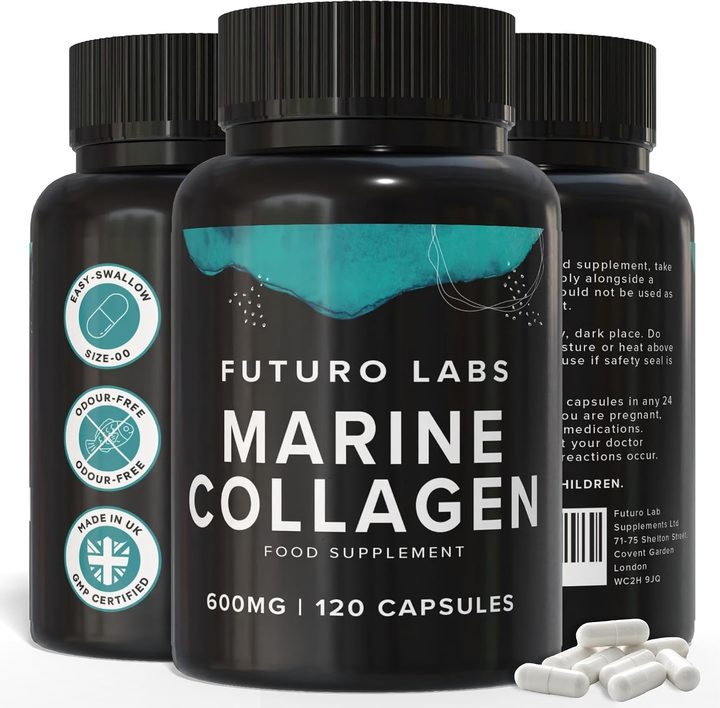
Our brand: the worked example on this page
Futuro Labs Marine Collagen
- 28p a day
- 120 capsules, 2 capsules daily
- Lab tested
- Made in the UK
For the joint that is research, not pain: Futuro Labs Marine Collagen on Amazon UK, 2 capsules, 1200mg hydrolysed type 1 marine collagen with 12mg vitamin C at 15% NRV plus zinc, 120 for £16.99, 28p a day, lab tested and UK made, below the ~10g joint comfort research dose and taken for vitamin C's cartilage sentence, holding no pain sentence because none exists. Full label breakdown. The verb audit is on the vitamins for strong bones and joints page; the joint complaints sorted on the collagen for lifters' joints page.
Clocks one and two: the soreness that fades in days and the aches that arrive with winter
Do vitamins help with muscle pain and joints is a question that cannot be answered until the pain is sorted, and the most useful sorting tool is the clock, because muscle and joint pains announce their cause by when they arrive and how long they stay, and the vitamin question has a different answer on each clock. Clock one runs from twenty-four to seventy-two hours. The soreness that follows unfamiliar or eccentric-heavy training, the first heavy squat session in months, the downhill run, the new exercise, begins eight to twenty-four hours later, peaks at one to three days and fades by about a week, the delayed-onset muscle soreness time course, and it is the pain most lifters mean. No vitamin treats it. The repeated bout effect does: a second exposure to the same exercise within weeks produces far less soreness, which is why the fix is to do the thing again gently rather than to open a tub, and the supplement research on this clock is thin, one small trial of 350mg of magnesium a day around running reporting less perceived soreness, and mixed small trials of collagen peptides around exercise reporting inconsistent effects on soreness and recovery markers with no benefit established, research at best and no claim. Clock two runs a whole season, and it is where the question's one clean yes lives. Aches in the muscles and bones, proximal weakness, a heaviness climbing stairs or rising from a chair, fatigue and cramps arriving through a UK autumn and winter are the picture of vitamin D deficiency, which is common in this country because the sun is too low from October to March for skin to make the vitamin, and severe deficiency produces osteomalacia with bone and joint pain and muscle weakness. This is the one muscle and joint pain a vitamin corrects, and it corrects it only in a reader who was deficient: the UK guidance is ten micrograms a day for adults through autumn and winter, a doctor's blood test and advice decides anything higher, and a reader who was replete gains no pain relief from more vitamin D, since the vitamin holds a sentence for the maintenance of normal muscle function and not a pain sentence, and a normal muscle is not made less sore by a vitamin it already has.
Clocks three and four, the register's pain silence, the statin note, and the worked example
Clock three is an hour every morning, and it is a doctor's clock. Joint stiffness that lasts more than an hour on waking, eases with movement over the morning and affects the same joints on both sides, the small joints of the hands, the wrists, the feet, is the hallmark pattern of inflammatory arthritis as distinct from the few minutes of stiffness a loaded joint or an osteoarthritic knee gives, and it is a reason to see a doctor rather than to sort vitamins, because the inflammatory arthritides are diagnosed by blood test and examination and treated early for good reason, and a vitamin experiment on that clock is months lost. Add to the doctor's clock a joint that is hot, red and swollen, a joint pain with fever or a rash, and pain that wakes the reader at night unrelated to position. Clock four is persistent and slow: the lifter's ache after volume, knees the evening after a heavy leg day, shoulders after a pressing block, worse with volume and better with a lighter week, which is load management and programming rather than nutrition, and where the collagen joint comfort trials at around ten grams a day over months sit as research with modest effects, beside the omega-3 and curcumin research with similar hedges. The register's silence deserves stating plainly: no vitamin holds a pain sentence of any kind. Vitamin D contributes to the maintenance of normal muscle function, magnesium contributes to normal muscle function, vitamin C contributes to normal collagen formation for the normal function of cartilage, and none of those is a sentence about pain, so a tub that says it relieves joint pain has left the register behind. One more clock for the reader on a statin: muscle aches, weakness and cramps are the commonest reason people stop statins, and they belong to the prescriber, who manages them by dose, drug and timing, not to a vitamin, although a doctor may check vitamin D along the way. The worked example holds no pain sentence because none exists, and states its terms: two capsules, 1200mg hydrolysed type 1 marine collagen with 12mg vitamin C plus zinc, 120 for £16.99 at 28p a day, lab tested and UK made, below the ten-gram joint comfort research dose, taken for vitamin C's collagen formation sentence for cartilage, a maintenance line and not a relief. Do vitamins help with muscle pain and joints: on the soreness clock, no; on the winter clock, vitamin D if the reader is deficient; on the morning clock, a doctor; on the volume clock, a lighter week; and on no clock does any vitamin hold a pain sentence.
| The clock | The pain | The likely cause | The vitamin answer |
|---|---|---|---|
| 24 to 72 hours | Soreness after unfamiliar or eccentric training, fading by a week | Delayed-onset muscle soreness | None treats it; the repeated bout effect prevents it; magnesium and collagen research is thin |
| A season | Aches with proximal weakness, fatigue, cramps through autumn and winter | Vitamin D deficiency, common in the UK | Vitamin D, 10 micrograms by guidance, more on a blood test: the one vitamin-corrected pain |
| An hour each morning | Stiffness over an hour on waking, easing with movement, symmetric joints | Inflammatory arthritis picture | A doctor, not a vitamin |
| Persistent with volume | The lifter's ache after heavy sessions | Load exceeding current capacity | Load management, a lighter week; collagen at ~10g over months as research |
| On a statin | Aches, weakness, cramps after starting one | Statin-associated muscle symptoms | The prescriber; vitamin D may be checked |
| The register | Any of the above | The tub's promise | No vitamin holds a pain sentence; D and magnesium hold muscle function, C holds collagen formation |
| The worked exampleOurs | Two capsules, 1200mg marine collagen with 12mg vitamin C, 28p a day | Below the research dose | Vitamin C's cartilage sentence; no pain sentence |
What to check on the label
- Time the pain: days, a season, every morning, or with volume.
- Let soreness fade: the repeated bout, not a tub.
- Check vitamin D in winter: aches with weakness, 10 micrograms by guidance.
- Take an hour of morning stiffness to a doctor: symmetric joints especially.
- Expect no pain sentence from any vitamin: the register grants none.
Our brand
The worked example: Futuro Labs Marine Collagen
Futuro Labs Marine Collagen: 2 capsules daily, 1200mg hydrolysed type 1 marine collagen with 12mg vitamin C and 1.5mg zinc (15% NRV each), 120 capsules for £16.99, 60 days at 28p a day, lab-tested, UK GMP made. Slim veggie-shell capsules, odour free. Fish derived: pescatarian, not vegetarian or vegan.
- Collagen per serving
- 1200mg hydrolysed type 1 marine (fish)
- Co-factors
- vitamin C 12mg (15% NRV), zinc 1.5mg (15% NRV)
- Serving
- 2 capsules a day
- Bottle
- 120 capsules, 60 days
- Price
- £16.99 (28p a day)
- Capsule
- slim size 00, veggie shell, odour free
Questions people also ask
What vitamin helps with muscle pain after working out?
None treats delayed-onset soreness: it peaks at one to three days after unfamiliar training and fades by a week, the repeated bout effect prevents most of it the second time, and the supplement research on this clock is one small magnesium trial and mixed collagen trials, with no vitamin holding a pain sentence.
Can low vitamin D cause muscle and joint pain?
Yes, and it is the one muscle and joint pain a vitamin corrects: deficiency, common through a UK autumn and winter, produces aches in muscles and bones, proximal weakness, fatigue and cramps, and severe deficiency osteomalacia, corrected by vitamin D at ten micrograms a day by guidance or more on a blood test and a doctor's advice, in a reader who was deficient.
When is joint pain a reason to see a doctor rather than try a supplement?
When it runs on the morning clock: stiffness lasting over an hour on waking, easing with movement and affecting the same joints on both sides is the inflammatory arthritis pattern, and a hot, red, swollen joint, joint pain with fever or a rash, or pain that wakes you at night are all a doctor's, since a supplement experiment on those is months lost.
Does magnesium help with muscle pain?
It holds a sentence for normal muscle function, not for pain: one small trial of 350mg a day around running reported less perceived soreness, research rather than a claim, and clinically low magnesium produces cramps and weakness that correcting it resolves, which is a deficiency picture and not a general analgesic.
Does collagen help joint pain in lifters?
As research: around ten grams a day for twelve to twenty-four weeks reduced activity-related joint discomfort in small, mostly industry-funded trials, modest effects and no claim, with load management and a lighter week the interventions that carry the weight for the ache after volume.
Sources
- The delayed-onset muscle soreness time-course literature: soreness after unfamiliar or eccentric exercise begins at eight to twenty-four hours, peaks at twenty-four to seventy-two hours and resolves over five to seven days, with the repeated-bout effect reducing subsequent episodes. PubMed record
- The vitamin D deficiency literature: severe deficiency causes osteomalacia with bone and joint pain, proximal muscle weakness, aches and cramps, common in the UK in winter and in people with dark skin or little sun exposure, diagnosed by a serum 25-hydroxyvitamin D and treated on a doctor's dose. PubMed record
- The morning stiffness literature: stiffness lasting an hour or more on waking, easing with activity and affecting joints symmetrically, is a hallmark of inflammatory arthritis and a criterion in its diagnosis, while stiffness of a few minutes that eases with the first movements is typical of osteoarthritis and of loaded or overused joints, the duration being the clinical discriminator. PubMed record
- The statin-associated muscle symptoms literature: muscle aches, weakness and cramps are the commonest reason for stopping statins, are managed by the prescriber through dose, drug or timing changes, and have no established prevention from supplements, coenzyme Q10 trials being mixed and magnesium untested. PubMed record