Ghost Fitness/Collagen/How long does it take collagen to tighten skin?
How long does it take collagen to tighten skin?
The short answer
Place it in the toolbox. Sunscreen: years, prevention. Retinoid: three to six months, the best topical evidence. Weight stability and muscle: months. Procedures: weeks. Oral collagen: eight to twelve weeks at 2.5 to 10g, a few percent by instrument.
- Sunscreenthe largest lever, prevention measured in years of daily use
- A topical retinoidthe best-evidenced topical for photoaged skin: three to six months of nightly use to a visible change
- Weight stability, muscle, proceduresskin follows the volume beneath: months; microneedling, radiofrequency, fillers: weeks to months, a practitioner's
- Oral collagenelasticity by cutometer up a few percent at 2.5 to 10g over 8 to 12 weeks; below what a mirror shows
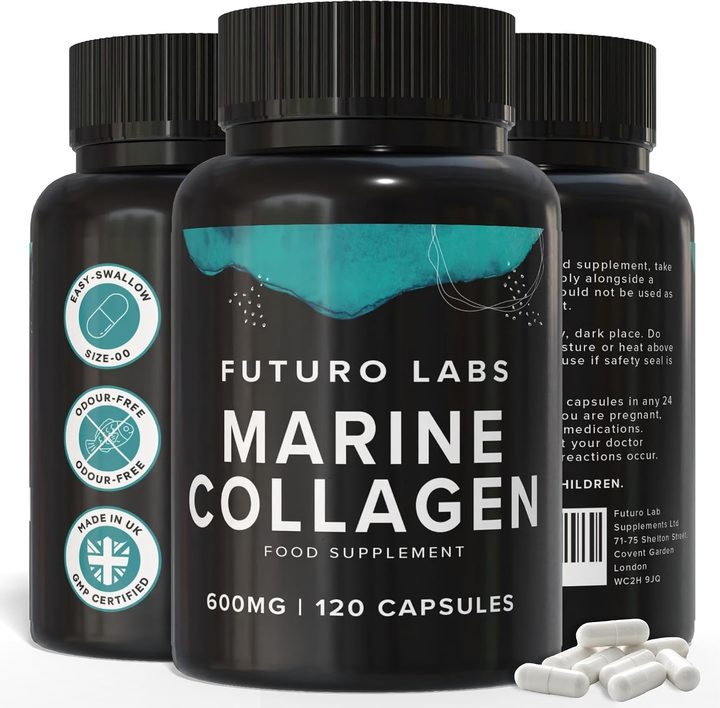
Our brand: the worked example on this page
Futuro Labs Marine Collagen
- 28p a day
- 120 capsules, 2 capsules daily
- Lab tested
- Made in the UK
Fifth tool on its true terms: Futuro Labs Marine Collagen on Amazon UK, 2 capsules, 1200mg hydrolysed type 1 marine collagen with 12mg vitamin C at 15% NRV plus zinc, 120 for £16.99, 28p a day, lab tested and UK made, below the 2.5 to 10g skin trial doses and taken for vitamin C's collagen formation sentence for skin and zinc's normal skin line, no tightening promised. Full label breakdown. Why no dose buys the verb is on the tighten loose skin page; retinol against collagen on the retinol or collagen page; the three skin clocks on the collagen and skin page.
The toolbox in order of size: sunscreen, the retinoid, the volume underneath, and the practitioner's tools
How long does it take collagen to tighten skin is a question that gives the tub a job the toolbox shares, and the honest page answers it with a timetable for the whole toolbox, because tighten is not a word any collagen trial used and a reader asking how long deserves to know how long everything else takes too, ranked by how much each thing actually does. Tool one, and the largest, is sunscreen, which tightens nothing and prevents most of what loosens: photoageing from ultraviolet light is the main cause of the collagen and elastin degradation that makes skin lax, and daily broad-spectrum sunscreen is the intervention with the largest effect on how skin looks at sixty, an effect measured not in weeks but in years of daily use and visible only as the loosening that did not happen, the slowest tool and the one every dermatologist names first. Tool two is a topical retinoid, the best-evidenced topical category for photoaged skin: retinoids increase dermal collagen synthesis, thicken the epidermis and improve fine lines, texture and firmness in randomised trials, with visible change after three to six months of nightly use and continued improvement to a year, prescription strengths sitting with a doctor and over-the-counter retinol being the weaker cousin with the same direction, so the retinoid's tightening timetable is a season and its evidence is the best on the list. Tool three is the volume underneath, the lifter's lever: skin follows what it covers, so loose skin after weight loss retracts over a year or more as far as age, amount and speed allow, a stable weight stops the cycle of stretch and shrink, and resistance training that builds muscle beneath the skin fills the space from below, the only tightening a lifter can do with a barbell, over months of training. Tool four is the practitioner's: microneedling, radiofrequency and focused ultrasound tightening act on the dermis by controlled injury or heat, producing collagen remodelling over weeks to months with results that vary and costs that are real; injectable fillers restore volume immediately and are the one tool with an instant timetable, historically bovine collagen and now mostly hyaluronic acid; and surgical lifts remove the excess where nothing else will, all of these decisions made with a qualified practitioner and outside any supplement page's scope beyond naming them.
Tool five, oral collagen, translated to its instrument, and the timetable read whole
Tool five is oral collagen, and its place on the timetable needs the word tighten translated first. No trial measured tightness; the instrument closest to it is the cutometer, a suction probe that pulls a small area of skin and measures how far it stretches and how completely it recoils, its recoil parameters being the nearest thing in the literature to what a reader means by tight, and the oral collagen skin trials moved those parameters a few percent against placebo at 2.5 to 10 grams a day over eight to twelve weeks, alongside hydration by corneometer and, in some trials, dermal density by ultrasound and eye wrinkle depth by profilometry, in trials that were small, mostly funded by the peptide's manufacturer and read by instruments, with changes generally below what a person sees in a mirror. So collagen's tightening timetable is eight to twelve weeks for a few percent of elasticity by suction probe, at trial doses, and nothing at four weeks because the dermis has not begun to turn over, and the honest reader who wants that result takes the trial dose for the trial duration and judges by a photograph in fixed light or by nothing, since a mirror cannot see it. The timetable read whole puts the tub in its place: sunscreen, years of prevention and the largest effect; a retinoid, three to six months and the best topical evidence; weight stability and muscle, months and the lifter's own tool; procedures, weeks to months and a practitioner's; oral collagen, eight to twelve weeks for a few percent by instrument, fifth of five and the only one bought in a supplement aisle. The register agrees with the ranking, since collagen holds no authorised skin claim and may not use the word tighten or firm, both cosmetic words that belong to no supplement, and the label's skin sentences are vitamin C's collagen formation and zinc and biotin's normal skin, borrowed from the ingredients beside the collagen. The worked example is the fifth tool on its true terms: two capsules, 1200mg hydrolysed type 1 marine collagen with 12mg vitamin C plus zinc, 120 for £16.99 at 28p a day, lab tested and UK made, below the 2.5 to 10 grams the skin trials gave, taken for vitamin C's collagen formation sentence for skin and zinc's normal skin line, with no tightening promised and the sunscreen bought first. How long does it take collagen to tighten skin: eight to twelve weeks to move a suction probe a few percent, in a toolbox where the first tool takes years and does the most.
| The tool | How long | What it does | The evidence |
|---|---|---|---|
| Daily sunscreen | Years | Prevents the photoageing that loosens skin; the largest lever | The strongest in the list; visible as loosening that did not happen |
| A topical retinoid | Three to six months, improving to a year | Increases dermal collagen, thickens the epidermis, improves lines and firmness | The best-evidenced topical category; prescription strengths with a doctor |
| Weight stability and muscle | Months to a year or more | Skin follows the volume beneath; training fills the space | The lifter's own tool |
| Microneedling, radiofrequency, ultrasound | Weeks to months | Controlled injury or heat remodels the dermis | Variable results; a practitioner's |
| Fillers and surgery | Immediate; a procedure | Restore volume; remove excess | A practitioner's; outside a supplement page |
| Oral collagen | 8 to 12 weeks at 2.5 to 10g | Elasticity by cutometer up a few percent; hydration up a few percent | Small, mostly industry-funded trials; below what a mirror shows; no claim |
| The register | Not applicable | Tighten and firm are cosmetic words no supplement may use | Vitamin C's collagen formation; zinc and biotin's normal skin |
| The worked exampleOurs | Below the trial doses | Two capsules, 1200mg marine collagen with 12mg vitamin C plus zinc, 28p a day | Fifth tool; no tightening promised |
What to check on the label
- Buy the sunscreen first: the largest lever, the slowest clock.
- Ask a doctor about a retinoid: three to six months, the best topical evidence.
- Fill the space from beneath: stable weight, muscle.
- Leave procedures to a practitioner: weeks to months, real costs.
- Expect collagen's few percent at twelve weeks: by instrument, at trial doses.
Our brand
The worked example: Futuro Labs Marine Collagen
Futuro Labs Marine Collagen: 2 capsules daily, 1200mg hydrolysed type 1 marine collagen with 12mg vitamin C and 1.5mg zinc (15% NRV each), 120 capsules for £16.99, 60 days at 28p a day, lab-tested, UK GMP made. Slim veggie-shell capsules, odour free. Fish derived: pescatarian, not vegetarian or vegan.
- Collagen per serving
- 1200mg hydrolysed type 1 marine (fish)
- Co-factors
- vitamin C 12mg (15% NRV), zinc 1.5mg (15% NRV)
- Serving
- 2 capsules a day
- Bottle
- 120 capsules, 60 days
- Price
- £16.99 (28p a day)
- Capsule
- slim size 00, veggie shell, odour free
Questions people also ask
Does collagen tighten skin?
Not in any word a trial used: the closest instrument is the cutometer, whose suction recoil parameters rose a few percent at 2.5 to 10 grams a day over eight to twelve weeks in small, mostly industry-funded trials, a change a device detects and a mirror generally does not, and collagen holds no skin claim and may not use the words tighten or firm.
What tightens skin fastest?
Fillers, immediately, and energy-based procedures over weeks to months, all a practitioner's; among things a reader does at home, a topical retinoid shows visible change in three to six months with the best topical evidence, and oral collagen moves an instrument a few percent in eight to twelve weeks.
Is retinol or collagen better for tightening skin?
The retinoid, by evidence and effect: retinoids increase dermal collagen synthesis, thicken the epidermis and improve lines and firmness in randomised trials over three to six months, the best-evidenced topical category for photoaged skin, while oral collagen moved a suction probe a few percent in small industry-funded trials over eight to twelve weeks.
How long does collagen take to firm the skin?
Eight to twelve weeks at 2.5 to 10 grams a day for a few percent of elasticity by cutometer, with nothing at four weeks because the dermis has not begun to turn over, and firm, like tighten, being a cosmetic word no supplement may print, so the honest expectation is an instrument result at three months and not a mirror one.
Can lifting weights tighten loose skin?
It fills the space from beneath: skin follows the volume it covers, so resistance training that builds muscle under loose skin and a stable weight that stops the stretch-and-shrink cycle are the lifter's firmness tools over months, with skin retraction after weight loss continuing for a year or more as far as age, amount and speed allow.
Sources
- The topical retinoid evidence base: randomised trials support retinoids as the best-evidenced topical category for photoaged skin, prescription strengths sitting with GPs and dermatologists. PubMed record
- The skin measurement literature: oral collagen trials assess skin by instrument, elasticity by cutometer suction, hydration by corneometer capacitance, dermal density by high-frequency ultrasound and wrinkle depth by profilometry, changes of a few percent that are detectable by the device and generally below what a person sees in a mirror. PubMed record
- The collagen and skin trial literature: randomised studies of oral collagen peptides on skin elasticity and hydration, mostly small, short and industry funded, with no authorised claim resulting. PubMed record
- The dermal filler literature: injectable fillers, historically bovine collagen and now mostly hyaluronic acid, add volume beneath the skin as a medical procedure with documented complications including overfilling, migration, lumps and vascular occlusion, performed by trained practitioners and outside the scope of any oral supplement. PubMed record