Ghost Fitness/Collagen/How long does collagen take to work on skin?
How long does collagen take to work on skin?
The short answer
Three layers, three clocks. Surface hydration: days, any humectant, corneometer. Epidermis: around four weeks to turn over. Dermis, where wrinkles live: months, and the trials measured at eight to twelve weeks at 2.5 to 10g, a few percent by instrument.
- The surfacehydration moves in days with any humectant, weather or moisturiser; the corneometer reads it
- The epidermisturns over in around four weeks: at a month, nothing from the dermis has reached it
- The dermismonths; the trials measured at 8 to 12 weeks at 2.5 to 10g: elasticity and density by instrument
- Wrinklesone 8-week trial at 2.5g: eye wrinkle depth by profilometry, manufacturer-funded, no claim
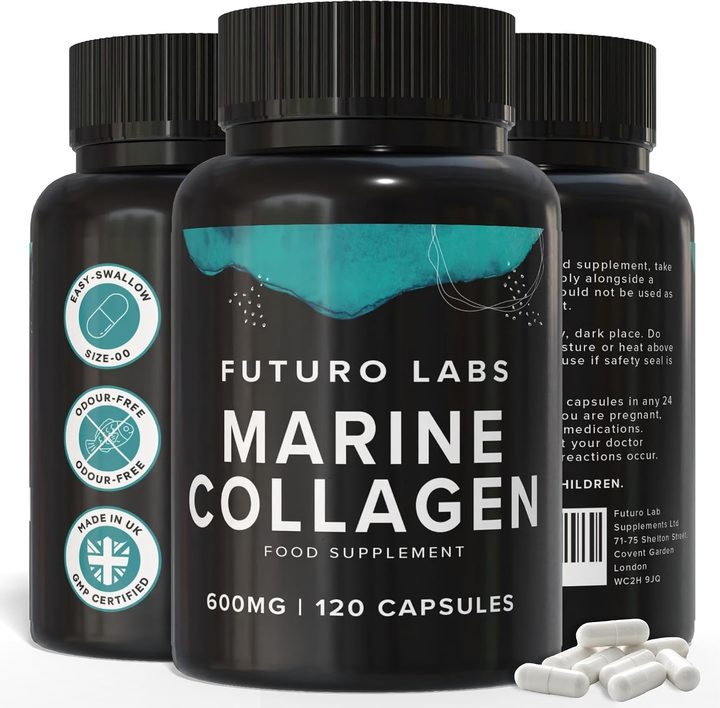
Our brand: the worked example on this page
Futuro Labs Marine Collagen
- 28p a day
- 120 capsules, 2 capsules daily
- Lab tested
- Made in the UK
On its true terms and the dermis clock: Futuro Labs Marine Collagen on Amazon UK, 2 capsules, 1200mg hydrolysed type 1 marine collagen with 12mg vitamin C at 15% NRV plus zinc, 120 for £16.99, 28p a day, lab tested and UK made, below the 2.5 to 10g the skin trials gave, taken for vitamin C's collagen formation sentence for skin and zinc's normal skin line. Full label breakdown. The photograph read as a calendar is on the marine before-and-after page; the instruments on the does collagen help skin page.
The surface and the epidermis: the clocks that run in days and weeks
How long does collagen take to work on skin is a question that assumes skin is one thing with one clock, and skin is three layers with three, so the honest page answers layer by layer, from the outside in, because the layer a reader is looking at decides what could possibly have changed and when. The surface first, the stratum corneum, the outermost sheet of dead, flattened cells bound in lipids that a reader touches and a camera photographs. Its hydration changes in days and even hours, moved by the weather, the heating, the cleanser, the water a reader drank and any humectant applied to it, glycerin, hyaluronic acid in a serum, or collagen in a cream, which cannot cross the skin but holds water on it, and the corneometer, the instrument that measures capacitance at the surface, reads exactly this layer. The oral collagen trials' hydration gains, a few percent by corneometer against placebo, were measured here, but at eight to twelve weeks and not at week one, because the trials were looking for a change the dermis produced slowly rather than the surface produced overnight, and a reader who feels their skin is more hydrated in the first week of collagen has felt the weather or the glass of water the powder came in, both of which move this layer faster than any dose. The epidermis second, the living layer beneath, whose cells are born at its base and migrate to the surface to become the stratum corneum, a journey that takes around four weeks, the skin turnover literature's timescale. At one month, then, the skin a reader sees is the first skin grown entirely since the tub was opened, which sounds like the moment to judge and is the opposite: the epidermis is fed from the dermis below, and nothing collagen might do in the dermis has had time to alter what the epidermis makes, so the four-week check finds an epidermis that has simply been replaced with more of the same, and the honest verdict at a month is that there is nothing yet to see because there is nothing yet to have happened.
The dermis: where the trials measured, where wrinkles live, and the worked example on that clock
The dermis third, the thick living layer beneath the epidermis where the skin's own collagen and elastin fibres sit in a matrix made by fibroblasts, where blood vessels and nerves run, and where wrinkles live, since a wrinkle is a fold in dermal architecture that the surface merely follows. The dermis turns over on a clock of months, dermal collagen being replaced slowly across the year rather than the month, and this is the layer the oral collagen trials were actually aimed at: the proposed mechanism is that small collagen peptides surviving digestion, prolyl-hydroxyproline among them, reach the dermis by the blood and act on fibroblasts, a hypothesis with marker data behind it, and the trials measured the dermis's output at eight to twelve weeks, elasticity by cutometer suction, which reads how the skin recoils and is a dermal property, dermal density and thickness by high-frequency ultrasound in some trials, and in one eight-week randomised trial of 2.5 grams a day of a specific peptide in women aged forty-five to sixty-five, eye wrinkle depth by skin profilometry, which reported a reduction against placebo alongside increased procollagen and elastin markers in skin biopsies. That trial is the answer to the secondary question, how long does collagen take to work on wrinkles: eight weeks, in one manufacturer-funded trial of one peptide, read by an instrument that measures wrinkle depth in fractions of a millimetre rather than by an eye, with no longer trial behind it and no authorised claim resulting. So the dermis clock is eight to twelve weeks to the first measurement, at 2.5 to 10 grams a day, for changes of a few percent that a cutometer, an ultrasound probe or a profilometer detects and a mirror generally does not, in trials that were small and mostly industry-funded, and the honest expectation for a reader on trial doses is an instrument result at three months and a mirror that has not obviously changed. Three layers, three clocks: the surface in days, moved by everything; the epidermis in four weeks, showing nothing yet; the dermis in months, where the trials measured and where a reader who wants the trials' result takes the trials' dose for the trials' duration and judges by the trials' instruments. The register's line runs beneath all three: collagen holds no authorised claim for skin, so the label's skin sentences belong to vitamin C, which contributes to normal collagen formation for the normal function of skin, and to zinc and biotin, which contribute to the maintenance of normal skin. The worked example sits on the dermis clock at a dose below the trials and says so: two capsules, 1200mg hydrolysed type 1 marine collagen with 12mg vitamin C plus zinc, 120 for £16.99 at 28p a day, lab tested and UK made, below the 2.5 to 10 grams the skin trials gave, taken for vitamin C's and zinc's sentences and the habit rather than for a profilometer's reading. How long does collagen take to work on skin: days for the surface, which anything moves; four weeks for the epidermis, which shows nothing; and eight to twelve weeks for the dermis, by instrument, at trial doses, which is the only clock the evidence owns.
| The layer | Its clock | What moves it | What the trials measured there |
|---|---|---|---|
| Surface, stratum corneum | Days | Weather, heating, cleanser, water, any humectant | Hydration by corneometer, a few percent, at 8 to 12 weeks |
| Epidermis | Around four weeks to turn over | Fed from the dermis below | Nothing yet at a month: replaced with more of the same |
| Dermis | Months | Fibroblasts making collagen and elastin; the proposed target of oral peptides | Elasticity by cutometer, density by ultrasound, at 8 to 12 weeks at 2.5 to 10g |
| Wrinkles | The dermis clock | Dermal architecture the surface follows | Eye wrinkle depth by profilometry in one 8-week trial at 2.5g; no longer trial |
| The register | All layers | The tub's skin sentences | Vitamin C's collagen formation for skin; zinc and biotin's normal skin; collagen none |
| The worked exampleOurs | The dermis clock, below the trial doses | Two capsules, 1200mg marine collagen with 12mg vitamin C plus zinc, 28p a day | Vitamin C's and zinc's sentences; nothing promised to a profilometer |
What to check on the label
- Discount the first week: the surface moves with the weather.
- Skip the four-week check: the epidermis shows nothing yet.
- Mark twelve weeks at trial doses: the dermis by instrument.
- Read wrinkles as one 8-week trial: profilometry, no claim.
- Read the tub's skin lines as vitamin C's and zinc's: collagen holds none.
Our brand
The worked example: Futuro Labs Marine Collagen
Futuro Labs Marine Collagen: 2 capsules daily, 1200mg hydrolysed type 1 marine collagen with 12mg vitamin C and 1.5mg zinc (15% NRV each), 120 capsules for £16.99, 60 days at 28p a day, lab-tested, UK GMP made. Slim veggie-shell capsules, odour free. Fish derived: pescatarian, not vegetarian or vegan.
- Collagen per serving
- 1200mg hydrolysed type 1 marine (fish)
- Co-factors
- vitamin C 12mg (15% NRV), zinc 1.5mg (15% NRV)
- Serving
- 2 capsules a day
- Bottle
- 120 capsules, 60 days
- Price
- £16.99 (28p a day)
- Capsule
- slim size 00, veggie shell, odour free
Questions people also ask
How long does collagen take to work on wrinkles?
One trial answers it: eight weeks of 2.5 grams a day of a specific collagen peptide in women aged forty-five to sixty-five reduced eye wrinkle depth measured by skin profilometry against placebo, a manufacturer-funded trial of one peptide read by an instrument in fractions of a millimetre, with no longer trial and no authorised claim.
Why does my skin feel better after a week on collagen?
Because the surface moves in days: stratum corneum hydration responds to the weather, the heating, the cleanser, the water a dose came in and any humectant, all faster than a supplement could act on the dermis, so the first week's feel is the surface and the trials' hydration gains were measured at eight to twelve weeks.
Should I judge collagen at four weeks?
No: the epidermis turns over in around four weeks, so at a month the skin seen is the first grown since the tub was opened but is fed from a dermis that has not yet changed, and the trials measured at eight to twelve weeks for that reason.
What did the collagen skin trials actually measure?
The dermis's output by instrument: elasticity by cutometer suction, hydration by corneometer, dermal density by ultrasound in some trials and eye wrinkle depth by profilometry in one, at 2.5 to 10 grams a day over eight to twelve weeks, changes of a few percent in small, mostly industry-funded trials, generally below what a mirror shows.
Does the dose change how fast collagen works on skin?
Not the speed: the dermis turns over on a clock of months whatever the dose, and the trials at 2.5 grams and at 10 grams both measured at eight to twelve weeks, so a two-capsule dose below the trial range is taken on its true terms for vitamin C's and zinc's skin sentences and not for a faster result.
Sources
- The skin biology literature: the epidermis turns over in around four weeks while dermal collagen, the layer supplements target, turns over far more slowly, so the oral collagen skin trials measured elasticity and hydration after eight to twelve weeks of daily intake with no timing of day specified, consistency across weeks rather than time of day being the variable the trials controlled. PubMed record
- The skin measurement literature: oral collagen trials assess skin by instrument, elasticity by cutometer suction, hydration by corneometer capacitance, dermal density by high-frequency ultrasound and wrinkle depth by profilometry, changes of a few percent that are detectable by the device and generally below what a person sees in a mirror. PubMed record
- The collagen and wrinkle depth trial: an eight-week randomised placebo-controlled trial of 2.5 grams a day of specific collagen peptides in women aged 45 to 65 reported reduced eye wrinkle depth measured by skin profilometry, with increases in dermal procollagen and elastin markers in biopsies, a manufacturer-funded trial of one peptide with an instrument outcome and no authorised claim. PubMed record
- The collagen and skin trial literature: randomised studies of oral collagen peptides on skin elasticity and hydration, mostly small, short and industry funded, with no authorised claim resulting. PubMed record