Ghost Fitness/Collagen/How long does collagen take to work on hair?
How long does collagen take to work on hair?
The short answer
The hair cycle sets the clock; collagen has no seat: hair grows a centimetre a month and rests three, so any change takes three to six months; no collagen trial has shown one. Biotin, zinc and selenium hold hair's claims.
- The clocka centimetre a month; around three months resting before shedding; any change visible at three to six months
- Collagen's seatnone: no trial with hair density, shedding or thickness as an outcome
- The proteinshair is keratin, cysteine-rich; collagen has almost no cysteine
- The registerbiotin, zinc and selenium: maintenance of normal hair; copper: normal hair pigmentation; collagen: nothing
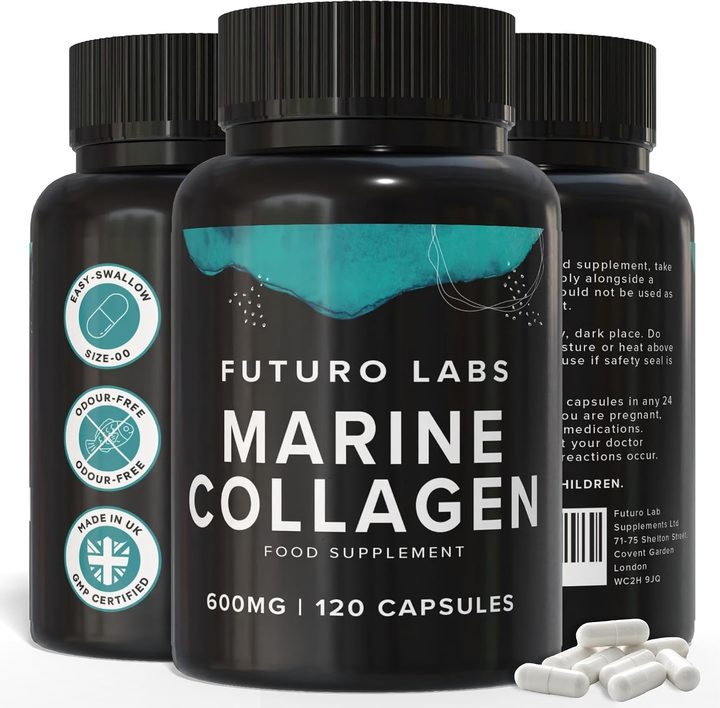
Our brand: the worked example on this page
Futuro Labs Marine Collagen
- 28p a day
- 120 capsules, 2 capsules daily
- Lab tested
- Made in the UK
The zinc that carries a hair sentence, on its true terms: Futuro Labs Marine Collagen on Amazon UK, 2 capsules, 1200mg hydrolysed type 1 marine collagen with 12mg vitamin C at 15% NRV plus 1.5mg zinc, 120 for £16.99, 28p a day, lab tested and UK made, the collagen below the research band and the zinc holding the register's maintenance of normal hair line. Full label breakdown. The same clock for omega-3 is on the omega-3 and hair page; what collagen does measurably is on the does collagen help skin page.
The hair cycle as the clock, and why anything acting on hair takes three to six months to show
How long does collagen take to work on hair is a question whose first half has a precise answer and whose second half has an honest one, and the page gives both in that order, because the clock belongs to the hair and not to the tub. The hair cycle sets the clock. Scalp hair grows about a centimetre a month, and each follicle runs through a long growth phase of two to six years, a brief regression of a few weeks, and a resting phase of around three months at the end of which the hair sheds and the follicle begins a new one, with around a tenth of a scalp's follicles resting at any time and fifty to a hundred hairs shedding a day as a normal consequence. The arithmetic of that cycle is what makes every hair question a slow one: the hairs a reader sees and sheds today were decided by follicles months ago, so a nutrient corrected, a stress passed, an illness recovered from or a medicine started changes what the follicles do now and shows in the brush and the mirror three to six months later, when the follicles that responded have moved through their resting phase and the new hairs have grown enough centimetres to count, the hair cycle literature's timescale, and this is true of everything that acts on hair, iron for a reader who was short of it, thyroid treatment for a reader who needed it, the prescription treatments for pattern loss, and the passing of the shedding that follows a fever or a birth. So the first half of the answer is that if collagen did anything to hair, it would take three to six months to see, the same as anything else, and a reader judging any hair supplement at eight weeks is judging hairs that were decided before the tub was opened. That is the clock, and it is worth knowing on its own, because it is why the before-and-after hair photographs at four and eight weeks on the shelf are photographs of styling and light.
Collagen's empty seat, the proteins compared, the register's hair sentences, and the reader with real shedding
The second half is whether collagen has a seat on that clock at all, and the honest answer is that it does not, for three reasons the page gives in turn. First, the trials: no collagen trial has measured hair density, hair shedding, hair thickness or hair growth rate as an outcome, the oral collagen trials measured skin by instrument and joints by questionnaire and tendon by synthesis marker, and the hair claims on collagen tubs are extrapolations from the skin trials and from the fact that hair grows out of skin, which is true and is not a trial. Second, the proteins: hair is made of keratin, a protein rich in the sulphur amino acid cysteine, whose disulphide bonds crosslink the keratin and give hair its strength and its shape, while collagen is a third glycine with proline and hydroxyproline and contains almost no cysteine, so the idea that eating collagen supplies the building blocks of hair has the chemistry backwards, the building block hair needs most being the one collagen most lacks, and the amino acids hair does need arriving in adequate quantity from any complete protein diet at 1.6 grams per kilo, which collagen does not count toward. Third, the register: the UK claims register's hair sentences belong to biotin, zinc and selenium, each of which contributes to the maintenance of normal hair, and to copper, which contributes to normal hair pigmentation, and collagen holds none, so a collagen tub that mentions hair is borrowing a line from the zinc or biotin beside it, which is lawful about the zinc or biotin and says nothing about the collagen, and the honest capsule that includes zinc may carry zinc's hair sentence and says so. A different reader deserves a different paragraph: a reader who searched this because they are shedding more than the normal fifty to a hundred hairs a day, finding hair on the pillow and in the plughole, has a set of common, checkable causes, low iron, thyroid, the shedding that follows an illness or a birth or a major stress by three months, some medicines, and pattern loss with its own treatments, and every one of those is a conversation with a doctor and a blood test rather than a tub, since a three-to-six-month experiment with collagen on shedding hair is three to six months in which the cause went unlooked for. The worked example carries the one hair sentence on this page and states its terms: two capsules, 1200mg hydrolysed type 1 marine collagen with 12mg vitamin C plus 1.5mg zinc, 120 for £16.99 at 28p a day, lab tested and UK made, the collagen below the research band and taken for vitamin C's collagen formation sentence, the zinc contributing to the maintenance of normal hair, at 15% of its reference value, a modest line honestly held. How long does collagen take to work on hair: the clock says three to six months for anything, and the evidence says collagen is not on it.
| The item | The fact | What it means for the question |
|---|---|---|
| The hair cycle | A centimetre a month; years growing, weeks regressing, around three months resting, then shedding | Anything that acts on hair shows at three to six months |
| Normal shedding | Fifty to a hundred hairs a day | The baseline any change is measured against |
| Collagen's trials | Skin by instrument, joints by questionnaire, tendon by marker; no hair outcome | No seat on the clock |
| The proteins | Hair is cysteine-rich keratin; collagen has almost no cysteine | The building block hair needs most is the one collagen lacks |
| The register | Biotin, zinc, selenium: maintenance of normal hair; copper: pigmentation | Collagen holds no hair sentence |
| Real shedding | Low iron, thyroid, post-illness or post-birth shedding, medicines, pattern loss | A doctor and a blood test, not a tub |
| The worked exampleOurs | Two capsules, 1200mg marine collagen with 12mg vitamin C plus 1.5mg zinc, 28p a day | Zinc carries the hair sentence at 15% NRV; collagen carries none |
What to check on the label
- Give any hair change three to six months: the cycle decides.
- Expect collagen to show nothing: no trial measured hair.
- Remember hair is keratin: cysteine, which collagen lacks.
- Read the hair sentence as zinc's or biotin's: never collagen's.
- Take real shedding to a doctor: iron, thyroid and the rest are checkable.
Our brand
The worked example: Futuro Labs Marine Collagen
Futuro Labs Marine Collagen: 2 capsules daily, 1200mg hydrolysed type 1 marine collagen with 12mg vitamin C and 1.5mg zinc (15% NRV each), 120 capsules for £16.99, 60 days at 28p a day, lab-tested, UK GMP made. Slim veggie-shell capsules, odour free. Fish derived: pescatarian, not vegetarian or vegan.
- Collagen per serving
- 1200mg hydrolysed type 1 marine (fish)
- Co-factors
- vitamin C 12mg (15% NRV), zinc 1.5mg (15% NRV)
- Serving
- 2 capsules a day
- Bottle
- 120 capsules, 60 days
- Price
- £16.99 (28p a day)
- Capsule
- slim size 00, veggie shell, odour free
Questions people also ask
Does collagen help hair grow?
No trial has shown it: the oral collagen trials measured skin by instrument, joints by questionnaire and tendon by synthesis marker, none measured hair density, shedding or growth, hair is cysteine-rich keratin whereas collagen has almost no cysteine, and the register's hair sentences belong to biotin, zinc and selenium rather than collagen.
How long does any hair supplement take to work?
Three to six months for anything that acts on hair at all: scalp hair grows a centimetre a month and follicles rest around three months before shedding, so the hairs seen today were decided months ago and a nutrient corrected or a treatment started shows in the brush and the mirror a season later.
Why does my collagen tub say it supports hair?
Because of the ingredient beside the collagen: biotin, zinc and selenium each hold the authorised sentence that they contribute to the maintenance of normal hair, so a collagen product containing one of them may print that line about that ingredient, and collagen itself holds no hair claim.
Is collagen the same protein as hair?
No: hair is keratin, a protein rich in the sulphur amino acid cysteine whose disulphide bonds give hair its strength, while collagen is a third glycine with proline and hydroxyproline and almost no cysteine, so eating collagen does not supply the building block hair needs most.
I am losing more hair than usual, should I try collagen?
Not first: shedding above the normal fifty to a hundred hairs a day has common, checkable causes, low iron, thyroid, the shedding that follows illness, birth or stress by three months, some medicines and pattern loss, each a conversation with a doctor and a blood test, and a three-to-six-month collagen experiment is that long with the cause unlooked for.
Sources
- The hair growth cycle: scalp hair grows about a centimetre a month, each follicle cycling through a growth phase of years, a brief regression and a resting phase of around three months before shedding, so any change in shedding or density from any cause takes three to six months to become visible. PubMed record
- The keratin composition literature: hair is built from keratin, a protein rich in the sulphur amino acid cysteine whose disulphide bonds give hair its strength, whereas collagen contains almost no cysteine and is instead a third glycine with proline and hydroxyproline, so the two proteins share little beyond the word protein. PubMed record
- The GB claims register, hair entries: biotin, zinc and selenium contribute to the maintenance of normal hair, copper contributes to normal hair pigmentation, and no omega-3 entry mentions hair. https://www.gov.uk/government/publications/great-britain-nutrition-and-health-claims-nhc-register
- Retained Regulation (EC) No 1924/2006 on nutrition and health claims made on foods, and the Great Britain nutrition and health claims register. https://www.gov.uk/government/publications/great-britain-nutrition-and-health-claims-nhc-register