Ghost Fitness/Collagen/How long does collagen take to work on nails?
How long does collagen take to work on nails?
The short answer
The nail is the clock: 3mm a month, six months to replace a fingernail, so nothing shows before three to six months. The one collagen nail study, 2.5g for twenty-four weeks, had no placebo. Zinc and biotin hold the claims.
- The nail's clock~3mm a month; a fingernail replaced in ~6 months, a toenail in 12 to 18; changes show as new nail grows out
- The one study2.5g specific peptides for 24 weeks, ~25 people with brittle nails: faster growth, fewer breaks; open-label, no placebo, manufacturer-funded
- The commonest causerepeated wetting and drying: gloves and moisturiser outrank any supplement
- The registerzinc, selenium and biotin contribute to the maintenance of normal nails; collagen holds none
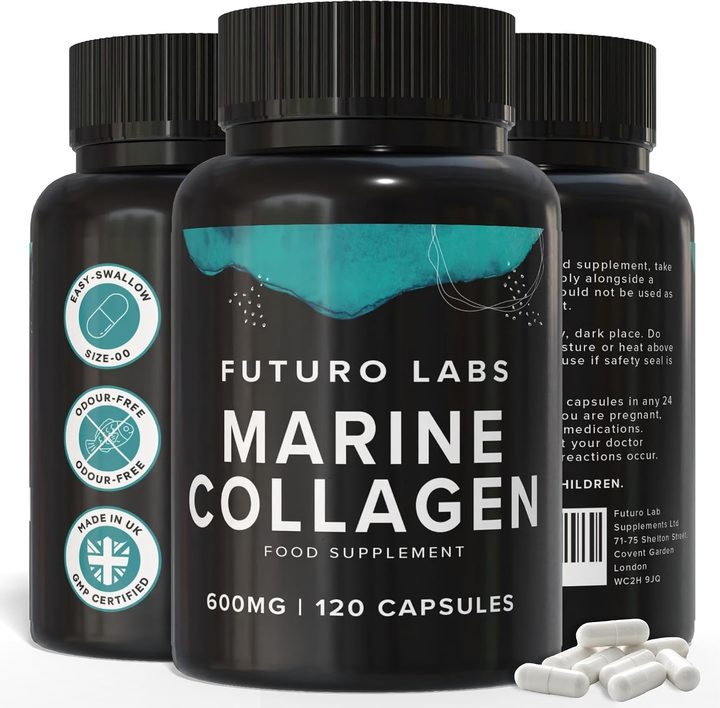
Our brand: the worked example on this page
Futuro Labs Marine Collagen
- 28p a day
- 120 capsules, 2 capsules daily
- Lab tested
- Made in the UK
The zinc that holds a nail sentence: Futuro Labs Marine Collagen on Amazon UK, 2 capsules, 1200mg hydrolysed type 1 marine collagen with 12mg vitamin C at 15% NRV plus 1.5mg zinc, 120 for £16.99, 28p a day, lab tested and UK made, the zinc contributing to the maintenance of normal nails and the collagen near the one study's dose and stated as uncontrolled evidence. Full label breakdown. The hair clock is on the collagen and hair page; whether there is anything to notice on the notice a difference page.
The nail's clock, and why nothing shows before the new nail grows out
How long does collagen take to work on nails is a question the nail answers before the collagen does, because a nail is a clock that runs at a known speed, and anything that acts on a nail, a nutrient, a habit, an illness or a supplement, shows on that clock and no faster. The nail plate a reader sees is dead keratin, made at the matrix under the cuticle and pushed forward as new nail forms behind it, and a fingernail grows at around three millimetres a month, faster on the dominant hand and in summer and slower with age, so the nail at the fingertip today was made three to six months ago and the whole fingernail takes around six months to replace itself, with toenails growing at a third of the pace and taking twelve to eighteen months. That arithmetic is the whole of the timing answer: a change in the nail's strength, thickness or tendency to split from any cause at all appears only in the new nail as it grows out from the cuticle, so the earliest anything could be seen is three months, when the first centimetre of new plate has emerged, and the full effect is six months, when the old nail is gone, and no supplement is exempt from the clock because the clock is the tissue's. Before asking what collagen might do on that clock, the honest page names what most commonly does: brittle nails, the splitting, peeling, soft nails that send readers to the supplement aisle, are caused mainly by repeated wetting and drying, washing up, hand washing, swimming, solvents and nail polish remover, which swell and shrink the keratin until it delaminates, so the interventions with the largest effect are gloves for wet work, a moisturiser or oil on the nails and cuticles, and less remover, none of which is a supplement and all of which show on the same three-to-six-month clock. Nail changes that come with other symptoms, pitting, ridging, colour change, spooning, lifting from the bed, or with hair loss and fatigue, point to skin conditions, iron or thyroid and are a doctor's rather than a clock's.
The one collagen nail study, exactly described, the register's nail sentences, and the honest timetable
The one collagen nail study exists and deserves exact description, because it is the whole of the evidence a tub is quoting when it says collagen for nails. An open-label study gave 2.5 grams a day of specific collagen peptides for twenty-four weeks to around twenty-five people with brittle nails and measured nail growth rate and the frequency of broken nails, reporting faster growth and fewer breaks by the end and in the weeks after stopping, and the study was funded by the peptide's manufacturer. Two things make it a signal rather than a trial. It had no placebo group: every participant knew they were taking collagen for their nails, every participant had six months of attention on their nails and, presumably, their gloves and their remover, and nail growth rate and breakage are exactly the kind of measures that improve under attention alone, so the study cannot separate the collagen from the six months of caring about nails. And it was small and single, around twenty-five people and never repeated under controlled conditions, so no randomised placebo-controlled trial of collagen for nails exists and the honest verdict is that one uncontrolled study suggests and nothing has tested. The register agrees: collagen holds no authorised nail sentence, and the nail sentences belong to zinc, selenium and biotin, each of which contributes to the maintenance of normal nails, with copper holding hair pigmentation and the rest of the aisle holding nothing, so a collagen tub that mentions nails is either borrowing zinc's or biotin's sentence from the ingredient beside it or saying something the register does not permit. The honest timetable, then: if collagen does anything for nails, which one open-label study suggests and no controlled trial has shown, it would show at three to six months as the new nail grows out, the same clock as gloves and moisturiser, which have the larger effect and cost less; a reader who wants to test it takes the study's 2.5 grams for its twenty-four weeks, photographs the nails before the first dose and at three and six months in the same light, and changes nothing else about their hands, which is the control the study lacked. The worked example carries the one nail sentence honestly: two capsules, 1200mg hydrolysed type 1 marine collagen with 12mg vitamin C plus 1.5mg zinc, 120 for £16.99 at 28p a day, lab tested and UK made, the zinc contributing to the maintenance of normal nails at 15% of its reference value, the collagen near the study's 2.5 grams and stated as uncontrolled evidence, taken for vitamin C's collagen formation sentence and the habit. How long does collagen take to work on nails: three to six months if it works at all, which one uncontrolled study suggests, on a clock that gloves and a moisturiser run faster and cheaper.
| The item | The fact | What it means for the timing |
|---|---|---|
| The nail's clock | ~3mm a month; a fingernail replaced in ~6 months; toenails 12 to 18 | Nothing from any cause shows before three months; the full effect at six |
| The commonest cause of brittle nails | Repeated wetting and drying; polish remover | Gloves and moisturiser outrank any supplement, on the same clock |
| The one collagen study | 2.5g specific peptides for 24 weeks, ~25 people, brittle nails: faster growth, fewer breaks | Open-label, no placebo, manufacturer-funded: a signal, not a trial |
| What is missing | A randomised placebo-controlled trial | None exists |
| The register | Zinc, selenium and biotin: maintenance of normal nails | Collagen holds no nail sentence |
| Nail changes with other symptoms | Pitting, ridging, colour, spooning, lifting; hair loss, fatigue | A doctor, not a clock |
| The fair home test | The study's 2.5g for 24 weeks; photographs at 0, 3 and 6 months; nothing else changed | The control the study lacked |
| The worked exampleOurs | Two capsules, 1200mg marine collagen with 12mg vitamin C plus 1.5mg zinc, 28p a day | Zinc's nail sentence at 15% NRV; collagen stated as uncontrolled evidence |
What to check on the label
- Give any nail change six months: the plate has to grow out.
- Wear gloves and moisturise first: wetting and drying is the usual cause.
- Read the one study as uncontrolled: no placebo, twenty-five people.
- Read the nail sentence as zinc's or biotin's: collagen holds none.
- Take pitting, colour change or lifting to a doctor: not a supplement question.
Our brand
The worked example: Futuro Labs Marine Collagen
Futuro Labs Marine Collagen: 2 capsules daily, 1200mg hydrolysed type 1 marine collagen with 12mg vitamin C and 1.5mg zinc (15% NRV each), 120 capsules for £16.99, 60 days at 28p a day, lab-tested, UK GMP made. Slim veggie-shell capsules, odour free. Fish derived: pescatarian, not vegetarian or vegan.
- Collagen per serving
- 1200mg hydrolysed type 1 marine (fish)
- Co-factors
- vitamin C 12mg (15% NRV), zinc 1.5mg (15% NRV)
- Serving
- 2 capsules a day
- Bottle
- 120 capsules, 60 days
- Price
- £16.99 (28p a day)
- Capsule
- slim size 00, veggie shell, odour free
Questions people also ask
Does collagen make your nails stronger?
One open-label study of 2.5 grams a day for twenty-four weeks in around twenty-five people with brittle nails reported faster growth and fewer breaks, but it had no placebo group and six months of attention on the nails, so it is a signal rather than a trial, no controlled trial exists, and the register's nail sentences belong to zinc, selenium and biotin.
How long do nails take to show any change?
Three to six months: a fingernail grows around three millimetres a month and is replaced in about six, toenails in twelve to eighteen, so any change from any cause appears only as the new plate grows out from the cuticle, with the first centimetre at three months and the old nail gone at six.
What actually causes brittle nails?
Mostly repeated wetting and drying, washing up, hand washing, swimming, solvents and polish remover swelling and shrinking the keratin until it splits, so gloves for wet work, a moisturiser or oil on the nails and less remover have the largest effect, while pitting, ridging, colour change or lifting with other symptoms point to conditions a doctor checks.
Which nutrients hold nail claims in the UK?
Zinc, selenium and biotin each contribute to the maintenance of normal nails by the register, and collagen holds no nail sentence, so a collagen tub that mentions nails is borrowing from the zinc or biotin beside it or saying something the register does not permit.
How should I test whether collagen helps my nails?
Run the study's protocol with the control it lacked: 2.5 grams a day for twenty-four weeks, photographs of the nails in the same light before the first dose and at three and six months, and no change to gloves, moisturiser or remover habits in the meantime, so that anything seen is the collagen and not the attention.
Sources
- The nail biology literature: a fingernail grows about three millimetres a month and takes around six months to regrow fully, brittle nails being caused mainly by repeated wetting and drying, with iron deficiency, thyroid disease and age among the medical causes, and no omega-3 nail trial existing. PubMed record
- The collagen and nails study: an open-label study giving 2.5 grams a day of specific collagen peptides for twenty-four weeks to people with brittle nails reported faster nail growth and fewer broken nails, with no placebo group, around twenty-five participants and manufacturer funding, the one collagen nail study and not a controlled trial. PubMed record
- The GB claims register, nail entries: zinc, selenium and biotin each contribute to the maintenance of normal nails, with copper and other nutrients holding hair or skin claims, and magnesium holding no nail, hair or skin claim. https://www.gov.uk/government/publications/great-britain-nutrition-and-health-claims-nhc-register
- The keratin composition literature: hair is built from keratin, a protein rich in the sulphur amino acid cysteine whose disulphide bonds give hair its strength, whereas collagen contains almost no cysteine and is instead a third glycine with proline and hydroxyproline, so the two proteins share little beyond the word protein. PubMed record