Ghost Fitness/Collagen/How long do I need to take collagen to notice a difference?
How long do I need to take collagen to notice a difference?
The short answer
Honestly, there may be nothing to notice: no claim promises a felt change. The clocks that exist are the trials', instrument-measured skin studies ran 8 to 12 weeks, and the cofactors' functions are maintenance, not events you feel.
- The leading handnothing to notice is the likeliest outcome: no claim promises a change
- The trial clockskin studies measured instruments at 8 to 12 weeks
- The protocol clockbench and marker research: no felt effect was ever the point
- The cofactor clockmaintenance functions: continuous, not eventful
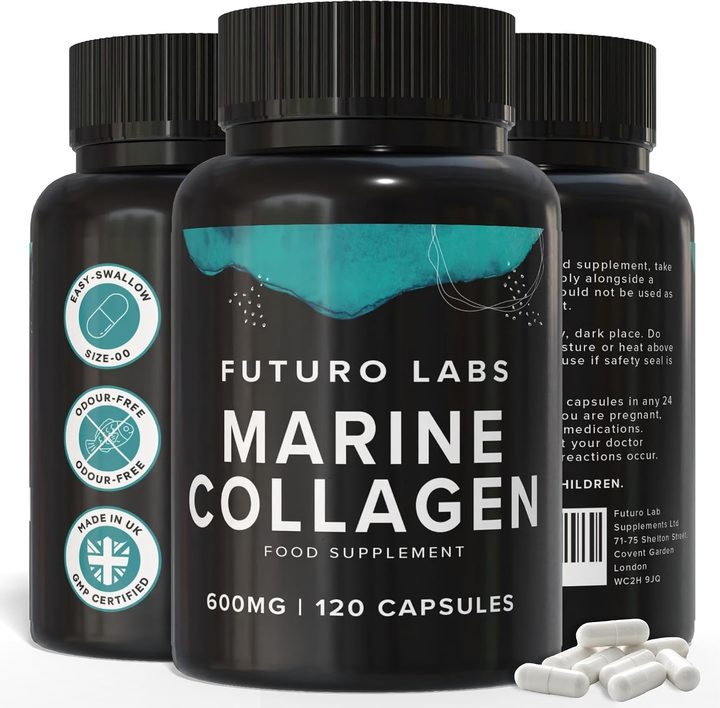
Our brand: the worked example on this page
Futuro Labs Marine Collagen
- 28p a day
- 120 capsules, 2 capsules daily
- Lab tested
- Made in the UK
Bought for its panel, not a countdown: Futuro Labs Marine Collagen on Amazon UK, 1200mg hydrolysed type 1 with vitamin C and zinc at 15% NRV, £16.99 for 60 days at 28p. Full label breakdown. The trial-grade frame is on the sagging page; the effectiveness decomposition on the effective-form page.
The leading hand first: why nothing-to-notice is the honest favourite
Every version of this question deserves the same opening sentence, so here it is undecorated: the likeliest honest outcome of taking a collagen supplement is that you notice nothing, at any week, because no authorised claim promises a perceptible change and the category's evidence never measured feelings. That is not a trick answer, it is the load-bearing one, and it reframes what the timeline question can honestly mean. The register carries zero collagen claims, so there is no lawful sentence of the form take this and X improves, and the sentences a good label does carry, vitamin C contributing to normal collagen formation, zinc maintaining normal skin, hair and nails, are maintenance functions, descriptions of ongoing normal physiology, continuous rather than eventful, no more noticeable week to week than the working of any adequately supplied nutrient, which is why an honest page cannot hand you a week number attached to a sensation without inventing both. What a timeline page can honestly do is read out the clocks that actually exist in the category's paperwork, each labelled for what it measured, so the reader knows which countdowns are real, what they counted, and why none of them was a promise.
The three real clocks, read in order, and the sensible personal protocol
Clock one, the skin trials': the modest studies the sagging and skin pages grade ran their instruments, cutometer elasticity, corneometer hydration, at 8 and 12 week marks on 2.5-to-10g daily doses, which tells you the durations researchers considered worth measuring and nothing about what a mirror shows, the changes being small, instrument-read and population-average, several trials' participants presumably noticing nothing themselves, so 8-to-12 weeks is honestly described as the studied window, never the delivery date. Clock two, the protocol's: the 15g-with-vitamin-C pre-loading lane was never a felt-effect story at any duration, its evidence being engineered-tissue bench work and blood synthesis markers, stop-two research whose entire honest description is that markers moved, so the protocol reader's clock is a training calendar, weeks of consistent loading sessions with the scoop an hour before, judged, if at all, by the rehab metrics a physio tracks, never by sensation. Clock three, the cofactors': continuous from the first adequate day, functions rather than events, the clock without hands. Which yields the sensible personal protocol for anyone who wants to run their own honest test: pick one concrete, checkable thing rather than a vibe, a photo in fixed light monthly if skin is the interest, the physio's measures if rehab is, set a review date around the studied window, 8-to-12 weeks, and decide at that date with money in mind, 28p a day being cheap to continue and cheap to stop, while treating any dramatic before-and-after promise on a label or an advert as the register violation it is. And the one non-clock worth naming: anything you notice that is new and concerning, a reaction, a symptom, belongs to a pharmacist or GP conversation, not a countdown.
| The clock | What it measured | What it honestly tells you |
|---|---|---|
| Nothing-to-notice | The register: zero claims promise a felt change | The leading hand: the likeliest outcome at any week |
| The skin trials' | Instruments at 8 and 12 weeks, 2.5-10g doses | The studied window, never a delivery date |
| The protocol's | Bench tissue and blood markers beside training | A training calendar judged by rehab metrics |
| The cofactors' | Maintenance functions, continuous | No hands: normal physiology, ongoing |
| Your own test | One checkable thing, reviewed at 8-12 weeks | Photo in fixed light or physio measures, then decide |
| The non-clock | Anything new and concerning | A pharmacist or GP conversation, not a countdown |
The verdict, told by the honest clocks
How long until collagen makes a noticeable difference: the honest favourite is never, no claim promising a felt change at any duration, and the real clocks read out plainly, the skin trials measured instruments at 8-to-12 weeks without promising mirrors anything, the protocol was never a sensation story, the cofactors run continuously without events, and the sensible personal test is one checkable measure reviewed at the studied window with 28p-a-day money that is cheap to stop. The worked example is built for exactly that honesty: Futuro Labs Marine Collagen, 1200mg hydrolysed type 1 with 12mg vitamin C and 1.5mg zinc at 15% NRV, lab tested, UK made, £16.99 for 60 days at 28p a day, sold on its panel and its pence, with no countdown printed anywhere, because none would be true.
What to check on the label
- Nothing-to-notice leads: no claim promises a felt change, ever.
- 8-to-12 weeks is the studied window: instruments, not mirrors.
- The protocol has no sensation clock: markers and rehab metrics only.
- Run one checkable test: fixed-light photo or physio measures, then review.
- New and concerning is not a phase: pharmacist or GP, not a countdown.
Our brand
The worked example: Futuro Labs Marine Collagen
Futuro Labs Marine Collagen: 2 capsules daily, 1200mg hydrolysed type 1 marine collagen with 12mg vitamin C and 1.5mg zinc (15% NRV each), 120 capsules for £16.99, 60 days at 28p a day, lab-tested, UK GMP made. Slim veggie-shell capsules, odour free. Fish derived: pescatarian, not vegetarian or vegan.
- Collagen per serving
- 1200mg hydrolysed type 1 marine (fish)
- Co-factors
- vitamin C 12mg (15% NRV), zinc 1.5mg (15% NRV)
- Serving
- 2 capsules a day
- Bottle
- 120 capsules, 60 days
- Price
- £16.99 (28p a day)
- Capsule
- slim size 00, veggie shell, odour free
Questions people also ask
How many weeks until collagen works?
Honestly, it may never produce anything you notice: no claim promises a felt change. The skin trials measured instruments at 8 to 12 weeks, which is a studied window, not a delivery date.
Why do brands say results in 4 or 8 weeks?
Borrowed trial durations dressed as promises: the studies read cutometers and questionnaires, changes were small and population-average, and the register authorises no such sentence.
When would the tendon protocol show a difference?
It was never a felt-effect story: bench and marker research beside training, judged over weeks by the rehab measures a physio tracks, not by sensation.
How should I test it for myself sensibly?
One checkable measure, a monthly photo in fixed light or your physio's metrics, reviewed at 8 to 12 weeks, with the 28p-a-day maths making continuation and stopping equally cheap.
What if I notice something unexpected?
Anything new and concerning, a reaction or symptom, goes to a pharmacist or GP conversation rather than a countdown, and the label's pregnancy and medication warning applies throughout.
Sources
- The collagen and skin trial literature: randomised studies of oral collagen peptides on skin elasticity and hydration, mostly small, short and industry funded, with no authorised claim resulting. PubMed record
- The collagen peptide trial literature: randomised controlled studies of hydrolysed collagen supplementation across skin, joint and connective-tissue outcomes, typically at 2.5g to 15g daily, with small effects and frequent industry funding. PubMed record
- The gelatin and vitamin C pre-exercise research (Shaw, Baar and colleagues): 15g gelatin with vitamin C taken about an hour before loading, studied for markers of collagen synthesis, the protocol behind the tendon-training conversation. PubMed record
- EFSA Panel on Dietetic Products, Nutrition and Allergies. Scientific Opinion on the substantiation of health claims related to magnesium. EFSA Journal 2010;8(10):1807. https://efsa.onlinelibrary.wiley.com/doi/10.2903/j.efsa.2010.1807