Ghost Fitness/Collagen/What is the difference between collagen peptides and hydrolysed collagen?
What is the difference between collagen peptides and hydrolysed collagen?
The short answer
No difference: collagen peptides and hydrolysed collagen are two names for one product, the process named or its output named. Gelatine is the different thing, the halfway substance before the enzymes cut it small.
- The two nameshydrolysed names the process; peptides names the output
- The one productidentical powder, identical chemistry, identical tub
- The actually-different thinggelatine: the halfway substance that gels
- The family's countfive common terms, three real substances
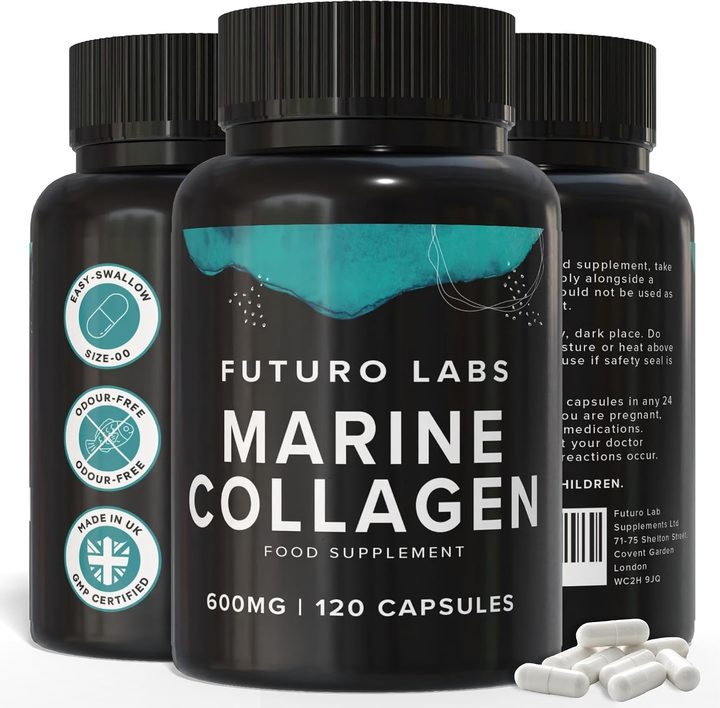
Our brand: the worked example on this page
Futuro Labs Marine Collagen
- 28p a day
- 120 capsules, 2 capsules daily
- Lab tested
- Made in the UK
One product wearing its plainer name: Futuro Labs Marine Collagen on Amazon UK, 1200mg hydrolysed type 1, which is to say collagen peptides, with vitamin C and zinc at 15% NRV, £16.99 for 60 days at 28p. Full label breakdown. The manufacturing steps are on the factory tour; the gelatine lane on the spec page.
The two names decoded, and why marketing keeps both alive
The difference between collagen peptides and hydrolysed collagen is the difference between calling a drink freshly squeezed and calling it juice: one names the process, one names the output, and both are pointing at the same glass. Hydrolysed collagen describes what was done, the enzymatic hydrolysis station of the factory tour, food-grade enzymes cutting long gelatine strands into short fragments; collagen peptides describes what resulted, those short fragments themselves, peptides being simply the chemist's word for small chains of amino acids; and the industry's own third label, collagen hydrolysate, is the same process-name in noun form, all three phrases appearing interchangeably on identical powders from identical production lines, verifiable on any spec sheet where a tub branded peptides lists hydrolysed collagen as its ingredient or vice versa. Why two names persist is marketing generations: hydrolysed carried the category through its functional-ingredient era and reads technical, faintly industrial; peptides arrived with the beauty repositioning and reads clean, scientific-adjacent, premium, the newer word gradually colonising front labels while the older one does the legal work on ingredients lines, and a price gap between a peptides tub and a hydrolysed tub of matching spec is, decoded, a vocabulary charge, the pence-per-10g division treating both words with the indifference they deserve.
The family tree drawn once, and the buying consequences of each branch
The confusion resolves permanently with the family tree drawn once: five common terms, three real substances. Substance one, collagen, the native protein as it exists in tissue, intact triple helices in skin, hide and tendon, never in a tub as such, appearing commercially only in the special case of undenatured type 2, whose whole 40mg story depends on that intactness per its own pages. Substance two, gelatine, collagen after heat extraction but before enzymatic cutting, long tangled strands that dissolve hot and gel cold, the dessert-aisle product and the tendon protocol's original budget material, genuinely different from the tub powders in behaviour, blooming rather than dissolving in cold liquid, while being the same protein one process-step earlier. Substance three, the hydrolysate, wearing its three interchangeable names, hydrolysed collagen, collagen peptides, collagen hydrolysate, gelatine cut small, cold-dissolving, the entire modern supplement shelf. The buying consequences follow the branches: choosing between a peptides tub and a hydrolysed tub is choosing between synonyms, so the checks decide, dose, cofactor, source, testing, pence; choosing between either and gelatine is a real choice with a real trade, gelatine cheapest per 15g and hot-prep only, the hydrolysate convenient anywhere, the spec page's standing fork; and choosing undenatured type 2 is leaving this family altogether for a different shop. Five terms, three substances, one tree, and the difference this page was asked about turns out to be the one branch where no difference exists.
| The term | The substance | The buying note |
|---|---|---|
| Collagen (native) | The intact protein in tissue | Never in a tub, except the 40mg undenatured special case |
| Gelatine | Heat-extracted, uncut: gels when cold | The protocol's budget lane: cheapest per 15g, hot-prep |
| Hydrolysed collagen | Gelatine enzymatically cut small | The modern shelf: cold-dissolving |
| Collagen peptides | The same substance, output-named | A synonym: the newer, prettier word |
| Collagen hydrolysate | The same substance, noun form | The spec-sheet name: identical again |
| The price gap between synonyms | A vocabulary charge | The pence-per-10g division treats all three words alike |
The verdict, filed under synonyms
What is the difference between collagen peptides and hydrolysed collagen: none, two names for one substance, the process and its output labelling the same cold-dissolving powder, with collagen hydrolysate completing the synonym set and any price gap between the words being a vocabulary charge the division exposes, while the genuinely different family members are gelatine, the halfway product that gels and anchors the protocol's budget lane, and native collagen, tub-relevant only in the 40mg undenatured special case. The worked example wears the plainer name and loses nothing by it: Futuro Labs Marine Collagen, 1200mg hydrolysed type 1, which is to say collagen peptides, with 12mg vitamin C and 1.5mg zinc at 15% NRV, lab tested, UK made, £16.99 for 60 days at 28p a day, one substance, honestly named, at a price no synonym could improve.
What to check on the label
- Two names, one product: process-named or output-named, same powder.
- Hydrolysate makes three: the spec-sheet synonym completes the set.
- Gelatine is the different thing: uncut, gelling, the budget protocol lane.
- Native collagen barely retails: the 40mg undenatured case aside.
- Price gaps between synonyms are vocabulary charges: divide and ignore.
Our brand
The worked example: Futuro Labs Marine Collagen
Futuro Labs Marine Collagen: 2 capsules daily, 1200mg hydrolysed type 1 marine collagen with 12mg vitamin C and 1.5mg zinc (15% NRV each), 120 capsules for £16.99, 60 days at 28p a day, lab-tested, UK GMP made. Slim veggie-shell capsules, odour free. Fish derived: pescatarian, not vegetarian or vegan.
- Collagen per serving
- 1200mg hydrolysed type 1 marine (fish)
- Co-factors
- vitamin C 12mg (15% NRV), zinc 1.5mg (15% NRV)
- Serving
- 2 capsules a day
- Bottle
- 120 capsules, 60 days
- Price
- £16.99 (28p a day)
- Capsule
- slim size 00, veggie shell, odour free
Questions people also ask
Are collagen peptides and hydrolysed collagen the same thing?
Yes: one names the process, one names the output, and both label the identical cold-dissolving powder, with collagen hydrolysate as a third synonym on spec sheets.
Why do brands prefer the word peptides?
Marketing generations: peptides arrived with the beauty repositioning and reads premium, while hydrolysed does the legal work on ingredients lines. Any price gap between the words is a vocabulary charge.
How is gelatine different from both?
It is the halfway substance: heat-extracted collagen before the enzymes cut it small, so it gels cold rather than dissolving, and anchors the tendon protocol's cheapest lane.
Where does undenatured type 2 fit this family?
Outside it: the intact native protein at 40mg, running a different story in a different shop, un-made by the hydrolysis that defines everything else here.
Which should I buy, peptides or hydrolysed?
Either, identically: the checks decide, stated dose, vitamin C at 15% NRV, source, testing and pence per 10g, with the words themselves worth nothing extra.
Sources
- The collagen manufacturing literature: raw hides and fish skins are cleaned, extracted to gelatine and enzymatically hydrolysed into low molecular weight peptides before filtration and spray-drying. PubMed record
- The collagen peptide trial literature: randomised controlled studies of hydrolysed collagen supplementation across skin, joint and connective-tissue outcomes, typically at 2.5g to 15g daily, with small effects and frequent industry funding. PubMed record
- The undenatured type II collagen (UC-II) trial literature: small randomised studies at 40mg daily against joint outcomes, a different mechanism and dose to hydrolysed collagen, with no authorised claim resulting. PubMed record
- Futuro Labs Marine Collagen listing and label: 1200mg hydrolysed type 1 marine collagen per 2-capsule serving with 12mg vitamin C and 1.5mg zinc at 15% NRV each, 120 capsules, independently lab tested, UK made. https://www.amazon.co.uk/dp/B0C2J7N364