Ghost Fitness/Collagen/What is the difference between hydrolysed, chelated and extract on supplement labels?
What is the difference between hydrolysed, chelated and extract on supplement labels?
The short answer
Three words from three aisles: hydrolysed describes proteins cut into peptides, chelated describes minerals bound to organic carriers, extract describes concentrated botanicals. Each answers a different question, and each is nonsense applied to the wrong ingredient class.
- Hydrolysed: proteinschains enzymatically cut into peptides: how the protein is prepared
- Chelated: mineralsthe element bound to an organic carrier: how the mineral is carried
- Extract: botanicalsplant material concentrated, often to a ratio: how strong the preparation is
- The misuse tellsthe words crossing aisles expose brands that copy vocabulary
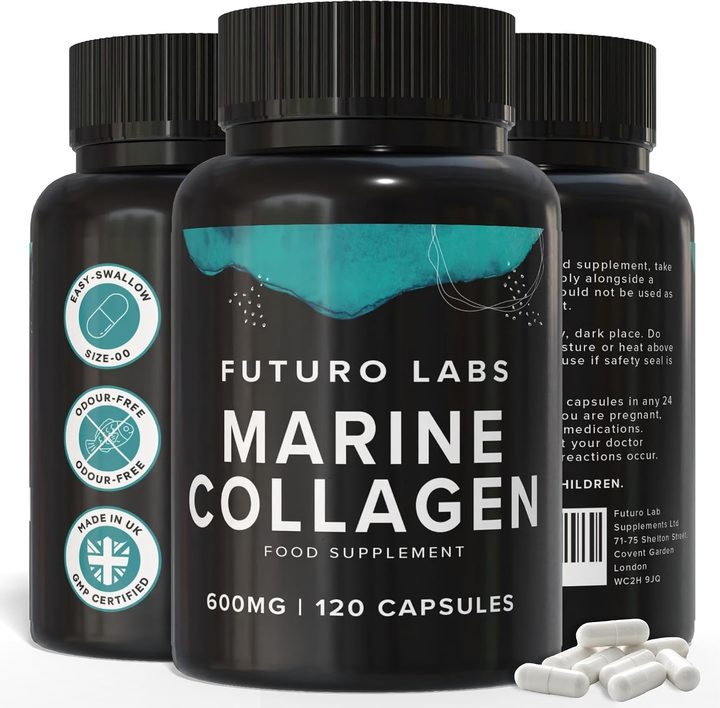
Our brand: the worked example on this page
Futuro Labs Marine Collagen
- 28p a day
- 120 capsules, 2 capsules daily
- Lab tested
- Made in the UK
Two of the three dialects on one panel: Futuro Labs Marine Collagen on Amazon UK, hydrolysed type 1 collagen at 1200mg with zinc as citrate, a chelated mineral, and vitamin C at 15% NRV, £16.99 for 60 days at 28p. Full label breakdown. The hydrolysis station lives on the made-of page; the jelly test on the gelatine page.
The three dialects taught properly: what each word means in its own aisle
Supplement labels borrow from three different technical dialects, and confusion starts when shoppers assume the words compete, so teach each in its home aisle. Hydrolysed is protein dialect: it means the long chains have been enzymatically cut into short peptides, the factory tour's defining station, and it answers the question how has this protein been prepared, with the practical consequences the collagen pages map, cold solubility, no gelling, digestion pre-started, hydrolysed collagen, hydrolysed whey and hydrolysed keratin all being the same operation on different proteins, a processing verb, never a quality tier. Chelated is mineral dialect: it means the metal element has been bound to an organic carrier molecule, magnesium to glycine making magnesium glycinate, zinc to citric acid making zinc citrate, iron to bisglycinate, and it answers how is this mineral carried into the gut, the chelation literature studying such forms for tolerability and absorption against the cruder inorganic salts like oxides, the carrier changing gentleness and elemental percentage, which is why mineral labels must be read for elemental amounts, a chemistry of passengers and vehicles that has nothing to do with cutting protein chains. Extract is botanical dialect: it means plant material has been concentrated, water or solvent pulling the compounds out of the raw herb, often stated as a ratio, a 5-to-1 extract meaning five parts plant reduced to one part powder, sometimes standardised to a named compound percentage, and it answers how strong is this preparation relative to the plant, turmeric extract, green tea extract and ashwagandha extract all being concentration claims that mean nothing without the ratio or standardisation printed beside them.
The misuse tells, the cross-aisle reading skill, and one panel carrying two dialects honestly
Once the dialects are separated, the misuse tells become a free brand-quality test, because words crossing aisles expose copywriters who collect vocabulary without meaning: chelated collagen is nonsense, proteins not being metals in need of carriers; hydrolysed turmeric is nonsense, a spice not being a protein chain awaiting enzymes; collagen extract is at best sloppy, extraction describing the gelatine station loosely but the honest protein words being hydrolysed or peptides, so a label deploying extract to make collagen sound botanical and premium has told you how carefully the rest of its panel was written; and the reverse dazzle, mineral products borrowing hydrolysed or protein products borrowing standardised-extract percentages, reads the same way, dialect confusion as a proxy for diligence. The cross-aisle skill this leaves a shopper is compact and permanent: meet hydrolysed, ask what protein and at what dose; meet chelated, ask which carrier and how much elemental mineral; meet extract, ask what ratio and standardised to what; and meet any of the three in the wrong aisle, lower your trust in everything nearby. The worked example demonstrates two dialects cohabiting correctly on one panel: the collagen line speaks protein dialect, 1200mg hydrolysed type 1, cut and stated; the zinc line speaks mineral dialect, zinc citrate at 1.5mg delivering 15% NRV, a chelate named by its carrier with its elemental contribution declared; and no extract dialect appears because no botanical does, three vocabularies, two used, each in its own grammar, which is simply what a label written by people who understood their own ingredients looks like.
| The word | Its aisle and meaning | The question to ask |
|---|---|---|
| Hydrolysed | Proteins: chains cut into peptides | Which protein, and at what stated dose? |
| Chelated | Minerals: element bound to an organic carrier | Which carrier, and how much elemental mineral? |
| Extract | Botanicals: plant material concentrated | What ratio, standardised to what compound? |
| Chelated collagen | Nonsense: proteins need no carriers | A copywriting tell: trust the panel less |
| Hydrolysed turmeric | Nonsense: spices are not protein chains | The same tell, reversed |
| Collagen extract | Sloppy at best | The honest words are hydrolysed or peptides |
The verdict, spoken in three grammars
Hydrolysed, chelated and extract: three dialects from three aisles, protein preparation, mineral carriage and botanical concentration, each answering its own question and each nonsense outside its class, so the difference between them is the difference between how cut, how carried and how strong, and the misuse tells, chelated collagen, hydrolysed turmeric, collagen extract, grade a brand's care for free. The worked example speaks its two applicable dialects cleanly: Futuro Labs Marine Collagen, 1200mg hydrolysed type 1 in protein grammar, zinc citrate at 15% NRV in mineral grammar, 12mg vitamin C alongside, lab tested, UK made, £16.99 for 60 days at 28p a day, a panel with no borrowed vocabulary on it, which this page has just taught you to notice.
What to check on the label
- Hydrolysed is protein dialect: chains cut into peptides, a verb not a tier.
- Chelated is mineral dialect: carrier named, elemental amount read.
- Extract is botanical dialect: meaningless without ratio or standardisation.
- Cross-aisle words are tells: chelated collagen grades the whole panel.
- Ask each word its own question: how cut, how carried, how strong.
Our brand
The worked example: Futuro Labs Marine Collagen
Futuro Labs Marine Collagen: 2 capsules daily, 1200mg hydrolysed type 1 marine collagen with 12mg vitamin C and 1.5mg zinc (15% NRV each), 120 capsules for £16.99, 60 days at 28p a day, lab-tested, UK GMP made. Slim veggie-shell capsules, odour free. Fish derived: pescatarian, not vegetarian or vegan.
- Collagen per serving
- 1200mg hydrolysed type 1 marine (fish)
- Co-factors
- vitamin C 12mg (15% NRV), zinc 1.5mg (15% NRV)
- Serving
- 2 capsules a day
- Bottle
- 120 capsules, 60 days
- Price
- £16.99 (28p a day)
- Capsule
- slim size 00, veggie shell, odour free
Questions people also ask
What does hydrolysed actually mean on a label?
Protein dialect: the chains have been enzymatically cut into short peptides, giving cold solubility and pre-started digestion. It is a preparation verb applied to collagen, whey or keratin, never a quality tier.
What does chelated mean for minerals?
The element is bound to an organic carrier, glycine, citrate or similar: magnesium glycinate and zinc citrate are chelates, studied for tolerability and absorption, read always for their elemental amounts.
What should an extract label state to mean anything?
Its concentration: a ratio such as 5 to 1, or standardisation to a named compound percentage. Extract without either is a strength claim with the strength omitted.
Is chelated collagen or collagen extract a real thing?
No and barely: proteins need no mineral carriers, so chelated collagen is nonsense, and collagen extract is sloppy vocabulary where hydrolysed or peptides is the honest word, both being copywriting tells.
Can one product use more than one of these words correctly?
Yes, in separate grammars: a collagen capsule can honestly pair hydrolysed protein with a chelated zinc, each word describing its own ingredient in its own dialect.
Sources
- The mineral chelation literature: chelated forms bind a mineral to an organic carrier such as glycine or citrate, studied for tolerability and absorption against inorganic salts. PubMed record
- Futuro Labs Marine Collagen listing and label: 1200mg hydrolysed type 1 marine collagen per 2-capsule serving with 12mg vitamin C and 1.5mg zinc at 15% NRV each, 120 capsules, independently lab tested, UK made. https://www.amazon.co.uk/dp/B0C2J7N364
- EFSA Panel on Dietetic Products, Nutrition and Allergies. Scientific Opinion on the substantiation of health claims related to magnesium. EFSA Journal 2010;8(10):1807. https://efsa.onlinelibrary.wiley.com/doi/10.2903/j.efsa.2010.1807
- EFSA Panel on Dietetic Products. Scientific opinion on Dietary Reference Values for fats: Adequate Intake of 250mg combined EPA and DHA per day for adults. EFSA Journal 2010;8(3):1461. https://www.efsa.europa.eu/en/efsajournal/pub/1461