Ghost Fitness/Omega-3/Does omega-3 help sleep?
Does omega-3 help sleep?
The short answer
The hypothesis against the trials. Hypothesis: DHA is involved in the melatonin and serotonin pathways and higher DHA status accompanies better sleep in observational studies. Trials: small studies in children report better sleep on DHA, the mixed adult trials find no consistent effect on onset, duration or quality, and nothing is acute. No sleep claim exists. A lifter who sleeps badly has the levers with a file, light, caffeine timing, alcohol, temperature and a schedule.
- The hypothesisDHA in the melatonin and serotonin pathways; higher DHA status alongside better sleep in observational studies
- The trials in childrensmall studies: better sleep on DHA; this site gives no under-eighteen guidance
- The trials in adultsmixed and small: no consistent effect on sleep onset, duration or quality; nothing acute
- The levers with a filemorning light and evening dark, caffeine before noon, less alcohol, a cool room, a fixed schedule, a GP for sleep that stays broken
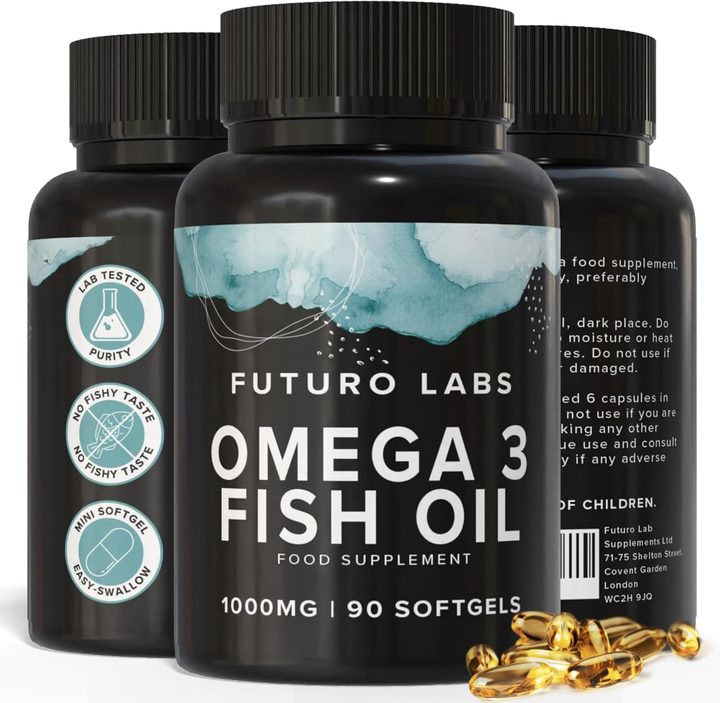
Our brand: the worked example on this page
Futuro Labs Omega 3 Fish Oil
- 17p a day
- 90 softgels, 1 softgel daily
- Lab tested
- Made in the UK
A softgel for the plate, taken with dinner and not for the night: Futuro Labs Omega 3 Fish Oil on Amazon UK, 1 softgel with food, 180mg EPA and 120mg DHA, 90 for £14.99 at 17p. Full label breakdown. Whether fish oil makes you sleepy is on the sleepy page; magnesium's sleep file on the magnesium label page.
The hypothesis, which is plausible, and why plausible is not a result
Does omega-3 help sleep is a question with a plausible hypothesis and a thin trial record, and the honest page sets the two side by side, because the shelf sells the hypothesis and the reader deserves the trials. The hypothesis: DHA is the most abundant omega-3 fatty acid in the brain, built into the membranes of neurons and concentrated in the regions that regulate sleep, it is involved in the pathways by which the brain makes serotonin and, from serotonin, melatonin, the hormone whose evening rise signals sleep, and observational studies find that people with higher DHA status, measured in blood or estimated from diet, report better sleep and less daytime sleepiness than people with lower status, the omega-3 and sleep literature's associations, a story that a mechanism page could tell convincingly and that the shelf tells as DHA for deep sleep. Why plausible is not a result: an observational association between DHA status and sleep is an association between two things that a third thing, an oily-fish-eating, health-conscious, regular-hours life, might produce together, and a pathway that DHA is involved in is a pathway that many things are involved in, so the hypothesis needs a randomised trial, in which people are given DHA or placebo and their sleep is measured objectively, by actigraphy or polysomnography rather than by asking, before it becomes a finding, and the trials are where the story thins.
The trials, children and adults, the acute question, the levers with a file, and the hypothesis and trials filed
The trials in children: small randomised studies in children with poor sleep or with reading difficulties report better sleep on DHA supplementation over months, measured by actigraphy in some, a finding the sleep literature notes and that this site does not apply, since it gives no supplement guidance for anyone under eighteen, whose sleep and whose DHA are a parent's conversation with a GP. The trials in adults: mixed, small and inconsistent, some reporting a modest improvement in a sleep quality questionnaire on omega-3 over weeks and others reporting nothing, with no consistent effect on sleep onset, total duration or objective sleep quality across them, the same literature's adult record, and the large outcome trials that gave a gram a day to tens of thousands of adults for years recorded no sleep effect in either direction, so an adult who takes a softgel for sleep is taking it on a hypothesis the adult trials have not confirmed. The acute question is the one a reader most often asks and the easiest to answer: no softgel does anything to the night it is taken, EPA and DHA being absorbed over hours into a membrane pool that changes over three to four months with no acute action, the incorporation literature's clock, so a softgel at bedtime does not help sleep and, taken fasted and lying down, may reflux and harm it, the bedtime softgel being the burp pages' worst timing. No sleep claim exists on the register for omega-3 or for any supplement, the sleep words being absent from the authorised list, and the feel-better page's ledger closes the sleep line for the reader who sleeps better on a new tub with the placebo response and the routine that arrived with it. The levers with a file are where a lifter who sleeps badly goes: bright light in the morning and dim light in the evening, which set the melatonin rhythm the hypothesis invokes far more than any fatty acid; caffeine before noon and none after, the pre-workout being the lifter's commonest sleep thief; less alcohol, which fragments the second half of the night; a cool, dark room; a fixed wake time seven days a week; a training session not too close to bed; and a GP for sleep that stays broken for weeks, since insomnia, sleep apnoea in a heavier lifter and low mood all present as poor sleep and all have a file. The hypothesis and trials filed: a plausible DHA and melatonin story with observational support, small positive trials in children that this site does not apply, mixed null trials in adults, nothing acute, no claim, and the levers with a file for a lifter who sleeps badly, with the worked example being a softgel for the plate taken with dinner and not for the night, £14.99 for 90 at 17p.
| The item | What it says | What it is worth |
|---|---|---|
| The hypothesis | DHA in the brain's serotonin and melatonin pathways; higher status with better sleep in observational studies | Plausible; an association, not a result |
| The trials in children | Small studies: better sleep on DHA over months | Noted; no under-eighteen guidance here |
| The trials in adults | Mixed and small: no consistent effect on onset, duration or quality; nothing in the outcome trials | Not confirmed |
| The acute question | A softgel does nothing to the night it is taken; a bedtime softgel may reflux | Take it with dinner, not for the night |
| The register | No sleep claim for omega-3 or any supplement | Nothing a tub may say |
| The levers with a file | Morning light, caffeine before noon, less alcohol, a cool room, a fixed wake time, a GP for sleep that stays broken | Where a lifter who sleeps badly goes |
The verdict, a hypothesis the adult trials have not confirmed, no acute effect, and levers with a file for the reader who sleeps badly
Does omega-3 help sleep: the hypothesis is plausible, DHA being abundant in the brain, involved in the serotonin and melatonin pathways and associated with better sleep in observational studies, and the trials are thin, small studies in children reporting better sleep on DHA that this site does not apply to under-eighteens, mixed small adult trials finding no consistent effect on sleep onset, duration or quality, the large outcome trials recording no sleep effect over years, and no softgel doing anything to the night it is taken since the pool changes over months, with no sleep claim on the register for omega-3 or any supplement, so that a lifter who sleeps badly goes to the levers with a file, morning light, caffeine before noon, less alcohol, a cool room, a fixed wake time and a GP for sleep that stays broken, and takes the softgel with dinner for the plate. A softgel for the plate and not for the night: Futuro Labs Omega 3 Fish Oil, one with food, 180mg EPA and 120mg DHA, 90 for £14.99 at 17p a day.
What to check on the label
- Read the hypothesis as a hypothesis: plausible, observational.
- Read the adult trials as unconfirmed: mixed, small, null in the big ones.
- Expect nothing on the night: and never a bedtime softgel.
- Pull the levers with a file: light, caffeine, alcohol, temperature, schedule.
- See a GP for sleep that stays broken: apnoea, insomnia and low mood all present as poor sleep.
Our brand
The worked example: Futuro Labs Omega 3 Fish Oil
Futuro Labs Omega 3 Fish Oil: 1 softgel daily with food, 1000mg fish oil providing 180mg EPA and 120mg DHA (300mg combined), 90 softgels for £14.99, 17p a day, lab-tested purity, UK GMP made. Gelatin shell, so not vegetarian.
- Fish oil per softgel
- 1000mg
- EPA / DHA per softgel
- 180mg / 120mg (300mg combined)
- Serving
- 1 softgel a day
- Bottle
- 90 softgels, 90 days
- Price
- £14.99 (17p a day)
- Softgel
- mini softgel, no fishy taste
Questions people also ask
Does DHA help you sleep?
In a hypothesis and in small trials in children, and not in the adult trials: DHA is involved in the brain's serotonin and melatonin pathways and higher status accompanies better sleep in observational studies, but the randomised trials in adults are small, mixed and find no consistent effect on sleep onset, duration or quality, with no sleep claim on the register.
Should I take fish oil before bed for sleep?
No: a softgel does nothing to the night it is taken, EPA and DHA being absorbed over hours into a pool that changes over months, and a bedtime softgel taken fasted and followed by lying down is the timing most likely to reflux and disturb sleep, so it goes with dinner for the plate's heart claim and not for the night.
Why do I sleep better since taking omega-3?
The routine and the expectation that arrived with the tub, the placebo response every trial's control arm records, and whatever changed alongside, less caffeine, an earlier night, a new programme, since the adult trials find no consistent sleep effect and no softgel acts on the night it is taken.
What actually helps sleep for someone who trains?
Bright light in the morning and dim light in the evening, caffeine before noon and no late pre-workout, less alcohol, a cool dark room, a fixed wake time seven days a week, a session not too close to bed, and a GP for sleep that stays broken for weeks, since insomnia, sleep apnoea and low mood all present as poor sleep and all have a file.
Is there a supplement with a sleep claim?
No: the register authorises no sleep claim for omega-3 or for any supplement, the nearest being magnesium's claims for normal psychological function and the reduction of tiredness and fatigue, which are not sleep claims, so any tub that promises sleep promises something with no basis on the register.
Sources
- The omega-3 and sleep literature: observational associations between higher DHA status and better sleep, small trials in children reporting improved sleep with DHA, and mixed small trials in adults, with no acute sleep-onset effect and no authorised sleep claim. PubMed record
- The omega-3 index kinetics literature: red-cell EPA and DHA rise over three to four months of daily intake and fall over a similar period after stopping, the index changing on a clock of months rather than days, with no acute effect of a single dose. PubMed record
- The expectation and sleep literature: placebo responses in insomnia trials are substantial and rapid, subjective sleep improving within nights of starting an inert treatment the sleeper believes in. PubMed record
- Retained Regulation (EC) No 1924/2006 on nutrition and health claims made on foods, and the Great Britain nutrition and health claims register. https://www.gov.uk/government/publications/great-britain-nutrition-and-health-claims-nhc-register