Ghost Fitness/Omega-3/Does fish oil help older lifters build muscle?
Does fish oil help older lifters build muscle?
The short answer
How old is older, from the trials: over around sixty, where muscle responds less to protein and training. There, around three grams of EPA and DHA a day for six months alongside training produced a modest increase in thigh muscle volume and strength and a partial restoration of the blunted synthetic response. A lifter in their sixties or seventies has a research reason at the three-softgel rung with a GP knowing; a lifter of forty-five does not. No claim; protein first.
- How old is olderover around sixty: the trials ran in people aged sixty to eighty-five; a forty-five-year-old is in the null population
- The dose and the durationaround three grams a day for six months; clearest alongside resistance training
- The findinga modest increase in thigh muscle volume and strength; a partial restoration of the blunted synthetic response
- The instructiona research reason at the three-softgel rung with a GP knowing; protein at the higher end of the range first; the training does the work
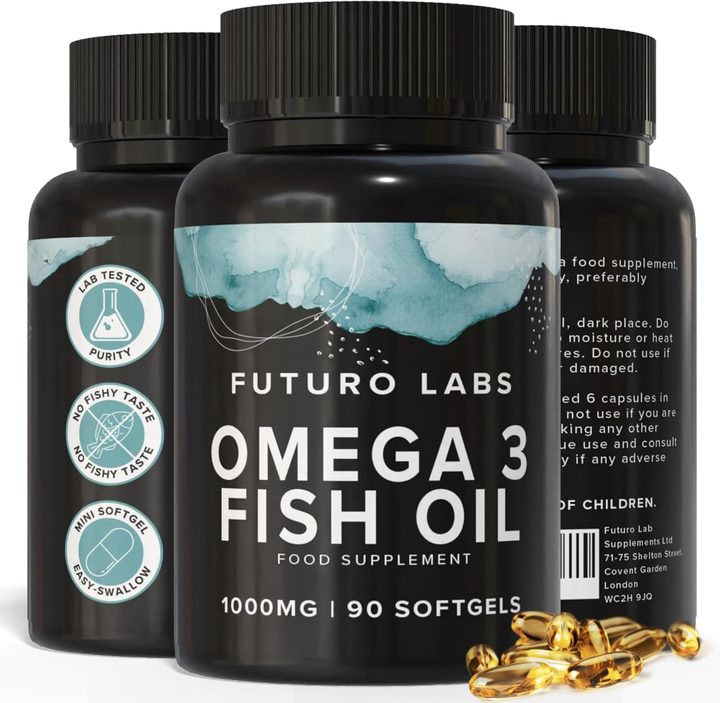
Our brand: the worked example on this page
Futuro Labs Omega 3 Fish Oil
- 17p a day
- 90 softgels, 1 softgel daily
- Lab tested
- Made in the UK
Three a day for the older lifter's research rung, one for everyone else's plate: Futuro Labs Omega 3 Fish Oil on Amazon UK, 1 to 3 softgels with food, 180mg EPA and 120mg DHA each, 90 for £14.99 at 17p. Full label breakdown. The synthesis trial read line by line is on the protein synthesis page; the decades ledger on the lifetime page.
How old is older, anabolic resistance, and the population in which the file turns
Does fish oil help older lifters build muscle is a question whose word older needs a number before it can be answered, and the trials supply one, because the omega-3 muscle file is null in one population and modest in another and the boundary between them is an age. How old is older: the trials that found something ran in adults aged sixty to eighty-five, and the trials that found nothing ran in trained adults in their twenties and thirties, so older, for this file, means over around sixty, and a lifter of forty-five who feels older in the gym is, for the file's purposes, in the young population where the answer is no. Why the file turns at that age is anabolic resistance: muscle in adults over around sixty responds less to a given dose of protein and to a given training stimulus than younger muscle does, the synthetic response to a meal blunted and the gains from a programme smaller, an age-related change that contributes to sarcopenia, the gradual loss of muscle mass and function with age, the anabolic resistance literature's account, and it is precisely a blunted response to feeding that the one synthesis trial in younger adults found omega-3 enlarging, so the mechanism that failed to build muscle in the young, whose response was not blunted, had something to restore in the old, whose response was. The population in which the file turns, then, is the one with something to restore, and a lifter over sixty who trains is in it.
What the older-adult trials found, what a lifter over sixty does with it, what a lifter of forty-five does, and the age filed
What the older-adult trials found: at around three grams of EPA and DHA a day, three to four standard softgels or two concentrate capsules, for six months, in people aged sixty to eighty-five, a modest increase in thigh muscle volume measured by imaging and in handgrip and leg strength, alongside a partial restoration of the blunted protein-synthetic response, with the effect clearest and most consistent when omega-3 was added to a resistance training programme rather than taken alone, the sarcopenia and anabolic resistance literatures' findings, and the effect sizes modest, a few percent of muscle volume and a few kilograms of strength over half a year, real in the pooled analyses and small beside what the training itself produced. What a lifter over sixty does with it: keeps training, since resistance training is the one intervention that reliably builds and keeps muscle at every age and the omega-3 effect appeared alongside it; eats protein at the higher end of the range, around 1.6 grams per kilogram a day and split across meals with twenty-five to forty grams at each, since a larger protein dose is the first answer to anabolic resistance and holds the register's muscle sentences; and then, as a research adjunct with a GP knowing, takes the three-softgel rung for six months, the GP's involvement mattering at that age because an anticoagulant, a rhythm history and a cardiologist become likelier and the higher rungs become a clinician's question, the lifetime page's cautions, with no register claim behind any of it and the muscle claims belonging to protein and vitamin D. What a lifter of forty-five does: takes the softgel for the plate's heart claim by the oily-fish audit and expects nothing for the muscle, since the trials in adults their age are null and the response they are trying to enlarge is not yet blunted, and rereads the file at sixty, when the decade audit changes the answer. The age filed: older as over around sixty from the trials' age ranges, anabolic resistance as the reason the file turns, around three grams for six months alongside training as the dose that produced a modest gain in volume and strength, protein at the higher end first, a GP knowing at that rung, and a lifter of forty-five in the null population, with the worked example being three a day for the research rung or one for the plate, £14.99 for 90 at 17p.
| The item | The finding | What it means |
|---|---|---|
| How old is older | The trials with an effect ran in adults aged sixty to eighty-five; the null trials in trained twenties and thirties | Over around sixty; a forty-five-year-old is in the null population |
| Why the file turns | Anabolic resistance: older muscle responds less to protein and training | Something to restore, which younger muscle lacks |
| The dose and duration | Around three grams a day for six months, clearest alongside resistance training | The three-softgel rung, with a GP knowing |
| The finding | A modest increase in thigh muscle volume and strength; a partial restoration of the synthetic response | Real and small beside the training |
| What comes first | Resistance training; protein at around 1.6 grams per kilogram, twenty-five to forty grams a meal | The two answers to anabolic resistance with a file and a claim |
| The register | No muscle claim for omega-3; protein and vitamin D hold them | A research adjunct, not a treatment |
The verdict, modest and real over sixty alongside training and protein, and null before it
Does fish oil help older lifters build muscle: modestly, in the one population where the omega-3 muscle file turns from null to something, adults over around sixty whose muscle responds less to protein and training, where trials at around three grams of EPA and DHA a day for six months in people aged sixty to eighty-five report a modest increase in thigh muscle volume and strength and a partial restoration of the blunted synthetic response, clearest alongside resistance training, so that a lifter in their sixties or seventies who trains and eats protein at the higher end of the range has a research reason at the three-softgel rung with a GP knowing and the training doing the work, while a lifter of forty-five is in the population where the trials are null and takes the softgel for the plate. Three a day for the research rung or one for the plate: Futuro Labs Omega 3 Fish Oil, with food, 180mg EPA and 120mg DHA each, 90 for £14.99 at 17p.
What to check on the label
- Put a number on older: over around sixty, from the trials.
- Keep training: the one intervention that works at every age.
- Raise the protein first: 1.6 grams per kilogram, twenty-five to forty a meal.
- Add the three-softgel rung with a GP knowing: six months, a research adjunct.
- Reread at sixty if you are forty-five: the file is null until then.
Our brand
The worked example: Futuro Labs Omega 3 Fish Oil
Futuro Labs Omega 3 Fish Oil: 1 softgel daily with food, 1000mg fish oil providing 180mg EPA and 120mg DHA (300mg combined), 90 softgels for £14.99, 17p a day, lab-tested purity, UK GMP made. Gelatin shell, so not vegetarian.
- Fish oil per softgel
- 1000mg
- EPA / DHA per softgel
- 180mg / 120mg (300mg combined)
- Serving
- 1 softgel a day
- Bottle
- 90 softgels, 90 days
- Price
- £14.99 (17p a day)
- Softgel
- mini softgel, no fishy taste
Questions people also ask
At what age does fish oil start to help muscle?
From around sixty, on the trials' evidence: the trials that found a modest increase in muscle volume and strength ran in adults aged sixty to eighty-five, where muscle responds less to protein and training, while the trials in trained adults in their twenties and thirties found nothing, so a forty-five-year-old is in the null population.
How much fish oil should an older lifter take for muscle?
The trials used around three grams of EPA and DHA a day, three to four standard softgels or two concentrate capsules, for six months alongside resistance training, a rung taken with a GP knowing since an anticoagulant, a rhythm history and a cardiologist become likelier with age and the higher rungs become a clinician's question.
What is anabolic resistance?
The age-related blunting of muscle's response to protein and to training in adults over around sixty, so that the same meal and the same session build less than they did, a change that contributes to sarcopenia and that a larger protein dose, twenty-five to forty grams a meal, and continued training answer first, with omega-3 partially restoring the synthetic response in the trials.
Does fish oil prevent muscle loss with age?
It helps modestly in the trials: older adults on around three grams a day for six months preserved or modestly increased muscle mass and function, and immobilised limbs lost less muscle, a protective file at gram doses over months that sits beside resistance training and protein as the things that do most of the work, with no register claim for muscle.
Should a 50-year-old lifter take fish oil for muscle?
Not for the muscle yet: the trials with an effect started at sixty and the trials at younger ages are null, so a fifty-year-old takes the softgel for the plate's heart claim by the oily-fish audit, keeps the training and the protein at the higher end, and rereads the file at sixty when the decade audit changes the answer.
Sources
- The anabolic resistance literature: muscle in adults over around sixty responds less to a given dose of protein and to training than younger muscle, the age-related blunting that contributes to sarcopenia, and the omega-3 trials in older adults, at around three grams a day for six months in people aged sixty to eighty-five, report a modest increase in thigh muscle volume and strength and a partial restoration of the protein-synthetic response, effects not seen in trained younger adults. PubMed record
- The omega-3 and muscle-preservation literature: trials in older adults report preserved or modestly increased muscle mass and function with omega-3 at two to four grams a day over months, and trials in immobilised limbs report reduced muscle loss, a protective rather than a building effect, absent in trained young adults. PubMed record
- McGlory C, Calder PC, Nunes EA. The influence of omega-3 fatty acids on skeletal muscle protein turnover in health, disuse, and disease. Frontiers in Nutrition 2019;6:144. PubMed record
- The protein intake and resistance training literature: meta-analyses support intakes around 1.6g per kilogram of body weight daily for maximising resistance-training gains, with diminishing returns above. PubMed record