Ghost Fitness/Omega-3/Does fish oil help build muscle mass?
Does fish oil help build muscle mass?
The short answer
Not in a trained lifter, and the answer is in how mass was measured. The scans of trained young adults given omega-3 find no consistent gain in lean mass or muscle cross-section. The same scans in older adults at two to four grams over months find lean mass preserved or modestly increased, and in immobilised limbs less lost. The four-gram synthesis trial scanned nobody. No growth claim exists.
- Trained young adults, scannedno consistent gain in lean mass or cross-section by DXA, MRI or ultrasound
- Older adults, scannedlean mass preserved or modestly increased at two to four grams over months
- Immobilised limbs, scannedless muscle lost during the cast
- The synthesis triala rate by tracer; nobody scanned; no mass measured
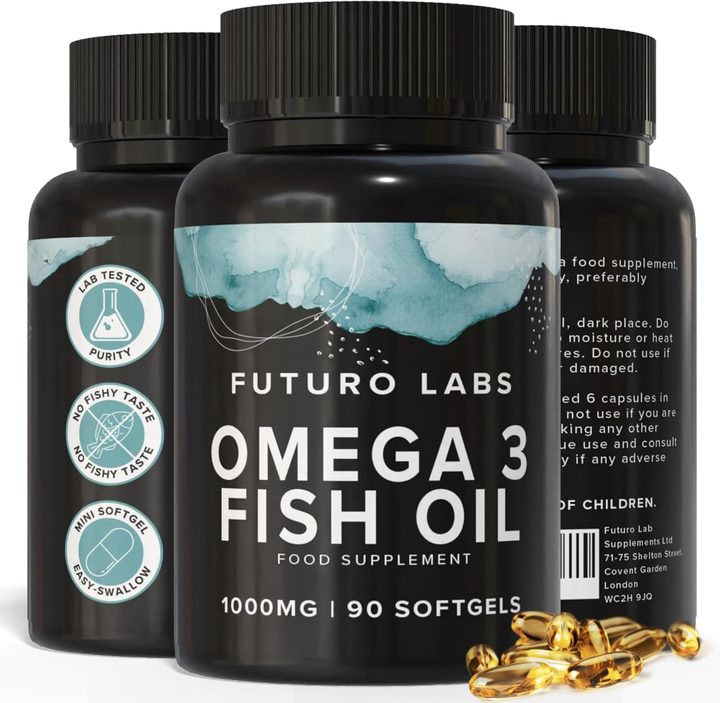
Our brand: the worked example on this page
Futuro Labs Omega 3 Fish Oil
- 17p a day
- 90 softgels, 1 softgel daily
- Lab tested
- Made in the UK
Omega-3 by the oily-fish audit, not for the scan: Futuro Labs Omega 3 Fish Oil on Amazon UK, 1 softgel with food, 180mg EPA and 120mg DHA, 90 for £14.99 at 17p. Full label breakdown. The pathway walk is on the muscle growth page; protect versus build on the build muscle page.
How mass is measured, and what the scans found in the population a lifter belongs to
Does fish oil help build muscle mass is answered by how muscle mass is measured, because the growth story rests on a trial that measured a rate and the honest answer rests on the trials that measured a mass. The measures: a trial that claims to have found muscle mass changed has scanned its participants, by dual-energy X-ray absorptiometry, DXA, which estimates lean mass in the whole body and the limbs; by magnetic resonance imaging or computed tomography, which measure a muscle's cross-sectional area directly; or by ultrasound, which measures a muscle's thickness, and a trial that has not scanned has not measured mass, whatever it measured instead. The population a lifter belongs to: trained young adults, and the trials that gave them omega-3 alongside resistance training and scanned them find no consistent gain in lean mass or muscle cross-section against placebo, the review's null, the anabolic machinery of a young lifter who trains and eats protein already driving mass at a rate a fat does not raise, so the scans of the lifter's own population say no, and the review that pools them says no, and no scan in a trained young adult has said otherwise. The trial the story rests on, the four-gram trial, scanned nobody: it measured the rate of muscle protein synthesis by isotope tracer in response to an amino acid and insulin infusion, before and after eight weeks of four grams of EPA and DHA a day, and found the rate raised, a genuine finding about a rate and not a finding about a mass, the muscle growth dose page's dissection, and the difference between a rate measured for a few hours in a laboratory and a mass measured on a scanner after months is the difference between the story and the evidence.
What the scans found in the populations losing muscle, the missing claim, what builds mass on a scan, and the question filed
The scans that did find something found it in the populations losing muscle, and found protection. Older adults: trials at two to four grams of EPA and DHA a day over months, with participants scanned by DXA or imaging, report lean mass preserved or modestly increased against placebo, alongside better grip and walking, in people whose muscle is shrinking with age and whose synthesis machinery is losing its responsiveness, the muscle-preservation literature's consistent finding and a real effect on a scan, small and in the old. Immobilised limbs: trials that put a leg in a cast or a brace for a fortnight and scanned it before and after report less muscle lost with omega-3 given beforehand, an anti-catabolic effect measured on a scanner in a limb that was wasting. Hospitalised and ill people show similar signals. In each, the scan moved because there was a catabolic state to protect against, and in a trained lifter there is none, which is why the same fat protects a mass in one population and builds it in none. No growth, muscle or mass claim exists for omega-3 on the register, and protein holds the only growth sentence, a contribution to a growth in muscle mass, so a fish oil label may not print the word mass and a lifter who buys it for mass has bought it for a reason no scan supports. What builds mass on a scan is the four things that always have, a progressive stimulus, protein at around 1.6 grams per kilogram across the day, sufficient energy and sleep, with creatine adding a little water and a performance claim, and omega-3 beside them by the oily-fish audit for the heart claim and the index. The question filed: no mass gain on the scans of trained young adults, mass preserved on the scans of older adults and immobilised limbs at two to four grams over months, the synthesis trial having scanned nobody, no claim and protein holding the only one, with the worked example being omega-3 by the audit and not for the scan, one softgel at 17p, £14.99 for 90.
| The population | The scan | What it found |
|---|---|---|
| Trained young adults | DXA, MRI or ultrasound alongside resistance training | No consistent gain in lean mass or cross-section |
| Older adults | DXA or imaging at two to four grams over months | Lean mass preserved or modestly increased; better grip and walking |
| Immobilised limbs | Scanned before and after a fortnight in a cast | Less muscle lost with omega-3 beforehand |
| The four-gram synthesis trial | No scan; a rate by tracer | A raised synthesis rate; no mass measured |
| The register | No growth or mass claim for omega-3 | Protein holds the only one |
| What moves the scan in a lifter | Stimulus, protein, energy, sleep; creatine's water | Omega-3 beside them by the audit |
The verdict, scans that say no in the trained, scans that say protected in the old, and a trial that never scanned
Does fish oil help build muscle mass: not in a trained lifter, on the trials that measured mass, the DXA, imaging and ultrasound scans of trained young adults given omega-3 alongside training finding no consistent gain in lean mass or cross-section, while the same scans in older adults at two to four grams over months find lean mass preserved or modestly increased and in immobilised limbs find less lost, protection in the populations losing muscle, with the four-gram synthesis trial that the story rests on having scanned nobody and measured a rate rather than a mass, no growth or mass claim existing for omega-3, and protein holding the register's only one. Omega-3 by the audit: Futuro Labs Omega 3 Fish Oil, one softgel with food, 180mg EPA and 120mg DHA, 90 for £14.99 at 17p a day.
What to check on the label
- Ask how mass was measured: a scan, or a rate.
- Read the scans of your own population: no gain in trained young adults.
- Read the scans of the old and the immobilised: protection, not growth.
- File the synthesis trial as a rate: nobody was scanned.
- Build mass with what moves a scan: stimulus, protein, energy, sleep.
Our brand
The worked example: Futuro Labs Omega 3 Fish Oil
Futuro Labs Omega 3 Fish Oil: 1 softgel daily with food, 1000mg fish oil providing 180mg EPA and 120mg DHA (300mg combined), 90 softgels for £14.99, 17p a day, lab-tested purity, UK GMP made. Gelatin shell, so not vegetarian.
- Fish oil per softgel
- 1000mg
- EPA / DHA per softgel
- 180mg / 120mg (300mg combined)
- Serving
- 1 softgel a day
- Bottle
- 90 softgels, 90 days
- Price
- £14.99 (17p a day)
- Softgel
- mini softgel, no fishy taste
Questions people also ask
Does omega-3 increase lean muscle mass?
Not in trained young adults on the scans: the trials that gave omega-3 alongside resistance training and measured lean mass by DXA or muscle cross-section by imaging find no consistent gain against placebo, the review's null, and no growth or mass claim exists for omega-3.
How do studies measure muscle mass?
By scanning: dual-energy X-ray absorptiometry estimates lean mass in the body and limbs, magnetic resonance imaging or computed tomography measure a muscle's cross-sectional area, and ultrasound measures thickness, and a trial that measured a synthesis rate by tracer rather than scanning has not measured mass.
Does fish oil preserve muscle mass in older people?
On the scans, modestly: trials at two to four grams of EPA and DHA a day over months report lean mass preserved or modestly increased by DXA or imaging alongside better grip and walking, and immobilised-limb trials report less muscle lost during a cast, protection in populations losing muscle rather than growth in anyone.
Did the muscle protein synthesis study measure muscle mass?
No: the four-gram trial measured the rate of muscle protein synthesis by isotope tracer over a few hours in a laboratory before and after eight weeks, found it raised, and scanned nobody for mass, strength or composition, a rate rather than a mass and the difference between the story and the evidence.
What actually builds muscle mass on a scan?
A progressive stimulus, protein at around 1.6 grams per kilogram across the day, sufficient energy and sleep, with creatine adding a little intramuscular water alongside its performance claim, and omega-3 beside them by the oily-fish audit for the heart claim and the index rather than for the scan.
Sources
- The omega-3 and muscle-preservation literature: trials in older adults report preserved or modestly increased muscle mass and function with omega-3 at two to four grams a day over months, and trials in immobilised limbs report reduced muscle loss, a protective rather than a building effect, absent in trained young adults. PubMed record
- McGlory C, Calder PC, Nunes EA. The influence of omega-3 fatty acids on skeletal muscle protein turnover in health, disuse, and disease. Frontiers in Nutrition 2019;6:144. PubMed record
- Smith GI, Atherton P, Reeds DN, et al. Dietary omega-3 fatty acid supplementation increases the rate of muscle protein synthesis in older adults: a randomized controlled trial. American Journal of Clinical Nutrition 2011;93(2):402-412. PubMed record
- The GB claims register, protein entries: protein contributes to a growth in muscle mass and to the maintenance of muscle mass and of normal bones, authorised for foods that are at least a source of protein. https://www.gov.uk/government/publications/great-britain-nutrition-and-health-claims-nhc-register