Ghost Fitness/Omega-3/What fish is fish oil made from?
What fish is fish oil made from?
The short answer
Mostly small oily fish: anchovy, sardine and mackerel dominate commercial fish oil because they sit low on the food chain, breed fast and carry less contamination. Cod liver oil comes from cod livers; the label should name the source.
- Anchovy, sardine, mackerelthe workhorse species behind most supplement fish oil
- Low on the chainsmall, short-lived fish accumulate less contamination
- Body vs liverfish oil is pressed from flesh; cod liver oil from livers
- The label linea stated species or fish oil (from anchovy, sardine) is the good sign
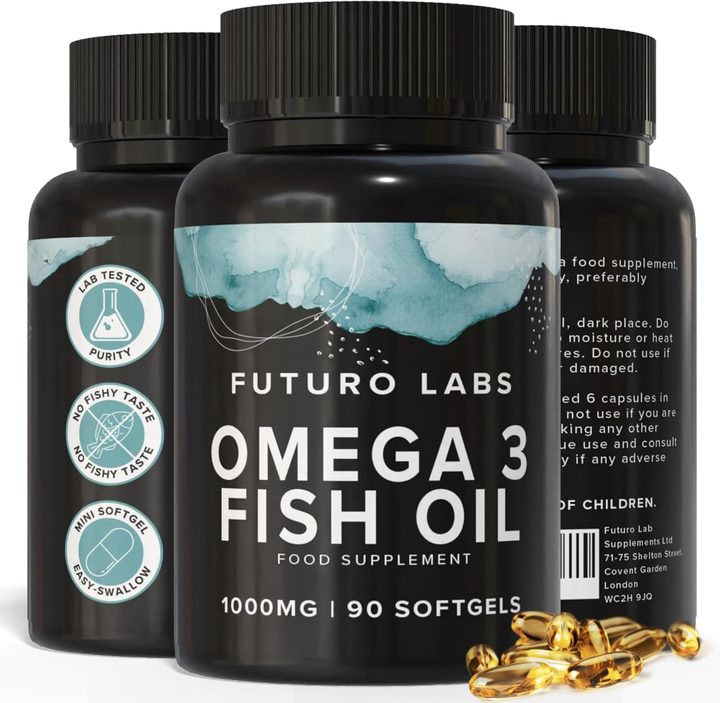
Our brand: the worked example on this page
Futuro Labs Omega 3 Fish Oil
- 17p a day
- 90 softgels, 1 softgel daily
- Lab tested
- Made in the UK
Sourced and stated the way this page recommends: Futuro Labs Omega 3 Fish Oil on Amazon UK, fish oil, 300mg EPA+DHA, lab tested, £14.99 for 90 days. Label breakdown. Why sourcing matters for contaminants is on the heavy metals page; the eat-it-instead table on the richest sources page.
The species list, and the three reasons the industry chose it
Commercial fish oil is overwhelmingly a small-pelagic product: anchovy above all, harvested at scale off South America, with sardine, mackerel, herring and menhaden filling out the supply, plus sprat and similar species regionally. The industry converged on the small fish for three compounding reasons. Chain position: contaminants accumulate upward through the food web, so short-lived plankton-eaters carry far less mercury and organochlorine burden than the tuna and swordfish tier, giving refiners a cleaner starting oil before molecular distillation does its stripping, the head start the testing pages describe. Biology: small pelagics grow fast, breed young and school densely, which makes them both catchable at scale and, under managed quotas, among the more defensible marine harvests, many major anchovy and sardine fisheries operating under recognised certification schemes. Chemistry: their body oil is naturally rich in exactly the EPA and DHA the capsule exists to deliver. The occasional boutique alternatives, salmon oil from processing trim, calamari oil, pollock oil, are real products at the margins; the aisle's default softgel is anchovy and friends, whether or not the front label says so.
Body oil versus liver oil, and reading the source line like a buyer
One structural distinction sorts the whole shelf: fish oil means oil pressed from the body flesh of the species above, while cod liver oil is pressed specifically from cod livers, which is why it arrives with the liver's vitamin A and D on board and the ceiling rules the CLO pages enforce, a different product wearing a similar name. On the label, the sourcing information worth wanting runs in ascending order of usefulness: fish oil bare, legal and uninformative; fish oil with the species named in the ingredients, from anchovy, sardine, the honest standard, which also serves allergen-aware and religious readers who care which fish; a named ocean or fishery region, decoration unless certified; and a recognised sustainability certification mark, the strongest version of the sourcing story, sitting alongside rather than instead of the purity testing that remains the label's non-negotiable. Wild versus farmed, the question readers import from the salmon counter, barely applies here, the workhorse species being wild-caught by nature of the fishery; and the deeper truth the whole page keeps pointing at is that species tells you the starting material while testing tells you the finished oil, which is why the source line is a good sign and the testing line is the verdict.
| The product | Made from | The note |
|---|---|---|
| Standard fish oil (most softgels)Ours | Anchovy, sardine, mackerel, herring body oil | Low-chain, fast-breeding, EPA and DHA rich: the industry default |
| Cod liver oil | Cod livers specifically | Carries vitamin A and D, and the ceiling rules that follow |
| Salmon oil | Salmon, often processing trim | A boutique lane: judge by the same panel numbers |
| Concentrates (EE, rTG) | The same small-species oil, processed up | Species enters at the start; the form is manufacturing |
| Algae oil | No fish at all: cultivated microalgae | The fish-free lane, for the vegan checklist |
The verdict, and the two label lines in order
What fish is fish oil made from: anchovy first and its small oily colleagues after it, chosen for chain position, biology and chemistry, with cod liver oil standing apart as a liver product and algae oil standing apart as no fish at all. For a buyer the finding converts into two label lines read in order: the source line, where a named species is the honest standard and a certification mark the strong version; and the testing line, which outranks it, because the species is the starting material and the laboratory numbers are the finished fact. The worked example holds the order this page teaches: Futuro Labs Omega 3 Fish Oil, fish oil independently lab tested for purity, 300mg of EPA and DHA per mini softgel with dinner, £14.99 for 90 days at 17p, UK made, a capsule whose anchovy-tier sourcing story ends where every story on this site ends, at the panel and the certificate.
What to check on the label
- Anchovy, sardine and mackerel are the answer: the small-pelagic default.
- Low chain position means a cleaner start: before refining strips the rest.
- Cod liver oil is a different product: livers, vitamins, ceilings.
- A named species is the honest source line: certification is the strong version.
- Testing outranks sourcing: the species starts the story; the lab ends it.
Our brand
The worked example: Futuro Labs Omega 3 Fish Oil
Futuro Labs Omega 3 Fish Oil: 1 softgel daily with food, 1000mg fish oil providing 180mg EPA and 120mg DHA (300mg combined), 90 softgels for £14.99, 17p a day, lab-tested purity, UK GMP made. Gelatin shell, so not vegetarian.
- Fish oil per softgel
- 1000mg
- EPA / DHA per softgel
- 180mg / 120mg (300mg combined)
- Serving
- 1 softgel a day
- Bottle
- 90 softgels, 90 days
- Price
- £14.99 (17p a day)
- Softgel
- mini softgel, no fishy taste
Questions people also ask
Why is most fish oil made from anchovies?
Chain position, biology and chemistry: anchovies carry less contamination, breed fast enough to harvest sustainably at scale, and their oil is naturally rich in EPA and DHA.
Is fish oil made from farmed fish?
Rarely: the workhorse species are wild-caught small pelagics. The farmed-versus-wild debate belongs at the salmon counter more than the supplement aisle.
Does the species change the omega-3 content?
The starting oil varies, but the capsule's content is whatever the panel declares: species is the raw material story, the EPA and DHA lines are the product.
Is fish oil sustainable?
The major anchovy and sardine fisheries operate under managed quotas, many with recognised certification: a certification mark on the label is the strong version of the claim.
What if I want no fish involved at all?
Algae oil: EPA and DHA cultivated from microalgae, the fish-free lane, bought through the vegan checklist page.
Sources
- GOED Voluntary Monograph: the omega-3 industry's quality standard setting limits for heavy metals, dioxins and oxidation (peroxide, anisidine and TOTOX values) in fish oils. https://goedomega3.com
- Assimilated Regulation (EC) No 1881/2006 setting maximum levels for certain contaminants in foodstuffs, including mercury in fishery products: the contaminant-limits framework retained in UK food law. https://eur-lex.europa.eu/legal-content/EN/TXT/?uri=CELEX%3A32006R1881
- Scientific Advisory Committee on Nutrition and Committee on Toxicity. Advice on fish consumption: benefits and risks (two portions of fish a week, one oily). TSO, 2004. https://www.gov.uk/government/publications/sacn-advice-on-fish-consumption-benefits-and-risks
- Futuro Labs Omega 3 Fish Oil listing: 1000mg fish oil per softgel providing 180mg EPA and 120mg DHA, 90 softgels. Amazon UK, accessed 31 August 2026. https://www.amazon.co.uk/dp/B0CP9T3BTN