Ghost Fitness/Omega-3/What is the capsule shell made of in fish oil softgels?
What is the capsule shell made of in fish oil softgels?
The short answer
Usually gelatin: bovine or fish gelatin softened with glycerol and water, the standard softgel recipe, chosen because it seals oil against air. Vegetarian shells use HPMC or carrageenan instead, and the source belongs on the label.
- 3 ingredientsgelatin, glycerol, water: the classic softgel shell recipe
- Bovine or fishthe two common gelatin sources, and the disclosure that matters
- HPMC, carrageenanthe plant-derived shells the veggie alternatives use
- The sealwhy softgels won: an airtight capsule around an oxidisable oil
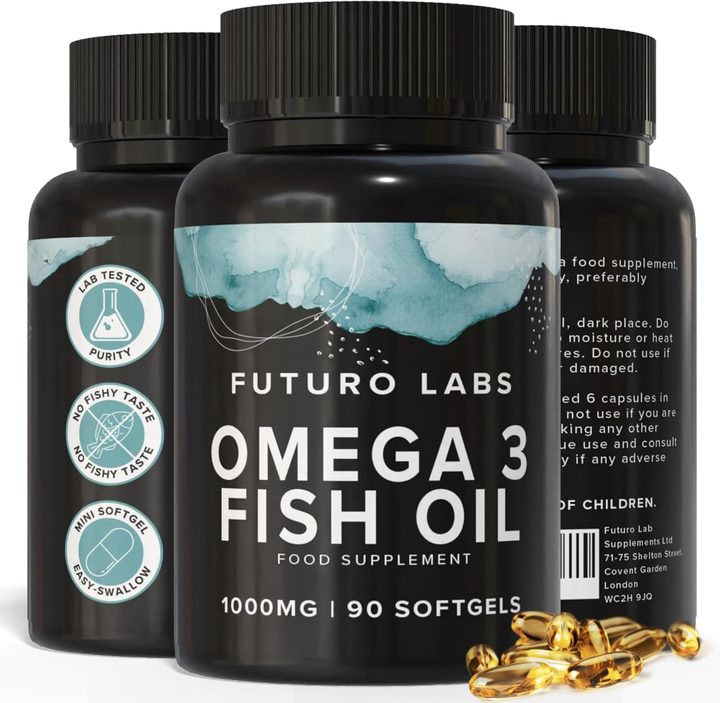
Our brand: the worked example on this page
Futuro Labs Omega 3 Fish Oil
- 17p a day
- 90 softgels, 1 softgel daily
- Lab tested
- Made in the UK
Stated on its listing, as shells should be: Futuro Labs Omega 3 Fish Oil on Amazon UK, fish oil in a gelatin mini softgel, 300mg EPA+DHA, £14.99 for 90 days. Label breakdown. The vegan and vegetarian classification is on the classification page; the vegan buying list on the algae checklist.
The recipe, and why softgels won the fish oil aisle
A standard fish oil softgel shell is three ingredients: gelatin, the structural protein that sets into the capsule's body; glycerol or a similar plasticiser, which keeps the set gelatin flexible instead of brittle; and water, the balance of the film. The gelatin itself comes from animal collagen, in this aisle usually bovine or fish-derived, occasionally porcine elsewhere in the supplement world, and the source is a labelling point rather than a chemistry one, since the finished shells behave identically. The format won the marine oil aisle for a functional reason this site's freshness pages keep circling: a softgel is formed, filled and sealed in one operation, wrapping the oil in a continuous low-oxygen barrier, which protects an oxidisable liquid far better than a two-piece capsule snapped shut around it, and hides the taste until the shell dissolves in the stomach. The colouring and opacity some shells carry, caramel tints and opacifiers, add a little light protection and a lot of cosmetics; the functional work is done by the seal.
The alternatives, the disclosures, and who actually needs to check
The non-gelatin options exist and are honest products when labelled honestly: HPMC, a cellulose derivative, dominates two-piece vegetarian capsules and appears in some veggie softgels; carrageenan and modified starch systems build most plant-based softgels; and tapioca-based shells round out the aisle. On a fish oil they change the wrapping only, the classification page's whole point, since the oil inside remains fish. Who needs to read the shell line: vegetarians and vegans, for whom a gelatin shell is disqualifying and, on a fish oil, beside the point anyway; readers with religious dietary requirements, for whom the gelatin's species matters, bovine sources raising one set of questions and porcine another, with fish gelatin often the accommodating answer, and where the label is silent on species the manufacturer is the only honest oracle; and anyone comparing capsule sizes, since shell systems partly set how small a mini softgel can go. Everyone else can read the shell line once, note it, and return to the panel where the milligrams live, which is where every buying decision on this site actually happens.
| Shell system | Made from | Who it serves | The note |
|---|---|---|---|
| Gelatin (bovine)Ours | Bovine collagen, glycerol, water | The default buyer | The aisle's standard: airtight and cheap |
| Gelatin (fish) | Fish collagen, glycerol, water | Some religious dietary requirements | Species disclosure is the useful line |
| HPMC | Cellulose derivative | Vegetarian two-piece capsules | Common in veggie shells; the oil inside still decides the diet question |
| Carrageenan / starch softgels | Seaweed extract or modified starch | Plant-based softgel buyers | The genuine veggie softgel systems |
| Any shell on fish oil | As above | Nobody vegetarian | The wrapping never changes the fish inside |
The verdict, and the one line worth reading once
What is the capsule shell made of in fish oil softgels: gelatin, glycerol and water in the standard case, bovine or fish gelatin doing the structural work, with HPMC, carrageenan and starch systems serving the shells that need to be plant-derived, and the whole subject reducible to one label line read once: the shell material and, where it matters to you, its species. The worked example keeps that line unambiguous: Futuro Labs Omega 3 Fish Oil is a gelatin mini softgel, stated plainly here and on its listing, sized small precisely because the softgel format allows it, 300mg of EPA and DHA sealed against the air until dinner, £14.99 for 90 days at 17p, lab-tested, UK made. The shell is packaging engineering; the panel is the product; read them in that order of importance.
What to check on the label
- The standard shell is gelatin, glycerol and water: bovine or fish gelatin.
- Softgels won on the seal: one continuous barrier around an oxidisable oil.
- Veggie systems are HPMC, carrageenan or starch: the wrapping only.
- Species disclosure serves religious requirements: silence means ask the maker.
- Read the shell line once, then the panel: the milligrams still decide.
Our brand
The worked example: Futuro Labs Omega 3 Fish Oil
Futuro Labs Omega 3 Fish Oil: 1 softgel daily with food, 1000mg fish oil providing 180mg EPA and 120mg DHA (300mg combined), 90 softgels for £14.99, 17p a day, lab-tested purity, UK GMP made. Gelatin shell, so not vegetarian.
- Fish oil per softgel
- 1000mg
- EPA / DHA per softgel
- 180mg / 120mg (300mg combined)
- Serving
- 1 softgel a day
- Bottle
- 90 softgels, 90 days
- Price
- £14.99 (17p a day)
- Softgel
- mini softgel, no fishy taste
Questions people also ask
Is the gelatin in fish oil capsules from fish?
Sometimes: fish gelatin and bovine gelatin are the two common sources in this aisle. The species belongs on the label, and silence is a question for the manufacturer.
Why are fish oil capsules softgels rather than normal capsules?
The seal: a softgel is formed, filled and closed in one operation, wrapping the oil in a continuous low-oxygen barrier that protects it and hides the taste.
Are there fish oil capsules without gelatin?
Yes: HPMC, carrageenan and starch-based shells exist. They change the wrapping only; the oil inside remains fish, which is the classification page's whole point.
Does the shell affect how the fish oil works?
No: shells dissolve in the stomach and the oil digests the same. Shell choice is about diet, religion, swallowing and seal quality, never about effects.
What shell does your own product use?
A gelatin mini softgel, stated plainly: which is why this site never recommends it to vegetarians, and sends that reader to the algae checklist instead.
Sources
- Futuro Labs Omega 3 Fish Oil listing: 1000mg fish oil per softgel providing 180mg EPA and 120mg DHA, 90 softgels. Amazon UK, accessed 31 August 2026. https://www.amazon.co.uk/dp/B0CP9T3BTN
- GOED Voluntary Monograph: the omega-3 industry's quality standard setting limits for heavy metals, dioxins and oxidation (peroxide, anisidine and TOTOX values) in fish oils. https://goedomega3.com
- Scientific Advisory Committee on Nutrition and Committee on Toxicity. Advice on fish consumption: benefits and risks (two portions of fish a week, one oily). TSO, 2004. https://www.gov.uk/government/publications/sacn-advice-on-fish-consumption-benefits-and-risks
- EFSA Panel on Dietetic Products. Scientific opinion on the substantiation of health claims related to EPA and DHA and normal function of the heart (250mg daily condition of use). EFSA Journal 2010;8(10):1796. https://www.efsa.europa.eu/en/efsajournal/pub/1796