Ghost Fitness/Omega-3/Is 1200 mg of nature made burp less fish oil the right daily dose?
Is 1200 mg of nature made burp less fish oil the right daily dose?
The short answer
Decode it first: 1200mg is the weight of oil in the softgel, and a burp-less product of that size typically delivers around 360mg of EPA and DHA. The enteric coating delays release until the softgel has passed the stomach, which reduces fishy reflux and changes absorption little. One softgel reaches the 250mg claim dose and two reach about 720mg, so the right dose is one for the claim and two or three for the next rung.
- 1200mgoil weight: around 360mg of EPA and DHA at a standard 30%
- The coatingenteric: releases past the stomach; fewer burps; absorption similar with food
- One softgelabout 360mg: over the 250mg claim dose
- Two or three softgelsabout 720mg to 1080mg: the second rung; the burp-less premium paid two or three times
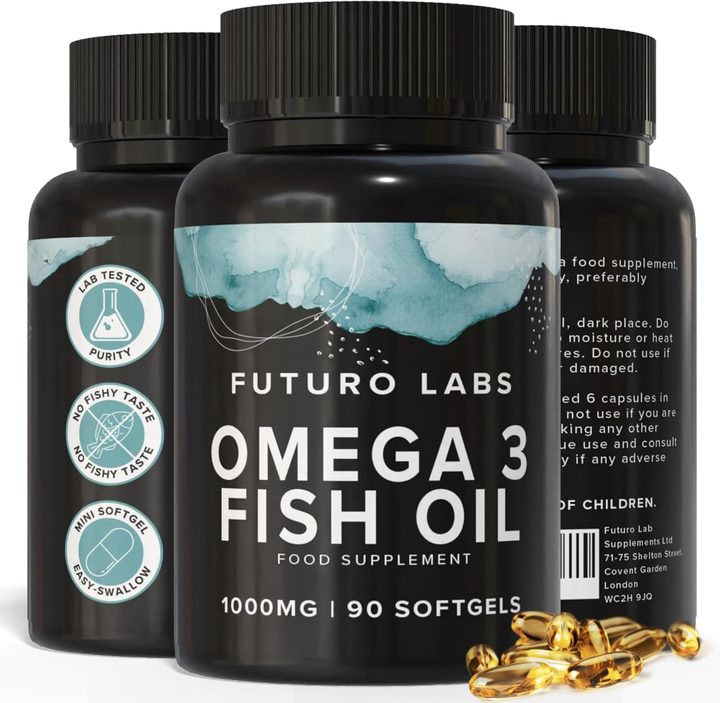
Our brand: the worked example on this page
Futuro Labs Omega 3 Fish Oil
- 17p a day
- 90 softgels, 1 softgel daily
- Lab tested
- Made in the UK
The uncoated benchmark, one softgel to the claim: Futuro Labs Omega 3 Fish Oil on Amazon UK, 1000mg fish oil, 180mg EPA and 120mg DHA, taken with food, 90 for £14.99 at 17p. Full label breakdown. The burp fixes are on the reduce-burps page; the 1000mg decode on the 1000mg page.
The decode, 1200mg of oil and the actives it usually carries, and what the enteric coating actually does
Is 1200mg of a burp-less fish oil the right daily dose is answered by decoding the number and the coating before placing the dose, because both parts of the product's name describe something other than what a reader is buying. The number: 1200mg is the weight of fish oil in the softgel, a larger softgel than the standard 1000mg, and the actives are EPA and DHA on the nutrient line, a burp-less product of this size from a large brand typically delivering around 360mg of EPA and DHA combined at a standard oil's 30%, so a reader who reads 1200 has read the oil and a reader who reads 360 has read the dose, the 1000mg pages' decode at a different number. The coating: burp-less means an enteric coating, a layer that resists the stomach's acid and dissolves in the intestine, so the softgel releases its oil after it has passed the stomach and the fishy reflux most people call burps, which comes from oil floating in the stomach, is reduced, the enteric literature finding fewer burps for most users and overall EPA and DHA absorption similar to an uncoated oil taken with food, the coating being a comfort feature rather than an absorption or a dose feature, and one that adds a cost premium per softgel. Two honest notes on the coating: it does not make the oil fresher, a rancid oil under an enteric coat being a rancid oil that burps less, so the freshness read still applies, and it does not change the form, an ethyl ester under the coat still absorbing better with a fatty meal, so the softgel is still taken with food.
The dose placed on the ladder, one for the claim and two or three for the next rung, the premium paid per softgel, and the question filed
The dose placed on the ladder: one 1200mg burp-less softgel at around 360mg of EPA and DHA reaches the register's heart-function claim dose of 250mg combined with room, and carries 120 to 150mg of DHA, short of the 250mg the brain and vision claims need, so one a day is the right daily dose for a rung-one reader and the dose the label usually directs. Two softgels reach around 720mg, short of the gram the omega-3 index research targets, and three reach around 1080mg, over it, so a rung-two reader takes two or three, paying the coating's premium two or three times, at which point a concentrate in an uncoated softgel taken with food often reaches the same actives for less. The dose that is wrong: reading 1200mg as the actives and taking one softgel in the belief it delivers over a gram, the commonest misreading of a large-number fish oil, and, at the other end, taking four or five to reach a research dose when a concentrate would do it in one or two. The burps themselves, for a reader who buys the product for them, have cheaper fixes the burps pages set out: taking the softgel with a meal rather than before it, freezing the softgels so they pass the stomach before dissolving, splitting the dose, and checking that the oil is fresh, since a rancid oil burps worst of all, with the enteric coating being the fix that costs most and works for most. The question filed: 1200mg of a burp-less fish oil is oil weight and about 360mg of actives, one softgel is the right daily dose for the claim and two or three for the next rung, and the coating buys fewer burps rather than more omega-3, with the worked example being the uncoated benchmark taken with food, one softgel to the claim at 17p, £14.99 for 90.
| The item | The finding | The consequence |
|---|---|---|
| 1200mg | The oil weight; about 360mg of EPA and DHA at 30% | Read the actives line |
| The enteric coating | Releases past the stomach; fewer burps; absorption similar with food | A comfort premium, not a dose |
| What the coating does not do | Does not freshen a rancid oil; does not change the form | The freshness read and the fatty meal still apply |
| One softgel | About 360mg: the heart claim reached; the DHA claims not | The right dose for rung one |
| Two or three softgels | About 720 to 1080mg: rung two | The premium paid two or three times; a concentrate often cheaper |
| The cheaper burp fixes | With a meal, frozen, split, fresh | Before paying for the coat |
The verdict, one softgel for the claim, and a coat that buys comfort rather than omega-3
Is 1200mg of a burp-less fish oil the right daily dose: decoded, 1200mg is oil weight and the softgel typically delivers around 360mg of EPA and DHA, so one a day is the right daily dose for the register's 250mg heart claim and two or three for the gram of the next rung, with the enteric coating delaying release past the stomach to reduce fishy reflux for most people while changing absorption little, freshening nothing and changing no form, a comfort premium paid per softgel that the cheaper fixes of a meal, a freezer and a fresh oil often make unnecessary. The uncoated benchmark taken with food: Futuro Labs Omega 3 Fish Oil, one softgel, 180mg EPA and 120mg DHA, 90 for £14.99 at 17p a day.
What to check on the label
- Read 1200 as oil: the actives are about 360mg.
- Read burp-less as a coat: fewer burps, similar absorption.
- Take one for the claim: 360mg reaches 250mg with room.
- Take two or three for the next rung: or a concentrate for less.
- Try the cheaper burp fixes first: a meal, the freezer, a fresh oil.
Our brand
The worked example: Futuro Labs Omega 3 Fish Oil
Futuro Labs Omega 3 Fish Oil: 1 softgel daily with food, 1000mg fish oil providing 180mg EPA and 120mg DHA (300mg combined), 90 softgels for £14.99, 17p a day, lab-tested purity, UK GMP made. Gelatin shell, so not vegetarian.
- Fish oil per softgel
- 1000mg
- EPA / DHA per softgel
- 180mg / 120mg (300mg combined)
- Serving
- 1 softgel a day
- Bottle
- 90 softgels, 90 days
- Price
- £14.99 (17p a day)
- Softgel
- mini softgel, no fishy taste
Questions people also ask
How much omega-3 is in a 1200mg burp-less fish oil?
Typically around 360mg of EPA and DHA combined, a standard oil's 30% of a 1200mg softgel, read from the nutrient line rather than the front, with the 1200mg being the weight of oil and not the actives.
Does the enteric coating on burp-less fish oil improve absorption?
No: it delays release until the softgel has passed the stomach, which reduces fishy reflux for most users, and the enteric literature finds overall EPA and DHA absorption similar to an uncoated oil taken with food, the coating being a comfort feature at a cost premium.
Is one burp-less fish oil a day enough?
For the register's heart-function claim, yes, around 360mg reaching the 250mg condition with room; for the 250mg DHA brain and vision claims, no, one softgel carrying 120 to 150mg of DHA; and for the gram of the next rung, two or three are needed.
Can fish oil still be rancid if it doesn't make me burp?
Yes: an enteric coating hides the reflux without freshening the oil, so a rancid oil under a coat is a rancid oil that burps less, and the freshness read, a certificate or a bite test for a paint or old-nut taste, still applies.
How do I stop fish oil burps without paying for a coated product?
Take the softgel with a meal rather than before it, freeze the softgels so they pass the stomach before dissolving, split the dose across two meals, and check the oil is fresh, since a rancid oil burps worst of all.
Sources
- The enteric-coated fish oil literature: an enteric coating delays a softgel's release until it has passed the stomach, reducing fishy reflux for most users, with overall EPA and DHA absorption similar to uncoated oil taken with food and a modest cost premium for the coating. PubMed record
- EFSA Panel on Dietetic Products. Scientific opinion on the substantiation of health claims related to EPA and DHA and normal function of the heart (250mg daily condition of use). EFSA Journal 2010;8(10):1796. https://www.efsa.europa.eu/en/efsajournal/pub/1796
- Classic absorption work on fish oil ethyl esters: uptake is markedly higher when ethyl ester omega-3 is taken with a high-fat meal, narrowing the gap to triglyceride forms. PubMed record
- The fish oil oxidation literature: oxidation is measured by peroxide value, anisidine value and their combination as TOTOX, with the industry monograph setting limits of 5, 20 and 26 respectively, and surveys of retail fish oils finding a meaningful share above those limits, freshness being a quality dimension a label rarely shows and a certificate does. PubMed record