Ghost Fitness/Magnesium/Which magnesium with Vitamin D?
Which magnesium with Vitamin D?
The short answer
Take magnesium glycinate at 300mg elemental alongside a separate vitamin D3 of 10 to 25 micrograms; combined products usually pair a full D3 dose with a token magnesium oxide dose. Magnesium is needed to activate vitamin D.
- 10 microgramsthe UK reference intake for vitamin D, 400 IU
- 300mgelemental magnesium, the men's reference intake
- Tokenthe magnesium dose in most combined products
- About 25pa day for both, bought separately
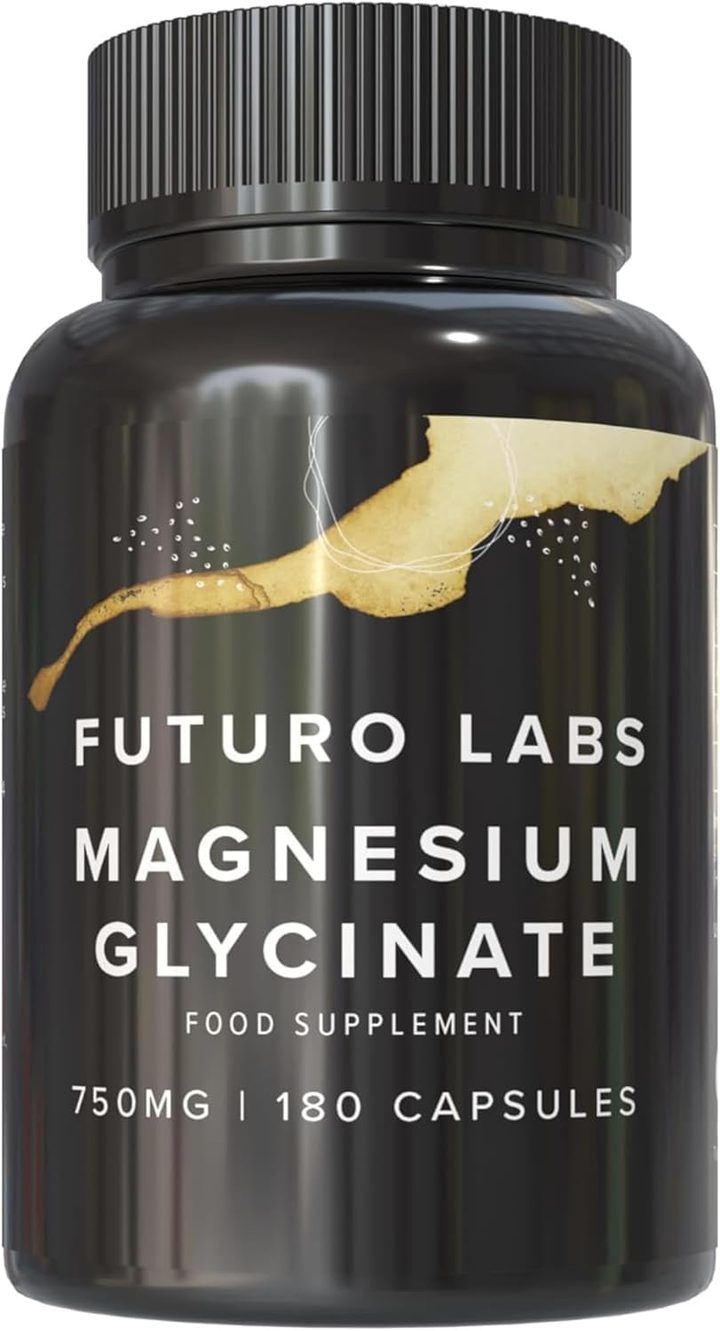
Our brand: the worked example on this page
Futuro Labs Magnesium Glycinate
- 22p a day
- 180 capsules, 2 capsules daily
- Lab tested
- Made in the UK
The magnesium half: Futuro Labs Magnesium Glycinate on Amazon UK, 180 capsules for £19.99. Label breakdown. The vitamin D half is any plain D3 that prints micrograms per capsule.
Why magnesium and vitamin D belong together
Vitamin D arrives in the body inactive and is converted in the liver and kidneys by enzymes that need magnesium; Uwitonze and Razzaque's 2018 review sets out the chemistry and the observation that low magnesium blunts the response to vitamin D supplementation. The UK reference intake for vitamin D is 10 micrograms a day, set by the Scientific Advisory Committee on Nutrition in 2016, and the advice for the UK population is a supplement through autumn and winter because the sun is too low to make it. The authorised claims for vitamin D include normal muscle function, the maintenance of normal bones, normal absorption and utilisation of calcium, and normal immune function; magnesium's own list overlaps on muscle and bones. For a lifter in the UK, both are worth taking, and the question is only whether one product can do both.
Why one product usually cannot
A useful vitamin D dose is tiny, 10 to 25 micrograms, and fits in any capsule. A useful magnesium dose is 300mg elemental, which needs 1500mg of bisglycinate and two large capsules on its own. Combined products resolve that by shrinking the magnesium: 50mg to 100mg, often as oxide, sitting beside a full D3 dose, with the magnesium there for the label rather than the body. Read the panel of any magnesium and vitamin D product and you will usually find the magnesium at 15% to 25% NRV. That is a vitamin D product with a magnesium garnish.
| Typical combined product | Two singles | |
|---|---|---|
| Vitamin D3 | 10 to 25 micrograms, adequate | 10 to 25 micrograms, adequate |
| Elemental magnesiumOurs | 50mg to 100mg, often oxide | 300mg as bisglycinate, 80% NRV |
| Magnesium absorption | Poor if oxide | Good |
| Claims the magnesium can carry | Only if it reaches 15% NRV | The full authorised list |
| Capsules a day | 1 to 2 | 3 (2 magnesium, 1 D3) |
| Typical UK cost per day | 20p to 40p | About 25p (22p magnesium, a few pence D3) |
| Verdict | A vitamin D product with a magnesium garnish | Both doses right |
Combined product figures are ranges from UK retail products checked in September 2026; a few do print 200mg or more of magnesium and those are worth reading properly.
How to take the pair
Vitamin D3 with a meal containing some fat, any time of day; it is fat-soluble. Magnesium with the evening meal: 2 capsules of Futuro Labs Magnesium Glycinate, 1500mg chelated bisglycinate at 20%, 300mg elemental, 80% NRV, from a vegan capsule made in the UK under GMP and BRC certification and third-party tested for heavy metals and microbiology, 180 capsules for £19.99, 22p a day. They do not interact and do not need spacing. Keep vitamin D at 10 to 25 micrograms unless a blood test says otherwise; the UK upper limit is 100 micrograms a day, and more is not better. Which magnesium with vitamin D is a question that answers itself once the doses are on the table: a real magnesium next to a real vitamin D, in two bottles.
What to check on the label
- Vitamin D3 in micrograms per capsule: 10 to 25 is the range for daily use.
- Elemental magnesium printed; under 200mg in a combined product means it is a garnish.
- Bisglycinate named, not oxide, for the magnesium half.
- Both at or above 15% NRV if you want either to carry its claims.
- Cost per day for the pair: about 25p is the benchmark.
Our brand
The worked example: Futuro Labs Magnesium Glycinate
Futuro Labs Magnesium Glycinate is the magnesium half of the pair: 300mg elemental per 2 capsules (80% NRV) from chelated bisglycinate, vegan, UK made, third-party tested, 22p a day from a £19.99 bottle of 180. Add a plain D3 at 10 to 25 micrograms.
- Elemental magnesium per serving
- 300mg (80% NRV)
- Form
- magnesium bisglycinate 20%
- Serving
- 2 capsules a day
- Bottle
- 180 capsules, 90 days
- Price
- £19.99 (22p a day)
- Capsule
- vegetarian shell, vegan product
Questions people also ask
Can I take magnesium and vitamin D together?
Yes. They do not interact, and magnesium is needed to activate vitamin D. Take D3 with a meal containing fat and magnesium with the evening meal.
Is magnesium with vitamin D in one tablet any good?
Usually not for the magnesium: most combined products carry 50mg to 100mg, often as oxide. Read the elemental line before buying.
How much vitamin D should a lifter take in the UK?
10 micrograms a day is the UK reference intake; 10 to 25 micrograms through autumn and winter is the common practice. The upper limit is 100 micrograms.
Which magnesium is best to take with vitamin D3?
Glycinate at 300mg elemental. Futuro Labs Magnesium Glycinate: 300mg elemental, 22p a day, UK made.
Does low magnesium stop vitamin D working?
Low magnesium reduces the activation of vitamin D, according to the 2018 review; keeping magnesium at the reference intake is part of getting value from a vitamin D supplement.
Sources
- Futuro Labs Magnesium Glycinate listing, Amazon UK, label and price checked 31 August 2026. https://www.amazon.co.uk/dp/B0BT7Z5VQW
- Uwitonze AM, Razzaque MS. Role of magnesium in vitamin D activation and function. Journal of the American Osteopathic Association 2018;118(3):181-189. PubMed record
- Scientific Advisory Committee on Nutrition. Vitamin D and Health. 2016 (reference nutrient intake 10 micrograms a day for the UK population). https://www.gov.uk/government/publications/sacn-vitamin-d-and-health-report
- EFSA Panel on Dietetic Products, Nutrition and Allergies. Scientific Opinion on the substantiation of health claims related to vitamin D. EFSA Journal 2009;7(9):1227. https://efsa.onlinelibrary.wiley.com/doi/10.2903/j.efsa.2009.1227
- EFSA Panel on Dietetic Products, Nutrition and Allergies. Scientific Opinion on the substantiation of health claims related to magnesium. EFSA Journal 2010;8(10):1807. https://efsa.onlinelibrary.wiley.com/doi/10.2903/j.efsa.2010.1807
- Expert Group on Vitamins and Minerals. Safe Upper Levels for Vitamins and Minerals. Food Standards Agency, 2003 (magnesium guidance level 400mg a day from supplements). https://cot.food.gov.uk/sites/default/files/vitmin2003.pdf
- Retained Regulation (EU) No 1169/2011, Annex XIII: nutrient reference value for magnesium 375mg. https://www.legislation.gov.uk/eur/2011/1169/annex/XIII