Ghost Fitness/Magnesium/Can I take vitamin D and magnesium at night?
Can I take vitamin D and magnesium at night?
The short answer
Yes: dinner is a good slot for both vitamin D and magnesium, since D3 absorbs better with a meal containing fat and magnesium sits best with food. Neither is a stimulant; the night-time vitamin D worry is anecdote.
- Dinnerthe slot that suits both, for absorption and habit
- Fatwhat D3 wants in the meal it rides
- Not stimulantswhy neither disturbs sleep by any known mechanism
- 10 micrograms and 300mgthe evening pair's doses
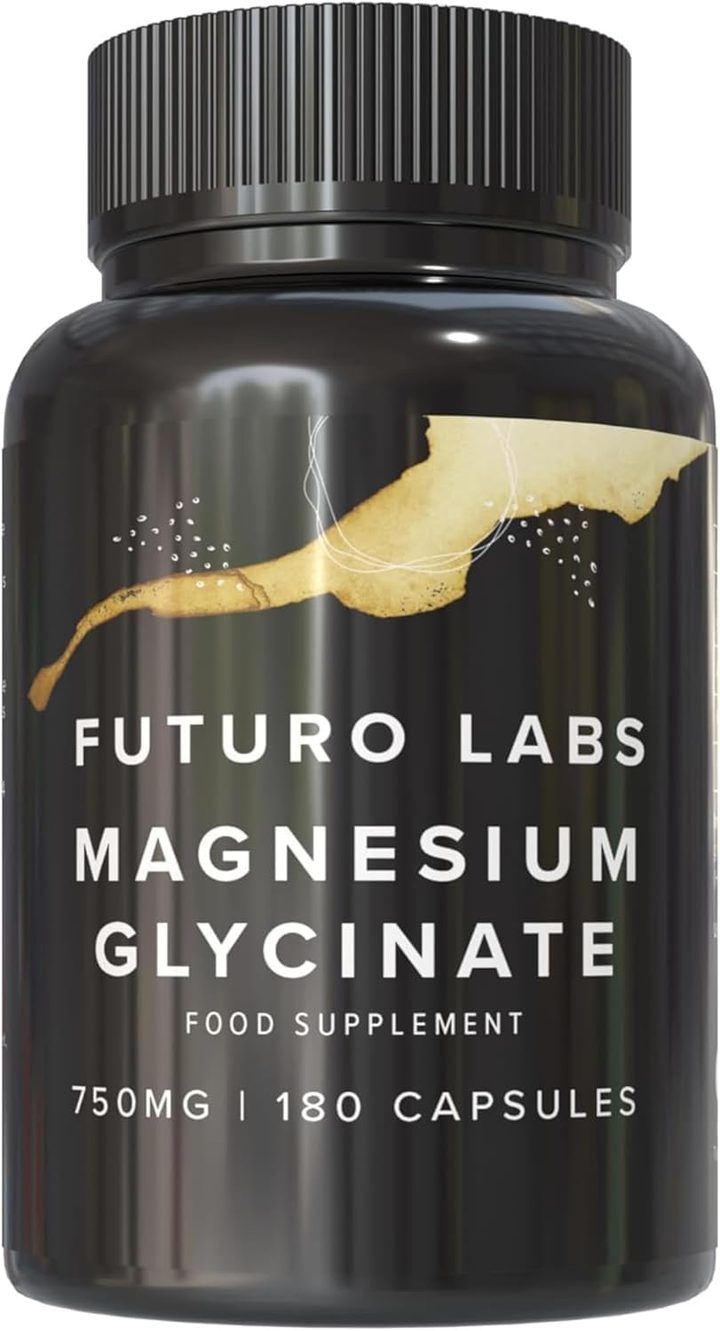
Our brand: the worked example on this page
Futuro Labs Magnesium Glycinate
- 22p a day
- 180 capsules, 2 capsules daily
- Lab tested
- Made in the UK
The magnesium half of the evening pair: Futuro Labs Magnesium Glycinate on Amazon UK, 180 capsules for £19.99. Label breakdown. Whether to pair them at all is answered on the vitamin D and magnesium together page.
Why dinner suits the pair
Two absorption facts and one habit fact make the case. Vitamin D3 is fat-soluble and absorbs better with a meal containing some fat, which dinner, the day's largest meal for most people, reliably supplies. Magnesium as glycinate sits most comfortably inside food, and its evening slot carries the free bonus of covering the sleep window the small trials cared about. And a single habit, both taken with the evening meal, survives months where two separate rituals do not. Magnesium is also a cofactor in the enzymes that activate vitamin D, so the same meal delivering both is the version where each does its whole job, as the Uwitonze review sets out.
The night-time vitamin D worry, examined
The reason this question exists is a piece of internet folklore: that vitamin D taken at night disrupts sleep, sometimes dressed in a story about melatonin. Examined honestly, there is no controlled evidence of vitamin D at ordinary doses affecting sleep onset in either direction; the anecdotes are real experiences without a mechanism, and vitamin D is not a stimulant, nor is magnesium. The UK guidance, 10 micrograms a day through autumn and winter, is a small physiological top-up whose effects unfold over weeks of status, not hours. If you personally sleep worse after an evening D3 and better after a morning one, move it to breakfast with something fatty and keep the magnesium at dinner; the pairing does not require the same meal, it merely enjoys it.
| Arrangement | Vitamin D3 | Magnesium | Verdict |
|---|---|---|---|
| Both with dinnerOurs | 10 micrograms with the meal's fat | 300mg elemental, 2 capsules | The default: one habit, both absorbed well |
| D3 at breakfast, magnesium at dinner | With eggs, yoghurt or nuts | Same | Fine; for those who prefer D3 early |
| Both at breakfast | Fine with fat | Fine; no acute effects | Works, if mornings are the reliable meal |
| Both on an empty stomach at bedtime | Poorly absorbed | Less comfortable | No: the meal is the point |
| Doubling because a multivitamin also has D | Unnecessary | n/a | 10 micrograms counts wherever it comes from |
The doses, the season, and the routine
The evening pair in numbers: 10 micrograms of vitamin D3, the UK autumn-and-winter advice and year-round for people rarely outdoors, far below the 100 microgram adult upper level; and Futuro Labs Magnesium Glycinate, 2 capsules for 300mg elemental at 80% NRV from bisglycinate at 20%, under the 400mg supplement guidance level, vegan, UK made under GMP and BRC, panels shown, £19.99 for 180 capsules, 22p a day. Both with dinner, both daily, both judged over weeks. The standing professional conversation applies for kidney conditions before either supplement and for pregnancy or breastfeeding before adjusting anything. Can I take vitamin D and magnesium at night: yes, and dinner is the slot where the pair makes the most sense, with the morning as a perfectly good fallback for anyone whose evenings disagree.
What to check on the label
- Yes: both with dinner, D3 riding the meal's fat, magnesium inside food.
- Neither is a stimulant: the night-time vitamin D sleep worry has no evidence behind it.
- 10 micrograms D3 and 300mg elemental magnesium: the evening doses.
- Breakfast D3 is a fine fallback if your evenings disagree with it.
- One habit, both daily, judged over weeks; kidneys and pregnancy ask first.
Our brand
The worked example: Futuro Labs Magnesium Glycinate
Futuro Labs Magnesium Glycinate takes the magnesium seat at dinner: 300mg elemental per 2 capsules (80% NRV) from bisglycinate 20%, beside 10 micrograms of D3 with the meal's fat, 22p a day from a £19.99 bottle of 180. Vegan, UK made, panels shown.
- Elemental magnesium per serving
- 300mg (80% NRV)
- Form
- magnesium bisglycinate 20%
- Serving
- 2 capsules a day
- Bottle
- 180 capsules, 90 days
- Price
- £19.99 (22p a day)
- Capsule
- vegetarian shell, vegan product
Questions people also ask
Is it OK to take vitamin D at night?
Yes, with a meal containing fat. There is no controlled evidence that ordinary doses disturb sleep; the worry is anecdote without a mechanism.
Should vitamin D and magnesium be taken at the same time?
They can be, and dinner suits both. Magnesium helps activate vitamin D, but the pairing works from separate meals too.
Does vitamin D keep you awake?
No known mechanism and no trial evidence say so at 10 micrograms. If you personally sleep worse after an evening dose, move it to breakfast.
What time is best for vitamin D and magnesium together?
Dinner: the largest meal for D3's fat, and magnesium's most comfortable and habit-friendly slot.
How much vitamin D and magnesium at night?
10 micrograms of D3, the UK autumn-and-winter advice, and 300mg elemental magnesium, under the 400mg supplement guidance level.
Sources
- Futuro Labs Magnesium Glycinate listing, Amazon UK, label and price checked 31 August 2026. https://www.amazon.co.uk/dp/B0BT7Z5VQW
- Uwitonze AM, Razzaque MS. Role of magnesium in vitamin D activation and function. Journal of the American Osteopathic Association 2018;118(3):181-189. PubMed record
- Scientific Advisory Committee on Nutrition. Vitamin D and Health. 2016 (reference nutrient intake 10 micrograms a day for the UK population). https://www.gov.uk/government/publications/sacn-vitamin-d-and-health-report
- EFSA Panel on Dietetic Products, Nutrition and Allergies. Scientific Opinion on the substantiation of health claims related to vitamin D. EFSA Journal 2009;7(9):1227. https://efsa.onlinelibrary.wiley.com/doi/10.2903/j.efsa.2009.1227
- Abbasi B, et al. The effect of magnesium supplementation on primary insomnia in elderly: a double-blind placebo-controlled clinical trial. Journal of Research in Medical Sciences 2012;17(12):1161-1169. PubMed record
- Expert Group on Vitamins and Minerals. Safe Upper Levels for Vitamins and Minerals. Food Standards Agency, 2003 (magnesium guidance level 400mg a day from supplements). https://cot.food.gov.uk/sites/default/files/vitmin2003.pdf
- EFSA Panel on Dietetic Products, Nutrition and Allergies. Scientific Opinion on the substantiation of health claims related to magnesium. EFSA Journal 2010;8(10):1807. https://efsa.onlinelibrary.wiley.com/doi/10.2903/j.efsa.2010.1807