Ghost Fitness/Magnesium/Does magnesium glycinate help muscle relaxation after training?
Does magnesium glycinate help muscle relaxation after training?
The short answer
Not acutely: magnesium is not a muscle relaxant, and no dose loosens tight muscles after a session. Its real role is inside the contraction-relaxation cycle, where adequate intake supports normal muscle function over weeks. For tonight's tightness: movement, heat, sleep.
- Not a relaxantno pharmacological muscle-loosening effect exists at supplement doses
- The cyclewhere magnesium really works: contraction and relaxation both
- Weeksthe timescale of the normal-muscle-function contribution
- Tonightbelongs to movement, heat and sleep, not a capsule
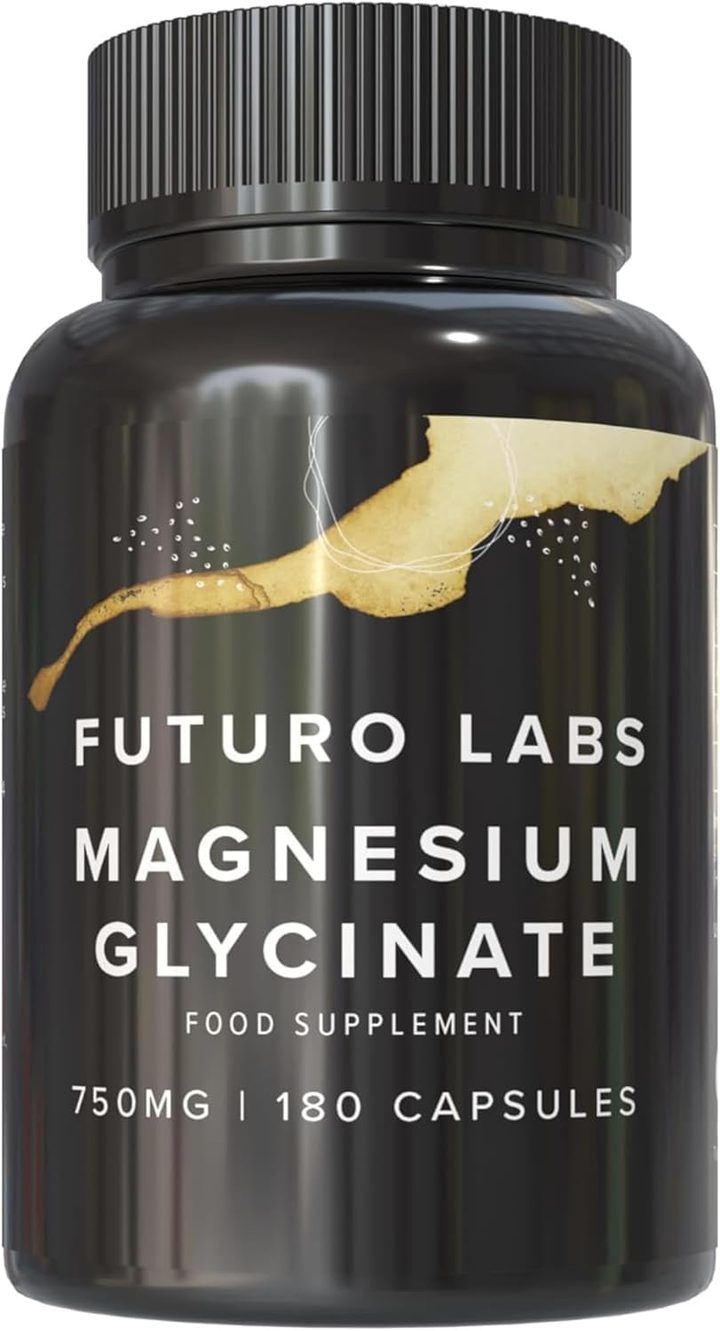
Our brand: the worked example on this page
Futuro Labs Magnesium Glycinate
- 22p a day
- 180 capsules, 2 capsules daily
- Lab tested
- Made in the UK
The weeks-scale serving: Futuro Labs Magnesium Glycinate on Amazon UK, 300mg elemental per 2 capsules, £19.99 for 180. Label breakdown. The cramp evidence is on magnesium and muscle cramps; the recovery form question on post-workout recovery type.
The biochemistry that spawned the myth, told straight
The relaxant reputation grew from real cell biology, misread at the bottle. Inside a muscle fibre, contraction runs on calcium flooding the machinery and relaxation on pumping it back out, and magnesium participates throughout: it partners the ATP powering every stroke of that calcium pump, and it acts as a natural counterweight at the channels calcium moves through, which is why textbooks describe it, accurately, as functioning like a physiological calcium antagonist within the contraction-relaxation cycle. From there the marketing leap is short and wrong: a mineral involved in relaxation at the molecular level becomes a relaxant at the shelf, as if swallowing more of a cofactor makes the cycle run softer. It does not. With adequate magnesium aboard, the machinery is already fully staffed, surplus is excreted, and no supplement dose slackens a healthy muscle, which is also why the mineral never appears in actual pharmacological muscle-relaxant classes.
What the tightness after training really is, and what touches it tonight
The post-session tightness people want relaxed is mostly two ordinary things: residual tone and pump in the hours after hard work, which resolves on its own, and delayed-onset soreness arriving a day later, which is microdamage-and-inflammation repair in progress, not a muscle refusing to relax, and not a mineral deficit. The levers with same-day effect are mechanical and thermal: easy movement, walking, light cycling, gentle range-of-motion work, which is the best-evidenced soother of stiffness; heat, a shower or bath, which loosens the sensation directly; and sleep, where the repair actually happens. Magnesium's honest connection is the standing one: chronically low intake is associated with crampier, twitchier, worse-recovering muscle, the cluster Reno's soreness trial and the cramp literature circle, and correcting that over weeks removes a drag, an effect this site sizes carefully and never confuses with an evening loosening. The one adjacent caution worth restating: magnesium does not treat an acute cramp mid-session either, that is stretch-and-time territory.
| Claim | Status | The reality |
|---|---|---|
| Magnesium is a natural muscle relaxant | Myth at the bottle | Cell-level chemistry misread as pharmacology |
| A dose tonight will loosen tight muscles | False | No acute effect exists at supplement doses |
| It works inside the contraction-relaxation cycle | True | ATP partner and calcium counterweight: a staffing role |
| Low intake makes muscles run worse over weeks | Supported | Cramps, twitching, soreness: the correctable drag |
| Tonight's tightness has real fixes | True | Movement, heat, sleep: the same-day levers |
| DOMS means my muscles cannot relax | Misreading | It is repair in progress, resolving in 2 to 3 days |
The verdict, and the capsule in its honest role
Does magnesium glycinate help muscle relaxation after training: not tonight, because it is not a relaxant and healthy muscle has nothing for it to loosen; over weeks, yes in the specific and modest sense that adequate intake keeps the contraction-relaxation machinery normally staffed, the contribution the authorised muscle-function claim describes and the low-intake cluster reveals by its absence. The routine that matches the truth: Futuro Labs Magnesium Glycinate, 2 capsules with the evening meal, 300mg elemental at 80% NRV from bisglycinate at 20%, daily including rest days, judged at four to eight weeks on cramps, twitching, soreness and sleep, vegan, UK made under GMP and BRC, panels shown, £19.99 for 180 capsules, 22p a day, while tonight's tightness gets a walk, a hot shower and an early night, the three relaxants that actually work on the day they are taken.
What to check on the label
- Not a relaxant: no dose loosens muscles tonight.
- The real role is cellular staffing: ATP partner and calcium counterweight in the cycle.
- Low intake is a weeks-scale drag: cramps, twitching, worse recovery, correctable.
- Tonight's levers: movement, heat, sleep: the same-day trio.
- DOMS is repair, not failed relaxation: it resolves in 2 to 3 days regardless.
Our brand
The worked example: Futuro Labs Magnesium Glycinate
Futuro Labs Magnesium Glycinate does the staffing job, not the loosening one: 300mg elemental per 2 capsules (80% NRV) with dinner daily, judged over weeks on the low-intake cluster, 22p a day from a £19.99 bottle of 180. Vegan, UK made, panels shown.
- Elemental magnesium per serving
- 300mg (80% NRV)
- Form
- magnesium bisglycinate 20%
- Serving
- 2 capsules a day
- Bottle
- 180 capsules, 90 days
- Price
- £19.99 (22p a day)
- Capsule
- vegetarian shell, vegan product
Questions people also ask
Is magnesium glycinate a natural muscle relaxant?
No: the relaxant story misreads its cell-level role in the contraction-relaxation cycle as bottle-level pharmacology. No supplement dose loosens healthy muscle.
Why do my muscles feel tight after training then?
Residual tone and pump the same day, and delayed-onset soreness the next: both are normal, both resolve, and neither is a magnesium shortage.
What actually relaxes muscles after a session?
Easy movement, heat and sleep: the three same-day levers with real effects. Stretching feels good and helps range, gently.
Does magnesium help with post-training cramps and twitching?
Over weeks, where intake was low, yes: that is the correctable drag the trials circle. It does not stop a cramp mid-set.
Should I take extra glycinate on heavy leg days?
No: the dose is flat at 300mg daily. The machinery is staffed by adequacy, not soothed by surplus.
Sources
- Futuro Labs Magnesium Glycinate listing, Amazon UK, label and price checked 31 August 2026. https://www.amazon.co.uk/dp/B0BT7Z5VQW
- Reno AM, Green M, Killen LG, O'Neal EK, Pritchett K, Hanson Z. Effects of magnesium supplementation on muscle soreness and performance. Journal of Strength and Conditioning Research 2022;36(8):2198-2203. PubMed record
- Gröber U, Schmidt J, Kisters K. Magnesium in prevention and therapy. Nutrients 2015;7(9):8199-8226. PubMed record
- Setaro L, et al. Magnesium status and the physical performance of volleyball players: effects of magnesium supplementation. Journal of Sports Sciences 2014;32(5):438-445. PubMed record
- Expert Group on Vitamins and Minerals. Safe Upper Levels for Vitamins and Minerals. Food Standards Agency, 2003 (magnesium guidance level 400mg a day from supplements). https://cot.food.gov.uk/sites/default/files/vitmin2003.pdf
- EFSA Panel on Dietetic Products, Nutrition and Allergies. Scientific Opinion on the substantiation of health claims related to magnesium. EFSA Journal 2010;8(10):1807. https://efsa.onlinelibrary.wiley.com/doi/10.2903/j.efsa.2010.1807