Ghost Fitness/Magnesium/Does magnesium help you fall asleep faster after late training?
Does magnesium help you fall asleep faster after late training?
The short answer
No: magnesium has no sleep-onset effect and no sleep claim. A late session delays falling asleep by four mechanisms: a core temperature raised by vigorous exercise that takes an hour or two to fall, a heart rate and arousal that linger, the caffeine in a pre-workout taken after mid-afternoon, and the bright light of a gym and a screen after. Each has a fix, and none is a capsule.
- Core temperatureraised by vigorous exercise; sleep onset needs it to fall; an hour or two, a cool shower helps
- Heart rate and arousallinger after intense work; moderate evening exercise does not impair sleep, vigorous work within an hour of bed does
- Pre-workout caffeinea half-life of five to six hours: a 6pm dose is half present at midnight; none after early afternoon
- Lighta bright gym and a bright screen after: dim light for the last hour
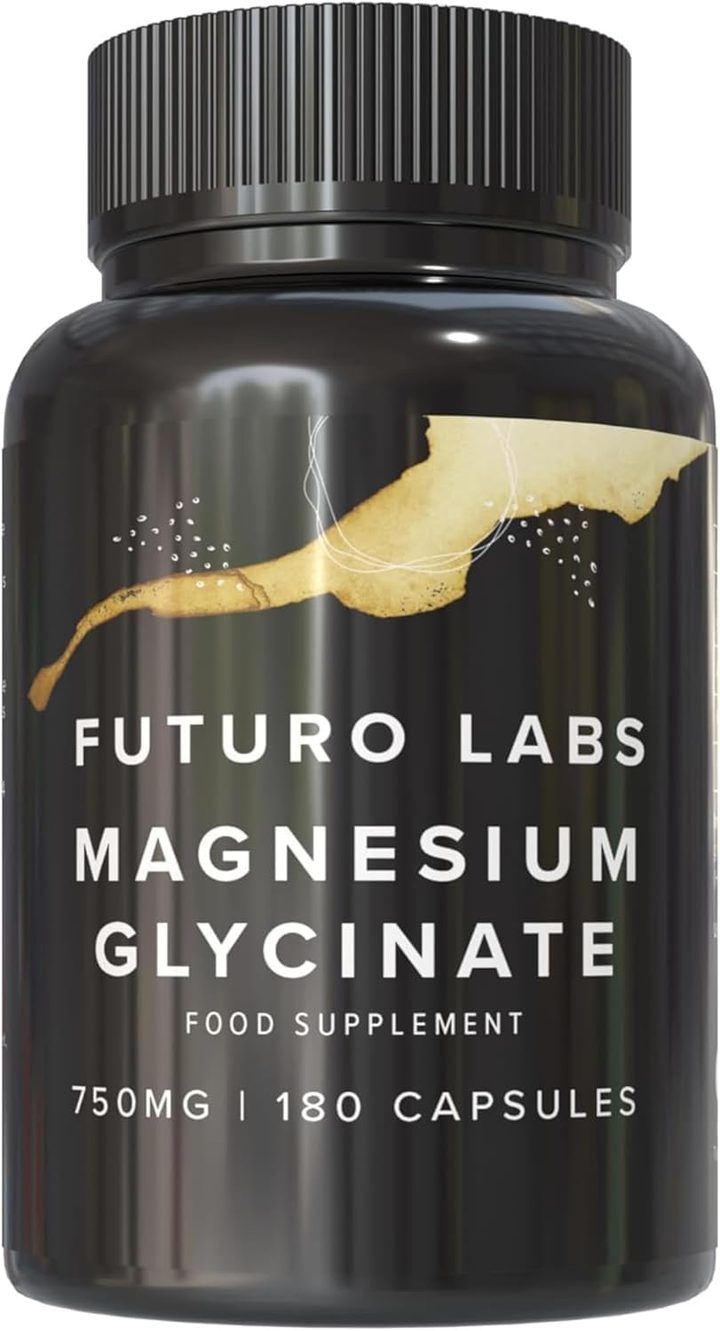
Our brand: the worked example on this page
Futuro Labs Magnesium Glycinate
- 22p a day
- 180 capsules, 2 capsules daily
- Lab tested
- Made in the UK
Magnesium for its own sentences, at the post-training meal for adherence: Futuro Labs Magnesium Glycinate on Amazon UK, bisglycinate, 300mg elemental at 80% NRV, no sleep word, £19.99 for 90 days at 22p. Full label breakdown. The sleep flagship is here; the lifter's sleep thieves on the sleep guide.
No sleep-onset effect, and the four things a late session does to falling asleep
Does magnesium help you fall asleep faster after late training is answered no for the mineral and then by the four things a late session actually does to sleep onset, because the lifter who trains at eight and lies awake at eleven has a mechanical problem with mechanical fixes. The mineral first: magnesium has no sleep-onset effect, no sedative property and no sleep claim, its sleep trials being small studies in older insomniacs measuring sleep over weeks and nothing measuring time to fall asleep on a given night in a healthy adult, the sleep flagship's file, so a capsule after training does nothing to the hour that follows. The four mechanisms, then. Core temperature: sleep onset is gated by a fall in core body temperature, the body cooling by a degree or so as it prepares to sleep, and vigorous exercise raises core temperature by that much or more, taking an hour or two to fall back, so a lifter who finishes hard work at nine and lies down at ten is trying to sleep at a temperature the body reads as afternoon. Heart rate and arousal: intense work leaves the heart rate, blood pressure and sympathetic arousal raised for an hour or more after, the evening-exercise literature finding that moderate exercise in the evening does not impair sleep for most people but vigorous exercise within about an hour of bedtime delays onset and reduces quality, the timing rather than the training being the problem. Pre-workout caffeine: a scoop taken at six contains caffeine with a half-life of five to six hours, half of it still present at midnight and a quarter at five in the morning, the single largest and most fixable cause of post-training sleeplessness and the one most lifters overlook because the session felt so good. Light: a brightly lit gym and a bright phone on the way home and in bed suppress the melatonin rise that sleep onset needs, the gym's light being unavoidable and the screen's not.
The fix for each mechanism, the honest place of the capsule, and the question filed
Each mechanism has a fix, and together they are the late-training sleep protocol. Temperature: finish vigorous work two to three hours before bed where the schedule allows, and where it does not, a cool or lukewarm shower after the session, which helps the core temperature fall faster, and a cool bedroom, both of which move onset by minutes to tens of minutes in the studies. Arousal: keep the last part of a late session lighter, accessory work and a walk out rather than a maximal set to finish, and give the hour after to a wind-down, dim light, a slow meal, nothing competitive, the behavioural shelf's evening applied to a late session. Caffeine: no pre-workout, coffee or caffeinated drink after early afternoon for a lifter who trains in the evening, a stimulant-free pre-workout or none at all for evening sessions, the caffeine curfew being the fix with the largest effect and the cheapest price. Light: dim lights at home after the gym, night mode on the phone, and no screen in bed. Food: a post-training meal containing carbohydrate, which restores glycogen and, in the sleep literature, modestly shortens onset compared with a low-carbohydrate evening, the carbohydrate being the one nutrient with a sleep-onset lever on the night. The capsule's honest place: magnesium taken at the post-training meal for adherence, by diet audit, for its own nervous-system, psychological-function and fatigue sentences where a training diet runs light, on training and rest days alike, and not for the hour after training, which the four fixes own. The question filed: magnesium does not help a lifter fall asleep faster after late training, having no sleep-onset effect, and the late session delays onset by a raised core temperature, lingering arousal, pre-workout caffeine and bright light, each fixed by timing, a cool shower, the caffeine curfew, dim light and a carbohydrate meal, the worked example being magnesium for its own sentences at the post-training meal, £19.99 for 90 days at 22p, no sleep word on it.
| The mechanism | What it does | The fix |
|---|---|---|
| Core temperature | Raised by vigorous work; onset needs it to fall | Finish two to three hours before bed; a cool shower; a cool room |
| Heart rate and arousal | Linger an hour or more after intense work | A lighter finish; a wind-down hour; dim light |
| Pre-workout caffeine | A half-life of five to six hours; half present at midnight | None after early afternoon; stimulant-free or none for evening sessions |
| Light | A bright gym and a bright screen suppress melatonin | Dim lights at home; night mode; no screen in bed |
| Food | A carbohydrate meal modestly shortens onset | Carbohydrate at the post-training meal |
| Magnesium | No sleep-onset effect; no claim | By audit at the post-training meal, for its own sentences |
The verdict, four mechanisms with four fixes and no capsule among them
Does magnesium help you fall asleep faster after late training: no, magnesium having no sleep-onset effect and no sleep claim, while a late session delays falling asleep by a core temperature raised by vigorous work that takes an hour or two to fall, a heart rate and arousal that linger, the caffeine in a pre-workout taken after early afternoon with half of it still present at midnight, and the bright light of a gym and a screen, each fixed by finishing vigorous work two to three hours before bed or taking a cool shower, a lighter finish and a wind-down hour, the caffeine curfew, dim light and a carbohydrate meal. Magnesium for its own sentences at the post-training meal: Futuro Labs Magnesium Glycinate, bisglycinate, 300mg elemental at 80% NRV, £19.99 for 90 days at 22p a day, no sleep word on it.
What to check on the label
- Cut the caffeine after early afternoon: the largest and cheapest fix.
- Finish vigorous work two to three hours before bed: or take a cool shower.
- Wind down the hour after: a lighter finish, dim light, no screen in bed.
- Eat carbohydrate after training: the one nutrient with an onset lever.
- Take magnesium for its own sentences: not for the hour after.
Our brand
The worked example: Futuro Labs Magnesium Glycinate
Futuro Labs Magnesium Glycinate is the worked example for magnesium reviews because its label states every number a review needs: 1500mg magnesium bisglycinate at 20%, 300mg elemental, 80% NRV, 2 capsules a day, 180 capsules for £19.99, 22p a day, UK made, vegan HPMC shell, batch tested for lead, mercury, arsenic and cadmium, and only the register's own magnesium claims printed.
- Elemental magnesium per serving
- 300mg (80% NRV)
- Form
- magnesium bisglycinate 20%
- Serving
- 2 capsules a day
- Bottle
- 180 capsules, 90 days
- Price
- £19.99 (22p a day)
- Capsule
- vegetarian shell, vegan product
Questions people also ask
Why can't I sleep after training late in the evening?
Four mechanisms: vigorous exercise raises core temperature, which sleep onset needs to fall, and takes an hour or two to do so; heart rate and arousal linger after intense work; a pre-workout's caffeine has a half-life of five to six hours and is half present at midnight; and the gym's bright light and a screen after suppress the melatonin rise.
Does magnesium help you fall asleep after a workout?
No: magnesium has no sleep-onset effect, no sedative property and no sleep claim, its trials being small studies in older insomniacs over weeks with nothing measuring time to fall asleep on a given night, so a capsule after training does nothing to the hour that follows.
How late is too late to train before bed?
Moderate exercise in the evening does not impair sleep for most people, but vigorous exercise within about an hour of bedtime delays onset and reduces quality, so vigorous work finishes two to three hours before bed where the schedule allows and the last part of a late session is kept lighter where it does not.
Does a cool shower after training help you sleep?
Yes, modestly: sleep onset is gated by a fall in core temperature, and a cool or lukewarm shower after a session helps the temperature vigorous exercise raised fall faster, with a cool bedroom doing the same, moving onset by minutes to tens of minutes in the studies.
What should I eat after a late session to sleep better?
A post-training meal containing carbohydrate, which restores glycogen and modestly shortens sleep onset compared with a low-carbohydrate evening in the sleep literature, with magnesium taken beside it by audit for its own sentences and not for the night.
Sources
- The evening exercise and sleep literature: moderate exercise in the evening does not impair sleep for most people, but vigorous exercise within about an hour of bedtime delays sleep onset and reduces sleep quality, through raised core temperature, heart rate and arousal, with pre-workout caffeine a separate and larger effect. PubMed record
- Abbasi B, et al. The effect of magnesium supplementation on primary insomnia in elderly: a double-blind placebo-controlled clinical trial. Journal of Research in Medical Sciences 2012;17(12):1161-1169. PubMed record
- The insomnia treatment literature: cognitive behavioural therapy for insomnia (CBT-i) is the recommended first-line treatment for persistent insomnia, ahead of any supplement or hypnotic. PubMed record
- The GB claims register, magnesium entries: magnesium contributes to a reduction of tiredness and fatigue, normal psychological function, normal nervous system function, normal muscle function and electrolyte balance, among others. https://www.gov.uk/government/publications/great-britain-nutrition-and-health-claims-nhc-register