Ghost Fitness/Magnesium/Does taking magnesium and zinc help you sleep?
Does taking magnesium and zinc help you sleep?
The short answer
Partly: magnesium modestly helps sleep over weeks where intake was low, per small trials; zinc has no sleep evidence at any dose or hour. Together they add nothing a magnesium alone would not. Sleep hygiene outworks both.
- Half the paircarries any sleep evidence at all: the magnesium half
- About 17 minutesthe pooled sleep-onset improvement, in low-intake adults
- 0 trialsshowing zinc improves sleep at any dose
- 8 weekshow long the magnesium evidence took to show
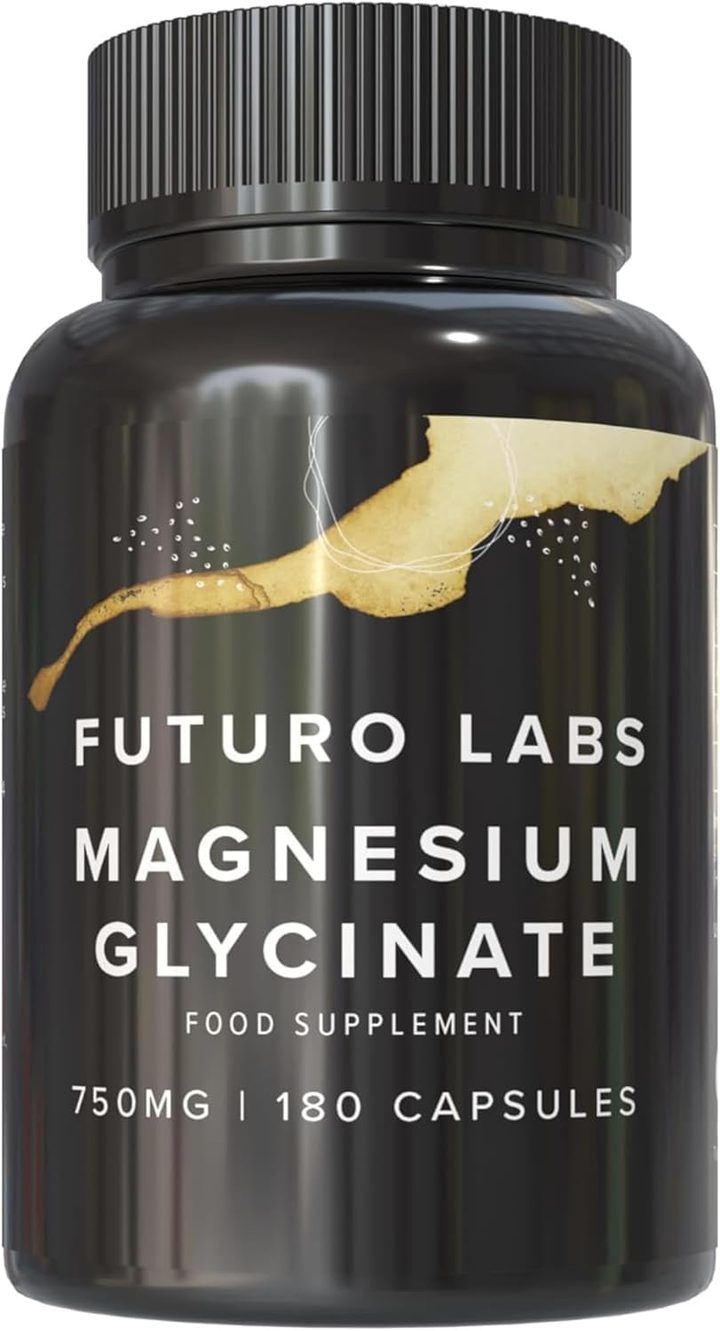
Our brand: the worked example on this page
Futuro Labs Magnesium Glycinate
- 22p a day
- 180 capsules, 2 capsules daily
- Lab tested
- Made in the UK
The half that earns its place: Futuro Labs Magnesium Glycinate on Amazon UK, 300mg elemental per 2 capsules, £19.99 for 90 nights. Label breakdown. The doses are on zinc and magnesium before bed; the timing slot on before sleep.
The magnesium half: modest, conditional, real
Magnesium's sleep case is the one this site keeps stating at its true size. Abbasi's randomised trial in older adults with insomnia found better sleep efficiency, faster onset and less early waking after eight weeks at 500mg; Nielsen's study in over-51s with poor sleep and low intake improved sleep quality markers at 320mg; and Mah and Pitre's pooled review put the onset gain around seventeen minutes while grading the evidence low quality and locating the whole effect in people whose intake had been poor. No sleep claim is authorised for any magnesium, the honest mechanism being corrected intake letting normal nervous system and psychological function return, and the honest expectation being modest improvement for the narrow-diet sleeper and nothing for the well-fed one.
The zinc half: adequacy matters, sleep evidence does not exist
Zinc arrives in this question courtesy of ZMA's marketing, and the record is short: no randomised trial shows zinc supplementation improving sleep in healthy adults at any dose, no sleep or relaxation claim is authorised for it, and the observational threads linking zinc status to sleep in some populations are the usual status-tracks-general-health story, not evidence a capsule sedates. Zinc's real claims, immune function, protein synthesis, the maintenance of normal testosterone, run on weeks of adequacy and are indifferent to the clock, which leaves the pairing's sleep arithmetic simple: magnesium alone carries whatever modest effect exists, zinc adds dietary insurance and zero sleep, and the formula that welded them together, ZMA, tested null at its full bedtime protocol in Wilborn's independent trial. Take zinc when the plate runs short of meat, dairy, eggs and seafood; just do not bill it to the night.
| Magnesium | Zinc | |
|---|---|---|
| Randomised sleep evidence | Small trials: modest onset and efficiency gains in low-intake adults | None at any dose |
| Effect size, honestly | About 17 minutes faster onset, pooled, low quality | n/a |
| Who benefits | Narrow-diet sleepers with low intake, over weeks | Nobody, for sleep; the diet-short, for adequacy |
| Authorised claims nearby | Nervous system, psychological function; no sleep claim | Immunity, testosterone maintenance; no sleep claim |
| Timing sensitivity | None: the calendar works, not the clock | None |
| Sleep verdict | Modestly, conditionally, yes | No |
The verdict assembled, and what to actually do tonight
Does taking magnesium and zinc help you sleep: the pair helps exactly as much as the magnesium alone does, modestly, over eight weeks, in people whose diets ran the mineral low, and the zinc rides along for its own unrelated reasons or not at all. The protocol that matches the evidence: Futuro Labs Magnesium Glycinate, 2 capsules with the evening meal, 300mg elemental at 80% NRV from bisglycinate at 20%, nightly for eight weeks against a baseline week, vegan, UK made under GMP and BRC, panels shown, £19.99 for 180 capsules, 22p a night, with 10mg to 15mg of zinc joining dinner only on diet-short days. And above both sits the machinery that outworks every capsule: a fixed wake time, caffeine finished eight hours out, a dark cool room, and persistent insomnia going to a GP, where the strong evidence lives.
What to check on the label
- Magnesium: modest, real, conditional: weeks of dosing, low-intake sleepers only.
- Zinc: no sleep evidence at any dose or hour: its claims are elsewhere.
- The pair equals the magnesium alone for sleep; ZMA tested null regardless.
- Eight weeks against a baseline week: the honest test protocol.
- Sleep hygiene and the GP outwork both for anything persistent.
Our brand
The worked example: Futuro Labs Magnesium Glycinate
Futuro Labs Magnesium Glycinate is the half of the pair with a sleep case: 300mg elemental per 2 capsules (80% NRV) from bisglycinate 20%, nightly with dinner for eight weeks, 22p a night from a £19.99 bottle of 180. Vegan, UK made, panels shown.
- Elemental magnesium per serving
- 300mg (80% NRV)
- Form
- magnesium bisglycinate 20%
- Serving
- 2 capsules a day
- Bottle
- 180 capsules, 90 days
- Price
- £19.99 (22p a day)
- Capsule
- vegetarian shell, vegan product
Questions people also ask
Is magnesium and zinc good before bed for sleep?
The magnesium may help modestly over weeks if your intake was low; the zinc contributes nothing to sleep at any hour. Dinner suits both regardless.
How long until magnesium helps sleep?
The trials ran eight weeks: judge then, against a baseline week, and expect modest change only where the diet had run short.
Why do people say zinc helps you sleep?
ZMA marketing and status-correlation threads: no randomised trial shows zinc improving sleep, and its independent formula test was null.
Should I buy a magnesium and zinc sleep supplement?
No: sleep blends bill the zinc to the night it does nothing for. Plain glycinate nightly plus separate zinc on diet-short days does the honest version.
What helps sleep more than either mineral?
A fixed wake time, caffeine cut eight hours before bed, a dark cool room, and a GP for persistent insomnia: the levers with strong evidence.
Sources
- Futuro Labs Magnesium Glycinate listing, Amazon UK, label and price checked 31 August 2026. https://www.amazon.co.uk/dp/B0BT7Z5VQW
- Abbasi B, et al. The effect of magnesium supplementation on primary insomnia in elderly: a double-blind placebo-controlled clinical trial. Journal of Research in Medical Sciences 2012;17(12):1161-1169. PubMed record
- Mah J, Pitre T. Oral magnesium supplementation for insomnia in older adults: a systematic review and meta-analysis. BMC Complementary Medicine and Therapies 2021;21:125. PubMed record
- Nielsen FH, Johnson LK, Zeng H. Magnesium supplementation improves indicators of low magnesium status and inflammatory stress in adults older than 51 years with poor quality sleep. Magnesium Research 2010;23(4):158-168. PubMed record
- EFSA Panel on Dietetic Products, Nutrition and Allergies. Scientific Opinion on the substantiation of health claims related to zinc, including maintenance of normal testosterone levels in the blood. EFSA Journal 2010;8(10):1819. https://efsa.onlinelibrary.wiley.com/doi/10.2903/j.efsa.2010.1819
- EFSA Panel on Dietetic Products, Nutrition and Allergies. Scientific Opinion on the substantiation of health claims related to magnesium. EFSA Journal 2010;8(10):1807. https://efsa.onlinelibrary.wiley.com/doi/10.2903/j.efsa.2010.1807
- Expert Group on Vitamins and Minerals. Safe Upper Levels for Vitamins and Minerals. Food Standards Agency, 2003 (magnesium guidance level 400mg a day from supplements). https://cot.food.gov.uk/sites/default/files/vitmin2003.pdf