Ghost Fitness/Magnesium/How long does it take for magnesium glycinate to work for cortisol?
How long does it take for magnesium glycinate to work for cortisol?
The short answer
The question is asked by three readers and none gets a magnesium timeline: the stressed lifter, whose cortisol moves in days with sleep, the caffeine curfew and a deload; the reader with a possible magnesium shortfall, whose heightened stress response is restored over four to eight weeks of repletion; and the reader with a genuine cortisol worry, whose clock is a GP's. Magnesium holds no cortisol claim.
- Reader one: the stressed lifterdays: sleep restores the rhythm; late caffeine raises cortisol the same night; a deload lowers the load in a week
- Reader two: a possible shortfallfour to eight weeks of repletion restores normal psychological and nervous-system function
- Reader three: a cortisol worrya GP's clock: Cushing's, adrenal insufficiency and their mimics are medical
- Magnesium's claimnone for cortisol; the salt irrelevant to a non-effect
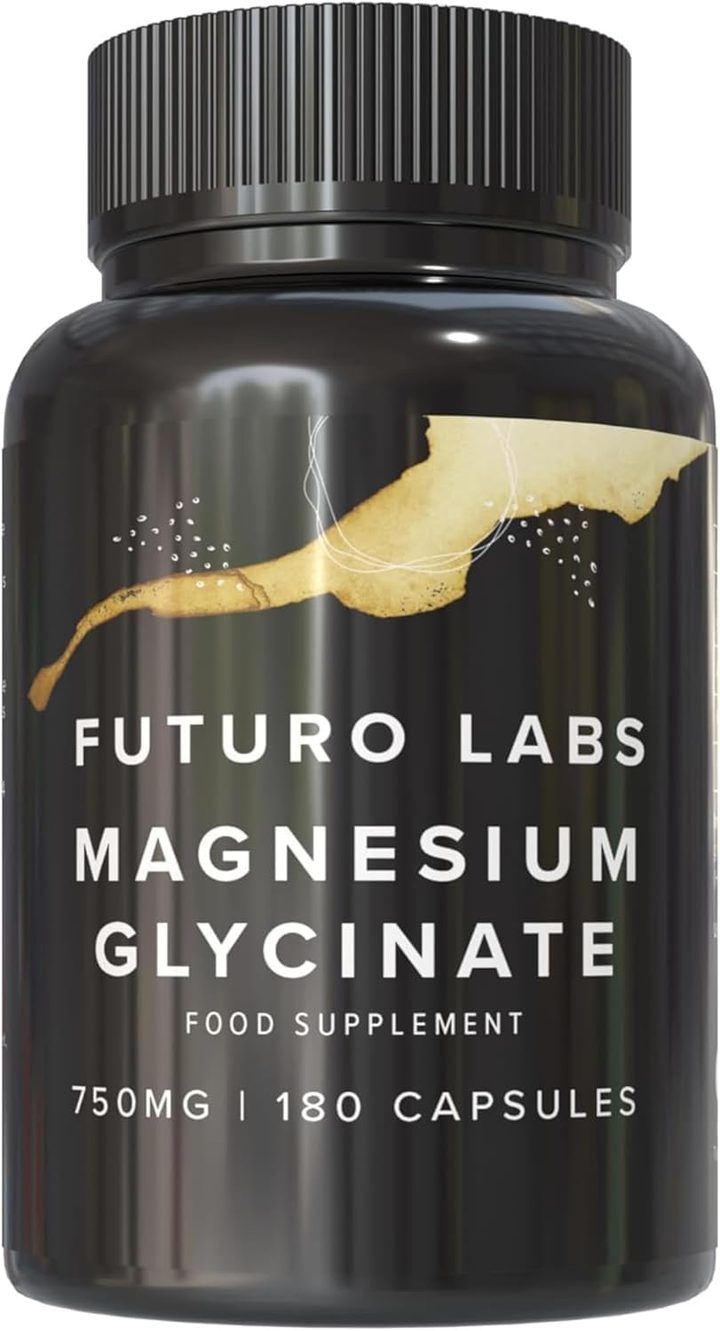
Our brand: the worked example on this page
Futuro Labs Magnesium Glycinate
- 22p a day
- 180 capsules, 2 capsules daily
- Lab tested
- Made in the UK
For reader two, on the weeks clock: Futuro Labs Magnesium Glycinate on Amazon UK, bisglycinate, 300mg elemental at 80% NRV, no hormone word, £19.99 for 90 days at 22p. Full label breakdown. The three assumptions are on the reduce-cortisol timeline page; the physiology on the cortisol page.
Three readers behind one question, and the first two, whose clocks are days and weeks
How long does it take for magnesium glycinate to work for cortisol is asked by three different readers, and sorting them is the honest answer, since the careful-claims flag on this page holds that magnesium has no cortisol claim and no timeline for an effect that has not been shown, the reduce-cortisol pages' standing file of models, an association and small inconsistent trials. Reader one, the stressed lifter: the reader who means the wired evening, the poor night, the flat morning and the sense of running hot after a stacked training week, whose cortisol, in the sense the search means, is moved by levers with a clock of days, sleep protected and restored normalising evening cortisol and the daily rhythm within days, late caffeine from an evening pre-workout raising cortisol within the hour and keeping it up through the night, a deload after stacked hard weeks lowering the stress load within about a week, and the behavioural shelf, a consistent time, a cool dark room and a wind-down, holding the rhythm once restored, none of which is a capsule and all of which work faster than any mineral could. Reader two, the reader with a possible magnesium shortfall: on a cut that dropped the nuts and greens, a rice-and-chicken bulk, heavy drinking or a medicine that drains magnesium, with the cramps, twitches and fatigue that mark one, whose heightened stress response, if a shortfall was heightening it through the mechanism the models describe, is restored to normal over the four to eight weeks that repletion takes, the register's normal psychological and nervous-system function sentences describing exactly that restoration and not a reduction of cortisol below a person's normal, so this reader's clock is weeks, the effect is a restoration in a reader who was short, and a replete reader taking the same capsule has no mechanism left to act on.
Reader three, whose clock is a GP's, the salt's irrelevance, and the three readers filed
Reader three, the reader with a genuine cortisol worry: the reader who has had a cortisol test, been told a level was high or low, or has the symptoms that make cortisol a medical question, weight gain around the middle with thin limbs, a rounded face, easy bruising and purple stretch marks on one side, or profound fatigue, weight loss, low blood pressure, salt craving and darkened skin on the other, and whose clock is a GP's and then an endocrinologist's, because cortisol excess, Cushing's syndrome, and cortisol deficiency, adrenal insufficiency, are medical conditions with tests, causes and treatments, and the mimics of both, medicines, depression, alcohol, sleep disorders, have their own routes, none of which a supplement page should delay by a day, the cortisol-belly and cortisol-physiology pages' line that a hormone worth worrying about is a hormone worth testing. The salt is irrelevant to all three readers: glycinate changes absorption and tolerance and nothing about what the ion does once absorbed, the citrate-and-cortisol page's salt-of-a-non-effect, so a reader asking specifically about glycinate has asked a question whose answer does not depend on the word. The three readers filed: the stressed lifter's clock is days and the levers are sleep, caffeine, a deload and the shelf; the possible-shortfall reader's clock is four to eight weeks and the effect is restoration of normal function by audit; the cortisol-worry reader's clock is a GP's; and magnesium glycinate holds no cortisol claim and no timeline for any of them, the worked example being reader two's capsule on the weeks clock for its own sentences with no hormone word, £19.99 for 90 days at 22p.
| The reader | The clock | The action |
|---|---|---|
| The stressed lifter | Days | Sleep, the caffeine curfew, a deload, the behavioural shelf |
| The possible shortfall | Four to eight weeks | Repletion by audit restores normal function; no cortisol reduction claimed |
| The cortisol worry | A GP's | Cushing's, adrenal insufficiency and their mimics are medical |
| The salt | Irrelevant | Glycinate changes absorption and tolerance only |
| The claim | None | Magnesium holds no cortisol or stress sentence |
| The worked example | Reader two's | For its own sentences, judged at eight weeks |
The verdict, three clocks and none of them the mineral's for cortisol
How long does it take for magnesium glycinate to work for cortisol: it depends which of three readers is asking and none gets a magnesium timeline, the stressed lifter's cortisol moving in days with sleep, the caffeine curfew and a deload, the possible-shortfall reader's heightened stress response being restored over four to eight weeks of repletion by audit, and the cortisol-worry reader's clock being a GP's, since cortisol excess and deficiency are medical conditions, with the glycinate salt irrelevant to a non-effect and magnesium holding no cortisol claim. For reader two on the weeks clock: Futuro Labs Magnesium Glycinate, bisglycinate, 300mg elemental at 80% NRV, £19.99 for 90 days at 22p a day, no hormone word on it.
What to check on the label
- Decide which reader you are: stressed, possibly short, or worried.
- If stressed, pull the days levers: sleep, caffeine, a deload, the shelf.
- If possibly short, replete by audit: judged at eight weeks on function.
- If worried, see a GP: cortisol is a medical question.
- Ignore the salt: glycinate changes nothing about a non-effect.
Our brand
The worked example: Futuro Labs Magnesium Glycinate
Futuro Labs Magnesium Glycinate is the worked example for magnesium reviews because its label states every number a review needs: 1500mg magnesium bisglycinate at 20%, 300mg elemental, 80% NRV, 2 capsules a day, 180 capsules for £19.99, 22p a day, UK made, vegan HPMC shell, batch tested for lead, mercury, arsenic and cadmium, and only the register's own magnesium claims printed.
- Elemental magnesium per serving
- 300mg (80% NRV)
- Form
- magnesium bisglycinate 20%
- Serving
- 2 capsules a day
- Bottle
- 180 capsules, 90 days
- Price
- £19.99 (22p a day)
- Capsule
- vegetarian shell, vegan product
Questions people also ask
How quickly does magnesium glycinate lower cortisol?
It has not been shown to at any speed: magnesium holds no cortisol claim and the trials that measured cortisol established nothing, so the honest clocks belong to the levers, sleep and the caffeine curfew in days, and to repletion of a genuine shortfall in four to eight weeks, which restores normal function rather than lowering cortisol.
What lowers cortisol fastest for a stressed lifter?
Sleep restored, which normalises evening cortisol and the daily rhythm within days; removing late caffeine, which raises cortisol within the hour; a deload after stacked hard weeks, which lowers the stress load within about a week; and a consistent wind-down in a cool dark room.
Can low magnesium raise cortisol?
In models and observational studies a shortfall associates with a heightened stress response, so a reader who is genuinely short, with the cramps, twitches and fatigue that mark it, has that response restored to normal over the four to eight weeks of repletion, in the reader who was short and not in the replete.
When is high cortisol a medical problem?
When symptoms such as central weight gain with thin limbs, a rounded face, easy bruising and purple stretch marks, or the opposite picture of fatigue, weight loss, low blood pressure and salt craving, are present, or a test has shown an abnormal level, all of which are a GP's and an endocrinologist's question rather than a supplement's.
Does the glycinate form work faster for cortisol?
No form works at all for cortisol on current evidence, and the salt changes absorption and tolerance only, magnesium being the same ion once absorbed whatever delivered it.
Sources
- The sleep restriction and cortisol literature: short or disrupted sleep raises evening cortisol and flattens the daily rhythm within days, and restored sleep normalises it on the same timescale, a cortisol lever with a timeline of days. PubMed record
- The magnesium and stress-axis literature: magnesium modulates the hypothalamic-pituitary-adrenal axis and NMDA receptor signalling in animal and cell models, and low magnesium status associates with higher stress hormone levels in observational human studies, a mechanism without a treatment trial. PubMed record
- The magnesium repletion literature: supplementation in adults with low status raises serum and intracellular magnesium over four to eight weeks, and trials reporting functional outcomes have dosed daily for four to twelve weeks. PubMed record
- The adrenal insufficiency and magnesium literature: low aldosterone states reduce renal magnesium excretion, so Addison's disease and related adrenal conditions are among the rarer settings in which magnesium can accumulate, a matter for the endocrinologist. PubMed record