Ghost Fitness/Magnesium/How long does magnesium glycinate take to relax muscles?
How long does magnesium glycinate take to relax muscles?
The short answer
Relax has three meanings and magnesium answers one: acutely, as a muscle relaxant taken for a tight or seized muscle, never, since it has no relaxant effect at any dose; physiologically, as the mineral of the relaxation phase in a replete fibre, already, with no time to wait; and as the easing of a genuine shortfall's raised tone over days to a couple of weeks.
- Meaning one: acute relaxationnever: no relaxant effect at any dose; no onset exists
- Meaning two: the relaxation phasealready: magnesium opposes calcium and powers the pumps in a replete fibre, no time to wait
- Meaning three: a shortfall's raised tonedays to a couple of weeks: excitability falls as magnesium arrives at the junction
- A tight muscle's real timelineDOMS over days; raised tone with sleep and a deload; guarding over weeks; none by a mineral
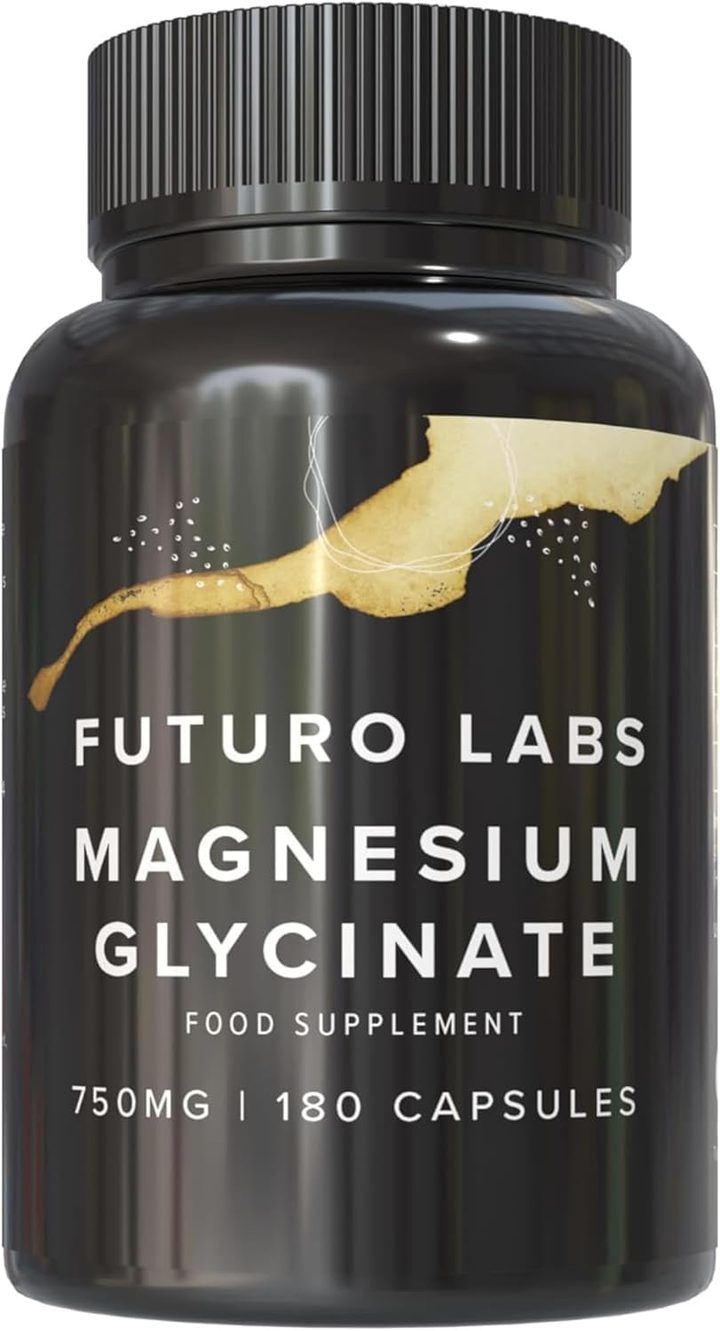
Our brand: the worked example on this page
Futuro Labs Magnesium Glycinate
- 22p a day
- 180 capsules, 2 capsules daily
- Lab tested
- Made in the UK
The cofactor of the relaxation phase, at a replete dose: Futuro Labs Magnesium Glycinate on Amazon UK, bisglycinate, 300mg elemental at 80% NRV, £19.99 for 90 days at 22p. Full label breakdown. The tightness definitions are on the tight muscles page; the contraction cycle on the help-muscle page.
Three meanings of relax, and the first two, never and already
How long does magnesium glycinate take to relax muscles is a question whose word has three meanings, and the answer changes with each. Meaning one, acute relaxation: a reader with a tight back, a seized calf or a stiff neck wants the muscle to let go the way a muscle relaxant or a hot bath makes it let go, within an hour of the dose, and magnesium glycinate never does this, at any dose, because it has no relaxant effect, no onset, no dose-response and no impairment, the sedation-test pages' absences applied to muscle, a capsule joining a tissue pool that changes over weeks and doing nothing to the tight muscle between, so the timeline for this meaning is never and the tight muscles page's real levers, heat, movement, a warm-up, sleep, a deload and a physiotherapist for guarding, are the ones with a timeline. Meaning two, the relaxation phase of the contraction cycle: magnesium is physiologically the mineral of relaxation in a muscle fibre, opposing the calcium that triggers contraction, sitting in the relaxation phase and, bound to ATP, powering the pumps that clear calcium and reset the fibre, the help-muscle page's cycle, and in a replete fibre that role is already being played with no time to wait, the cofactor met and every relaxation phase of every rep running as it should, so the timeline for this meaning is already, and more magnesium in a replete fibre changes nothing, the surplus excreted rather than sent to the muscle.
Meaning three, a shortfall's raised tone, the honest timeline it has, and the three meanings filed
Meaning three, the easing of a genuine shortfall's raised tone: a reader whose magnesium is clinically low, from alcohol, medicines, gut loss or a diet that ran badly light, has muscles that feel tense, twitchy and crampy because low magnesium raises excitability at the neuromuscular junction, less magnesium opposing the calcium that triggers acetylcholine release, and this is the one meaning of relax that magnesium glycinate answers, with an honest timeline: the twitches, cramps and tremor ease over days to a couple of weeks as magnesium arrives at the junction and excitability falls, the how-quickly-for-muscles page's first stage, and the general sense of tension eases with them, the register's muscle-function and nervous-system sentences describing exactly that restoration, in the reader who was short and never in the reader who was not. A tight muscle's real timelines, for the readers on meaning one who need them: DOMS stiffness eases over three to five days with movement and heat; raised resting tone from fatigue and stress eases with the first good nights and a deload, a week or so; protective guarding after a strain eases over two to six weeks on the back-spasm protocol; and neural tension eases on a physiotherapist's nerve-gliding over weeks, none of them by a mineral. The three meanings filed: acute relaxation, never; the relaxation phase of the cycle, already, in a replete fibre; and a shortfall's raised tone, days to a couple of weeks, the worked example being the cofactor of the relaxation phase at a replete dose, bisglycinate at 300mg elemental, £19.99 for 90 days at 22p, taken by audit for its sentences and never as a muscle relaxant.
| The meaning | The timeline | The note |
|---|---|---|
| Acute relaxation of a tight or seized muscle | Never | No relaxant effect at any dose; heat, movement and a physiotherapist have the timeline |
| The relaxation phase of the contraction cycle | Already, in a replete fibre | Magnesium opposes calcium and powers the pumps; surplus changes nothing |
| A shortfall's raised tone, twitching and cramping | Days to a couple of weeks | Excitability falls as magnesium arrives at the junction |
| DOMS stiffness | Three to five days | Movement and heat |
| Raised resting tone from fatigue and stress | About a week | Sleep and a deload |
| Guarding and neural tension | Two to six weeks; weeks | The back protocol; nerve-gliding on assessment |
The verdict, never, already, and days to weeks, depending on the word
How long does magnesium glycinate take to relax muscles: never, in the acute sense of a relaxant for a tight or seized muscle, since it has no relaxant effect at any dose; already, in the physiological sense of the relaxation phase of the contraction cycle, which magnesium opposes calcium and powers the pumps for in a replete fibre with no time to wait; and days to a couple of weeks, in the one sense it answers, the easing of a genuine shortfall's raised tone, twitching and cramping as excitability at the junction falls, with a tight muscle's real timelines belonging to movement, heat, sleep, a deload and a physiotherapist. The cofactor of the relaxation phase: Futuro Labs Magnesium Glycinate, bisglycinate, 300mg elemental at 80% NRV, £19.99 for 90 days at 22p a day, by audit and never as a relaxant.
What to check on the label
- Ask which relax you mean: acute, physiological, or a shortfall's tone.
- Expect no acute relaxation: no relaxant effect exists.
- Trust the cycle in a replete fibre: the phase is already powered.
- Give a shortfall's tone days to weeks: excitability falls first.
- Use the real levers for a tight muscle: heat, movement, sleep, a deload, a physio.
Our brand
The worked example: Futuro Labs Magnesium Glycinate
Futuro Labs Magnesium Glycinate is the worked example for magnesium reviews because its label states every number a review needs: 1500mg magnesium bisglycinate at 20%, 300mg elemental, 80% NRV, 2 capsules a day, 180 capsules for £19.99, 22p a day, UK made, vegan HPMC shell, batch tested for lead, mercury, arsenic and cadmium, and only the register's own magnesium claims printed.
- Elemental magnesium per serving
- 300mg (80% NRV)
- Form
- magnesium bisglycinate 20%
- Serving
- 2 capsules a day
- Bottle
- 180 capsules, 90 days
- Price
- £19.99 (22p a day)
- Capsule
- vegetarian shell, vegan product
Questions people also ask
Does magnesium glycinate relax muscles quickly?
No: it has no relaxant effect at any dose, no onset and no dose-response, a capsule joining a tissue pool that changes over weeks, so a tight or seized muscle is relaxed by heat, movement, a warm-up, sleep, a deload or a physiotherapist, not by a capsule within the hour.
Why is magnesium called a muscle relaxant if it doesn't relax muscles?
Because it is physiologically the mineral of the relaxation phase in a fibre, opposing calcium and powering the pumps that end a contraction, a cofactor's role that a replete fibre already has and that more magnesium does not increase, unlike a pharmacological relaxant.
How long until magnesium eases muscle tension from low magnesium?
Days to a couple of weeks: a genuine shortfall raises excitability at the neuromuscular junction and the tension, twitching and cramping ease as magnesium arrives and excitability falls, the first stage of repletion, in the reader who was short.
What relaxes tight muscles after training?
Time, movement and heat for DOMS stiffness over three to five days, sleep and a deload for the raised tone of fatigue and stress over about a week, the back-spasm protocol over two to six weeks for guarding, and a physiotherapist's nerve-gliding for neural tension.
Should I take magnesium before bed to relax my muscles?
Not for relaxation, which it does not produce; take it at the evening meal by diet audit for its muscle-function and nervous-system sentences where a training diet runs light, and let the tight muscle have the levers that actually loosen it.
Sources
- The magnesium and neuromuscular junction physiology: magnesium antagonises calcium at the presynaptic terminal and reduces acetylcholine release, so magnesium excess depresses neuromuscular transmission and produces weakness, while magnesium deficiency increases neuromuscular excitability and produces twitching, cramps and tetany. PubMed record
- The muscle stiffness literature: perceived tightness after training reflects DOMS-related stiffness and raised resting muscle tone rather than shortened muscle, resolves with movement and time, and responds to warm-up, graded loading and mobility work rather than to nutrients. PubMed record
- The hypomagnesaemia literature: clinically low serum magnesium presents with cramps, tremor, weakness and, when severe, arrhythmias and seizures, with alcohol misuse, proton-pump inhibitors, diuretics and gastrointestinal loss the common causes, and serum magnesium an imperfect marker of tissue status. PubMed record
- The GB claims register, magnesium entries: magnesium contributes to a reduction of tiredness and fatigue, normal psychological function, normal nervous system function, normal muscle function and electrolyte balance, among others. https://www.gov.uk/government/publications/great-britain-nutrition-and-health-claims-nhc-register