Ghost Fitness/Lion's mane/Is lion's mane caffeine free?
Is lion's mane caffeine free?
The short answer
Yes, inherently: no fungus makes caffeine, so a pure lion's mane capsule is caffeine free by nature, and the label may say so. Mushroom coffees and focus blends are not; the caffeine-avoider reads the ingredients line for the carriers.
- The mushroomcaffeine free by nature: no fungus synthesises the alkaloid
- The pure capsulecaffeine free by label: nothing in it could carry caffeine
- The products that are notmushroom coffees, focus blends, leaf teas: caffeine from other ingredients
- The avoider's checkthe ingredients line for coffee, tea, guarana, mate, cacao or caffeine
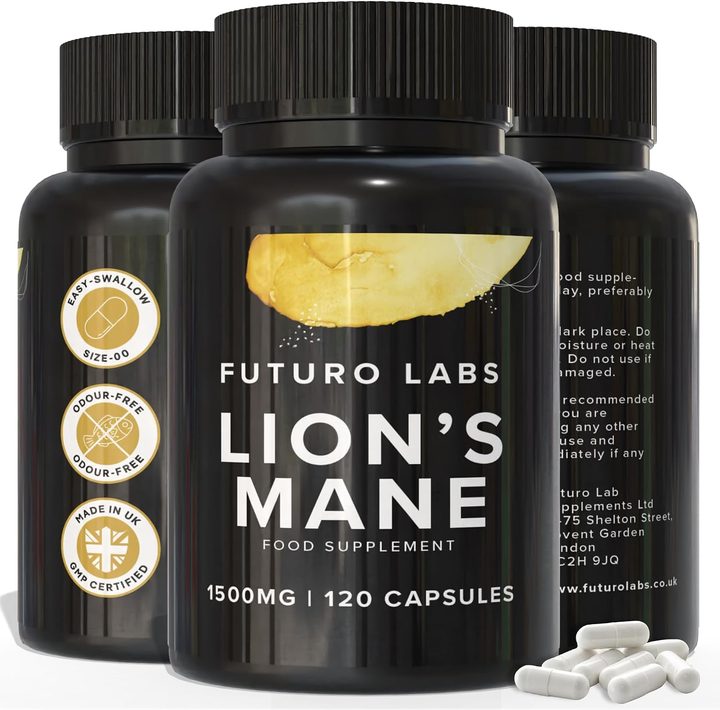
Our brand: the worked example on this page
Futuro Labs Lion's Mane
- 13p a day
- 120 capsules, 1 capsule daily
- Lab tested
- Made in the UK
Caffeine free by nature and label: Futuro Labs Lion's Mane on Amazon UK, 5:1 fruiting body extract, rice flour, HPMC shell, nothing else, £15.49 for 120 days at 13p. Full label breakdown. The botany is on the contains-caffeine page; the coffee bases on the mushroom-coffee page.
Caffeine free by nature and by label, and what the phrase on a pack may honestly mean
Lion's mane is caffeine free, and the answer has two layers worth separating because the phrase on a pack means something specific. By nature: caffeine is a purine alkaloid synthesised by a small set of plants, coffee, tea, cacao, guarana and yerba mate among them, through a biosynthetic pathway that fungi, a separate kingdom, do not possess, so no mushroom makes caffeine and lion's mane, Hericium erinaceus, contains none, its characteristic compounds being cell-wall beta-glucans and the lipophilic hericenone and erinacine families, none of them stimulants, the contains-caffeine page's botany. By label: a pure lion's mane capsule, extract plus a bulking agent in a shell, contains nothing that could carry caffeine, so a caffeine-free statement on such a product is honest by construction, describing an absence the ingredients line guarantees, the worked example's three-line list, fruiting body extract, brown rice flour, HPMC shell, being the proof. What the phrase may honestly mean on any pack is therefore the absence of caffeine-carrying ingredients, and it is worth exactly as much as the ingredients line beneath it: on a pure capsule it is a tautology, on a mushroom coffee it is impossible unless the coffee is decaffeinated to a trace, and on a focus blend it is a claim to check against the matrix line, because caffeine enters mushroom products only through what else is in them.
The caffeine-avoider's card, because the reader asking is usually avoiding it for a reason, and the products sorted
The reader asking whether lion's mane is caffeine free is usually avoiding caffeine for a reason, the anxious or caffeine-sensitive, the late trainer protecting sleep, the reader tapering off a habit, and they deserve a card rather than a botany lesson. First, the mushroom itself is safe for a caffeine-avoider at any hour, no stimulant, no jitters, no sleep cost, evening dosing harmless, and equally no lift, the avoider buying it for its separate claim-free bet and never as a caffeine replacement, since it replaces nothing caffeine does. Second, the products sorted by their caffeine carriers: pure extract capsules and powders, none; pure hot-water decoctions, none; mushroom coffees, the coffee's caffeine, regular-base blends at a full cup's worth, half-caff designs at roughly half, decaf bases at a trace, never zero unless decaffeinated; focus and nootropic blends, often caffeine added outright or carried by green tea extract, guarana or yerba mate; mushroom teas made with actual tea leaves, the leaf's caffeine. Third, the check: read the ingredients line for coffee, tea, green tea extract, guarana, yerba mate, cacao or the word caffeine, and look for a declared caffeine content in milligrams where any of those appears, the pure capsule having none of them and the blend needing the read. Fourth, the exclusions that are not about caffeine: the caffeine-avoider who is pregnant or breastfeeding avoids lion's mane for the separate reason that no safety data exists, and the fungal-allergic avoids it as an allergen, the caffeine-free fact clearing the stimulant question and none of the others. The card filed: yes, lion's mane is caffeine free by nature and by label on any pure product, the avoider takes it at any hour for its own bet, reads the ingredients line on anything blended, and reaches for decaf rather than a mushroom when what they actually want is a coffee without the caffeine.
| The product | Caffeine? | The avoider's action |
|---|---|---|
| Pure extract capsule or powderOurs | None: by nature and label | Take at any hour; expect no lift |
| Pure hot-water decoction | None | The same |
| Mushroom coffee | The coffee's: full, half or trace by base | Decaf base only, or your own decaf plus a capsule |
| Focus and nootropic blends | Often added, or carried by green tea, guarana, mate | Read the matrix line; usually walk on |
| Mushroom tea with tea leaves | The leaf's | Choose a mushroom-only decoction |
| The check | The ingredients line for the carriers | Coffee, tea, guarana, mate, cacao, caffeine |
The verdict, caffeine free where the ingredients line says so
Is lion's mane caffeine free: yes by nature, no fungus synthesising the alkaloid that a few plants make, and yes by label on any pure capsule or powder whose ingredients line carries nothing that could contain it, with mushroom coffees, focus blends and leaf teas being the products that are not, their caffeine arriving through the coffee, the added stimulants or the leaf, and the caffeine-avoider's whole check being the ingredients line read for the carriers. The pure product: Futuro Labs Lion's Mane, 5:1 fruiting body extract, brown rice flour and an HPMC shell and nothing else, UK made, lab tested, £15.49 for 120 days at 13p a day, caffeine free by a three-line list, taken at any hour by anyone avoiding the kettle.
What to check on the label
- Trust the botany: no fungus makes caffeine.
- Read the label's phrase against its ingredients: a tautology on a pure capsule.
- Sort the products by carrier: coffees, blends and leaf teas carry it.
- Check the line for the carriers: coffee, tea, guarana, mate, cacao, caffeine.
- Want decaf, buy decaf: the mushroom replaces no coffee.
Our brand
The worked example: Futuro Labs Lion's Mane
Futuro Labs Lion's Mane: 1 capsule daily of 5:1 fruiting body extract, labelled 1500mg mushroom equivalent (about 300mg extract), 120 capsules for £15.49, 120 days at 13p a day. Vegan HPMC shell, UK made under GMP and BRC, independently lab tested, caffeine free. Lion's mane holds no authorised UK health claims; this site describes its small studies as studies.
- Extract
- fruiting body, 5:1
- Per capsule
- 1500mg mushroom equivalent
- Serving
- 1 capsule a day
- Bottle
- 120 capsules, 120 days
- Price
- £15.49 (13p a day)
- Capsule
- HPMC vegan shell, size 00
Questions people also ask
Is lion's mane naturally caffeine free?
Yes: caffeine is a plant alkaloid made by coffee, tea, cacao, guarana and mate through a pathway fungi lack, so no mushroom contains it and lion's mane's compounds are non-stimulant beta-glucans and lipophilics.
Can a lion's mane product legally say caffeine free?
Yes where its ingredients carry none: on a pure capsule the phrase is honest by construction, while on a mushroom coffee it is impossible short of decaf and on a blend it must be checked against the matrix line.
Which lion's mane products do contain caffeine?
Mushroom coffees from their coffee base, focus and nootropic blends from added caffeine or green tea, guarana and mate, and mushroom teas made with tea leaves, all caught by reading the ingredients line.
Is lion's mane suitable if I'm caffeine-sensitive?
Yes: a pure capsule has no stimulant, no jitters and no sleep cost at any hour, though it also gives no lift, so it is taken for its own claim-free bet and never as a caffeine substitute.
I'm avoiding caffeine in pregnancy, can I take lion's mane instead?
No, for a separate reason: no safety data exists for lion's mane in pregnancy or breastfeeding, so the honest default is to avoid it, the caffeine-free fact clearing only the stimulant question.
Sources
- The caffeine biosynthesis literature: caffeine is a purine alkaloid synthesised by a limited set of plants including coffee, tea, cacao, guarana and yerba mate, and is not produced by fungi. PubMed record
- The medicinal mushroom labelling discussion: fruiting body versus mycelium-on-grain, extract ratios and beta-glucan content as the label facts that separate concentrated extracts from diluted powders. PubMed record
- The caffeine and attention literature: meta-analyses and decades of trials report improved reaction time, vigilance and attention after ordinary caffeine doses. PubMed record
- EFSA Panel on Dietetic Products, Nutrition and Allergies. Scientific Opinion on the substantiation of health claims related to magnesium. EFSA Journal 2010;8(10):1807. https://efsa.onlinelibrary.wiley.com/doi/10.2903/j.efsa.2010.1807