Ghost Fitness/Lion's mane/How much lion's mane powder to take?
How much lion's mane powder to take?
The short answer
The label's stated serving weight, weighed: extract powders typically direct 0.3 to 1 gram, plain powders 1 to 3, and the two never convert by volume. Tare a scale, weigh the stated grams, stir into a drink, no spoons.
- Extract powder servingstypically 0.3 to 1 gram: read the label's stated weight
- Plain powder servingstypically 1 to 3 grams: a culinary product, unquantifiable as a supplement
- The toola pocket scale reading to 0.1g, tared with the glass on it
- The ruleweigh the stated grams; never convert by spoon
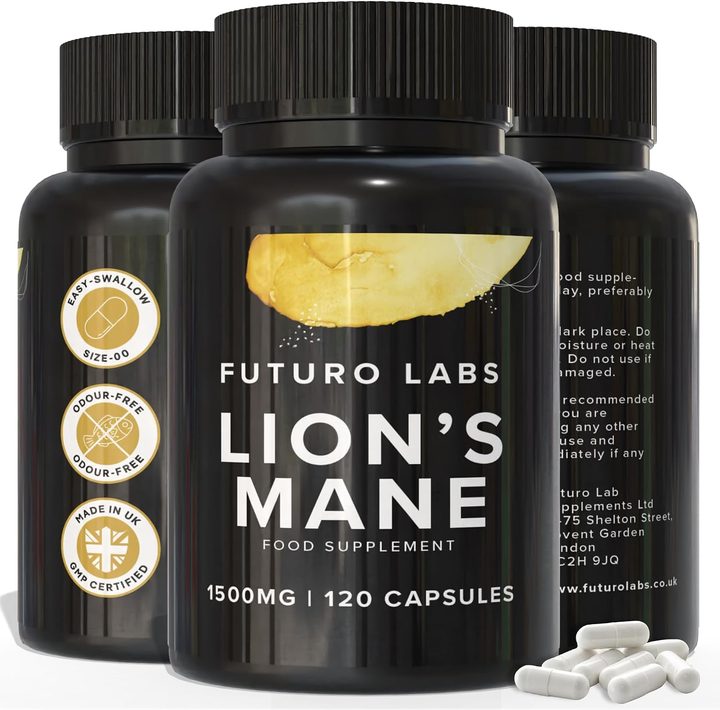
Our brand: the worked example on this page
Futuro Labs Lion's Mane
- 13p a day
- 120 capsules, 1 capsule daily
- Lab tested
- Made in the UK
The pre-weighed alternative: Futuro Labs Lion's Mane on Amazon UK, 1 capsule of about 300mg of 5:1 extract, £15.49 for 120 days at 13p. Full label breakdown. The teaspoon arithmetic is on the teaspoon page; the powder tests on the powder page.
Which powder first, because the grams mean different things, and then the label's serving weight
How much lion's mane powder to take is answered by the bag, but only after the bag is identified, because the shelf sells two powders under one name and their grams mean different things. Extract powder, the hot-water concentrated product at a stated ratio, directs servings in the 0.3-to-1-gram range on most labels, 300mg of a 5:1 being the worked example's capsule equivalent, and a gram of a 10:1 being 10,000mg equivalent, well above any trial's amount, so extract servings are small and the label's stated weight is the instruction, no established dose existing to override it and more being spend rather than strategy. Plain dried powder, the whole mushroom milled at 1:1 with the chitin intact, directs servings in the 1-to-3-gram range where it directs anything, which happens to sit near the trials' dried-mushroom amounts, Mori's roughly three grams and Docherty's 1.8, but plain powder is unextracted, delivering less of its contents than the trials' processed tablets, and is honestly a culinary ingredient rather than a supplement with a statable dose, the two-powders trap in the flesh. So the first instruction is to read the bag for the word extract and a ratio, and the second is to take the serving weight it states, in grams, as the answer to how much, because there is no other honest answer and no dose behind the label's direction beyond the manufacturer's chosen portion.
The scale that measures it, the drink it goes in, and the serving filed
The tool is a pocket scale reading to a tenth of a gram, because extract servings are fractions of a teaspoon that no eye measures and the drift between a scant and a generous fraction is the whole dose again, the teaspoon page's arithmetic: put the glass or shaker on the scale, tare it to zero, tip powder in until the display reads the label's stated grams, 0.3 for a 300mg serving, 0.5 for 500mg, and stop, the whole operation taking ten seconds once the habit forms and being the only way a loose extract delivers the dose its label describes, the factory's fill-weight checks having ended at the bag. The drink it goes in is the reader's choice and the consume page's territory, smoothies and coffee hiding the earthy bitterness best, broths and soups running the decoction logic domestically, water and juice serving the purist, the powder dissolving in any of them and the capsule-opening shortcut, tipping a capsule's contents into a cup, being the honest way to get the factory's measuring into a drink without a scale. The serving filed: how much lion's mane powder to take is the label's stated serving weight in grams, weighed on a tared scale, typically 0.3-to-1 gram for extract and a culinary amount for plain powder, stirred into whatever the morning already holds, at a fixed anchor, once a day, no cycling, sixteen weeks before judging, with the worked example being the same extract pre-weighed into a capsule for the reader who would rather the factory did the arithmetic at 13p.
| The item | Extract powder | Plain dried powder |
|---|---|---|
| The label's serving | Typically 0.3 to 1 gram | Typically 1 to 3 grams, where stated |
| What that is | 300mg of 5:1 is 1500mg equivalent | Dried mushroom by weight: near the trials, unextracted |
| The tool | A scale to 0.1g, tared | A spoon, into food |
| The drift | A fraction of a teaspoon: unmeasurable by eye | Less critical: a food |
| The drink | Smoothie, coffee, broth, juice | Soups, broths, cooking |
| The alternative | The capsule: pre-weighed at 13p | The fresh mushroom, on a plate |
The verdict, weighed in grams
How much lion's mane powder to take: the label's stated serving weight, weighed on a tared scale, typically 0.3 to 1 gram for an extract powder and a culinary 1 to 3 grams for plain dried powder, the two never converting by volume and the word extract with a stated ratio deciding which bag you hold, stirred into a drink at a fixed anchor once a day. The pre-weighed alternative: Futuro Labs Lion's Mane, one capsule of about 300mg of 5:1 extract, UK made, lab tested, £15.49 for 120 days at 13p a day, the factory's scale doing the tenth-of-a-gram work so the kitchen's need not.
What to check on the label
- Identify the powder: extract with a ratio, or plain 1:1.
- Take the label's grams: no established dose overrides them.
- Weigh, never spoon: a tared scale to 0.1g.
- Choose the drink: smoothie, coffee, broth or juice.
- Or let the capsule weigh it: 13p for the factory's scale.
Our brand
The worked example: Futuro Labs Lion's Mane
Futuro Labs Lion's Mane: 1 capsule daily of 5:1 fruiting body extract, labelled 1500mg mushroom equivalent (about 300mg extract), 120 capsules for £15.49, 120 days at 13p a day. Vegan HPMC shell, UK made under GMP and BRC, independently lab tested, caffeine free. Lion's mane holds no authorised UK health claims; this site describes its small studies as studies.
- Extract
- fruiting body, 5:1
- Per capsule
- 1500mg mushroom equivalent
- Serving
- 1 capsule a day
- Bottle
- 120 capsules, 120 days
- Price
- £15.49 (13p a day)
- Capsule
- HPMC vegan shell, size 00
Questions people also ask
How many grams of lion's mane powder should I take?
The label's stated serving: typically 0.3 to 1 gram for an extract powder and 1 to 3 grams for plain dried powder, no established dose existing to override either.
How do I measure lion's mane powder accurately?
A pocket scale reading to a tenth of a gram: tare the glass, tip powder in to the label's stated grams, and stop, since extract servings are fractions of a teaspoon that no eye measures.
What is the difference between extract powder and plain powder servings?
Concentration: 300mg of 5:1 extract is 1500mg of mushroom equivalent, while 3 grams of plain powder is 3 grams of unextracted dried mushroom, so the two never convert by volume or by weight.
What should I mix the powder into?
Anything: smoothies and coffee hide the earthy bitterness, broths run the decoction logic, water and juice serve the purist, and opening a capsule into a cup gets the factory's measuring into a drink without a scale.
Is powder worth it over capsules for the dose?
Only for the mixer or the scale-owning experimenter: at roughly 300mg a day the capsule pre-weighs the dose for 13p and the powder saves pennies while buying the measuring.
Sources
- The medicinal mushroom labelling discussion: fruiting body versus mycelium-on-grain, extract ratios and beta-glucan content as the label facts that separate concentrated extracts from diluted powders. PubMed record
- Mori K, Inatomi S, Ouchi K, Azumi Y, Tuchida T. Improving effects of the mushroom Yamabushitake (Hericium erinaceus) on mild cognitive impairment: a double-blind placebo-controlled clinical trial. Phytotherapy Research 2009;23(3):367-372. PubMed record
- Docherty S, Doughty FL, Smith EF. The acute and chronic effects of lion's mane mushroom supplementation on cognitive function, stress and mood in young adults: a double-blind, parallel groups, pilot study. Nutrients 2023;15(22):4842. PubMed record
- The mushroom polysaccharide analysis literature: beta-glucan content marks fungal material while high alpha-glucan readings indicate grain starch, the analytical distinction between fruiting body extracts and mycelium-on-grain powders. PubMed record