Ghost Fitness/Collagen/Should I take both marine and bovine collagen?
Should I take both marine and bovine collagen?
The short answer
A stack needs two mechanisms; marine and bovine share one, digested to identical peptides before blood can tell fish from cow. Taking both is a doubled dose with two allergens, and dose is grams: 2.5g and 10g performed alike.
- A stacktwo agents, two mechanisms; marine plus bovine is one mechanism twice
- What survives digestionthe same small peptides and amino acids from either source; type 1 or type 3 on the label does not reach a tissue
- The dose question2.5g and 10g produced skin changes of similar size; no trial shows two sources beating one
- What the second tub buysno second mechanism, no extra effect inside the band, a second allergen, a second price
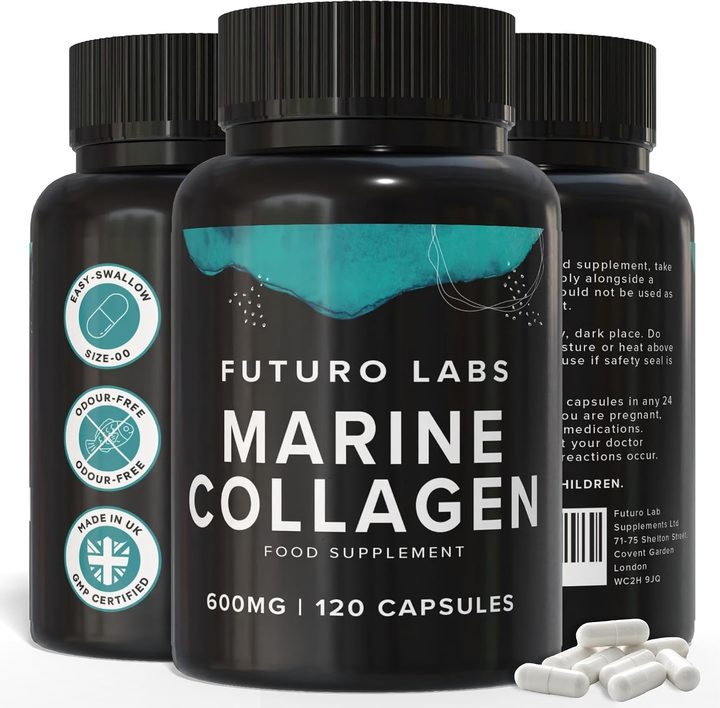
Our brand: the worked example on this page
Futuro Labs Marine Collagen
- 28p a day
- 120 capsules, 2 capsules daily
- Lab tested
- Made in the UK
One source, read by its grams and its label: Futuro Labs Marine Collagen on Amazon UK, 2 capsules, 1200mg hydrolysed type 1 marine collagen with 12mg vitamin C at 15% NRV plus zinc, 120 for £16.99, 28p a day, lab tested and UK made, marine and so not for a fish allergy, and stated as below the 2.5 to 15g research band. Full label breakdown. The combined-tub verdict is on the marine and bovine combined page; the use-case rounds on the marine or bovine page; the trials' own sourcing on the marine versus bovine studies page.
Stack or dose: the lifter's distinction, and what survives digestion
Should I take both marine and bovine collagen is a question that the gym already has the vocabulary to answer, because a lifter distinguishes between a stack and a dose without thinking about it. A stack is two or more agents with different mechanisms taken together for two or more effects: creatine saturates the muscle's phosphate store and caffeine acts on the nervous system, and taking both gets both, which is why the pairing makes sense. A dose is more of one agent, and more of one agent gets more of one effect only until the response flattens, after which the extra is excreted or stored and the money is gone. The question of taking both collagens is therefore the question of whether marine and bovine collagen are two agents or one, and the answer is settled in the gut. Both are hydrolysed collagen, type 1 collagen from fish skin and scales in the marine case and type 1 with some type 3 from cow hide in the bovine case, already broken by enzymes into short peptides at manufacture, and digestion finishes the job: the peptides are cut further by gut enzymes and absorbed as free amino acids, glycine, proline, hydroxyproline and the rest, and as a handful of small di- and tripeptides that resist digestion, prolyl-hydroxyproline and hydroxyprolyl-glycine among them, which appear in blood for several hours after a dose. Those peptides and amino acids are identical whichever animal they came from, because collagen's sequence is highly conserved across vertebrates and the hydroxyproline-containing fragments that survive are the same fragments; a laboratory can tell marine from bovine collagen before digestion by its amino acid ratios, and nothing in the bloodstream can tell afterwards. The type distinction the labels lean on does not survive either: type 1 and type 3 are descriptions of how whole collagen molecules assemble into fibrils in a tissue, and a di-peptide carries no type, so the bovine tub's type 3 does not travel to the skin as type 3 and the marine tub's type 1 does not arrive at a tendon as type 1; the cells of each tissue make their own collagen of their own type from the amino acid pool, and the pool is the same pool. Marine plus bovine is therefore one mechanism taken twice, which makes it a dose and not a stack, and the honest page says so before the shelf's language of complementary sources and complete type coverage can suggest otherwise.
The dose question answered by grams, what the second tub actually buys, and how to pick one
Once taking both is understood as a doubled dose, the question becomes whether a doubled dose does more, and the collagen trials have already answered that for the band in which readers take it. Across the oral collagen skin trials, 2.5g a day and 10g a day over eight to twelve weeks produced instrument changes in elasticity and hydration of similar size, with no trial showing more at the higher dose, a flat response inside the band; the joint trials sit at 5 to 10g with modest score changes and no dose comparison favouring more; and the tendon protocol uses 15g for its timing rationale rather than because 15g beats 10g, which has not been tested. No trial anywhere has compared one source with two sources at the same total grams, and the trial record itself is a mixture of porcine, bovine and fish peptides with no source winning any comparison, so a reader taking a 5g marine tub and a 5g bovine tub has 10g of collagen, which is what a single 10g tub would have given them, with nothing added by the second animal. What the second tub actually buys is listed honestly: no second mechanism, since there is one; no extra effect inside the band, since the response is flat; a second allergen, since fish and beef now both sit in the daily intake and a reader who develops a reaction has two suspects instead of one; a second set of label checks, grams, certificate, additives; and a second price, which for a habit that costs pence a day doubles to more pence a day for nothing the first tub was not already doing. The shelf's argument for both, that marine suits skin and bovine suits joints and so both cover everything, rests on the type labels that digestion erases, and the joint trials that exist used bovine and porcine peptides while the skin trials used all three sources, so the pairing of source to tissue was never in the data to begin with. How to pick one is then a short list. Diet first: a pescatarian or a reader avoiding beef takes marine, a reader avoiding fish takes bovine, and a reader who eats everything chooses on the next items. Allergy second: a fish allergy excludes marine outright and the UK label must declare it. Grams third: whichever source, the tub must reach the band the reader wants, 2.5g and above for the skin trials, 5 to 10g for the joints, 15g for the protocol, and a capsule habit at 1 to 2g sits below all of them and should say so. Then the certificate for heavy metals, which matter for a fish-derived product in particular, the vitamin C beside it to carry the one lawful sentence, and the pence per gram. The worked example is one source read that way: two capsules, 1200mg hydrolysed type 1 marine collagen with 12mg vitamin C at 15% of its reference value plus zinc, 120 for £16.99 at 28p a day, lab tested and UK made, marine and therefore not for a fish allergy, below the 2.5 to 15g research band and stated as such. Should I take both marine and bovine collagen: no, because they are one agent and not two, and a reader who wants more collagen buys more grams of one source rather than a second animal.
| The question | A stack would need | What marine plus bovine gives | Verdict |
|---|---|---|---|
| Mechanism | Two different mechanisms | One: hydrolysed collagen digested to the same peptides and amino acids | A dose, not a stack |
| What reaches the blood | Two different agents | Identical prolyl-hydroxyproline, hydroxyprolyl-glycine and free amino acids from either source | The blood cannot tell fish from cow |
| The type labels | Types that travel to tissues | Type 1 and type 3 describe fibrils in a tissue; peptides carry no type | Erased by digestion |
| Dose response | More effect from more grams | 2.5g and 10g produced skin changes of similar size; no trial of two sources versus one | Flat inside the band |
| Source to tissue | Marine for skin, bovine for joints | Skin trials used porcine, bovine and fish; joint trials bovine and porcine; no source won | Never in the data |
| What the second tub buys | A second effect | A second allergen, a second set of label checks, a second price | Nothing the first tub was not doing |
| How to pick one | Not applicable | Diet, then fish allergy, then grams for the band wanted, then certificate, vitamin C and pence per gram | One source |
| The worked exampleOurs | Not a stack | Two capsules, 1200mg marine collagen with 12mg vitamin C plus zinc, 28p a day; marine, not for a fish allergy | Below the band, stated |
What to check on the label
- Ask stack or dose: two mechanisms or one.
- Remember what survives digestion: the same peptides from either animal.
- Answer dose by grams: 2.5g and 10g performed alike in skin.
- Count the second tub's costs: a second allergen and a second price.
- Pick one source by diet and allergy: then read its grams and certificate.
Our brand
The worked example: Futuro Labs Marine Collagen
Futuro Labs Marine Collagen: 2 capsules daily, 1200mg hydrolysed type 1 marine collagen with 12mg vitamin C and 1.5mg zinc (15% NRV each), 120 capsules for £16.99, 60 days at 28p a day, lab-tested, UK GMP made. Slim veggie-shell capsules, odour free. Fish derived: pescatarian, not vegetarian or vegan.
- Collagen per serving
- 1200mg hydrolysed type 1 marine (fish)
- Co-factors
- vitamin C 12mg (15% NRV), zinc 1.5mg (15% NRV)
- Serving
- 2 capsules a day
- Bottle
- 120 capsules, 60 days
- Price
- £16.99 (28p a day)
- Capsule
- slim size 00, veggie shell, odour free
Questions people also ask
Does marine collagen work as well as bovine collagen?
As far as the trials can tell, yes: the skin trials used porcine, bovine and fish peptides and no source won a comparison, both are digested to the same small peptides and amino acids, and the decision between them is diet, fish allergy, grams, certificate and price rather than effect.
What are the benefits of hydrolysed bovine collagen peptides?
The same as any hydrolysed collagen's: instrument changes in skin elasticity and hydration at 2.5g and above over eight to twelve weeks, modest joint score changes at 5 to 10g over twelve to twenty-four weeks, and a synthesis marker rise when 15g with vitamin C precedes loading; bovine adds some type 3 on the label, which digestion erases, and no UK claim is authorised for any collagen.
Is it bad to mix marine and bovine collagen?
Not harmful, since both are food proteins, but pointless: they share one mechanism and are digested to identical peptides, so mixing is a doubled dose rather than a stack, with a flat response inside the trial band, two allergens instead of one and two prices; a reader who wants more collagen buys more grams of one source.
Which collagen type do I need for skin versus joints?
Neither type reaches a tissue: type 1 and type 3 describe how whole collagen assembles into fibrils, and hydrolysed collagen arrives as di- and tripeptides and amino acids that carry no type, with each tissue's cells making their own collagen of their own type from the pool; the skin and joint trials used mixed sources with no type winning.
Should pescatarians take marine collagen?
Marine suits a pescatarian diet because it is made from fish skin and scales rather than cow hide, and is excluded only by a fish allergy, which the UK label must declare; the grams, certificate for heavy metals, vitamin C and pence per gram are then read exactly as for any other source.
Sources
- The collagen peptide absorption literature: after oral hydrolysed collagen, small peptides such as prolyl-hydroxyproline and hydroxyprolyl-glycine appear in blood for several hours alongside free amino acids, and in cell and animal work these peptides act on fibroblasts and chondrocytes, the mechanism proposed for why hydrolysed collagen might do more than an equal quantity of its free amino acids, a hypothesis with human marker data behind it and no human outcome claim. PubMed record
- The collagen skin trial dose comparison: across the oral collagen skin trials, doses of 2.5 grams and 10 grams a day over eight to twelve weeks produced instrument changes of similar size, with no trial showing a proportional gain from the higher dose, consistent with fibroblast synthesis being rate-limited by the cell rather than by substrate supply once a modest intake is met. PubMed record
- The oral collagen trial sourcing record: the best-known skin trials used specific collagen peptides of porcine or bovine origin, with fish-derived peptides in a smaller number of trials and in mixed-source products, so the species behind most of the published skin data is mammalian, and no trial has compared marine against bovine head to head for skin. PubMed record
- The peptide molecular weight literature: hydrolysed collagens run low molecular weight by definition, with di- and tripeptide absorption documented across ordinary hydrolysates rather than unique to ultra-low fractions. PubMed record