Ghost Fitness/Collagen/How to increase cartilage in joints naturally?
How to increase cartilage in joints naturally?
The short answer
You cannot increase cartilage: it does not regrow, and no supplement has increased it on MRI. You can increase the water and glycosaminoglycan in what is left, by loading; the muscle around it; the room, by losing weight.
- What cannot go upadult articular cartilage: avascular, sparse cells, no regrowth; no supplement has increased it on imaging
- Can go up: cartilage qualityglycosaminoglycan and water content rise with moderate regular loading on contrast MRI; fall with immobilisation
- Can go up: musclequadriceps and glutes share the joint's load; built by progressive resistance training
- Can go up: roomeach kilogram of body weight is ~4kg across the knee per step; weight loss improves pain and function in proportion
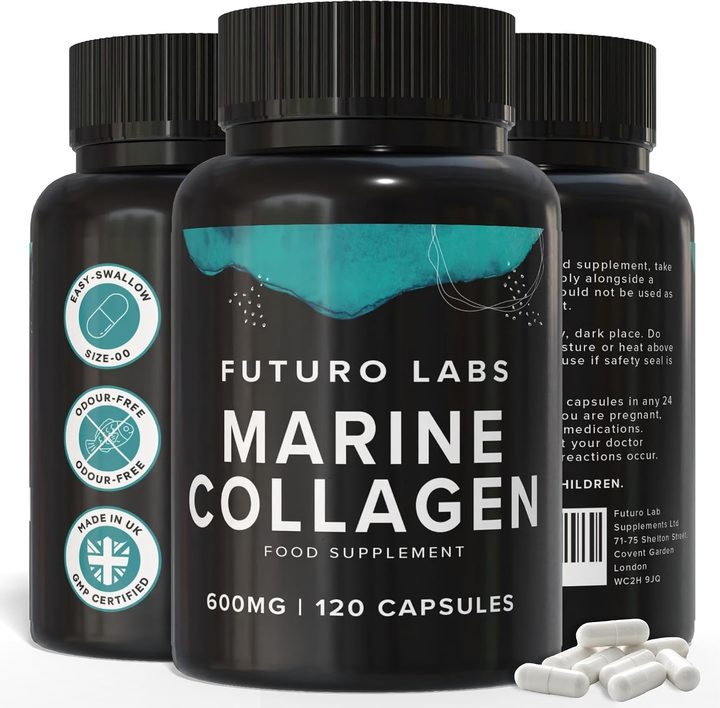
Our brand: the worked example on this page
Futuro Labs Marine Collagen
- 28p a day
- 120 capsules, 2 capsules daily
- Lab tested
- Made in the UK
For how the joint feels, not what it is made of: Futuro Labs Marine Collagen on Amazon UK, 2 capsules, 1200mg hydrolysed type 1 marine collagen with 12mg vitamin C at 15% NRV plus zinc, 120 for £16.99, 28p a day, lab tested and UK made, below the ~10g joint comfort research dose and taken for vitamin C's collagen formation sentence for cartilage. Full label breakdown. Which supplements rebuild cartilage is on the supplements rebuild cartilage page; the surgical field on the knee cartilage repair page; the five knee structures on the knee repair page.
What cannot go up: adult cartilage and the reason no natural method regrows it
How to increase cartilage in joints naturally is a question with a false premise and a useful answer hidden beneath it, and the honest page deals with the premise first, because a reader who spends a year trying to increase cartilage has spent a year on the one thing that cannot happen while three things that can were available. Adult articular cartilage, the smooth surface on the ends of the bones in a joint, does not regrow. It is avascular, so no blood brings repair cells or nutrients to a damaged area beyond what diffuses in from the joint fluid; it has no nerve supply, so damage is felt only when the bone beneath or the joint lining is involved; and it is populated by sparse chondrocytes locked in their matrix, which maintain the cartilage around them and cannot migrate to fill a defect or divide to replace lost tissue at any meaningful rate, the cartilage biology literature's reason that a cartilage injury in the twenties is still there in the forties and that osteoarthritis, once cartilage is lost, does not reverse. Nothing natural changes that, and nothing in a tub does either: the trials of glucosamine, chondroitin, collagen hydrolysate, vitamin D and fish oil in knee osteoarthritis that measured cartilage by MRI or joint space by X-ray found no meaningful slowing of loss and no regrowth against placebo, whatever they found on symptom scores, so no oral supplement has increased cartilage in a human joint and a reader who is told one does is being told something no imaging has ever shown. Cartilage repair, where it exists, is a surgical field, cell implants and grafts for focal defects in the right knees, and the fact that operating theatres exist for it is the plainest evidence that no natural method or capsule regrows the tissue. That is the premise dealt with: the amount of cartilage in an adult joint can be kept and cannot be increased, and the question becomes what can be increased that the joint depends on, which turns out to be three things and all of them natural.
What can go up: the cartilage's quality, the muscle around the joint, and the room the joint has
The first thing that can go up is the quality of the cartilage that remains, and it goes up with load. Cartilage is mechanosensitive: its chondrocytes respond to the cyclic compression of use by maintaining the matrix around them, and the matrix's glycosaminoglycans, the long charged molecules that hold water and give cartilage the pressurised stiffness that lets it bear load, increase in content when the joint is loaded regularly within tolerance and fall when it is not, the contrast-enhanced MRI studies showing higher glycosaminoglycan content in the knee cartilage of adults who took up moderate regular exercise and thinning, softer cartilage in the immobilised. So the natural way to improve cartilage is to use the joint, walking, cycling, swimming, resistance work through a pain-free range, progressively and often, which does not add cartilage but makes the cartilage that is there wetter, stiffer and better at its job, and which is why the clinical guidance for osteoarthritis puts exercise first and rest nowhere. The second thing that can go up is the muscle around the joint. The quadriceps, hamstrings and glutes at the knee, the glutes and deep hip muscles at the hip, the rotator cuff at the shoulder, share the load the joint takes and control how it lands, so a stronger, better-coordinated muscle envelope means less load reaching the cartilage at each step and less of the shearing that wears it, and muscle is built by progressive resistance training over months, the most natural and best-evidenced joint intervention a lifter owns. The third thing that can go up is the room the joint has, by which the honest page means the load taken off it: each kilogram of body weight adds around four kilograms of force across the knee with every step, so a five-kilogram loss takes twenty kilograms off each stride, and weight loss in overweight adults with knee osteoarthritis reduces pain and improves function in proportion to the weight lost, which is why weight management is first-line in the guidance beside exercise. Three natural increases, then, none of them cartilage and all of them the things cartilage needs: better matrix through loading, more muscle through training, less load through weight. Collagen's place at the end is honest and small: the joint comfort trials at around ten grams a day over months measured how a joint felt under load and found modest gains, not cartilage, and the register's cartilage sentence belongs to vitamin C, which contributes to normal collagen formation for the normal function of cartilage, the maintenance of what is there rather than the increase of it. The worked example is stated on those terms: two capsules, 1200mg hydrolysed type 1 marine collagen with 12mg vitamin C plus zinc, 120 for £16.99 at 28p a day, lab tested and UK made, below the joint research dose, taken for vitamin C's cartilage sentence, for how the joint feels and not for what it is made of. How to increase cartilage in joints naturally: you cannot, and you can increase everything around it that decides how long it lasts.
| The item | Can it increase | How | The evidence |
|---|---|---|---|
| Cartilage volume | No | Avascular, sparse cells, no regrowth; surgical implants for focal defects only | No supplement has increased cartilage on MRI in any trial |
| Cartilage quality | Yes | Loading within tolerance: walking, cycling, swimming, resistance work, progressively and often | Higher glycosaminoglycan content on contrast MRI with moderate regular exercise; thinning with immobilisation |
| Muscle around the joint | Yes | Progressive resistance training over months | Shares the load and controls the landing; first-line in osteoarthritis guidance |
| Room for the joint | Yes | Weight management | ~4kg across the knee per kilogram per step; pain and function improve in proportion to weight lost |
| Collagen | Comfort, not cartilage | ~10g a day over 12 to 24 weeks, as research | Questionnaire gains; no cartilage change; no claim |
| The register | Maintenance, not increase | Vitamin C's collagen formation for the normal function of cartilage | The label's lawful line |
| The worked exampleOurs | For how the joint feels | Two capsules, 1200mg marine collagen with 12mg vitamin C plus zinc, 28p a day | Below the research dose; the vitamin C line |
What to check on the label
- Stop trying to grow cartilage: it does not regrow.
- Load the joint within tolerance: wetter, stiffer cartilage.
- Build the muscle around it: it takes the load first.
- Take weight off the knee: four kilograms a step per kilogram.
- Read collagen as comfort research: not cartilage.
Our brand
The worked example: Futuro Labs Marine Collagen
Futuro Labs Marine Collagen: 2 capsules daily, 1200mg hydrolysed type 1 marine collagen with 12mg vitamin C and 1.5mg zinc (15% NRV each), 120 capsules for £16.99, 60 days at 28p a day, lab-tested, UK GMP made. Slim veggie-shell capsules, odour free. Fish derived: pescatarian, not vegetarian or vegan.
- Collagen per serving
- 1200mg hydrolysed type 1 marine (fish)
- Co-factors
- vitamin C 12mg (15% NRV), zinc 1.5mg (15% NRV)
- Serving
- 2 capsules a day
- Bottle
- 120 capsules, 60 days
- Price
- £16.99 (28p a day)
- Capsule
- slim size 00, veggie shell, odour free
Questions people also ask
Can cartilage grow back naturally?
No: adult articular cartilage is avascular, sparsely populated by chondrocytes that cannot migrate to a defect or divide to replace lost tissue at any meaningful rate, so lost cartilage is not replaced by any natural means, and cartilage repair where it exists is a surgical field of cell implants and grafts for focal defects.
What foods or supplements increase cartilage?
None on imaging: trials of glucosamine, chondroitin, collagen hydrolysate, vitamin D and fish oil in knee osteoarthritis that measured cartilage by MRI or joint space by X-ray found no regrowth and no meaningful slowing of loss against placebo, whatever their effect on symptom scores, so no oral supplement has increased cartilage in a human joint.
Does exercise improve cartilage?
It improves the cartilage that is there: contrast-enhanced MRI studies show higher glycosaminoglycan content, the molecules that hold water and let cartilage bear load, in adults who take up moderate regular exercise, and thinning in the immobilised, so loading within tolerance makes existing cartilage wetter and stiffer without adding to it.
Does losing weight help joint cartilage?
It takes the load off: each kilogram of body weight adds around four kilograms across the knee with every step, so a five-kilogram loss removes twenty kilograms a stride, and weight loss in overweight adults with knee osteoarthritis reduces pain and improves function in proportion, the reason weight management is first-line in the guidance.
Does collagen increase cartilage in joints?
No trial shows it: the collagen joint trials at around ten grams a day over twelve to twenty-four weeks measured how the joint felt under load by questionnaire and found modest gains, with no change in cartilage on any imaging, and the register's cartilage sentence belongs to vitamin C's role in maintaining normal collagen formation, not to increase.
Sources
- The cartilage biology literature: articular cartilage is avascular with sparse chondrocytes, giving it famously poor intrinsic repair capacity compared with vascularised tissues like bone and tendon. PubMed record
- The cartilage and exercise imaging literature: articular cartilage is mechanosensitive, and imaging studies using contrast-enhanced MRI report higher cartilage glycosaminoglycan content and better cartilage quality in adults who take up moderate regular exercise, with cartilage thinning in the immobilised, so loading within tolerance maintains and can improve the composition of existing cartilage without regrowing lost tissue. PubMed record
- The body weight and knee load literature: each kilogram of body weight adds roughly four kilograms of load across the knee per step, weight loss in overweight adults with knee osteoarthritis reduces pain and improves function in proportion to the weight lost, and weight management is a first-line recommendation in osteoarthritis guidance for that reason. PubMed record
- Clinical guidance on osteoarthritis management: exercise, weight management and education form the core first-line care, with supplements absent from the recommended pathway. PubMed record