Ghost Fitness/Collagen/Which supplements rebuild cartilage?
Which supplements rebuild cartilage?
The short answer
None. Run each through the imaging test: glucosamine and chondroitin showed no cartilage protection; collagen's trials never measured cartilage; type II, hyaluronic acid, curcumin and fish oil have symptom data only; vitamin D showed no structural benefit. Rebuilding is surgical.
- Glucosamine and chondroitinlarge independent trials failed on symptoms; imaging arms showed no cartilage or joint space protection
- Hydrolysed collagen and type IIcomfort by questionnaire at ~10g and ~40mg; cartilage never measured
- Hyaluronic acid, curcumin, fish oilsmall symptom trials; pain in short trials; no high-dose advantage over two years; no imaging benefit
- Vitamin Dtrials that scanned found no slowing of cartilage loss
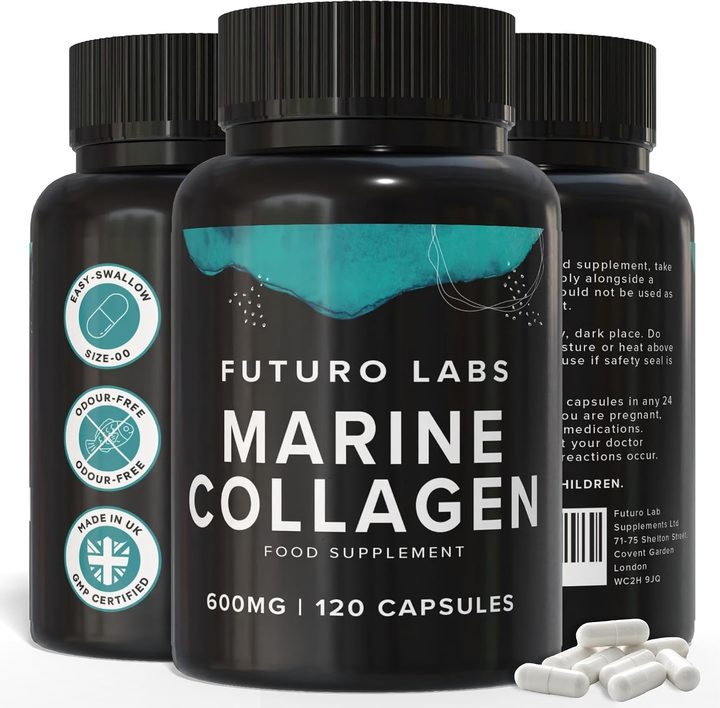
Our brand: the worked example on this page
Futuro Labs Marine Collagen
- 28p a day
- 120 capsules, 2 capsules daily
- Lab tested
- Made in the UK
Comfort research on its true terms, not rebuilding: Futuro Labs Marine Collagen on Amazon UK, 2 capsules, 1200mg hydrolysed type 1 marine collagen with 12mg vitamin C at 15% NRV plus zinc, 120 for £16.99, 28p a day, lab tested and UK made, below the ~10g comfort research dose and taken for vitamin C's collagen formation sentence for cartilage. Full label breakdown. What can go up when cartilage cannot is on the increase cartilage naturally page; the surgical field on the knee cartilage supplement page; the lifters' joint ranking on the supplements for lifters' joints page.
The imaging test, and the candidates that have been through it
Which supplements rebuild cartilage is a question whose verb decides how it must be answered, because rebuild is a structural word, it means more cartilage or thicker cartilage or cartilage that stopped thinning, and the only test of a structural claim is imaging, MRI cartilage volume and composition or joint space on X-ray, so the honest page puts every candidate on the shelf through the imaging test and reports what each showed, which is the same thing. Glucosamine and chondroitin first, the oldest names on the joint shelf and the ones most readers mean. Their story is the aisle's cautionary benchmark: after decades of small positive trials, the large independent randomised trials in knee osteoarthritis failed to support the category's symptom promises against placebo, and the trials that included imaging arms, measuring joint space narrowing on X-ray and cartilage on MRI over two to three years, found no meaningful protection of cartilage and no regrowth, so glucosamine and chondroitin have been through the test and did not pass it. Hydrolysed collagen second, this site's own aisle: the joint comfort trials at around ten grams a day for twelve to twenty-four weeks measured pain and function by questionnaire and found modest gains, and none of them measured cartilage by imaging, so collagen has not been through the test at all, there is nothing to pass or fail, and any tub that says collagen rebuilds cartilage is describing a scan that was never taken. Undenatured type II third, at around forty milligrams: small symptom trials in osteoarthritis and exercising adults, an oral tolerance mechanism, no imaging outcome. Oral hyaluronic acid fourth: small symptom trials, a molecule that is digested rather than delivered to the joint, no imaging. Curcumin fifth: modest reductions in knee osteoarthritis pain against placebo in short trials with heterogeneous formulations, a pain result and no structural claim or measurement. Fish oil sixth: a two-year randomised trial comparing a high dose with a low dose in knee osteoarthritis found no advantage for the high dose on pain or function and no structural benefit on imaging, the omega-3 joint evidence lying in rheumatoid arthritis instead. Vitamin D seventh, because it is often sold for joints: the trials that gave vitamin D to people with knee osteoarthritis and scanned them found no slowing of cartilage loss and no symptom benefit in those who were not deficient, so it too has been through the test and did not pass. Seven candidates, and the imaging test's verdict is the same for each: no oral supplement has rebuilt or measurably protected articular cartilage in a human joint, whatever it did to a symptom score.
Why the test comes out that way, and the shelf ranked by the evidence it does have
The test comes out that way for a reason the cartilage biology makes plain: adult articular cartilage is avascular and sparsely populated by chondrocytes that cannot migrate to a defect or divide to replace lost tissue, so there is no cell population for a swallowed molecule to stimulate into rebuilding and no blood supply to carry it there in quantity, and the tissue's capacity for repair is so limited that cartilage restoration, where it exists at all, is a surgical field of cell implants and grafts for focal defects in selected knees, which is the plainest evidence there is that nothing swallowed does the job, since no operating theatre would exist for a problem a capsule solved. What the shelf does have is symptom evidence, and a reader who wanted comfort rather than rebuilding can rank it honestly. Hydrolysed collagen's comfort trials, modest and mostly industry-funded, at ten grams over months, and curcumin's pain trials, modest and short, sit at the top of a low hill; undenatured type II and oral hyaluronic acid sit below them on smaller data; glucosamine and chondroitin sit at the bottom as the benchmark for what a category looks like after the large trials arrive; fish oil and vitamin D belong to other conditions. Above the whole hill, and not on the shelf, sit the interventions the osteoarthritis guidance puts first, exercise, which improves the composition of the cartilage that remains on contrast MRI, weight management, which takes around four kilograms off the knee per kilogram lost with each step, and a physiotherapist for the muscle around the joint, with supplements absent from the recommended pathway. The register agrees with the imaging: no supplement holds an authorised claim for cartilage, and the only cartilage sentence on any label is vitamin C's, that it contributes to normal collagen formation for the normal function of cartilage, a maintenance sentence describing what the body does with what it has. The worked example is comfort research on its true terms and not rebuilding: two capsules, 1200mg hydrolysed type 1 marine collagen with 12mg vitamin C plus zinc, 120 for £16.99 at 28p a day, lab tested and UK made, below the ten-gram comfort research dose, taken for vitamin C's cartilage sentence, with no scan promised because none has ever changed. Which supplements rebuild cartilage: none has on imaging, seven have been asked and the same answer came back each time, and the reader who wants a joint to last works on everything around the cartilage instead.
| The candidate | Imaging test | Symptom evidence | The verdict |
|---|---|---|---|
| Glucosamine and chondroitin | No cartilage or joint space protection over two to three years | Large independent trials failed | The cautionary benchmark |
| Hydrolysed collagen | Never measured | Modest comfort gains at ~10g over 12 to 24 weeks; industry-funded | Comfort research; no structural evidence |
| Undenatured type II | None | Small symptom trials at ~40mg | Comfort research, smaller |
| Oral hyaluronic acid | None | Small symptom trials | Digested; no delivery evidence |
| Curcumin | None | Modest knee pain reductions in short trials | Pain research; no structural claim |
| Fish oil | No structural benefit | No high-dose advantage over two years | Belongs to rheumatoid arthritis |
| Vitamin D | No slowing of cartilage loss | No benefit in the non-deficient | Belongs to bone and deficiency |
| Not on the shelf | Cartilage composition improves with exercise on contrast MRI | Exercise, weight, a physiotherapist | First-line in the guidance |
| The worked exampleOurs | Nothing promised | Two capsules, 1200mg marine collagen with 12mg vitamin C, 28p a day | Vitamin C's cartilage sentence; comfort research below the dose |
What to check on the label
- Ask for the scan: rebuild is a structural word.
- Read glucosamine's record: the benchmark for a failed category.
- Read collagen's as comfort: cartilage never measured.
- Rank by symptom evidence if comfort is the aim: modest and hedged.
- Put exercise, weight and a physio above the shelf: the guidance does.
Our brand
The worked example: Futuro Labs Marine Collagen
Futuro Labs Marine Collagen: 2 capsules daily, 1200mg hydrolysed type 1 marine collagen with 12mg vitamin C and 1.5mg zinc (15% NRV each), 120 capsules for £16.99, 60 days at 28p a day, lab-tested, UK GMP made. Slim veggie-shell capsules, odour free. Fish derived: pescatarian, not vegetarian or vegan.
- Collagen per serving
- 1200mg hydrolysed type 1 marine (fish)
- Co-factors
- vitamin C 12mg (15% NRV), zinc 1.5mg (15% NRV)
- Serving
- 2 capsules a day
- Bottle
- 120 capsules, 60 days
- Price
- £16.99 (28p a day)
- Capsule
- slim size 00, veggie shell, odour free
Questions people also ask
Does glucosamine rebuild cartilage?
No: the large independent randomised trials in knee osteoarthritis failed to support glucosamine and chondroitin's symptom promises, and the trials with imaging arms measuring joint space on X-ray and cartilage on MRI over two to three years found no meaningful protection and no regrowth, making the category the aisle's cautionary benchmark.
Does collagen rebuild cartilage?
No trial has looked: the collagen joint trials at around ten grams a day measured pain and function by questionnaire, found modest gains, and never measured cartilage by imaging, so collagen has not been through the structural test at all and a tub claiming it rebuilds cartilage describes a scan that was never taken.
Is there any supplement proven to regrow cartilage?
None on imaging: glucosamine, chondroitin, vitamin D and fish oil have been scanned and showed no protection or regrowth, collagen, type II, hyaluronic acid and curcumin have symptom data only, and cartilage restoration where it exists is a surgical field, the operating theatre being the proof that nothing swallowed does it.
What is the best supplement for cartilage then?
For comfort rather than rebuilding, hydrolysed collagen's trials and curcumin's pain trials sit at the top of a low, hedged hill, but the interventions with real evidence are not on the shelf: exercise improves the composition of remaining cartilage on contrast MRI, weight loss takes around four kilograms off the knee per kilogram per step, and a physiotherapist builds the muscle that shares the load.
Why can nothing rebuild cartilage?
Because adult articular cartilage is avascular and sparsely populated by chondrocytes that cannot migrate to a defect or divide to replace lost tissue, so there is no cell population for a swallowed molecule to stimulate and no blood supply to carry it there, and the tissue's repair capacity is so limited that restoring it takes cell implants or grafts in a theatre.
Sources
- The supplement and cartilage imaging literature: trials of glucosamine, chondroitin, collagen hydrolysate, vitamin D and fish oil in knee osteoarthritis that measured cartilage by MRI or joint space by X-ray report no meaningful slowing of cartilage loss and no regrowth against placebo, so no oral supplement has demonstrated rebuilding of articular cartilage, whatever its effect on symptom scores. PubMed record
- The glucosamine and chondroitin trial record: large independent randomised trials in osteoarthritis returned results that failed to support the category's promises, a cautionary benchmark for the whole joint shelf. PubMed record
- The cartilage biology literature: articular cartilage is avascular with sparse chondrocytes, giving it famously poor intrinsic repair capacity compared with vascularised tissues like bone and tendon. PubMed record
- The fish oil and osteoarthritis trial literature: a two-year randomised trial comparing high-dose with low-dose fish oil in knee osteoarthritis found no advantage for the high dose on pain or function, and reviews find the osteoarthritis file weak against the inflammatory arthritis file. PubMed record