Ghost Fitness/Collagen/How to strengthen bones and joints naturally?
How to strengthen bones and joints naturally?
The short answer
Naturally means load first: progressive resistance training is what raises bone density and builds the muscle that stabilises joints. Then the plate: protein, calcium, vitamin K and magnesium from food. Then one pill, vitamin D in winter. Collagen last.
- Lever one, loadprogressive resistance training raises bone density and builds the muscle that stabilises joints
- Lever two, the plateprotein ~1.6g per kilo, calcium, vitamin K, magnesium: four bone sentences, all from food
- Lever three, one pillvitamin D 10 micrograms a day through autumn and winter: bones, muscle function, calcium absorption
- Lever four, collagen~10g over months for joint comfort, 5g for a year in one bone trial: research, no claim
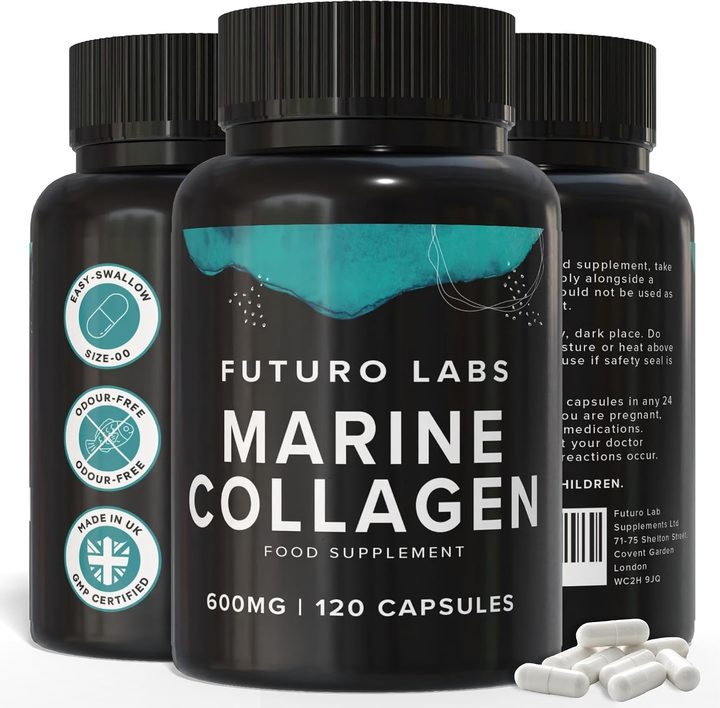
Our brand: the worked example on this page
Futuro Labs Marine Collagen
- 28p a day
- 120 capsules, 2 capsules daily
- Lab tested
- Made in the UK
Lever four on its true terms: Futuro Labs Marine Collagen on Amazon UK, 2 capsules, 1200mg hydrolysed type 1 marine collagen with 12mg vitamin C at 15% NRV plus zinc, 120 for £16.99, 28p a day, lab tested and UK made, below the research doses and taken for vitamin C's collagen formation sentence, which names cartilage and bones. Full label breakdown. What joint strength is made of is on the joints stronger page; the register's six bone claims on the best supplements for bones and joints page.
Lever one, load, and lever two, the plate
How to strengthen bones and joints naturally is a question with a ranking hidden in it, because the levers are not equal and the natural one the shelf never sells is the largest, so the honest page ranks them by size and puts the barbell before the plate and the plate before the pill. Lever one is load. Bone is living tissue that adapts to the forces placed on it, laying down mineral where it is stressed and resorbing it where it is not, which is why astronauts and the bedbound lose bone and why the loaded arm of a tennis player has denser bone than the other, and the trials of progressive resistance training show bone mineral density rising at the spine and hip in adults who lift over months, the connective tissue and bone loading literature's core finding, so squats, deadlifts, presses and loaded carries, built up gradually from a weight the body can already manage, are the strongest natural lever for bone anyone owns, with running and jumping adding impact loading to the lower limbs. The same lever is the whole answer for joints, since a joint cannot be strengthened as a substance but can be made stronger in the two ways that matter, stability from the muscle and control around it and load capacity from conditioning, both of which are adaptations to progressive training and neither of which comes in a tub, the point the joints stronger page makes at length. Lever two is the plate, and the register writes the shopping list, because four nutrients hold authorised bone sentences and all four are eaten rather than bought. Protein contributes to the maintenance of normal bones, and a lifter at around 1.6 grams per kilo from complete sources has that covered, bone being a third protein by dry weight. Calcium contributes to normal bones and teeth, from dairy, fortified plant milks, tinned fish with the bones in, tofu set with calcium and greens. Vitamin K contributes to the maintenance of normal bones, from leafy greens, kale, spinach and broccoli, with the warfarin caution that a reader on that medicine keeps intake steady and asks the clinic before any supplement. Magnesium contributes to the maintenance of normal bones, from nuts, seeds, beans, whole grains and dark chocolate, and associates with higher bone density in the cohort studies. Four sentences, four food groups, and a reader who eats a varied diet with enough protein has pulled lever two without opening a tub.
Lever three, one pill, lever four, collagen, and the levers totalled
Lever three is the one pill the natural answer honestly includes, because the UK cannot supply it naturally for half the year: vitamin D. Skin makes vitamin D from strong sunlight, and from October to March the sun in the UK is too low for that, so the national guidance is that adults consider ten micrograms a day through autumn and winter, and all year for those who are indoors or covered, the scientific advisory committee's reference intake, and vitamin D holds sentences for the maintenance of normal bones, normal muscle function and normal absorption of calcium, three of the things this page is about. It is the one place where natural and supplemented meet, since a winter supplement replaces what summer skin would have made, and the honest ranking puts it third because it maintains rather than builds, keeps the calcium absorbed and the muscle working, and adds nothing to a reader who is already replete in summer. Lever four is collagen, and it is last because it is research rather than a sentence: around ten grams of hydrolysed collagen a day for twelve to twenty-four weeks reduced activity-related joint discomfort in small, mostly industry-funded trials, modest effects and no claim; five grams a day of a specific peptide for a year in one trial of postmenopausal women with low bone density moved bone mineral density slightly at spine and hip, one manufacturer-linked trial with no claim; and the tendon pre-loading protocol, fifteen grams with vitamin C an hour before loading, is a marker study. None of this is a bone or joint sentence, and the register's collagen-adjacent lines belong to vitamin C, which contributes to normal collagen formation for the normal function of bones and cartilage, and manganese, for the normal formation of connective tissue, so a collagen capsule that includes vitamin C carries vitamin C's sentence and collagen carries none. The levers totalled: load, the largest and the one nobody sells; the plate, four bone sentences met from food; one pill, vitamin D through the winter; collagen, research at ten grams over months for a reader whose joints complain after volume. The worked example on its true terms sits on lever four: two capsules, 1200mg hydrolysed type 1 marine collagen with 12mg vitamin C plus zinc, 120 for £16.99 at 28p a day, lab tested and UK made, below the research doses and taken for vitamin C's collagen formation sentence, a habit for the reader who has already pulled the three levers above it. How to strengthen bones and joints naturally: lift, eat, take vitamin D in winter, and treat everything in a tub as fourth.
| The lever | What it does | The evidence or sentence | How to pull it |
|---|---|---|---|
| One: load | Raises bone density; builds the muscle and control that stabilise joints | Progressive resistance training trials; the bone loading literature | Squats, deadlifts, presses, carries, built up over months; running and jumping for the lower limbs |
| Two: the plate | Supplies the four nutrients with bone sentences | Protein, calcium, vitamin K and magnesium: maintenance of normal bones | ~1.6g protein per kilo; dairy or fortified milks; leafy greens; nuts, seeds, beans |
| Three: one pill | Replaces what winter skin cannot make | Vitamin D: normal bones, muscle function, calcium absorption; 10 micrograms in autumn and winter | A daily 10 microgram tablet from October to March |
| Four: collagen | Joint comfort and one bone trial, as research | ~10g over months in small trials; 5g for a year in one postmenopausal trial; no claim | Powder at trial doses to test it; the capsule for the vitamin C line |
| The register's joint lines | The only cartilage and connective tissue sentences | Vitamin C's collagen formation for cartilage and bones; manganese's connective tissue | Met from diet; carried by the capsule's vitamin C |
| The worked exampleOurs | Two capsules, 1200mg marine collagen with 12mg vitamin C plus zinc, 28p a day | Below the research doses; the vitamin C sentence | After the three levers above it |
What to check on the label
- Lift first: load is the lever nobody sells.
- Eat the four bone sentences: protein, calcium, vitamin K, magnesium.
- Take vitamin D through winter: 10 micrograms, October to March.
- Treat collagen as fourth: research at 10g over months.
- Read joint claims as vitamin C's: cartilage is its sentence.
Our brand
The worked example: Futuro Labs Marine Collagen
Futuro Labs Marine Collagen: 2 capsules daily, 1200mg hydrolysed type 1 marine collagen with 12mg vitamin C and 1.5mg zinc (15% NRV each), 120 capsules for £16.99, 60 days at 28p a day, lab-tested, UK GMP made. Slim veggie-shell capsules, odour free. Fish derived: pescatarian, not vegetarian or vegan.
- Collagen per serving
- 1200mg hydrolysed type 1 marine (fish)
- Co-factors
- vitamin C 12mg (15% NRV), zinc 1.5mg (15% NRV)
- Serving
- 2 capsules a day
- Bottle
- 120 capsules, 60 days
- Price
- £16.99 (28p a day)
- Capsule
- slim size 00, veggie shell, odour free
Questions people also ask
What is the best natural way to strengthen bones?
Progressive resistance training: bone adapts to the forces placed on it, and trials of lifting over months show bone mineral density rising at the spine and hip, with running and jumping adding impact loading to the lower limbs, a lever larger than anything eaten or bought.
Which foods strengthen bones and joints?
The foods carrying the register's four bone sentences: complete protein at around 1.6 grams per kilo, calcium from dairy, fortified plant milks, tinned fish with bones and greens, vitamin K from leafy greens, and magnesium from nuts, seeds, beans and whole grains, with vitamin C from fruit and vegetables holding the cartilage sentence.
Do I need any supplement for bones if I eat well and lift?
One, for half the year: vitamin D at ten micrograms a day through autumn and winter, the UK guidance, since the sun is too low from October to March for skin to make it, and it holds sentences for normal bones, muscle function and calcium absorption.
Can collagen strengthen joints naturally?
As research rather than a sentence: around ten grams a day over twelve to twenty-four weeks reduced joint discomfort in small industry-funded trials, and joint strength itself, stability and load capacity, is built by training the muscle and control around the joint, which no supplement does.
Does collagen help bone density?
One trial says a little: five grams a day of a specific collagen peptide for twelve months in postmenopausal women with reduced bone density reported small gains at spine and hip, a single manufacturer-linked trial with no authorised claim, while loading, protein, calcium and vitamin D hold the bone evidence and the bone sentences.
Sources
- The connective tissue and bone loading literature: tendons, ligaments and bone adapt to progressive loading over months, tendons stiffening and bone mineral density rising with resistance training, with the adaptation driven by the load itself and protein, calcium and vitamin D as the nutritional supports, and no evidence that omega-3 alters tendon, ligament or bone adaptation to training. PubMed record
- The GB claims register, protein entries: protein contributes to a growth in muscle mass and to the maintenance of muscle mass and of normal bones, authorised for foods that are at least a source of protein. https://www.gov.uk/government/publications/great-britain-nutrition-and-health-claims-nhc-register
- Scientific Advisory Committee on Nutrition. Vitamin D and Health. 2016 (reference nutrient intake 10 micrograms a day for the UK population). https://www.gov.uk/government/publications/sacn-vitamin-d-and-health-report
- The collagen peptide trial literature: randomised controlled studies of hydrolysed collagen supplementation across skin, joint and connective-tissue outcomes, typically at 2.5g to 15g daily, with small effects and frequent industry funding. PubMed record