Ghost Fitness/Collagen/Collagen vs whey protein isolate: which is better?
Collagen vs whey protein isolate: which is better?
The short answer
Isolate is whey's premium rung, more protein, less lactose and fat, so every gap against collagen widens. And the lactose escape is the twist: readers avoiding whey for dairy reasons often do better on isolate than on collagen.
- What isolate iswhey filtered further: roughly 90% protein, minimal lactose and fat
- What that does herewidens every whey-collagen gap: purity of completeness
- The twistlactose-avoiders often suit isolate better than collagen
- The unchanged verdictprotein jobs to the isolate; collagen keeps its own lanes
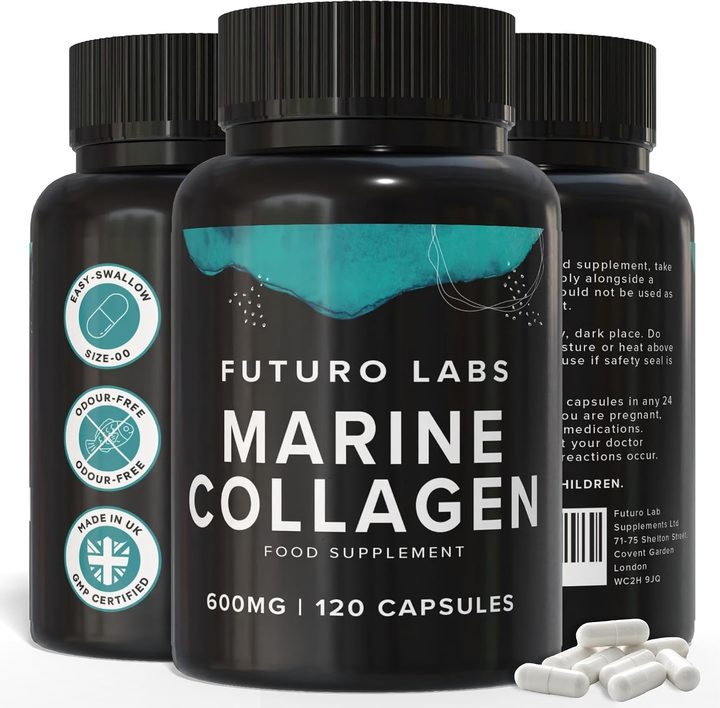
Our brand: the worked example on this page
Futuro Labs Marine Collagen
- 28p a day
- 120 capsules, 2 capsules daily
- Lab tested
- Made in the UK
Collagen's lanes, unchanged by whey's ladder: Futuro Labs Marine Collagen on Amazon UK, 1200mg hydrolysed type 1 with vitamin C and zinc at 15% NRV, £16.99 for 60 days at 28p. Full label breakdown. The base comparison is on the whey page; the family tree on the protein powder page.
The ladder explained, and what the premium rung does to an already settled contest
Whey is not one product but a ladder, and this query names its premium rung, so climb it properly. Rung one, concentrate: standard whey, filtered from milk to roughly 70-to-80% protein with modest lactose and fat riding along, the cheapest complete scoop in the aisle and entirely sufficient for most protein jobs. Rung two, isolate: the same whey filtered further, membrane and exchange steps stripping most of the remaining lactose and fat to leave roughly 90% protein by weight, a purer, usually pricier scoop whose honest advantages are dose-density, digestive comfort for the lactose-sensitive, and leaner macros for tight calorie budgets. Rung three, hydrolysed whey: pre-cut for speed, a niche premium the training pages rarely find necessary. Set collagen against rung two and the already settled contest simply widens at every line the base page scored: the leucine gap grows because isolate packs more protein per gram of scoop, the completeness verdict is unchanged but purer, the quality scales still read top against near zero, the claims column still reads protein's muscle and bone sentences against silence, and the price comparison actually tightens in an unexpected direction, isolate's premium over concentrate being modest while collagen's per-effective-gram cost for protein purposes was always infinite, its grams sitting outside the target entirely, so upgrading the whey rung strengthens the whey case without costing it the value argument.
The lactose escape route named, the edge cases sorted, and the verdict restated up the ladder
The twist that earns this page its keep is the escape route, because a meaningful share of collagen's protein-adjacent sales are refugees: readers who tried whey, found it sat badly, blamed dairy, and reached for collagen as the stomach-friendly protein, a swap that solves the comfort problem by abandoning the protein job. For most of them the culprit was lactose, concentrate's remaining sugar, and the fix sits one rung up the same ladder, isolate's filtration having removed most of it, which is why lactose-sensitive lifters routinely tolerate a good isolate that concentrate upset, keeping completeness, leucine and the claims while losing the discomfort, a strictly better trade than the collagen swap for every feeding purpose. The edge cases sort honestly around that route: true milk-protein allergy, as opposed to lactose intolerance, excludes the whole whey ladder including isolate, and routes to the complete non-dairy branch, soy, pea-rice blends, egg white, never to collagen for protein jobs; vegans exit dairy entirely to the same plant branch and take no collagen at all; and budget readers should hear the quiet truth that concentrate remains the value rung when tolerated, isolate being an upgrade of comfort and density, not of kind. The verdict, restated at altitude: every protein job, targets, training, deficits, goes to the whey ladder or its complete peers, the rung chosen by tolerance and budget, and collagen's two lanes, the 28p cofactor habit and the 15g pre-loading protocol, remain exactly where every page leaves them, unpromoted and undemoted by anything happening on someone else's ladder.
| The item | The finding | The route |
|---|---|---|
| Concentrate | 70-80% protein, some lactose and fat | The value rung: sufficient for most jobs |
| Isolate | ~90% protein, minimal lactose and fat | The premium rung: density, comfort, lean macros |
| Against collagen | Every gap widens: leucine, quality, claims | Protein jobs to the isolate, without exception |
| The lactose refugee | Discomfort on concentrate, swapped to collagen | One rung up instead: isolate keeps the job |
| True dairy allergy or vegan | The whole ladder excluded | Complete non-dairy branch: soy, pea-rice, egg white |
| Collagen's lanes | Unchanged by the ladder | The 28p habit and the 15g protocol, as ever |
The verdict, from the premium rung
Collagen vs whey protein isolate: the premium rung widens a contest the base page had already settled, more protein per scoop, most lactose gone, completeness purified, the quality scales and claims columns unmoved at top-versus-silence, and the page's real gift is the escape route, lactose-troubled readers who fled to collagen finding their actual answer one rung up the ladder they left, with true dairy allergy and vegan readers routed to the complete plant branch and never to collagen for protein work. Collagen's honest lanes survive at their usual address, and the worked example holds them without glancing at the ladder: Futuro Labs Marine Collagen, 1200mg hydrolysed type 1 with 12mg vitamin C and 1.5mg zinc at 15% NRV, lab tested, UK made, £16.99 for 60 days at 28p a day, a cofactor habit beside whatever complete protein, of whatever rung, feeds the actual targets.
What to check on the label
- Isolate is the premium rung: ~90% protein, minimal lactose and fat.
- Every gap widens against collagen: leucine, quality, claims.
- The lactose escape goes up, not sideways: isolate, not collagen.
- True allergy exits the ladder: soy, pea-rice, egg white for protein jobs.
- Collagen's lanes are unmoved: the 28p habit and the 15g protocol.
Our brand
The worked example: Futuro Labs Marine Collagen
Futuro Labs Marine Collagen: 2 capsules daily, 1200mg hydrolysed type 1 marine collagen with 12mg vitamin C and 1.5mg zinc (15% NRV each), 120 capsules for £16.99, 60 days at 28p a day, lab-tested, UK GMP made. Slim veggie-shell capsules, odour free. Fish derived: pescatarian, not vegetarian or vegan.
- Collagen per serving
- 1200mg hydrolysed type 1 marine (fish)
- Co-factors
- vitamin C 12mg (15% NRV), zinc 1.5mg (15% NRV)
- Serving
- 2 capsules a day
- Bottle
- 120 capsules, 60 days
- Price
- £16.99 (28p a day)
- Capsule
- slim size 00, veggie shell, odour free
Questions people also ask
Is whey isolate better than collagen?
For every protein job, yes, and by more than concentrate: roughly 90% complete protein with minimal lactose against an incomplete profile with no claims, the base contest widened at each line.
I stopped whey because it upset my stomach. Should I take collagen?
Usually the culprit was lactose, and the fix is one rung up: isolate's filtration removes most of it, keeping completeness and leucine collagen cannot supply.
What if I have a genuine milk allergy?
That excludes the whole whey ladder, isolate included: protein jobs route to the complete non-dairy branch, soy, pea-rice blends or egg white, never to collagen.
Is isolate worth the premium over concentrate?
Only for a reason: lactose sensitivity, tight macros or dose density. Tolerated concentrate remains the value rung, and neither rung changes the collagen verdict.
Where does collagen fit beside an isolate user?
The same two lanes as beside anyone: the 28p daily habit carrying vitamin C and zinc at 15% NRV, or the 15g pre-loading protocol beside training, never counted toward targets.
Sources
- The whey processing literature: filtration steps take whey from concentrate to isolate, raising protein share while stripping most lactose and fat. PubMed record
- Comparative protein research: the leucine content of a protein drives its muscle protein synthesis response, with whey outperforming collagen in direct comparisons. PubMed record
- The protein quality literature: scoring systems such as PDCAAS and DIAAS rate proteins by essential amino acid completeness and digestibility, with collagen scoring at or near zero for lacking tryptophan. PubMed record
- Review literature on protein intake and muscle mass in older adults: higher protein intakes support the maintenance of muscle in ageing, the evidence base behind the register's protein and muscle-mass claims mattering more with age. PubMed record