Ghost Fitness/Collagen/Does collagen expire?
Does collagen expire?
The short answer
Dry collagen carries a best-before, not a safety cliff: the peptides are stable and the real clock runs on the vitamins, whose potency fades first. Store cool, dry and sealed, keep wet spoons out.
- The date's legal meaningbest-before: a quality promise, not a use-by safety line
- The stable halfdry peptides: chemically robust for years when kept dry
- The real clockvitamin C potency: heat, moisture, light and time degrade it
- The enemymoisture: the wet scoop, the steamy kitchen, the unsealed lid
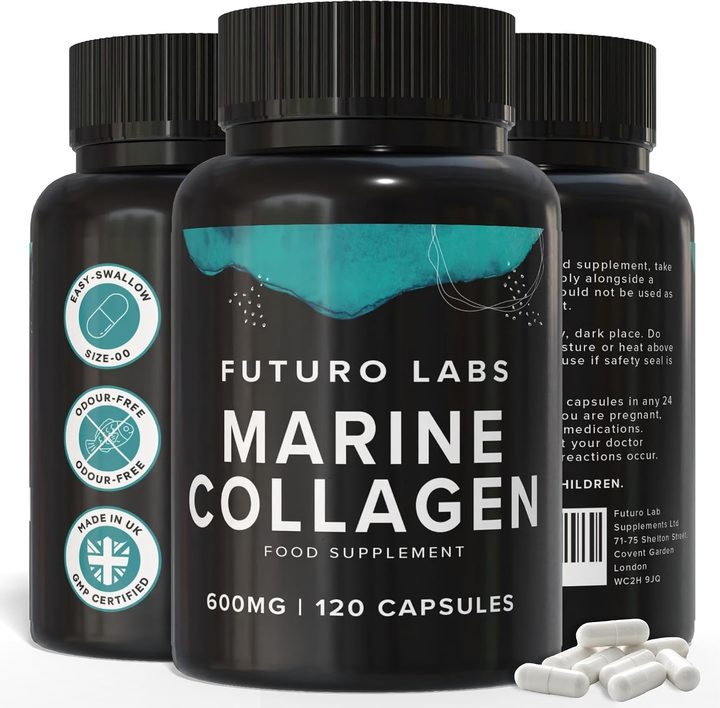
Our brand: the worked example on this page
Futuro Labs Marine Collagen
- 28p a day
- 120 capsules, 2 capsules daily
- Lab tested
- Made in the UK
Two clocks, both printed: Futuro Labs Marine Collagen on Amazon UK, 1200mg hydrolysed type 1 with vitamin C and zinc at 15% NRV, batch-numbered and best-before dated, £16.99 for 60 days at 28p. Full label breakdown. The label geography is on the label walk page; the safety register on the safest-form page.
The two clocks explained: why the peptides barely age and the vitamins genuinely do
Every collagen tub runs two clocks at different speeds, and reading the date correctly means knowing which one it tracks. Clock one, the peptides': slow to the point of boring, because dry hydrolysed collagen is a chemically robust material, a stable powder with almost no water activity for microbes to exploit and no fragile structures left to lose, hydrolysis having already done the breaking, so a sealed, dry tub's protein keeps essentially indefinitely at kitchen temperatures, which is why the date printed on supplements is legally a best-before, a manufacturer's quality promise, and not the use-by safety line fresh foods carry, the distinction the whole page turns on: past a best-before, the product is not presumed unsafe, merely no longer guaranteed at its best. Clock two, the cofactors', and the one the date is really tracking on a formulated product: vitamin C is the panel's perishable, ascorbic acid degrading measurably with heat, moisture, light and plain time, the stability literature's standing finding, so the 15% NRV a fresh tub delivers erodes across months of poor storage and beyond the printed date, zinc being more robust but the C being the sentence-carrying ingredient whose potency the best-before genuinely warrants, meaning an old tub's honest status is peptides fine, vitamin claims fading, the label's lawful sentences quietly expiring before its protein ever does.
The storage protocol, the after-date decision tree, and the formats' different speeds
The protocol that slows both clocks is four habits long and mostly one enemy deep, the enemy being moisture: keep the tub sealed between uses, the lid actually closed rather than resting; keep it cool and dark, a cupboard rather than a windowsill or the shelf above the kettle, heat and light being the C's other accelerants; keep the scoop dry absolutely, one wet spoon introducing the water activity that clumps powder, invites microbial life the dry state forbade, and turns a stable product into a perishable one, the single commonest way collagen actually goes bad; and buy at the pace you consume, the 60-day worked example sized so a tub never sits open for seasons. The after-date decision tree, for the tub found at the back of the cupboard: check the seal history first, an always-sealed dry tub past its best-before is almost certainly fine to use with the vitamin caveat priced in; run the senses, clumping, dampness, off or rancid smells, any colour change, each being a moisture or oxidation flag that retires the tub regardless of date; and apply the fading-C rule, the further past the date, the less the cofactor sentences should be trusted, an old tub being honest peptides and unreliable vitamins. The formats run the clocks at different speeds worth a closing line each: plain dry powder is the slowest ager of all, capsules add a shell that itself prefers dry storage, gummies are confectionery with confectionery's shorter, texture-led life, and liquids and shots are the category's genuine perishables, preservative systems and all, their dates deserving the most literal reading in the aisle.
| The item | The finding | The action |
|---|---|---|
| The printed date | Best-before: quality, not a safety cliff | Read it as a promise about the vitamins |
| The peptides | Stable for years, kept dry and sealed | The slow clock: rarely the problem |
| The vitamin C | Degrades with heat, moisture, light, time | The real clock: sentences fade before protein does |
| The enemy | Moisture: wet scoops, steamy shelves | Dry spoon always; cupboard, not kettle shelf |
| The after-date tree | Seal history, senses, fading-C rule | Clumps, damp or off smells retire any tub |
| The formats | Powder slowest; gummies and liquids fastest | Read liquid dates literally |
The verdict, told by both clocks
Does collagen expire: it carries a best-before rather than a safety cliff, the dry peptides running a clock so slow it rarely matters while the vitamin C runs the real one, potency fading with heat, moisture, light and time until the label's lawful sentences quietly outdate its stable protein, so the practical rules are the four-habit protocol, sealed, cool, dark, dry-spooned, the after-date tree of seal history, senses and the fading-C rule, and literal dates on the aisle's true perishables, the liquids and gummies. The worked example runs both clocks visibly: Futuro Labs Marine Collagen, 1200mg hydrolysed type 1 with 12mg vitamin C and 1.5mg zinc at 15% NRV, batch-numbered and best-before dated, sized at 60 days so a tub never grows old open, UK made, £16.99 at 28p a day, a product designed to be finished before either clock gets interesting.
What to check on the label
- Best-before, not use-by: a quality promise, no safety cliff.
- The peptides barely age: dry and sealed keeps them for years.
- The C is the real clock: potency fades, sentences expire first.
- Moisture is the one enemy: dry spoons, sealed lids, cool cupboards.
- Senses retire tubs: clumps, damp or off smells end any date debate.
Our brand
The worked example: Futuro Labs Marine Collagen
Futuro Labs Marine Collagen: 2 capsules daily, 1200mg hydrolysed type 1 marine collagen with 12mg vitamin C and 1.5mg zinc (15% NRV each), 120 capsules for £16.99, 60 days at 28p a day, lab-tested, UK GMP made. Slim veggie-shell capsules, odour free. Fish derived: pescatarian, not vegetarian or vegan.
- Collagen per serving
- 1200mg hydrolysed type 1 marine (fish)
- Co-factors
- vitamin C 12mg (15% NRV), zinc 1.5mg (15% NRV)
- Serving
- 2 capsules a day
- Bottle
- 120 capsules, 60 days
- Price
- £16.99 (28p a day)
- Capsule
- slim size 00, veggie shell, odour free
Questions people also ask
Can I use collagen after the best-before date?
Usually, with the caveat priced in: an always-sealed dry tub's peptides remain fine, while the vitamin C's potency fades, so the further past the date, the less the cofactor claims should be trusted.
How do I know if collagen has actually gone bad?
The senses: clumping, dampness, off or rancid smells, or colour change, each flagging moisture or oxidation, and any of them retires the tub regardless of what the date says.
What is the best way to store collagen?
Four habits against one enemy: lid sealed between uses, a cool dark cupboard away from the kettle, an absolutely dry scoop, and buying at the pace you consume.
Do capsules, gummies and liquids last as long as powder?
No: plain powder ages slowest, capsules similarly with dry storage, gummies live confectionery-length lives, and liquids are the aisle's genuine perishables whose dates deserve literal reading.
Why does the vitamin C matter more than the collagen here?
Because it carries the label's lawful sentences at 15% NRV: ascorbic acid degrades with heat, moisture, light and time, so the claims expire before the chemically stable peptides ever do.
Sources
- The vitamin C stability literature: ascorbic acid degrades with heat, moisture, light and time, making vitamin potency the practical shelf-life clock in fortified products. PubMed record
- Futuro Labs Marine Collagen listing and label: 1200mg hydrolysed type 1 marine collagen per 2-capsule serving with 12mg vitamin C and 1.5mg zinc at 15% NRV each, 120 capsules, independently lab tested, UK made. https://www.amazon.co.uk/dp/B0C2J7N364
- EFSA Panel on Dietetic Products. Scientific opinion on Dietary Reference Values for fats: Adequate Intake of 250mg combined EPA and DHA per day for adults. EFSA Journal 2010;8(3):1461. https://www.efsa.europa.eu/en/efsajournal/pub/1461
- EFSA Panel on Dietetic Products, Nutrition and Allergies. Scientific Opinion on the substantiation of health claims related to magnesium. EFSA Journal 2010;8(10):1807. https://efsa.onlinelibrary.wiley.com/doi/10.2903/j.efsa.2010.1807