Ghost Fitness/Omega-3/Why do bodybuilders eat fish oil?
Why do bodybuilders eat fish oil?
The short answer
Because a bodybuilder's fish is the wrong fish. Tilapia, cod, haddock and canned light tuna, eaten for protein, are lean white fish carrying a few tens of milligrams of EPA and DHA a portion against around two grams in salmon or mackerel, so a lifter who eats fish twice a day can be as low in omega-3 as someone who never touches it. The softgel puts back what the wrong fish never had. Two oily-fish portions a week make it unnecessary.
- The bodybuilder's fishtilapia, cod, haddock, pollock, canned light tuna: a few tens to a couple of hundred milligrams of EPA and DHA a portion
- The oily fishsalmon, mackerel, sardines, herring: around one and a half to two grams a portion
- The resultfish twice a day and a low-fish plate: the 250mg heart claim unmet
- The two fixesone softgel a day; or two oily-fish portions a week and no softgel
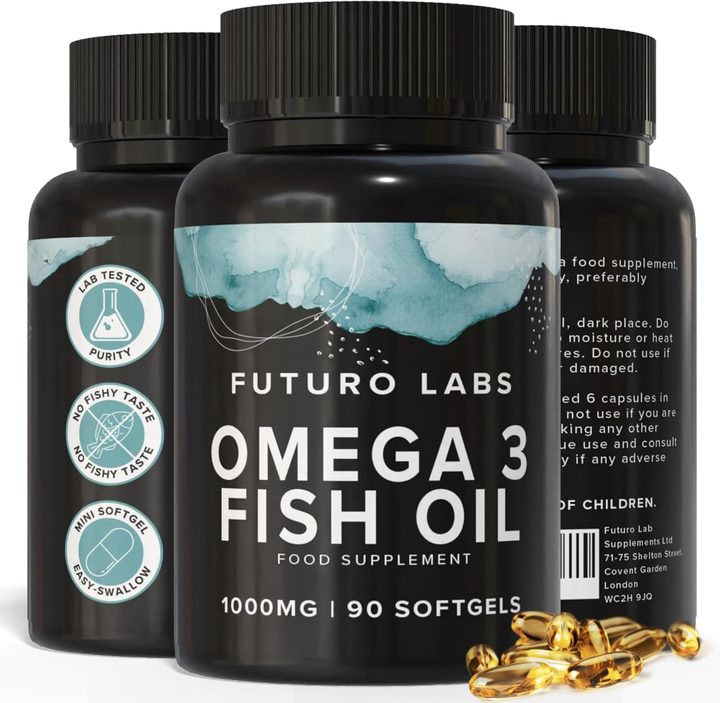
Our brand: the worked example on this page
Futuro Labs Omega 3 Fish Oil
- 17p a day
- 90 softgels, 1 softgel daily
- Lab tested
- Made in the UK
The softgel that stands in for the fish a bodybuilder does not eat: Futuro Labs Omega 3 Fish Oil on Amazon UK, 1 softgel with food, 180mg EPA and 120mg DHA, 90 for £14.99 at 17p. Full label breakdown. The plate-to-shelf table is on the sources page; the three eras of the liking on the why-bodybuilders-like page.
The bodybuilder's fish audit, and why a lifter who eats fish twice a day can still be short of omega-3
Why do bodybuilders eat fish oil is a question whose word eat points at the plate, and the plate answers it with an audit that surprises most lifters: the fish a bodybuilder eats is the wrong fish for omega-3. A bodybuilder eats fish for protein, and chooses the fish that fits a lean diet, tilapia, cod, haddock, pollock, basa and canned light tuna in brine or water, white fish with almost no fat, which is exactly why they were chosen and exactly why they carry almost no EPA and DHA, the omega-3 of a fish living in its fat, so that the food composition data put a portion of cod or tilapia at a few tens of milligrams of EPA and DHA and a can of light tuna in brine at around a hundred, against around one and a half to two grams in a fillet of salmon, mackerel, sardines or herring, a difference of ten to fifty times between a bodybuilder's fish and an oily fish, the lean-fish composition data's finding. The result is a lifter who eats fish twice a day, six portions a week, and carries a plate as low in omega-3 as someone who never touches fish at all, the 250mg heart claim unmet and the omega-3 index unbuilt, which is the audit's low-fish verdict arrived at by a route the audit does not usually expect, and it explains why bodybuilders in particular eat fish oil: the softgel puts back the omega-3 that their fish, chosen for leanness, never had, and it is the one supplement on the bodybuilding stack that a bodybuilding diet creates the need for by its own logic.
The two fixes, the tuna that counts and the tuna that does not, what fish oil does not do for a bodybuilder, and the audit filed
The two fixes are the audit's usual pair, and a bodybuilder can take either. The softgel: one standard softgel a day at 300mg meets the 250mg heart claim by condition of use, at 17p and nine calories that fit any diet, and three softgels or a concentrate build the index over a season for the lifter who wants the research range, the fish-audit page's rungs. The plate: two of the six weekly fish portions swapped from white to oily, salmon, mackerel, sardines or herring, give around 450mg a day on average and make the softgel unnecessary, at the cost of a few grams of fat per portion that any sensible diet accommodates and a diet-tracking app absorbs, and a bodybuilder who prefers eating to swallowing takes that route and skips the shelf entirely. The tuna that counts: fresh tuna steak and tuna canned in oil carry meaningful omega-3, a fresh steak a gram or so and an oil-packed can several hundred milligrams, while the light tuna in brine that lives in most bodybuilders' cupboards carries around a hundred milligrams, the canning and the species stripping it, so the tuna a bodybuilder eats does not count unless it is the steak or the oil-packed can, and the oil-packed can counts only if the oil is eaten rather than drained. What fish oil does not do for a bodybuilder is the ledger's list, no growth, no recovery beyond a little less soreness at gram doses over months, no joints, no fat loss and no hormone, so the softgel is eaten for the same reason a desk worker on chicken and cod would eat it, the heart claim and the index, with the bodybuilding diet supplying the need and nothing else. The audit filed: tilapia, cod, haddock and light tuna as the wrong fish at a few tens of milligrams a portion, salmon and mackerel as the right fish at two grams, a lifter who eats fish twice a day carrying a low-fish plate, one softgel or two oily-fish portions a week as the fixes, and the worked example being the softgel that stands in for the fish a bodybuilder does not eat, £14.99 for 90 at 17p.
| The fish | EPA and DHA a portion | The verdict |
|---|---|---|
| Tilapia, basa, pollock | A few tens of milligrams | Protein; almost no omega-3 |
| Cod, haddock | A few tens to a hundred milligrams | Protein; almost no omega-3 |
| Light tuna canned in brine or water | Around a hundred milligrams | Does not count |
| Tuna canned in oil, or a fresh steak | Several hundred milligrams; a gram or so | Counts, if the oil is eaten |
| Salmon, mackerel, sardines, herring | Around one and a half to two grams | Two portions a week: no softgel needed |
| A standard fish oil softgel | 300mg | The stand-in for the fish not eaten: one a day |
The verdict, a diet that chose its fish for leanness and had to buy its omega-3 back in a softgel
Why do bodybuilders eat fish oil: because a bodybuilder's fish is the wrong fish for omega-3, tilapia, cod, haddock, pollock and light tuna in brine being lean white fish chosen for a lean diet and carrying a few tens to a couple of hundred milligrams of EPA and DHA a portion against around two grams in salmon, mackerel, sardines or herring, so that a lifter who eats fish twice a day carries a plate as low in omega-3 as someone who never eats fish, the 250mg heart claim unmet and the index unbuilt, and the softgel puts back what the wrong fish never had, with two oily-fish portions a week making it unnecessary and the tuna that counts being the fresh steak or the oil-packed can. The softgel that stands in for the fish a bodybuilder does not eat: Futuro Labs Omega 3 Fish Oil, one with food, 180mg EPA and 120mg DHA, 90 for £14.99 at 17p a day.
What to check on the label
- Audit the fish you actually eat: white fish is protein, not omega-3.
- Know the ten-to-fifty-fold gap: tilapia to mackerel.
- Take the softgel for the claim: one a day fills what the wrong fish lacks.
- Or swap two portions to oily: salmon, mackerel, sardines, and no softgel.
- Count only the tuna that counts: the steak or the oil-packed can.
Our brand
The worked example: Futuro Labs Omega 3 Fish Oil
Futuro Labs Omega 3 Fish Oil: 1 softgel daily with food, 1000mg fish oil providing 180mg EPA and 120mg DHA (300mg combined), 90 softgels for £14.99, 17p a day, lab-tested purity, UK GMP made. Gelatin shell, so not vegetarian.
- Fish oil per softgel
- 1000mg
- EPA / DHA per softgel
- 180mg / 120mg (300mg combined)
- Serving
- 1 softgel a day
- Bottle
- 90 softgels, 90 days
- Price
- £14.99 (17p a day)
- Softgel
- mini softgel, no fishy taste
Questions people also ask
I eat fish every day, do I still need fish oil?
If the fish is tilapia, cod, haddock, pollock or light tuna in brine, yes or a swap: those lean white fish carry a few tens to a couple of hundred milligrams of EPA and DHA a portion, so a plate of them leaves the 250mg heart claim unmet, filled by one softgel a day or by swapping two portions a week to salmon, mackerel, sardines or herring.
Does canned tuna count as oily fish?
Not the usual can: light tuna in brine or water carries around a hundred milligrams of EPA and DHA, stripped by the species and the canning, while a fresh tuna steak carries a gram or so and tuna canned in oil several hundred milligrams if the oil is eaten rather than drained.
Why is tilapia so low in omega-3?
Because omega-3 lives in a fish's fat and tilapia has almost none, a farmed white fish chosen for a lean diet precisely because it is lean, so a tilapia portion carries a few tens of milligrams of EPA and DHA against a mackerel fillet's two grams, a difference of ten to fifty times.
How much oily fish replaces a fish oil capsule?
Two portions a week: salmon, mackerel, sardines or herring at around one and a half to two grams of EPA and DHA a portion give around 450mg a day on average, above the 250mg heart claim and the standard softgel's 300mg, at the cost of a few grams of fat a portion that any diet accommodates.
What does fish oil do for a bodybuilder beyond replacing fish?
Nothing on the bodybuilding ledger: no growth, no faster recovery beyond a little less soreness at gram doses over months, no joint, fat-loss or hormone effect, so the softgel is eaten for the heart claim and the index, the same reasons a desk worker on chicken and cod would have.
Sources
- The food composition data for fish: white and lean fish, cod, haddock, tilapia, pollock and canned light tuna, carry a few tens to a couple of hundred milligrams of EPA and DHA a portion, against around one and a half to two grams in salmon, mackerel, sardines and herring, so a diet of lean fish does not supply the omega-3 that oily fish does. PubMed record
- McCance and Widdowson's Composition of Foods integrated dataset (CoFID): the UK reference figures for nutrient content of foods, including EPA and DHA in fish. https://www.gov.uk/government/publications/composition-of-foods-integrated-dataset-cofid
- Scientific Advisory Committee on Nutrition and Committee on Toxicity. Advice on fish consumption: benefits and risks (two portions of fish a week, one oily). TSO, 2004. https://www.gov.uk/government/publications/sacn-advice-on-fish-consumption-benefits-and-risks
- EFSA Panel on Dietetic Products. Scientific opinion on the substantiation of health claims related to EPA and DHA and normal function of the heart (250mg daily condition of use). EFSA Journal 2010;8(10):1796. https://www.efsa.europa.eu/en/efsajournal/pub/1796